
The story of Las Vegas, a city synonymous with glitz, glamour, and the thrilling spin of a roulette wheel, is a tale of ambition, innovation, and an unwavering commitment to entertainment. From its humble beginnings as a dusty railroad stop in the middle of the Nevada desert, it has transformed into a global icon of travel, tourism, and hospitality. Yet, amidst the dazzling lights and towering resorts that define the modern Las Vegas Strip, a fundamental question often arises: what was the very first casino in this legendary city?
Pinpointing the singular “first casino” is more complex than it might seem, as the definition has evolved over time. Was it the first establishment to offer any form of gambling? The first purpose-built casino? Or the first integrated resort that combined lodging, dining, and gaming under one roof? To truly understand, we must journey back to the city’s origins and trace the fascinating development of its unique identity. Understanding this history is not merely an academic exercise; it offers a profound insight into the very essence of Las Vegas as a premier travel destination, a place where history, entertainment, and opulent accommodation intertwine seamlessly.
The Dawn of Gambling in Las Vegas: A Desert Oasis’s Transformation
Before the neon glow and the bustling crowds, Las Vegas was an unassuming oasis in the Mojave Desert, named “the meadows” by early Spanish explorers due to its artesian springs. Its real genesis as a settlement began in 1905, when the Union Pacific Railroad established a stop here for trains traveling between Los Angeles, California, and Salt Lake City, Utah. This strategic location quickly made it a vital hub, attracting prospectors, ranchers, and weary travelers seeking respite and supplies.
The Railroad Town and Its Early Days
The initial development of Las Vegas was concentrated around Fremont Street, which remains the historic heart of Downtown Las Vegas today. Early hotels and boarding houses sprung up to cater to the transient population. In these nascent days, informal gambling was a commonplace activity, often found in saloons and backrooms. Poker games, blackjack, and other card games provided entertainment and a way for laborers and travelers to pass the time and, perhaps, try their luck. These weren’t “casinos” in the modern sense, but they were the embryonic forms of what was to come, reflecting a burgeoning desire for recreation and a taste for chance that would eventually define the city’s character. The early lifestyle in Las Vegas was rugged, but it already held the seeds of the unique leisure and entertainment culture that would flourish.
The Legalisation of Gambling in Nevada
The trajectory of Las Vegas changed dramatically in 1931. Prior to this, gambling in Nevada had a complex legal history, often outlawed then legalised again. However, in an effort to boost the state’s economy during the Great Depression and to control the widespread illegal gambling that was already occurring, the Nevada Legislature passed Assembly Bill 98. This act fully legalised open gambling, paving the way for the development of purpose-built casinos. This legislative move was a watershed moment, creating the legal framework that would allow Las Vegas to blossom into the world-renowned gaming capital it is today. It was also at this time that construction began on the nearby Hoover Dam, bringing thousands of workers to the region and creating a ready audience for new forms of entertainment and leisure. The legalisation, combined with this influx of workers, created the perfect storm for the casino industry to take root.
Unraveling the “First Casino” Debate
With the legalisation of gambling, the stage was set for the emergence of true casinos. However, identifying the absolute first is subject to interpretation and historical nuance. Several establishments lay claim to this title, each with a valid argument depending on the criteria used. This historical debate adds another layer of intrigue to the rich tourism narrative of Las Vegas, offering visitors a deeper appreciation for the city’s origins.
Contender 1: The Golden Gate Hotel & Casino and Fremont Street
One of the strongest contenders for the title of “first” is the Golden Gate Hotel & Casino, originally known as the Hotel Nevada. It opened its doors in 1906, predating legalised gambling. While it functioned primarily as a hotel, it offered informal gambling in its early days. Crucially, after gambling was legalised in 1931, the Golden Gate Hotel & Casino quickly secured one of the first state-issued gambling licenses. It installed slot machines, blackjack tables, and other games, becoming a legitimate, fully operational casino within an existing hotel structure.
Located prominently on Fremont Street, it holds the distinction of being the longest continually operating hotel and casino in Las Vegas. Its enduring presence makes a strong case for it being the spiritual, if not strictly chronological, first casino of the modern era, embodying the blend of accommodation and gaming that would become the city’s hallmark. For travelers exploring Downtown Las Vegas, a visit to the Golden Gate offers a tangible connection to this foundational period.
Contender 2: The Northern Club and the Spirit of Prohibition
Another establishment often cited is the Northern Club. While the Golden Gate was an existing hotel that added legal gambling, the Northern Club holds the distinction of being the first establishment in Las Vegas to be issued a gambling license after the 1931 legalisation. Opened in 1929, even during the tail end of Prohibition, it operated as a speakeasy and informal gambling hall. When legalisation arrived, it was among the very first to officially transition into a licensed casino, securing its license on March 20, 1931, just days after the law passed.
The Northern Club was a smaller, dedicated gaming establishment, rather than a full hotel-casino. Its swift legalisation and operation mark it as a pioneer in the era of legitimate gaming, setting a precedent for many more dedicated gambling houses that would follow. It symbolized the immediate shift from illicit activities to a regulated industry, laying crucial groundwork for the future of Las Vegas as a tourism and entertainment hub.
Defining “First”: Gambling Houses vs. Integrated Resorts
The debate largely hinges on definition. If “first casino” means the first place where legal gambling activities were conducted under a state license, the Northern Club (and others like the Las Vegas Club and Apache Hotel that also got licenses on the same day) fits the bill. If it refers to an existing hospitality establishment that quickly adapted to legally offer extensive gaming, then the Golden Gate Hotel & Casino holds strong claim.
However, neither of these were the sprawling, all-encompassing integrated resorts that define modern Las Vegas. The concept of a resort combining luxury accommodation, fine dining, entertainment, and extensive gaming facilities was still on the horizon, emerging as the city matured. This distinction is vital for understanding the evolution of the city’s unique lifestyle and tourism offerings, moving from simple gaming halls to comprehensive travel experiences.
The Birth of the Las Vegas Strip and the Resort Era
While Downtown Las Vegas was the birthplace of legal gambling, the visionaries of the 1940s looked beyond Fremont Street to the undeveloped highway leading south, which would eventually become the iconic Las Vegas Strip. This marked a significant pivot, moving from small-scale establishments to grand, purpose-built resorts designed to attract a new kind of luxury traveler.
El Rancho Vegas: The Pioneer Resort
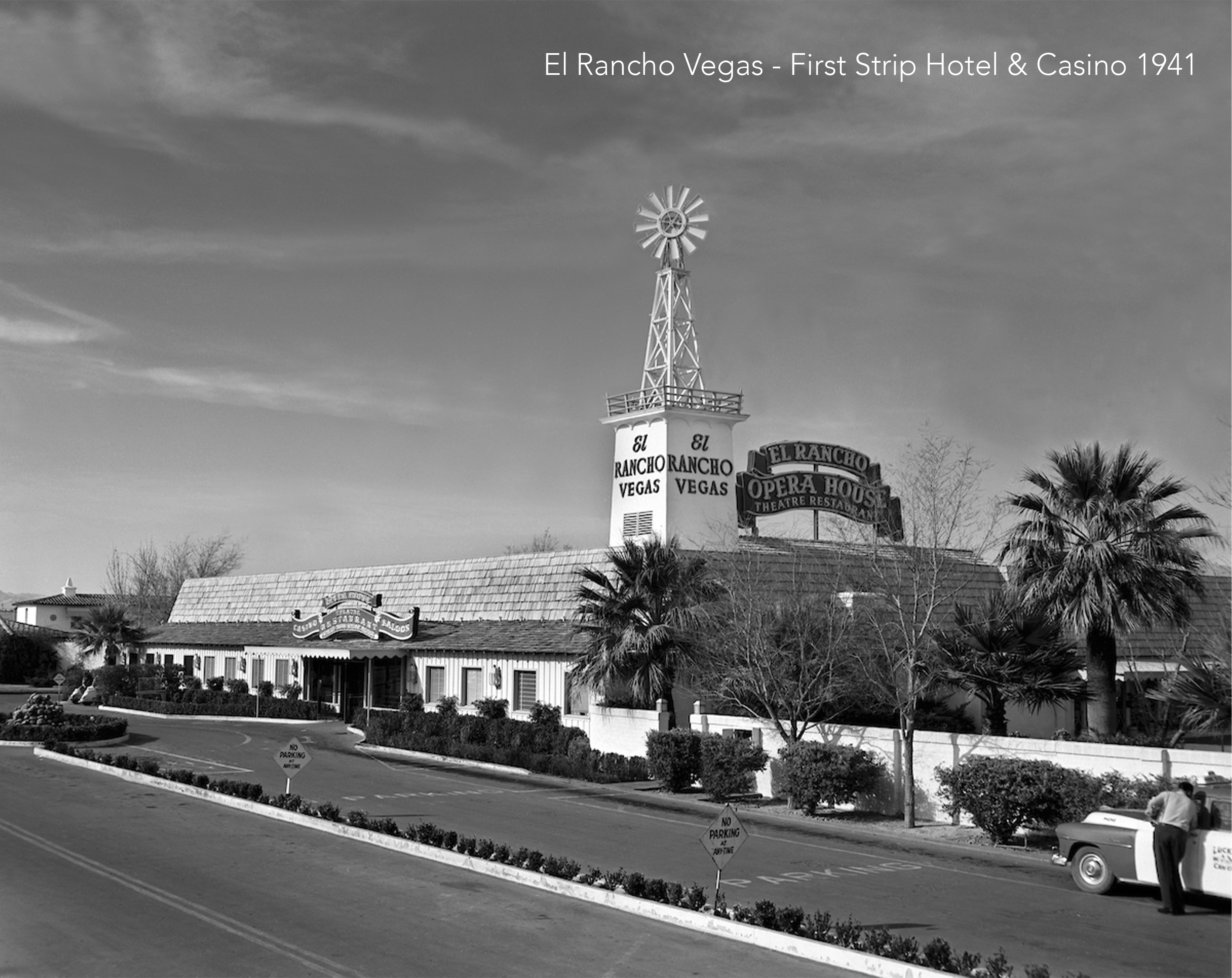
For many, the true “first” in the spirit of modern Las Vegas was El Rancho Vegas. Opened on April 3, 1941, it was the first resort on what would become the Las Vegas Strip. El Rancho Vegas wasn’t just a casino; it was a full-fledged resort designed to lure tourists with more than just gambling. It featured 63 bungalow-style rooms, a swimming pool, horseback riding, a showroom with top-tier entertainment, and, of course, a casino. Its distinctive Western theme created an immediate draw, offering a unique blend of accommodation and activities that appealed to a broader audience.
El Rancho Vegas set the blueprint for future development. It demonstrated that visitors desired an entire experience—a destination in itself—rather than just a place to gamble. Its success spurred a wave of construction, with other pioneering resorts like the Hotel Last Frontier (now The Sahara) quickly following suit. This was the moment Las Vegas began its transformation from a regional curiosity to an international tourism heavyweight.
A Legacy of Innovation and Entertainment
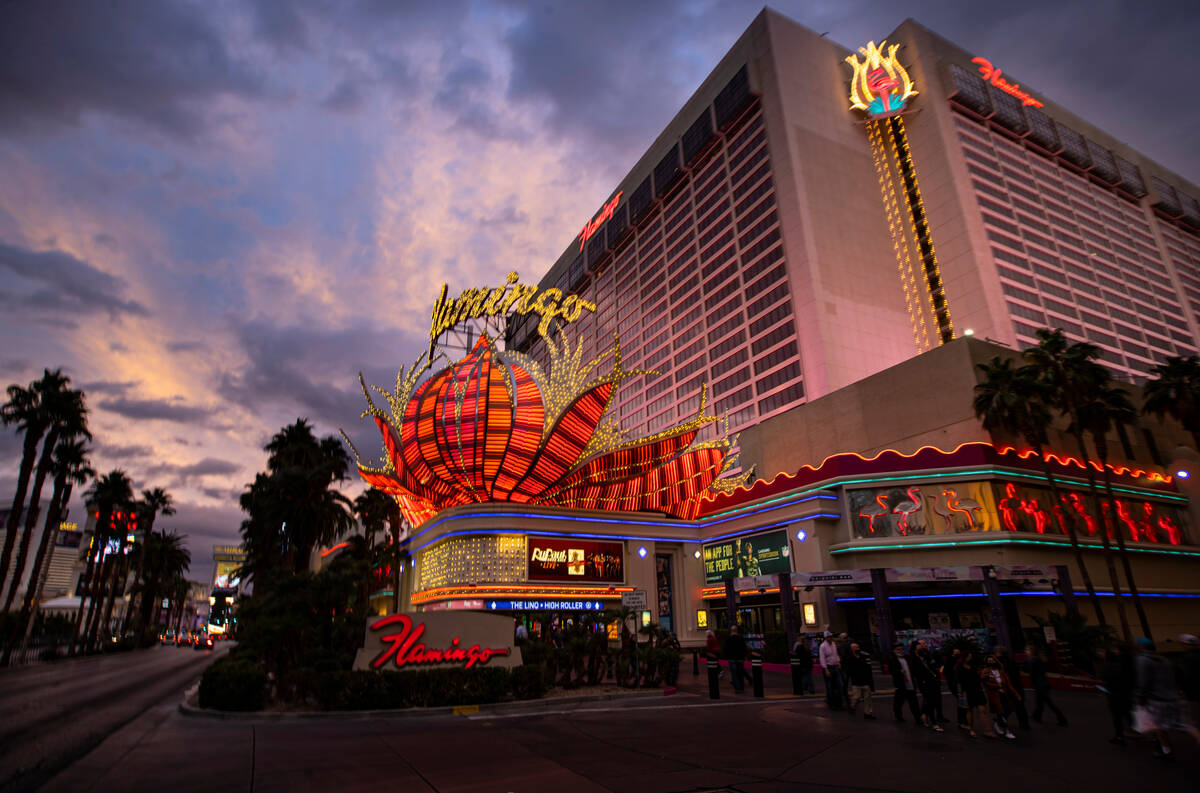
Following El Rancho Vegas’s lead, the post-World War II era saw explosive growth on the Strip. Figures like Bugsy Siegel, a notorious gangster with a vision, opened the lavish Flamingo Hotel & Casino in 1946, cementing the city’s reputation for luxury and high-stakes gambling. The Sands Hotel and Casino, Sahara, and numerous others soon followed, each vying to outdo the last in terms of extravagance and entertainment. These establishments didn’t just offer gambling; they brought in the biggest stars of the era, from Frank Sinatra to Elvis Presley, transforming the city into the “Entertainment Capital of the World.”
This era laid the foundation for the sophisticated accommodation, diverse attractions, and vibrant lifestyle that travelers expect from Las Vegas today. The commitment to providing a holistic experience, blending gaming with world-class shows, fine dining, and comfortable stays, originated in these early resorts.
Las Vegas Today: A Global Capital of Entertainment
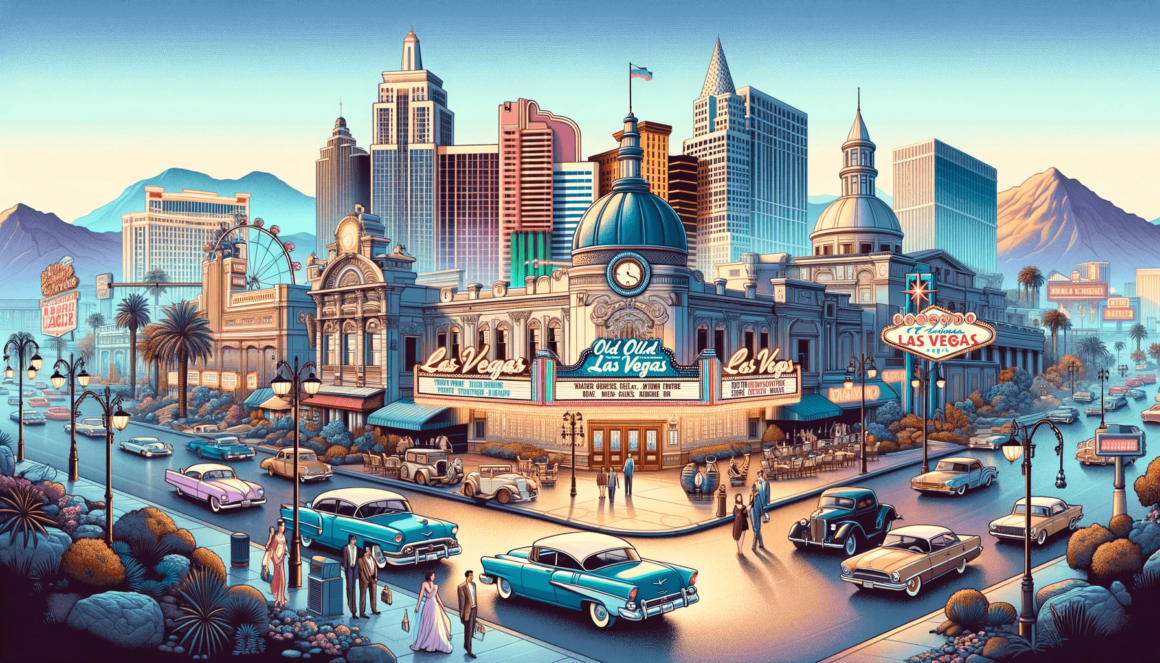
The legacy of these early pioneers, from the informal gambling houses of Fremont Street to the grand resort vision of El Rancho Vegas, is vividly present in modern Las Vegas. The city continues to evolve, constantly reinventing itself while honoring its historical roots. It is no longer just a gambling destination; it is a comprehensive tourism experience, catering to every type of traveler.
Beyond Gambling: The Modern Tourism Experience
Today, Las Vegas offers an unparalleled array of experiences. While iconic casinos like Caesars Palace, Bellagio, MGM Grand, and The Venetian Resort Las Vegas continue to draw millions with their expansive gaming floors, the city has diversified its appeal significantly. Travelers can indulge in world-class culinary experiences from celebrity chefs, attend residency shows by global music superstars, explore an abundance of shopping options from high-end boutiques to unique local finds, and relax at luxurious resort pools.
The city’s landmarks extend beyond its hotels and casinos. Visitors can marvel at the replica Eiffel Tower at Paris Las Vegas, ride the roller coaster at New York-New York Hotel & Casino, or experience the thrilling heights of The STRAT Hotel, Casino & Skypod. For those seeking cultural tourism, the Mob Museum offers a fascinating look into the city’s colorful past, while the Neon Museum preserves the iconic signage that once lit up the Strip.
Furthermore, Las Vegas serves as an excellent base for exploring natural wonders. Day trips to the majestic Grand Canyon, the tranquil beauty of Red Rock Canyon, or the engineering marvel of the Hoover Dam provide a perfect contrast to the city’s vibrant energy. The accessibility to such diverse attractions makes Las Vegas a truly comprehensive travel destination.
Planning Your Trip to the Entertainment Mecca
For anyone planning a trip, Las Vegas offers accommodation for every budget and lifestyle. From ultra-luxury suites in five-star resorts to family-friendly hotels and budget-conscious options, booking a stay is a seamless process with countless reviews and comparison sites available. Whether you’re planning a romantic getaway, a family vacation to attractions like Circus Circus, or a business trip combining conferences with leisure, the city’s infrastructure is designed to cater to diverse needs.
Tips for travelers often include booking shows and dining reservations in advance, exploring both the Strip and Downtown Las Vegas for varied experiences, and considering a Las Vegas Pass for cost-effective access to multiple attractions. The city’s commitment to continuous innovation means there’s always something new to discover, from cutting-edge entertainment venues like Allegiant Stadium to immersive experiences that push the boundaries of tourism.
In conclusion, while the precise identity of the “first casino in Las Vegas” remains a point of historical discussion, the journey through the city’s origins reveals a rich tapestry of entrepreneurial spirit and a relentless pursuit of entertainment. From the early gambling halls of Fremont Street like the Golden Gate Hotel & Casino and the Northern Club to the groundbreaking integrated resort concept of El Rancho Vegas on the Strip, each played a crucial role in shaping what Las Vegas is today: a global mecca for travel, hotels, tourism, accommodation, landmarks, and lifestyle, where every visit writes a new chapter in its extraordinary story.
LifeOutOfTheBox is a participant in the Amazon Services LLC Associates Program, an affiliate advertising program designed to provide a means for sites to earn advertising fees by advertising and linking to Amazon.com. Amazon, the Amazon logo, AmazonSupply, and the AmazonSupply logo are trademarks of Amazon.com, Inc. or its affiliates. As an Amazon Associate we earn affiliate commissions from qualifying purchases.