
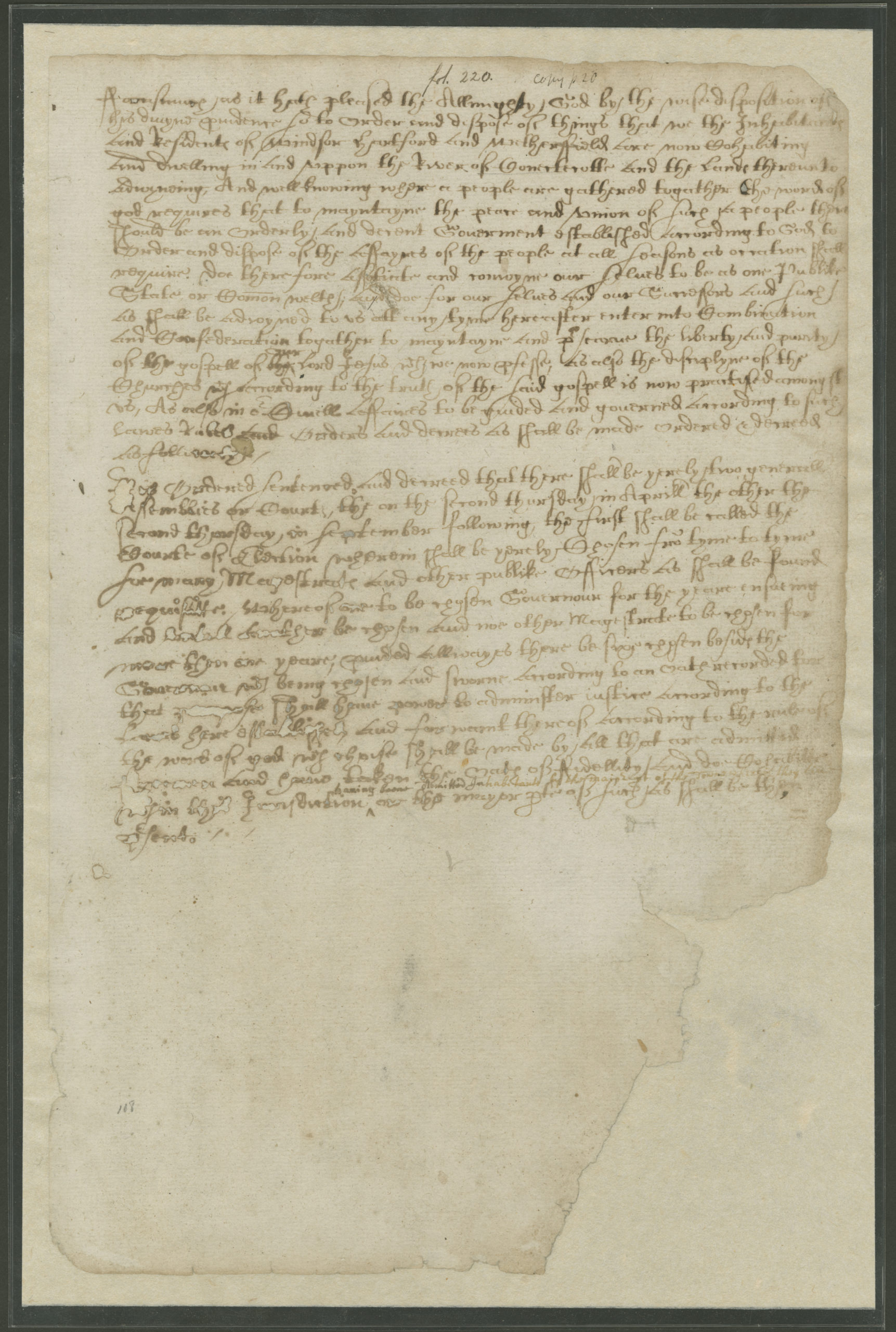
The Fundamental Orders of Connecticut stand as a pivotal document in American history, often hailed as the world’s first written constitution. Adopted by the nascent towns of Hartford, Windsor, and Wethersfield on January 14, 1639, this groundbreaking text laid the groundwork for a truly democratic government, setting a precedent that would influence future charters and ultimately shape the United States of America. Far more than a dusty historical artifact, the Orders represent a bold declaration of self-governance, born from the unique spirit of the early colonial settlers and offering a rich tapestry for travelers interested in the roots of American democracy.

For visitors planning a trip to Connecticut, understanding the Fundamental Orders of Connecticut offers a deeper appreciation of the region’s historical significance. The legacy of this document permeates the state, from its nickname as “the Constitution State” to the very architecture and cultural institutions found in its historic towns. Exploring the sites where these revolutionary ideas took root provides a unique blend of historical immersion and contemporary travel experiences, allowing one to walk in the footsteps of the founders and grasp the profound impact of their vision.
The Dawn of Self-Governance: Understanding Connecticut’s Revolutionary Charter
The genesis of the Fundamental Orders of Connecticut is rooted in the early 17th-century migration of English Puritans to North America. Many of these settlers, seeking religious freedom and greater autonomy, initially settled in the Massachusetts Bay Colony. However, disagreements over land, political representation, and the strict religious requirements for voting and holding office within the Massachusetts Bay Colony soon led to further migrations south.
Under the charismatic leadership of figures like Reverend Thomas Hooker and John Haynes, groups from Massachusetts ventured into the fertile Connecticut River Valley in the mid-1630s, establishing the towns of Hartford, Windsor, and Wethersfield. These communities, geographically distant from the direct control of the Massachusetts Bay Colony and lacking a formal charter from the British Crown, found themselves in a unique position to define their own governance. It was out of this need for ordered self-rule that the Fundamental Orders of Connecticut emerged.
A Vision Born from Dissatisfaction: The Journey to Independence
The move from Massachusetts Bay Colony was not merely a search for better land but a deliberate step towards a more inclusive form of government. Thomas Hooker, a prominent Puritan minister, famously preached a sermon in Hartford in May 1638, emphasizing that “the foundation of authority is laid in the free consent of the people.” This revolutionary idea, advocating for government by consent rather than divine right or inherited privilege, became the philosophical cornerstone for the document that followed.
The settlers in Hartford, Windsor, and Wethersfield faced practical challenges in managing their growing settlements, adjudicating disputes, and defending against Native American threats, particularly after the Pequot War. Without a formal legal framework, their continued prosperity and survival were uncertain. They recognized the need for a unified government that could act decisively and fairly, grounded in principles that ensured the rights and participation of its citizens.
This collective determination to establish a civil government based on popular sovereignty led to the drafting and adoption of the Fundamental Orders of Connecticut. It was a bold and audacious move for its time, essentially creating a self-governing entity without explicit permission from the distant British Crown. This spirit of independent thought and action defined early Connecticut and laid the groundwork for its future growth and influence.
Key Principles and Democratic Innovations
The Fundamental Orders of Connecticut was remarkable for several reasons, establishing precedents that were far ahead of their time:
- Government by the Consent of the Governed: The document explicitly stated that the authority of the government was derived from the consent of the freemen of the towns. This was a radical departure from the prevailing European model of monarchical or aristocratic rule.
- Written Constitution: It was a formal, written document outlining the structure and powers of the government, providing a clear framework for governance and limiting arbitrary rule. This concept of a codified constitution would become a hallmark of modern democratic states.
- Expanded Suffrage: Unlike the Massachusetts Bay Colony, where voting rights were generally restricted to church members, the Fundamental Orders of Connecticut allowed all “admitted inhabitants” who took an oath of fidelity to participate in elections. While still limited by modern standards (excluding women, enslaved people, and non-landowners), this was a significant expansion of the franchise for the era.
- Defined Governmental Structure: The Orders established a General Court (legislature) with the power to make laws, elect magistrates (executive), and levy taxes. It provided for the annual election of a governor and six magistrates, ensuring accountability to the populace. The powers of the governor were specifically limited, emphasizing the supremacy of the General Court.
- Separation of Powers (Implicit): While not explicitly using the term, the document hinted at a separation of legislative, executive, and judicial functions, laying a foundation for future governmental structures, including the eventual U.S. Constitution.
- No Reference to the Crown: Notably, the Fundamental Orders of Connecticut made no mention of the British Crown or any higher authority, establishing a government solely based on the will of the people in the colony. This bold omission underscored the truly independent nature of the new government.
These innovative principles made the Fundamental Orders of Connecticut an extraordinary document, reflecting a deep commitment to self-determination and popular sovereignty. It provided a stable and effective government for the burgeoning Colony of Connecticut, which grew to include other important settlements like New Haven (after the absorption of the separate New Haven Colony) and Old Saybrook.
Connecticut’s Enduring Legacy: From Colonial Roots to Modern Day
The impact of the Fundamental Orders of Connecticut extended far beyond its immediate geographical boundaries and temporal context. Its principles, particularly the concept of government by the consent of the governed and the establishment of a written constitution, provided a blueprint for later colonial charters and ultimately influenced the framers of the U.S. Constitution. It demonstrated that a government could be created and sustained by the people themselves, without direct royal mandate, laying a crucial cornerstone for the ideals of the American Revolution.
This historical significance is why Connecticut proudly bears the moniker “the Constitution State.” For travelers, this heritage presents a unique opportunity for educational and inspiring journeys, blending historical exploration with modern leisure.
The “Constitution State” and Its Historical Treasures
Visiting Connecticut offers a tangible connection to the origins of American democracy. In Hartford, the state capital, the original text of the Fundamental Orders of Connecticut is carefully preserved at the Connecticut State Library, housed within the impressive State Capitol Complex. While access to the original document might be limited for preservation, interpretive exhibits often provide a comprehensive understanding of its context and content. The State Capitol Building itself, an architectural marvel, stands as a symbol of the enduring government established by these very principles.
Beyond Hartford, the towns that first adopted the Orders — Windsor and Wethersfield — offer beautifully preserved historic districts. In Wethersfield, one can stroll down streets lined with colonial-era homes, many dating back to the 17th and 18th centuries, offering a glimpse into the daily lives of those who forged this revolutionary document. Windsor, Connecticut’s oldest town, boasts numerous historical sites and charming landscapes that transport visitors back to the early days of the colony.
Exploring the Cradle of American Democracy: Travel and Tourism
For history enthusiasts, a trip to Connecticut is akin to a pilgrimage. Beyond the immediate sites related to the Fundamental Orders of Connecticut, the state is rich with landmarks and attractions that illuminate its pivotal role in Colonial America and the early United States:
- Hartford: In addition to the State Capitol, explore the Wadsworth Atheneum Museum of Art, the oldest continuously operating public art museum in the United States, and soak in the literary history at the Mark Twain House & Museum and the Harriet Beecher Stowe Center. Elizabeth Park, with its stunning rose gardens, provides a serene urban oasis.
- New Haven: Home to the prestigious Yale University, New Haven offers impressive architecture, world-class museums, and a vibrant cultural scene. Its own colonial history, initially as a separate Puritan colony, provides an interesting counterpoint to the Connecticut River Valley settlements.
- Old Saybrook and the Connecticut Shoreline: Explore coastal towns that were vital ports and defensive outposts during the colonial era. The shoreline offers beautiful beaches like Hammonasset Beach State Park, Rocky Neck State Park, and Silver Sands State Park, and charming villages such as Essex and Stonington.
- Mystic: This iconic town on the southeastern coast is a must-visit for its Mystic Seaport Museum, a living history museum showcasing New England’s maritime heritage, and the Mystic Aquarium.
- Rural Connecticut: Beyond the coastal and central urban areas, towns like Litchfield, Farmington, and Kent offer picturesque landscapes, covered bridges, and additional glimpses into colonial and early American life, ideal for scenic drives and exploring charming boutique shops.
This diverse range of attractions caters to various travel lifestyles, from educational family trips focused on American history to romantic getaways exploring charming towns, or even luxury escapes combining historical tours with fine dining and upscale accommodations.
Planning Your Historical Journey: Accommodations and Experiences in Connecticut
Connecticut’s rich history and charming towns make it an ideal destination for various types of travelers. Whether you’re seeking a deep dive into colonial history or a relaxing trip with historical undertones, the state offers a wide array of accommodation options and experiences to enhance your journey.
Immersive Stays: Hotels, Inns, and Boutique Accommodations
When planning your visit to the “Constitution State,” selecting the right accommodation can significantly enhance your experience. For those looking to fully immerse themselves in the historical ambiance, consider staying in one of Connecticut’s many historic inns and boutique hotels:
- Historic Inns: Many towns, particularly along the coast and in the Connecticut River Valley, feature beautifully preserved inns that offer a unique blend of historical charm and modern comfort. The Griswold Inn in Essex, one of the oldest operating inns in the United States, is a prime example, providing a truly atmospheric stay with its antique furnishings and period decor. Another excellent choice is the Inn at Harbor Hill Marina in Niantic, offering picturesque waterfront views and a taste of coastal life.
- Boutique Hotels: For a more contemporary yet distinctive experience, boutique hotels in cities like Hartford, New Haven, Stamford, or Greenwich provide luxurious amenities and personalized service. The Goodwin Hotel in downtown Hartford offers an upscale experience within walking distance of many historical sites. For those exploring the western part of the state, the Delamar West Hartford combines elegance with proximity to attractions.
- Resorts and Spas: If your lifestyle travel includes relaxation and pampering, Connecticut also boasts several luxurious resorts. The Saybrook Point Resort & Marina in Old Saybrook offers stunning views of the Connecticut River and the Long Island Sound, along with a full-service spa. For a different kind of luxury, the state’s world-class casino resorts, Mohegan Sun and Foxwoods Resort Casino, near Uncasville and Mashantucket respectively, offer comprehensive entertainment, dining, and opulent accommodation options.
When booking your stay, consider the location relative to the historical sites you wish to explore. Many accommodations offer special packages for history buffs, sometimes including guided tours or passes to local museums. Whether you prefer the rustic charm of a bed and breakfast or the modern conveniences of a luxury hotel, Connecticut provides options to suit every preference and budget, ensuring a comfortable base for your historical adventures.

Beyond the Documents: Attractions and Lifestyle Travel
Beyond the direct exploration of the Fundamental Orders of Connecticut and its immediate surroundings, the state invites visitors to discover a broader range of attractions that cater to diverse interests and lifestyles:
- Family Trips: For families, Connecticut offers a wealth of educational and entertaining experiences. The Mystic Aquarium and the Maritime Aquarium at Norwalk provide captivating marine life encounters. History comes alive at the Mystic Seaport Museum, where children can explore historic ships and learn about 19th-century seafaring. A visit to Gillette Castle State Park, a quirky medieval-style castle, is another engaging option.
- Outdoor Adventures: Connecticut’s natural beauty is just as captivating as its history. Explore scenic hiking trails, including sections of the Appalachian Trail in the western part of the state, or enjoy water activities on the Connecticut River or the Long Island Sound. State parks like Hammonasset Beach State Park offer stunning coastal views and recreational opportunities.
- Cultural Immersion and Foodie Experiences: Delve into Connecticut’s local culture by visiting its numerous art galleries, theaters, and music venues. The culinary scene, especially in cities like New Haven (famous for its pizza), Hartford, and Fairfield County, offers everything from farm-to-table restaurants to charming seaside eateries. Don’t forget to sample local craft breweries and wineries.
- Proximity to Major Cities: Connecticut’s strategic location between New York City and Boston makes it an accessible destination for weekend getaways or longer trips from major metropolitan areas in New England. It can easily be incorporated into a larger New England road trip that encompasses significant historical and natural landmarks.
The Fundamental Orders of Connecticut serves as a powerful reminder of the deep-seated democratic principles that shaped America. Visiting Connecticut is not just a journey through picturesque towns and scenic landscapes; it is an immersive experience into the very heart of American self-governance, offering insights that resonate with both history buffs and casual travelers alike. By connecting with the past, visitors gain a richer understanding of the enduring legacy that continues to define the “Constitution State” and the United States as a whole.
LifeOutOfTheBox is a participant in the Amazon Services LLC Associates Program, an affiliate advertising program designed to provide a means for sites to earn advertising fees by advertising and linking to Amazon.com. Amazon, the Amazon logo, AmazonSupply, and the AmazonSupply logo are trademarks of Amazon.com, Inc. or its affiliates. As an Amazon Associate we earn affiliate commissions from qualifying purchases.