
The question, “What year did the Chicago Cubs win the World Series?” is more than just a query about baseball history; it’s a gateway to understanding a city’s resilience, a fan base’s enduring hope, and a landmark sporting achievement that transcended the diamond. For generations of Chicago residents and baseball aficionados worldwide, this question holds profound significance, representing the end of a nearly century-long drought and the realization of a dream that had eluded the North Side team since 1908. The year the Chicago Cubs finally hoisted the World Series trophy was not merely a date; it was a moment etched into the collective memory of a city, a testament to perseverance, and a cause for unparalleled celebration.

The Historic Drought and the Road to Redemption
For 108 years, the specter of the past loomed large over Wrigley Field. The Chicago Cubs had tasted World Series glory in 1907 and 1908, but since then, a seemingly insurmountable curse, often referred to as the “Billy Goat Curse,” had kept them from returning to baseball’s pinnacle. This prolonged absence from championship contention fostered a unique and deeply ingrained culture among the team’s loyal fanbase. It was a culture of unwavering support, a blend of hopeful optimism and seasoned skepticism, and an understanding that supporting the Cubs was not just about wins and losses, but about a shared journey of enduring passion.
The Rise of a Contender
The build-up to the 2016 season was marked by a sense of burgeoning hope. Under the leadership of President Theo Epstein and a talented young core of players, the Cubs had been steadily improving. Their farm system was recognized as one of the best in baseball, churning out future stars like Kris Bryant, Anthony Rizzo, and Javier Báez. These homegrown talents, combined with strategic acquisitions and a strong managerial presence in Joe Maddon, created a potent mix that began to challenge the established order in the National League.
The 2016 regular season saw the Cubs dominate, winning the division with a league-best 103 victories. Their exciting brand of baseball, characterized by power hitting, strong pitching, and aggressive base-running, captivated the city and brought a renewed sense of optimism. As the postseason approached, the question on everyone’s lips wasn’t just “Will they win?” but “Is this finally their year?”
The Unforgettable 2016 World Series
The 2016 World Series pitted the Chicago Cubs against the Cleveland Indians, another team with a long and often heartbreaking championship drought. The series itself became a legendary saga, a back-and-forth epic that captivated a nation and, of course, sent the city of Chicago into a frenzy.
A Series for the Ages
The Cubs took an early lead in the series, but the resilient Indians, managed by Terry Francona, fought back. The series reached a dramatic crescendo in Game 7, played on November 2nd, 2016, at Progressive Field in Cleveland. This game would go down as one of the most thrilling and pivotal contests in World Series history.
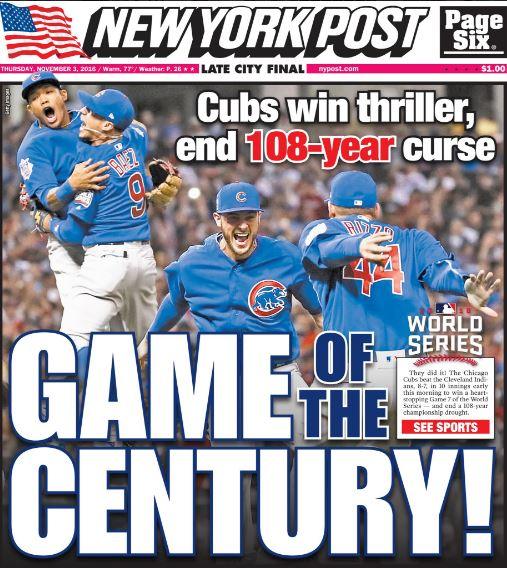
The game was a nail-biter, going into extra innings tied at 6-6. A rain delay in the 17th inning provided a moment of pause, a chance for both teams to regroup, but also for the weight of history to settle even more heavily on the players and fans. Then, in the top of the 10th inning, the Cubs scored two runs, taking a 8-6 lead. In the bottom of the inning, after a tense defensive play, the final out was recorded. The drought was over. The curse was broken. The Chicago Cubs had won the World Series!
The Impact on Chicago and Beyond
The victory sent Chicago into an absolute state of euphoria. Streets that had been packed with anxious fans watching the game on big screens erupted in joyous celebration. Millions poured into the city for a parade and rally that, by many accounts, was one of the largest gatherings in United States history. The sheer scale of the celebration underscored the immense significance of the win for generations who had only known disappointment.
A Tourism Boom and Cultural Phenomenon
The Chicago Cubs victory had a ripple effect that extended far beyond the confines of the baseball field. It ignited a surge in tourism to Chicago, with visitors flocking to experience the revitalized atmosphere around Wrigley Field and the city itself. The team’s historic win became a powerful narrative, attracting new fans and deepening the connection of existing ones.
The triumph also solidified the Cubs and their story as a cultural phenomenon. The narrative of enduring hope, perseverance, and eventual triumph resonated with people from all walks of life. It demonstrated how sports can unite a city, provide a shared identity, and create lasting memories. For those who planned their travel around experiencing this historic moment, or for those who visited Chicago in the aftermath to soak in the celebratory atmosphere, the experience was unforgettable.

Exploring Chicago: More Than Just Baseball
While the Chicago Cubs championship is a central part of the city’s modern identity, Chicago offers a wealth of attractions and experiences that cater to every type of traveler. From its iconic landmarks and world-class museums to its vibrant culinary scene and diverse neighborhoods, the city is a destination in itself, offering something for everyone.
When planning a trip to Chicago, consider the various accommodation options available. Whether you’re looking for a luxurious suite in a downtown hotel, a comfortable apartment for a longer stay, or a resort-style experience, Chicago has it all. The city’s extensive network of hotels caters to all budgets and preferences, offering amenities that enhance any travel experience.
Beyond baseball, Chicago is renowned for its stunning architecture, with tours of the city’s skyscrapers offering breathtaking views and insights into its rich history. Millennium Park, home to the iconic “The Bean” (Cloud Gate), is a must-visit for its public art and green spaces. The Art Institute of Chicago houses an impressive collection of masterpieces, while Navy Pier offers entertainment, dining, and panoramic views of Lake Michigan.
The city’s tourism scene is equally diverse. Explore the diverse culinary landscape, from deep-dish pizza to Michelin-starred restaurants. Immerse yourself in the local culture by attending a blues or jazz performance, catching a show in the renowned theater district, or exploring the unique shops and boutiques in neighborhoods like Lincoln Park or Wicker Park.
For those interested in family trips, Chicago boasts excellent museums like the Field Museum and the Shedd Aquarium, providing educational and entertaining experiences for all ages. The city’s public transportation system makes it easy to navigate between these attractions, ensuring a smooth and enjoyable visit.
Whether you are drawn to Chicago by the legendary story of the Cubs or by its many other world-class offerings, the city promises a memorable and enriching experience. The spirit of victory that permeated Chicago in 2016 continues to be a vibrant part of its identity, making it an even more compelling destination for travel and exploration. The answer to “What year did the Chicago Cubs win the World Series?” is a definitive 2016, a year that forever changed the landscape of baseball and cemented Chicago as a city of enduring champions.
LifeOutOfTheBox is a participant in the Amazon Services LLC Associates Program, an affiliate advertising program designed to provide a means for sites to earn advertising fees by advertising and linking to Amazon.com. Amazon, the Amazon logo, AmazonSupply, and the AmazonSupply logo are trademarks of Amazon.com, Inc. or its affiliates. As an Amazon Associate we earn affiliate commissions from qualifying purchases.