
The answer to when Hawaii officially became a part of the United States as its 50th state is a pivotal moment in both American and Hawaiian history: August 21, 1959. This date marked the culmination of a complex and multifaceted journey, spanning centuries of indigenous rule, foreign influence, political upheaval, and determined advocacy. For many, Hawaii represents the quintessential island paradise, a vibrant mosaic of cultures, stunning natural beauty, and a laid-back lifestyle. Yet, beneath the surface of its idyllic beaches and lush landscapes lies a profound history that shaped not only its identity but also its place on the global stage, profoundly impacting the tourism, lifestyle, and accommodation sectors that thrive there today.
Understanding the significance of 1959 requires a look back at the islands’ rich past, from ancient Polynesian voyagers discovering these volcanic lands to the establishment of a sovereign kingdom, and ultimately, its transformation into an American territory before achieving statehood. This journey is not just a historical timeline; it’s a narrative deeply woven into the fabric of modern Hawaii, influencing everything from its unique cultural attractions and revered landmarks to the very experiences travelers seek when they visit these enchanting islands. For those planning a trip, delving into this history enriches the experience, transforming a simple vacation into a deeper appreciation of a resilient culture and a captivating story of nation-building.
The Road to Statehood: A Storied Past
The path to Hawaii becoming the 50th state was anything but straightforward, marked by distinct eras that shaped its political and social landscape. These periods offer a fascinating glimpse into how a remote island chain, once an independent kingdom, transitioned into a modern American state.
From Ancient Polynesian Kingdom to European Contact
Before any foreign flags were planted, the Hawaiian Islands flourished as a sophisticated Polynesian society. Expert navigators from the Marquesas Islands and later Tahiti first settled Hawaii between 300 and 800 AD, establishing a complex social hierarchy, advanced agricultural practices, and a rich spiritual tradition centered around their gods and reverence for nature. For centuries, these islands developed in isolation, evolving distinct cultural practices, language, and governance.
The first documented European contact occurred in 1778 when British explorer Captain James Cook stumbled upon the archipelago during his third Pacific voyage. He initially named them the “Sandwich Islands” in honor of his patron, the Earl of Sandwich. While his arrival opened Hawaii to the outside world, it also introduced diseases that devastated the indigenous population and marked the beginning of foreign influence that would irrevocably alter the islands’ destiny.
Shortly after Cook’s arrival, a powerful chief named Kamehameha, through a series of strategic alliances and fierce battles, managed to unite all the major Hawaiian Islands under his rule by 1810, establishing the Kingdom of Hawaii. As King Kamehameha I, he skillfully navigated relations with emerging foreign powers, preserving the kingdom’s independence while embracing certain aspects of Western trade and technology. This era saw the rise of Honolulu on Oahu as a vital port city, attracting whalers, traders, and missionaries, further intertwining Hawaii’s fate with the global economy.
Overthrow and Annexation
The 19th century witnessed a gradual increase in American economic and political influence in Hawaii. American missionaries, descendants of early settlers, and businessmen, particularly those involved in the lucrative sugar industry, gained significant power and land ownership. This growing foreign presence created tensions with the Hawaiian monarchy, which sought to maintain its sovereignty and protect the rights of its people.
The climax of these tensions came in 1893 with the overthrow of Queen Liliʻuokalani, the last reigning monarch of the Kingdom of Hawaii. This coup was orchestrated by a group of American and European businessmen and sugar planters, with the support of the United States Minister to Hawaii and a contingent of US Marines. Though initially opposed by President Grover Cleveland, who condemned the overthrow as an illegal act, the provisional government eventually declared the Republic of Hawaii in 1894, led by Sanford B. Dole.
Five years later, amidst rising American imperialism and strategic interests in the Pacific, the United States formally annexed Hawaii in 1898 during the Spanish-American War, transforming it into a US territory. This act, while controversial and never sanctioned by a vote of the Hawaiian people, set the stage for the next six decades of territorial rule, integrating the islands more deeply into the American political and economic system and laying the groundwork for future statehood. This period saw increased investment in infrastructure, the growth of pineapple and sugar plantations, and the development of military installations, all contributing to the islands’ evolving identity.

The Path to the 50th Star
The journey from a US territory to the 50th state was a protracted process, characterized by shifting geopolitical landscapes, dedicated advocacy, and complex debates. It was a testament to the resilience of the Hawaiian people and the strategic importance of the islands.
World War II and its Impact
While the idea of Hawaii statehood had been discussed for decades, it was World War II that dramatically accelerated the conversation and profoundly shifted American public opinion. The devastating attack on Pearl Harbor on Oahu on December 7, 1941, thrust Hawaii into the global spotlight as a critical frontline of American defense. The heroism and sacrifices of the diverse population, including many of Japanese, Chinese, Filipino, and Portuguese descent who fought valiantly for the United States, showcased their unwavering loyalty and commitment to American ideals.
The war effort transformed Hawaii into a vital military hub, bringing immense strategic significance and economic development. Thousands of American servicemen and their families were stationed on the islands, further cementing connections to the mainland. The post-war era saw a growing sentiment that a territory whose people had demonstrated such loyalty and contributed so significantly to the nation’s defense deserved full representation and the rights of statehood. The notion that Hawaii was a foreign and distant land began to dissipate as its strategic value and the patriotism of its residents became undeniable.
Decades of Debate and Advocacy
Even with the momentum from World War II, the path to statehood was fraught with political obstacles and deep-seated prejudices. For decades, various arguments were raised against Hawaiian statehood. Some feared that its non-contiguous location and large non-white population would disrupt the racial and cultural balance of the United States. Others worried about the economic implications, particularly concerning the powerful sugar and pineapple lobbies who benefited from territorial status and cheap labor. There were also concerns about the political leaning of a new state, particularly during the Cold War era.
However, a dedicated movement for statehood, comprising both Hawaiian residents and sympathetic politicians on the mainland, tirelessly advocated for full integration. Local leaders like John A. Burns, who would later become a governor, and congressional delegates championed the cause in Washington D.C. They emphasized Hawaii’s democratic values, economic self-sufficiency, and its strategic importance as a bridge between the United States and Asia. Plebiscites held in Hawaii consistently showed overwhelming support for statehood among its residents, demonstrating a clear desire for equal rights and representation. The eventual admission of Alaska as the 49th state in January 1959, despite its non-contiguous nature, further bolstered the arguments for Hawaii’s inclusion.
The Admission Act of 1959
The persistent efforts of statehood advocates finally bore fruit in 1959. On March 12, 1959, the United States House of Representatives voted overwhelmingly in favor of the Hawaii Admission Act. Just days later, on March 18, 1959, the United States Senate followed suit, passing the bill by a wide margin. The legislation made its way to the desk of President Dwight D. Eisenhower, who, on March 18, 1959, signed the bill into law, officially clearing the path for Hawaii to become a state.
Following the presidential signature, a special election and referendum were held in Hawaii on June 27, 1959. The people of Hawaii voted overwhelmingly in favor of accepting the terms of the Admission Act and embracing statehood, with an astonishing 94.3% in favor. This decisive vote reflected the long-held aspirations of the islanders for full political equality.
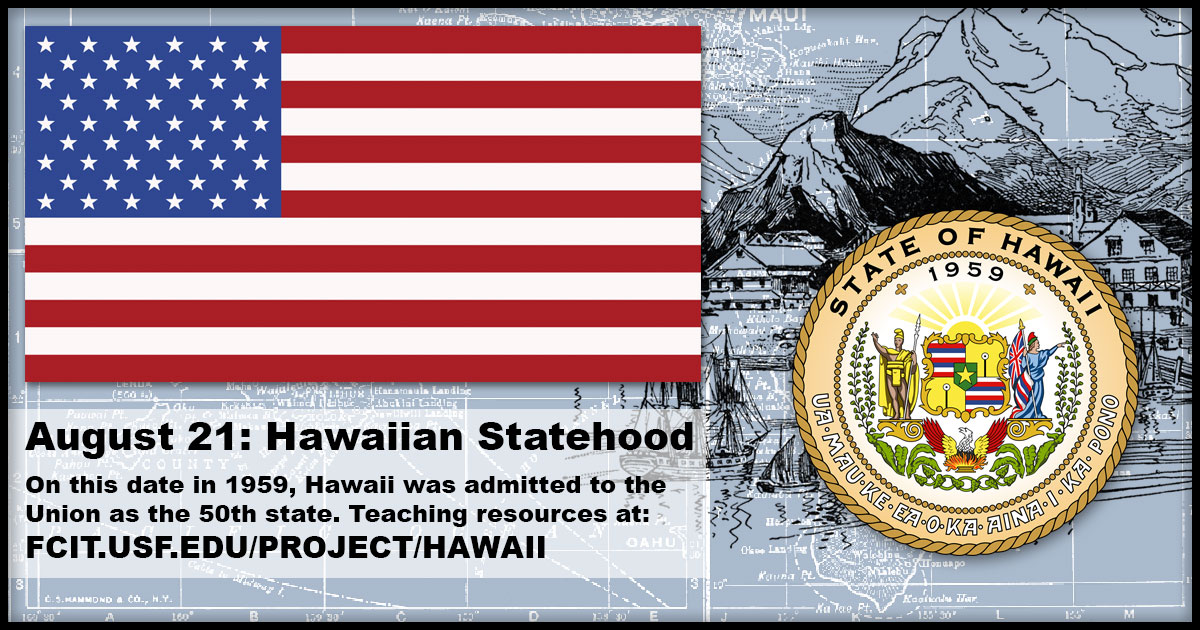
With all conditions met, on August 21, 1959, President Eisenhower issued a formal proclamation announcing Hawaii’s admission into the Union. This momentous day officially transformed the Territory of Hawaii into the State of Hawaii, marking it as the 50th and most recent addition to the United States of America. Celebrations erupted across the islands, signifying not just a political change but the dawn of a new era for its people and its global identity.
Hawaii’s Enduring Legacy: A Modern Paradise
The act of statehood in 1959 was more than a political formality; it was a defining moment that solidified Hawaii’s unique position as a cultural crossroads and a world-renowned destination. Today, the legacy of its journey to statehood is deeply ingrained in its vibrant culture, stunning landmarks, and the diverse travel experiences it offers.
A Mosaic of Cultures and Natural Wonders
Statehood allowed Hawaii to fully embrace and project its distinctive blend of Polynesian, Asian, and American influences to the world. This cultural fusion is evident in everything from its cuisine, which boasts a delicious mix of local ingredients and international flavors, to its languages, including Hawaiian Prizewinning and traditional Hawaiian. This rich tapestry is a significant draw for travelers, offering an immersive cultural experience far beyond typical beach vacations.
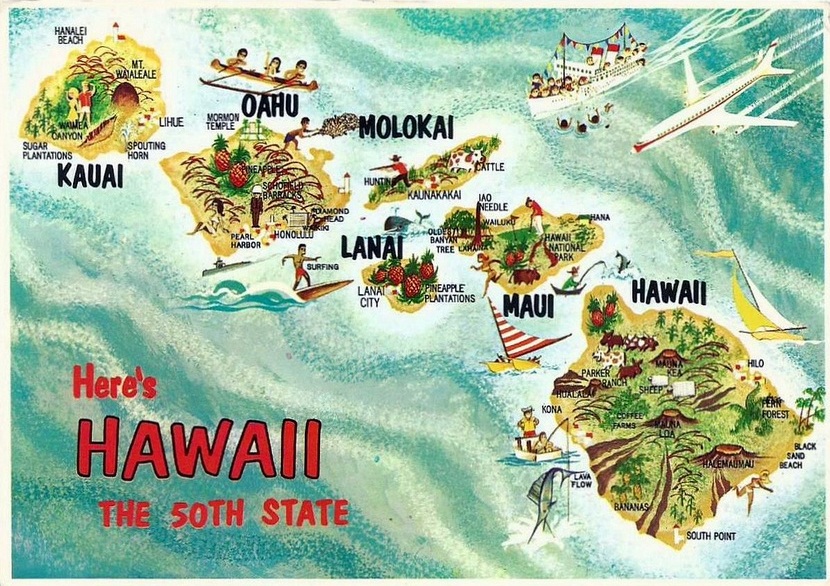
Each of the main islands – Oahu, Maui, Kauai, and Hawaii Island (the Big Island) – offers its own distinct charm and natural wonders. Oahu combines urban sophistication with iconic surf spots like Waikiki Beach and historical sites. Maui is famed for its luxurious resorts, the scenic Road to Hana, and the majestic Haleakalā volcano. Kauai, the “Garden Isle,” captivates with its lush rainforests, dramatic cliffs of the Na Pali Coast, and serene beaches. The Big Island showcases active volcanoes within Volcanoes National Park, diverse climate zones, and black sand beaches. This incredible natural diversity, coupled with a welcoming aloha spirit, positions Hawaii as a premier destination for all types of travelers, from adventure seekers to those looking for tranquil relaxation.
Exploring Historical Landmarks and Cultural Sites
For visitors eager to delve deeper than the surface, Hawaii offers a wealth of historical landmarks and cultural sites that directly reflect its journey to statehood and its enduring legacy. In Honolulu, the ʻIolani Palace stands as the only official residence of a reigning monarch in the United States, a poignant reminder of the Hawaiian Kingdom‘s sovereignty and its eventual overthrow. Tours of the palace offer a profound insight into royal life and the events that led to annexation.
Nearby, the USS Arizona Memorial at Pearl Harbor serves as a solemn tribute to the bravery and sacrifice of those who perished during the 1941 attack. Visiting this landmark is a powerful experience, directly connecting visitors to the pivotal role Hawaii played in World War II and its subsequent push for statehood. On the Big Island, the Puʻuhonua o Hōnaunau National Historical Park preserves an ancient place of refuge, offering a glimpse into traditional Hawaiian law and spirituality before Western contact. These sites, along with numerous museums and cultural centers, provide invaluable context for understanding Hawaii’s complex identity.
Travel and Accommodation Today
Since achieving statehood, Hawaii’s tourism industry has burgeoned, becoming a cornerstone of its economy. The islands now boast a diverse array of accommodation options, catering to every travel style and budget. From ultra-luxury resorts like the Four Seasons Resort Maui at Wailea or the historic The Royal Hawaiian on Waikiki Beach, offering opulent suites and world-class amenities, to charming boutique hotels, family-friendly apartments, and secluded villas, visitors have an unparalleled selection.
Budget-conscious travelers can find comfortable long-term stays or vacation rentals, particularly popular on islands like Kauai and the Big Island where nature activities like hiking and surfing are paramount. Booking platforms and comparison sites make it easy to find the perfect fit, whether it’s a romantic getaway, a family adventure, or a business stay blending work with leisure. The infrastructure developed over decades, enhanced by statehood, ensures seamless travel, from well-connected airports like Daniel K. Inouye International Airport in Honolulu to extensive road networks and inter-island flights. The state’s commitment to preserving its natural beauty and cultural heritage while providing exceptional visitor experiences means that Hawaii continues to evolve as a leading global tourism destination, balancing modern comforts with deep respect for its past.
In conclusion, August 21, 1959, is not merely a date on a calendar; it is the culmination of a compelling narrative that transformed a sovereign kingdom into the vibrant 50th state of the United States. This historical journey has bequeathed Hawaii with a unique identity that captivates millions of travelers each year. From the ancient echoes of Polynesian chants to the solemn reflections at Pearl Harbor, and from the majestic peaks of Haleakalā to the bustling streets of Honolulu, the islands offer an experience rich in history, culture, and unparalleled natural beauty. Understanding this past enhances every aspect of a Hawaiian adventure, making it more than just a trip—it’s an immersion into a living legacy.
LifeOutOfTheBox is a participant in the Amazon Services LLC Associates Program, an affiliate advertising program designed to provide a means for sites to earn advertising fees by advertising and linking to Amazon.com. Amazon, the Amazon logo, AmazonSupply, and the AmazonSupply logo are trademarks of Amazon.com, Inc. or its affiliates. As an Amazon Associate we earn affiliate commissions from qualifying purchases.