
Florida, the Sunshine State, a land synonymous with year-round warmth, palm trees swaying in a gentle breeze, and the inviting allure of its pristine beaches. It’s a destination that conjures images of sun-kissed skin, vibrant theme parks, and leisurely strolls along sun-drenched promenades. For many, the very idea of snow gracing the subtropical landscape of Florida seems as fantastical as a mirage shimmering on a desert highway. Yet, the question, “What year did it snow in Florida?” is not a hypothetical musing; it’s a query rooted in historical fact, a testament to the unexpected and often surprising capriciousness of weather patterns. While a white Christmas in Miami or a snowball fight in Orlando remains firmly in the realm of fantasy, Florida has indeed experienced snowfall, albeit under very specific and remarkable circumstances.
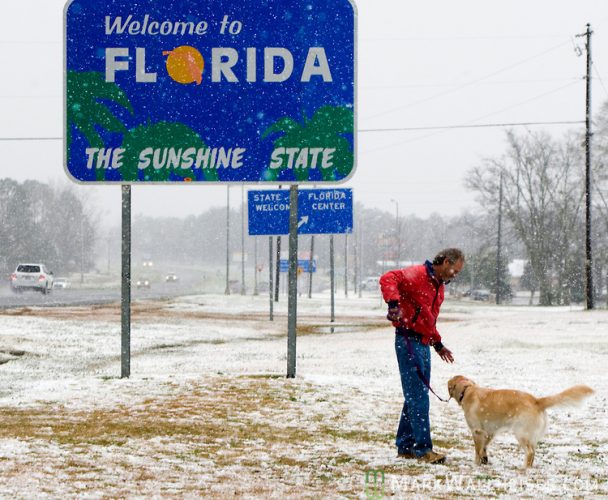
The Sunshine State’s reputation is built on its tropical and subtropical climate, with average temperatures rarely dipping below freezing in most of its populated areas. This makes it a magnet for snowbirds escaping the harsh winters of more northern climes, a prime location for luxury travel and family trips alike. The thought of frost painting the iconic citrus groves or a dusting of white on the beaches of the Gulf Coast is almost incongruous with the established image. However, meteorological records reveal that on a few rare occasions, the frosty fingers of winter have managed to creep south, leaving a temporary, and often fleeting, blanket of snow across parts of Florida. These events are not just curiosities; they offer a fascinating glimpse into the complex atmospheric forces that can influence even the most predictable climates.
The Elusive Snowfall: A Rare Phenomenon in the Sunshine State
When discussing snow in Florida, it’s crucial to distinguish between a light dusting, frost, and significant accumulation. True snowfall, where flakes fall from the sky and accumulate on the ground, is an exceptionally rare event in Florida. More common, particularly in the northern parts of the state, is frost, which can sometimes be mistaken for light snow, especially to the untrained eye or in faded photographs. However, historical accounts and meteorological data confirm that actual snow has fallen on multiple occasions, creating moments of astonishment and unusual beauty across the state.
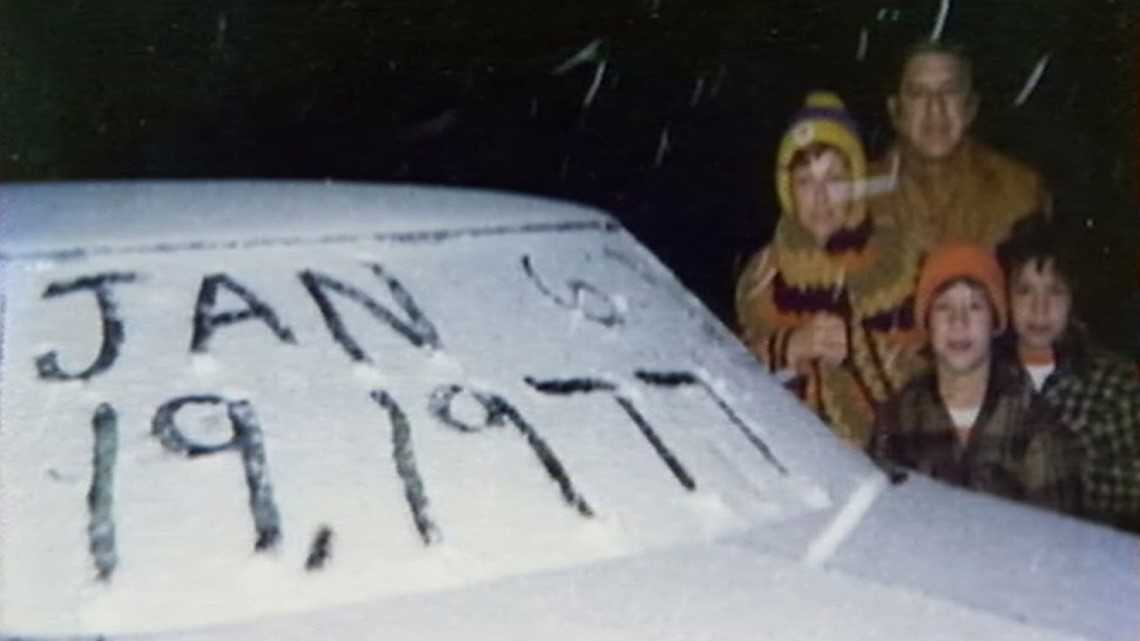
The most widely recognized and significant snowfall event in Florida’s history occurred in January 1977. This was not a localized incident affecting a single city; rather, it was a widespread phenomenon that impacted a considerable portion of the state, from the panhandle down to central Florida. The cold air mass that plunged south was exceptionally potent, interacting with moisture in a way that created the perfect conditions for frozen precipitation.
The Great Snow Event of 1977: A State Transformed
The winter of 1977 brought a historic cold snap to the United States, and Florida was not immune. On January 19, 1977, a dramatic shift in weather patterns brought an Arctic air mass far south of its usual territory. This cold front, combined with ample moisture, led to a day that many Floridians would never forget. Snowflakes, a sight usually reserved for postcards from distant, colder lands, were observed falling across a vast swathe of Florida.
In the western panhandle, cities like Pensacola experienced several inches of snow, leading to widespread disruption and, for many residents, a first-ever encounter with the fluffy white substance. Mobile homes were briefly dusted, and the usually vibrant streets of Pensacola took on a surreal, wintery appearance. Further inland, the snow reached as far south as the Ocala National Forest and even parts of the Tampa Bay area. While the accumulation in these more southerly regions was generally light, often just a dusting that melted quickly, the very fact of snow falling was enough to cause immense excitement and disbelief. Children, accustomed to the warmth of Florida, had the unique experience of building rudimentary snowmen or engaging in brief, impromptu snowball fights.
The impact on daily life was significant. Schools were closed in many areas, and traffic disruptions were common as drivers, unaccustomed to icy roads, navigated the unusual conditions. The local news channels were filled with images of snow-covered landscapes, a stark contrast to the typical Florida scenes of sunbathers and beachgoers. This event quickly became a legend, a topic of conversation that continues to be shared by those who witnessed it and passed down through generations. It challenged the very identity of Florida as a perpetually warm paradise.
Other Notable Occurrences and Microclimates
While the 1977 snowfall is the most prominent, Florida’s weather history includes other instances of snow or sleet, particularly in its northern regions. These events, though perhaps less widespread or significant, further underscore the possibility of winter’s reach extending into the Sunshine State. Understanding these occurrences also sheds light on the microclimates and specific meteorological conditions that can precipitate such anomalies.
The 2018 Snow Scare and Historical Precedents
More recently, in January 2018, parts of Florida experienced a different kind of winter phenomenon: a significant cold snap that brought frost and even some isolated reports of sleet and light snow flurries. While not as substantial as the 1977 event, it was enough to generate considerable excitement and media attention. Areas in the panhandle, including cities like Tallahassee, reported light accumulations of snow, causing minor traffic issues and a flurry of social media activity showcasing the unusual sights.
This 2018 event, while notable, was a reminder of colder periods in Florida’s past. Historical records, though sometimes less precise than modern meteorological data, indicate other periods of cold and frozen precipitation. For example, in February 1899, a severe cold wave hit the United States, and Florida experienced snow as far south as the coast of South Carolina and parts of inland Florida. The exact extent and accumulation in Florida during this 1899 event are less well-documented than the 1977 occurrence, but it is acknowledged as another instance where winter’s grip tightened on the state.
The northern regions of Florida, particularly the panhandle, are more susceptible to colder weather due to their higher latitude and proximity to the Gulf of Mexico, which can sometimes act as a conduit for cold air masses from the north. Cities like Tallahassee and those in its vicinity are more likely to experience temperatures cold enough for snow or sleet during severe winter weather outbreaks. These areas, while still far from being typical winter wonderlands, are the most probable locations for such rare meteorological events. Even in these regions, a significant accumulation of snow is an extraordinary occurrence, typically lasting only a few hours before melting under the returning sun.
Factors Contributing to Florida’s Rare Snowfall
The presence of snow in Florida, however infrequent, is a result of a complex interplay of atmospheric conditions. It requires a specific alignment of a potent cold air mass, sufficient atmospheric moisture, and temperatures at or below freezing throughout the lower atmosphere. For a destination known for its balmy weather, these conditions are, by definition, rare.

The Convergence of Cold Air and Moisture
The primary ingredient for snowfall is, of course, cold air. For Florida, this means an unusually strong surge of frigid air originating from the Arctic or Canada. These cold fronts typically move southeastward across the continent. When these air masses dip far enough south to influence Florida, they bring with them temperatures that can be conducive to frozen precipitation.
However, cold air alone is not enough. Snowfall also requires moisture. This moisture can come from various sources, such as departing low-pressure systems or the movement of the Gulf of Mexico itself. When a cold air mass meets a moisture-laden air stream, the conditions are ripe for precipitation. If the temperature at the cloud level and all the way down to the ground is at or below freezing (32 degrees Fahrenheit or 0 degrees Celsius), any precipitation that forms will be in the form of snow.
The geographical location of Florida plays a crucial role in the rarity of these events. The state’s southernmost position in the continental United States generally shields it from the most severe winter weather. The warm waters of the Atlantic Ocean and the Gulf of Mexico also tend to moderate temperatures. Nevertheless, during periods of extreme cold, these moderating influences are overwhelmed. The precise interaction of the cold air, the moisture plume, and the atmospheric temperature profile determines whether the precipitation falls as rain, sleet, or snow, and how much accumulation, if any, occurs. For Florida, the stars must truly align for the magic of snow to appear. This makes those rare snowy days not just meteorological curiosities, but truly unforgettable experiences for those fortunate enough to witness them.
LifeOutOfTheBox is a participant in the Amazon Services LLC Associates Program, an affiliate advertising program designed to provide a means for sites to earn advertising fees by advertising and linking to Amazon.com. Amazon, the Amazon logo, AmazonSupply, and the AmazonSupply logo are trademarks of Amazon.com, Inc. or its affiliates. As an Amazon Associate we earn affiliate commissions from qualifying purchases.