
The Lone Star State’s journey to statehood is a pivotal chapter in American history, marked by a unique path to joining the Union. Understanding when Texas officially became a part of the United States provides crucial context for appreciating its distinct culture, its monumental landscapes, and its enduring legacy within the nation. This integration was not a simple accession but a complex process involving a former republic’s ambition, American political considerations, and the evolving dynamics of expansion.
The Republic of Texas and Its Aspirations
Before its annexation, Texas existed as an independent nation, the Republic of Texas. Following its decisive victory at the Battle of San Jacinto in 1836, which secured its independence from Mexico, Texas began to explore its options for the future. The dream of joining the United States was a strong undercurrent from the very beginning of the republic. Many Texians, as they were known, felt a strong cultural and political kinship with their neighbors to the east. They saw annexation as a way to achieve greater security, economic stability, and a more prominent standing on the international stage.
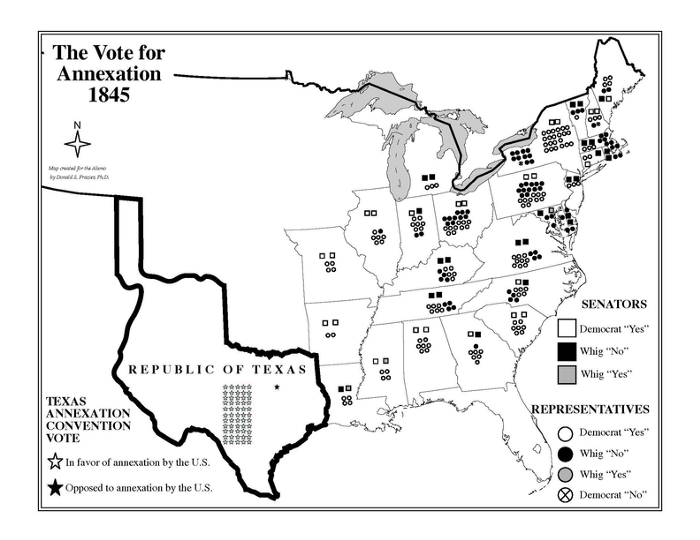
However, the path to annexation was far from straightforward. The United States was deeply divided over the issue of slavery. Texas, as a slave-holding republic, presented a significant complication. Admitting Texas would inevitably tip the balance of power between free and slave states in the Senate, a concern that fueled intense debate and opposition within the United States.
Early Attempts at Annexation
Initial overtures for annexation were made shortly after Texas gained independence. President Andrew Jackson, while personally in favor, was hesitant to push the issue due to the looming presidential election and the prevailing anti-slavery sentiment. His successor, President Martin Van Buren, also deferred the matter, prioritizing Texas‘s recognition as an independent nation over immediate annexation.
The presidency of John Tyler, however, saw a renewed push. Tyler, a staunch advocate for expansion, believed that annexing Texas was vital for the nation’s growth and security. He saw it as a way to counter potential British influence in the region and to secure vast territories for future American settlement. Despite facing considerable opposition and political maneuvering, Tyler’s administration continued to pursue annexation, laying crucial groundwork for future negotiations.
The Road to Statehood: 1845
The pivotal year for Texas‘s integration into the United States was 1845. Following a contentious election cycle in the United States that saw the election of James K. Polk, a fervent expansionist, the political climate shifted decisively in favor of annexation. Polk’s victory was widely interpreted as a mandate for territorial expansion, often referred to as “Manifest Destiny.”
On March 1, 1845, President John Tyler signed a joint resolution of Congress offering annexation terms to Texas. This resolution proposed admitting Texas as a territory, with the option to apply for statehood once its population reached the required threshold. The terms were generous, allowing Texas to retain its public lands and to divide itself into as many as four new states, all with the approval of the United States Congress. This provision was particularly appealing to Texians, as it offered the prospect of increased representation and further development.
Texas’s Acceptance and Final Steps
The Republic of Texas formally accepted the annexation offer on July 4, 1845, at a convention held in Austin, its capital. This momentous decision marked the end of Texas as an independent nation and the beginning of its transformation into an American state. The process, however, required final ratification by both the United States Congress and the Texas legislature.
The United States Congress officially approved the annexation, and on December 29, 1845, President James K. Polk signed the Texas Admission Act. This act formally declared Texas to be the 28th state admitted into the Union. While the legal act was completed in December 1845, Texas officially became a state on February 19, 1846, when the transfer of power from the Republic of Texas to the state government was consummated. Therefore, the most accurate answer to the question of when Texas joined the United States is 1845, with the official admission date being December 29, 1845, though the operational transition occurred in early 1846.

The Aftermath of Annexation
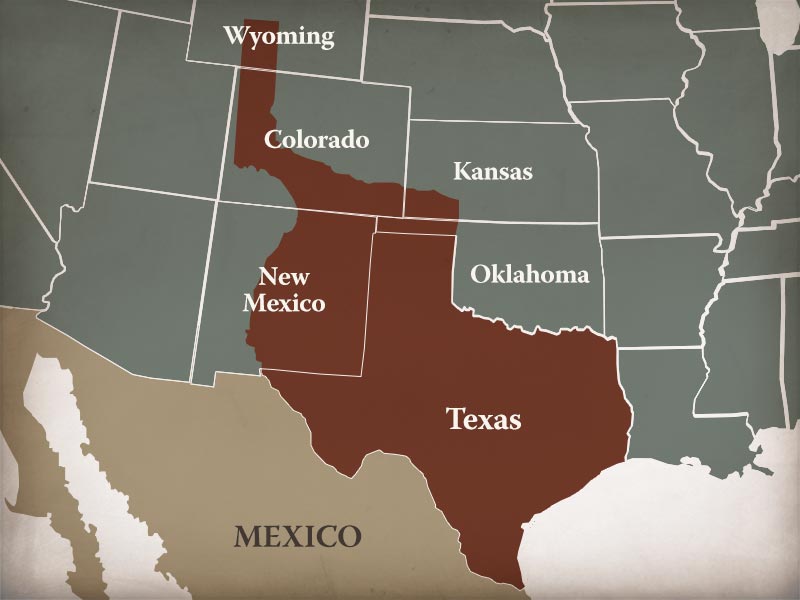
The annexation of Texas was not without its consequences. Mexico, which had never fully relinquished its claim to Texas after its independence, viewed the annexation as an act of aggression. This dispute over the southern border of Texas ultimately led to the Mexican-American War, which began in April 1846. The war resulted in a decisive United States victory and the cession of vast territories from Mexico to the United States, including present-day California, Nevada, Utah, Arizona, New Mexico, and parts of Colorado and Wyoming.
The admission of Texas as a slave state continued to exacerbate tensions over slavery in the United States, a contributing factor to the eventual outbreak of the Civil War. Despite these complex historical ramifications, Texas‘s entry into the Union fundamentally reshaped the American map and its trajectory, cementing its place as a cornerstone of the nation’s westward expansion and its diverse cultural fabric. The story of its joining is a testament to the ambition, negotiation, and conflict that defined an era of American nation-building, leaving an indelible mark on the identity of both Texas and the United States.
LifeOutOfTheBox is a participant in the Amazon Services LLC Associates Program, an affiliate advertising program designed to provide a means for sites to earn advertising fees by advertising and linking to Amazon.com. Amazon, the Amazon logo, AmazonSupply, and the AmazonSupply logo are trademarks of Amazon.com, Inc. or its affiliates. As an Amazon Associate we earn affiliate commissions from qualifying purchases.