
The first World’s Fair held in Chicago, a monumental event that captivated the nation and the world, opened its gates in 1893. Officially known as the World’s Columbian Exposition, this grand spectacle commemorated the 400th anniversary of Christopher Columbus’s arrival in the Americas, though it was delayed by one year due to extensive preparation requirements. This exposition was not merely a showcase of industrial prowess or cultural artifacts; it was a profound statement of America’s coming-of-age, transforming the very fabric of Chicago and leaving an indelible mark on art, architecture, technology, and urban planning.
A Centennial Celebration, Grandly Delayed
The decision to host a world’s fair celebrating Columbus’s journey was met with intense competition among several American cities, with Chicago ultimately winning the bid over rivals like New York, Washington D.C., and St. Louis. The choice of Chicago was significant; just two decades prior, the city had been devastated by the Great Chicago Fire of 1871. Its rapid and ambitious rebuilding served as a powerful testament to American resilience and dynamism, making it an ideal canvas for projecting a vision of national progress and opportunity to a global audience.
The original target year for the exposition was 1892, to align precisely with the quincentennial of Columbus’s voyage. However, the sheer scale and complexity of the proposed undertaking necessitated an extension. Organizing an event that would cover 690 acres in Jackson Park on Chicago’s South Side, erect dozens of grand buildings, and coordinate exhibits from countless nations proved to be an engineering and logistical challenge of unprecedented proportions. The delay was ultimately a blessing, allowing the organizers to achieve a level of grandeur and detail that might not have been possible otherwise. When the fair finally opened on May 1, 1893, it was a triumph, drawing over 27 million visitors during its six-month run—a staggering number considering the population and travel capabilities of the era.
The Birth of the “White City”: Architectural Vision and Urban Planning
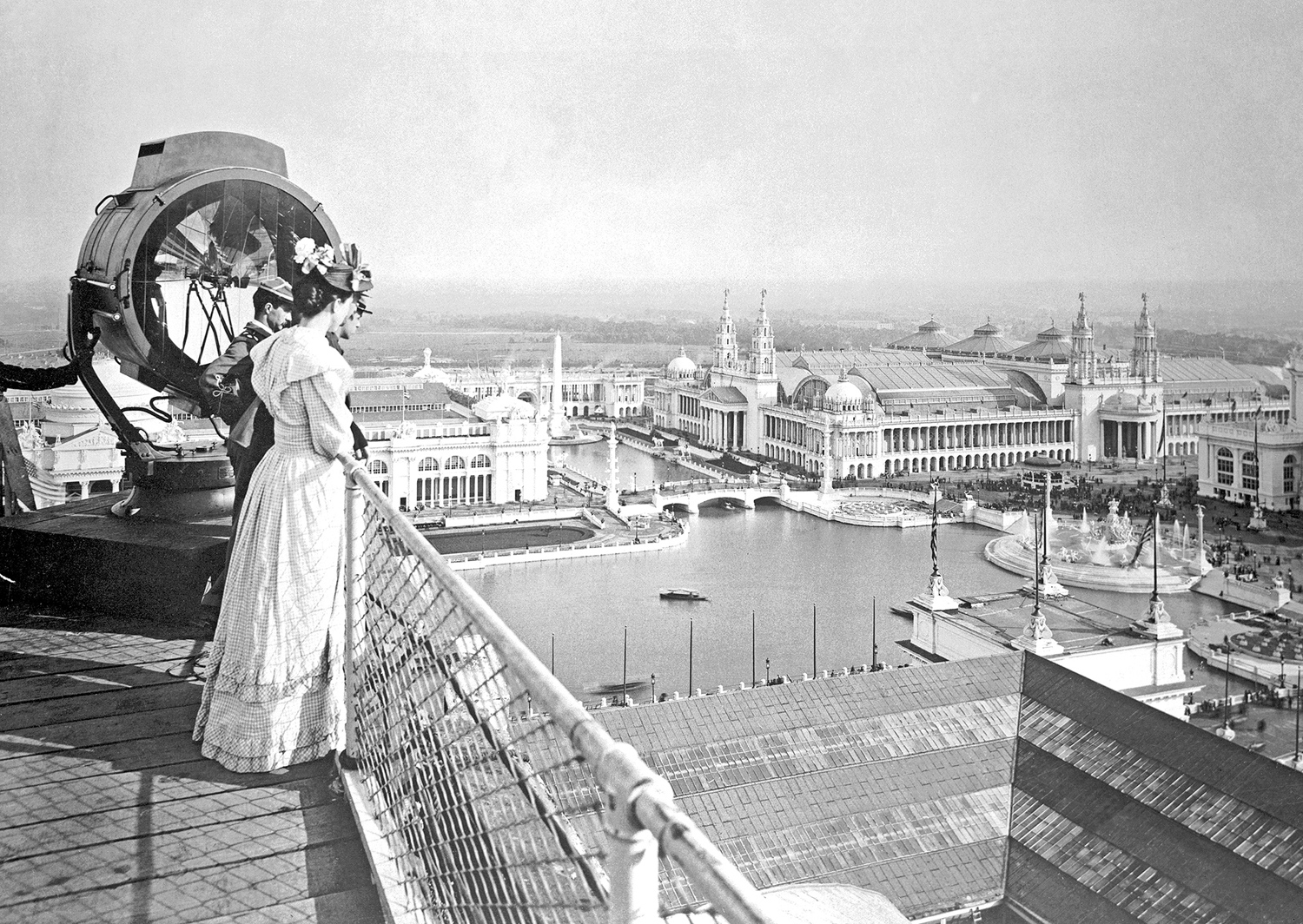
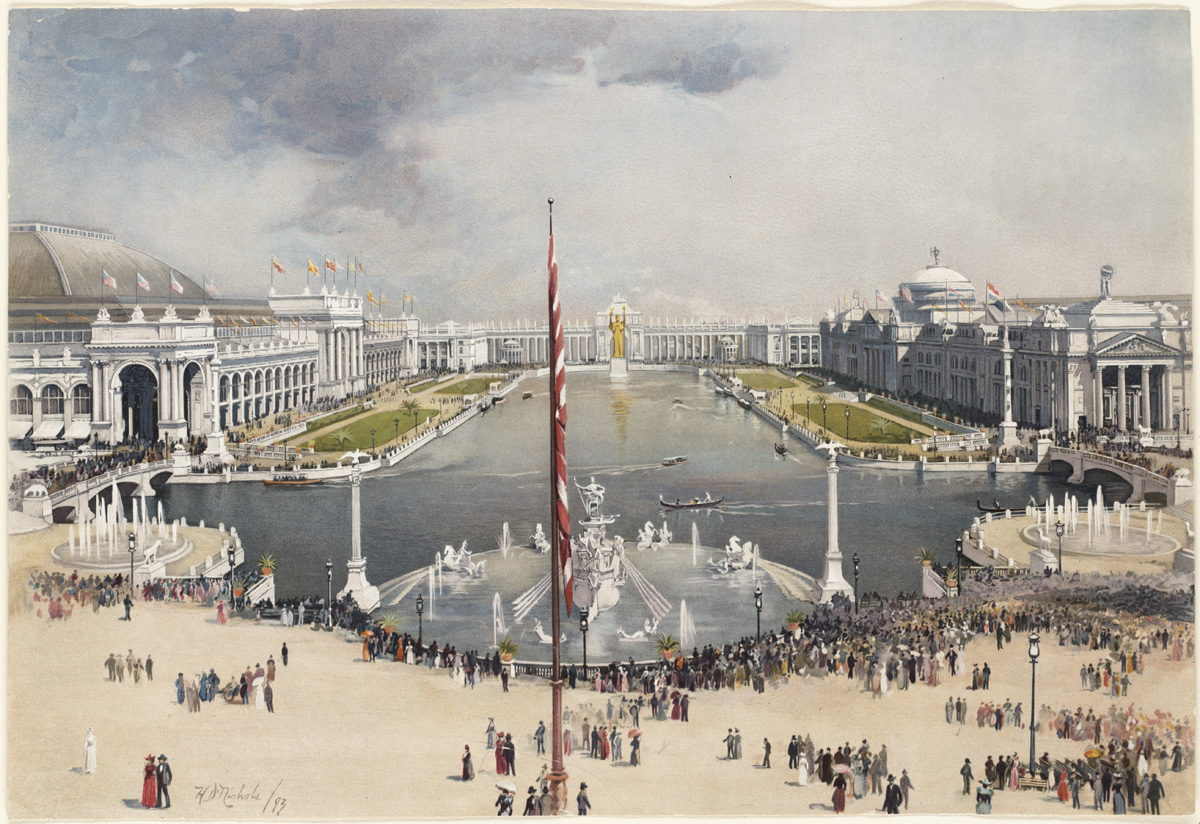
Perhaps the most enduring legacy of the World’s Columbian Exposition was its transformative architectural and urban design, earning it the moniker “The White City.” Spearheaded by the visionary director of works, Daniel Burnham, and landscape architect Frederick Law Olmsted (renowned for designing New York’s Central Park), the fairgrounds were conceived as a harmonized, ideal city.
Neoclassical Grandeur and Innovative Materials
The principal buildings, designed by some of the era’s most prominent architects including Richard Morris Hunt, Charles Follen McKim, and Louis Sullivan, were predominantly neoclassical in style, inspired by ancient Greek and Roman architecture. Their imposing facades, adorned with elaborate sculptures and grand colonnades, were constructed primarily from a material called “staff,” a mixture of plaster, cement, and jute fiber. This innovative material allowed for intricate ornamentation and gave the structures a brilliant white appearance, especially when illuminated at night.
The visual unity and majestic scale of the White City were breathtaking. Buildings like the magnificent Administration Building, with its towering dome, or the vast Manufactures and Liberal Arts Building, which covered 30 acres, redefined the limits of temporary construction. The fairgrounds were meticulously laid out with broad avenues, lagoons, and meticulously planned green spaces, a stark contrast to the often chaotic and unplanned urban environments of the time.
The Influence of the City Beautiful Movement
The aesthetic success of the White City profoundly influenced the City Beautiful movement in American urban planning. Architects and city planners were inspired by the exposition’s emphasis on monumental classical architecture, orderly public spaces, and the integration of art into the urban fabric. Although the White City itself was largely temporary (most buildings were demolished after the fair), its ideals shaped the development of civic centers, parks, and boulevards in cities across the United States for decades to come. The lasting exception was the Palace of Fine Arts, which was later rebuilt in stone and now houses the Museum of Science and Industry.
A Showcase of American Innovation and Global Culture
Beyond its architectural splendor, the World’s Columbian Exposition was a grand stage for technological innovation, artistic achievement, and cultural exchange. It presented an unparalleled snapshot of the late 19th-century world.

Technological Marvels: Electricity and the Ferris Wheel
The fair was a beacon of the burgeoning Second Industrial Revolution. Electricity, still a relatively new technology, played a starring role. George Westinghouse famously won the contract to light the fair using alternating current (AC) technology, outbidding Thomas Edison’s direct current (DC) system. The sight of the White City aglow at night, with over 100,000 incandescent lamps, was a mesmerizing spectacle that showcased the transformative power of electricity to millions, profoundly influencing public perception and accelerating its adoption. The exposition also featured the revolutionary work of Nikola Tesla, who demonstrated his AC power system, including fluorescent lights and remote control boats.
Perhaps the most popular and iconic mechanical marvel of the fair was the original Ferris Wheel, designed by engineer George Washington Gale Ferris Jr.. Standing 264 feet tall, it dwarfed its Parisian predecessor, the Eiffel Tower (from the 1889 Paris Exposition), and offered visitors unparalleled panoramic views of the fairgrounds. It symbolized American ingenuity and daring, quickly becoming a defining feature of world’s fairs and amusement parks thereafter.
Cultural Exhibits and the Midway Plaisance
The fair also presented a vast array of cultural exhibits from nations around the globe, displaying their art, crafts, and ways of life. While many of these displays, particularly those concerning non-Western cultures, reflected the colonial attitudes of the era, they nonetheless exposed American visitors to diverse traditions and peoples.
Complementing the serious educational exhibits was the Midway Plaisance, an expansive area dedicated to entertainment, concessions, and ethnographic displays. Here, visitors could experience everything from the novel Ferris Wheel to various “villages” showcasing different cultures, often in sensationalized ways. The Midway Plaisance established a template for amusement parks and popular entertainment venues that would evolve into the 20th century.
The Lasting Legacy of the 1893 Fair
The World’s Columbian Exposition had a profound and multifaceted impact that resonated far beyond its six-month duration. It solidified Chicago’s position as a major global city, demonstrating its capacity for grand ambition and effective execution.
Institutional Foundations and Urban Development
While most of the White City’s structures were temporary, the fair catalyzed the creation of several permanent institutions. The art collections exhibited during the fair eventually contributed to the founding of the Art Institute of Chicago. More directly, the anthropological and biological specimens collected for the fair formed the basis for the Columbian Museum of Chicago, which later became the world-renowned Field Museum. The enduring Museum of Science and Industry, as mentioned, stands in the former Palace of Fine Arts.
The fair’s legacy in urban planning was immense. Daniel Burnham’s vision for the White City served as a practical demonstration of comprehensive city planning, influencing his later work on the seminal 1909 Plan of Chicago, which laid out the blueprint for the modern city. The development of Jackson Park as a major recreational area was also a direct outcome.
Cultural and Economic Shifts
Economically, the fair was a massive stimulus for Chicago and the nation, boosting tourism, trade, and investment. Culturally, it marked a turning point, exposing millions to new technologies, art forms, and global perspectives. It fostered a sense of national pride and demonstrated America’s growing industrial and cultural prowess on the international stage.
The World’s Columbian Exposition of 1893 was more than just an exhibition; it was a grand experiment in idealism, a blueprint for future cities, and a powerful symbol of progress at the dawn of a new century. Its influence permeated architecture, technology, and popular culture, fundamentally shaping the understanding of what a city could be and what a nation could achieve.
LifeOutOfTheBox is a participant in the Amazon Services LLC Associates Program, an affiliate advertising program designed to provide a means for sites to earn advertising fees by advertising and linking to Amazon.com. Amazon, the Amazon logo, AmazonSupply, and the AmazonSupply logo are trademarks of Amazon.com, Inc. or its affiliates. As an Amazon Associate we earn affiliate commissions from qualifying purchases.