
The California Gold Rush, an event that indelibly shaped the course of American history and transformed a nascent territory into a powerhouse state, officially began in 1848. However, the year most synonymous with the dramatic influx of fortune-seekers from around the globe is 1849, which gave rise to the iconic term “Forty-Niners“. This pivotal period unleashed an unparalleled mass migration, turning the quiet landscapes of California into a bustling crucible of ambition, innovation, and immense social change. From its humble origins with the glint of gold in a stream bed, the Gold Rush rapidly escalated into a global phenomenon, drawing adventurers, entrepreneurs, and dreamers to what would soon become known as the Golden State. For anyone exploring the rich tapestry of California’s past and present, understanding the origins and impact of the Gold Rush is essential, offering insights into its unique culture, its iconic landmarks, and its enduring spirit of opportunity that continues to captivate travelers and residents alike.

The Dawn of a Golden Age: Discovery and Initial Impact
The story of the California Gold Rush is often recounted with an almost mythical quality, a testament to the profound effect it had on the collective imagination. It all began not with a grand expedition, but with a chance discovery that would set in motion one of the largest migrations in human history.
The Spark: James W. Marshall at Sutter’s Mill
The fateful moment occurred on January 24, 1848. A carpenter named James W. Marshall was overseeing the construction of a sawmill for his employer, John Sutter, along the American River near present-day Coloma. As he inspected the tailrace, a channel used to carry water away from the mill wheel, something caught his eye: a few shiny flakes at the bottom of the stream. Initially skeptical, Marshall performed some tests, confirming that the glistening specks were, indeed, gold.
John Sutter, a Swiss pioneer who had established a vast agricultural and trading empire in the Sacramento Valley, initially tried to keep the discovery quiet. He feared that a gold rush would disrupt his agricultural operations and lead to the collapse of his carefully built domain. His concerns were well-founded; the news, however, proved impossible to contain. Word trickled out, slowly at first, but with increasing momentum. Sam Brannan, a shrewd merchant and newspaper publisher in San Francisco, played a crucial role in publicizing the find. In May 1848, he famously paraded through the streets of San Francisco with a vial of gold dust, shouting, “Gold! Gold! Gold from the American River!” This dramatic announcement ignited the fever.
Local farmers, merchants, and soldiers abandoned their posts and flocked to the goldfields. The small communities around Sutter’s Mill quickly transformed into bustling, chaotic hubs. By the summer of 1848, thousands were already engaged in panning and digging, and the initial, relatively easy-to-find placer gold yielded considerable fortunes for some. The early days of the rush were predominantly a local affair, with most of the miners coming from within California or nearby territories. However, this was merely the prelude to the global deluge that was about to descend.
From Ripple to Roar: The Forty-Niners and the Mass Migration
The year 1849 marked the true commencement of the international gold rush. News of the discovery, initially met with skepticism in distant lands, gained undeniable credibility with official reports from California, including President James K. Polk’s affirmation in his December 1848 address to Congress. This confirmation acted as a global clarion call, triggering a mass migration on an unprecedented scale. People from every corner of the world—referred to collectively as the “Forty-Niners”—began their arduous journeys to California in pursuit of wealth.
The routes to California were varied and perilous. Thousands opted for the overland journey, primarily via the Oregon Trail and later the California Trail, traversing vast plains, rugged mountains, and unforgiving deserts. This trek, often taking five to six months, was fraught with danger from disease, starvation, and conflicts. Another popular route involved a sea voyage to Panama, an overland crossing of the Isthmus, and then another ship up the Pacific coast to San Francisco. While shorter, this route was often plagued by disease, especially cholera and malaria, in the tropical climate. The longest but safest route involved sailing around Cape Horn at the southern tip of South America, a journey that could last six to eight months but offered fewer immediate dangers from the elements or hostile encounters.
The migrants came from incredibly diverse backgrounds. Tens of thousands arrived from the eastern United States, but significant numbers also hailed from Europe (especially France, Germany, and the British Isles), Asia (predominantly China), Latin America (particularly Mexico and Chile), and even Australia. Each group brought their own cultures, languages, and skills, creating a vibrant, albeit often tumultuous, melting pot. This unprecedented surge of population transformed California almost overnight, laying the foundation for its future as a diverse and dynamic state. The lure of gold, the promise of a new life, and the thrill of adventure spurred these migrations, forever linking the year 1849 with the romantic and rugged spirit of the Gold Rush.
The Transformation of California: From Wilderness to Golden State
Before 1848, California was a sparsely populated frontier, recently acquired by the United States from Mexico. The Gold Rush dramatically accelerated its development, transforming it from a remote territory into a bustling hub of commerce and population, ultimately paving the way for its statehood.
Boomtowns and the Birth of Cities
The arrival of tens of thousands of prospectors necessitated the rapid establishment of infrastructure and services. Mining camps sprang up wherever gold was discovered, evolving into makeshift towns overnight. These “boomtowns,” characterized by their transient populations, rudimentary structures, and often lawless atmosphere, became the epicenter of daily life for many miners. Places like Columbia, Sonora, and Nevada City exploded in size, offering supplies, entertainment, and a semblance of community. However, just as quickly as they emerged, many of these boomtowns faded into ghost towns once the gold dried up or was exhausted, leaving behind fascinating historical remnants that draw travelers to explore California’s rich past.
More significantly, the Gold Rush spurred the phenomenal growth of existing settlements and the creation of major cities. San Francisco, once a small village known as Yerba Buena, became the primary port of entry for gold seekers and supplies. Its population skyrocketed from around 1,000 in 1848 to over 25,000 by 1850. The city became a bustling, chaotic nexus of international trade, banking, and cultural exchange. Similarly, Sacramento, strategically located at the confluence of the American River and the Sacramento River, served as a vital supply hub for the northern mines. Its growth was equally explosive, fueled by the constant flow of goods and people to the goldfields. These cities, along with others like Stockton, laid the groundwork for modern California’s urban landscape, boasting a unique blend of historical charm and contemporary vibrancy that makes them popular travel destinations today.
Economic and Social Upheaval
The economic impact of the Gold Rush was immediate and profound. Gold extraction fueled rapid economic expansion, but it also created extreme inflation. The cost of living in California soared, with basic goods and services costing many times more than in the eastern United States. While some found immense wealth, many others struggled to break even, and the true fortunes were often made not by digging for gold, but by providing goods and services to the miners—merchants, hoteliers, teamsters, and bankers flourished. The Gold Rush laid the foundation for California’s diverse economy, shifting it from a primarily agricultural base to one encompassing mining, commerce, and finance.
Socially, the Gold Rush was a period of both opportunity and immense challenge. The influx of diverse populations led to cultural clashes, discrimination, and violence, particularly against Native American populations, Chinese immigrants, and Latin Americans. The legal framework was often chaotic or non-existent, leading to vigilante justice in many areas. Despite these hardships, the Gold Rush also fostered a unique spirit of enterprise and innovation. Many who failed to strike it rich in the mines turned their hands to other ventures, contributing to the development of agriculture, transportation, and industries that would sustain [California](https://lifeoutofthebox.com/california] long after the gold was gone.

Perhaps the most significant political outcome of the Gold Rush was California’s rapid admission to the Union as a state. With its population exploding and a fully functional economy developing, it was clear California could no longer remain a mere territory. In 1850, as part of the Compromise of 1850, California officially became the 31st state. This expedited statehood was a direct consequence of the immense changes brought about by the Gold Rush, solidifying its place in the political landscape of the United States and setting it on a trajectory of unparalleled growth and influence.
Life in the Goldfields: Challenges and Fortunes
The image of a lone prospector panning for gold in a pristine stream is iconic, but the reality of life in the California goldfields was often far harsher, more communal, and infinitely more complex than romanticized portrayals suggest. It was a crucible where hope and despair, hard labor and fleeting luck, constantly intertwined.
The Quest for Gold: Methods and Daily Life
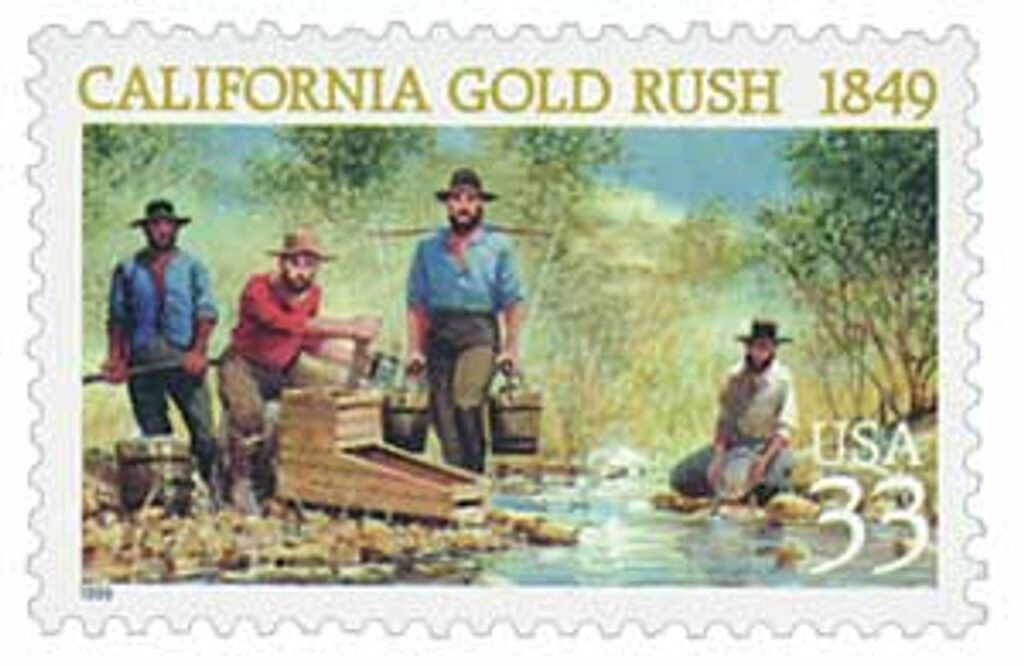
In the initial phase of the Gold Rush, particularly in 1848 and early 1849, the most common method of gold extraction was placer mining. This involved techniques such as panning, where miners swirled gravel and water in a pan to separate heavier gold from lighter sediment. As the rush progressed and the easily accessible surface gold diminished, more sophisticated (and often cooperative) methods emerged. These included using rocker boxes (cradles), long toms, and sluice boxes, which processed larger quantities of gravel more efficiently. These methods required more capital and labor, leading to the formation of mining companies and partnerships.
Later, as the surface deposits dwindled, miners turned to hydraulic mining, which used powerful jets of water to wash away entire hillsides, and quartz mining, involving tunneling deep underground to extract gold-bearing veins from hard rock. These industrial-scale operations required significant investment and expertise, marking a shift from individual prospectors to corporate ventures.
Daily life in the goldfields was arduous and often monotonous, punctuated by moments of excitement or crushing disappointment. Miners typically rose at dawn, worked long hours under the sun or in dark, damp tunnels, and retired exhausted. Camps were often overcrowded and unsanitary, leading to widespread disease like cholera, dysentery, and scurvy. Accidents were common, and medical care was scarce. Food was expensive and often poor quality. Despite the hardships, a strong sense of camaraderie often developed among miners, though this could quickly dissipate when tensions over claims or scarce resources arose. For many, the dream of striking it rich was the only thing that kept them going, a powerful allure that continues to resonate with the adventurous spirit of modern travelers exploring these historic sites.
A Diverse Melting Pot and Emerging Culture
The goldfields were a true melting pot of cultures, attracting people from nearly every continent. This unprecedented diversity led to a vibrant, albeit sometimes volatile, social landscape. Languages, customs, and culinary traditions mixed in fascinating ways. Communities formed around ethnic lines, offering support and familiarity in a foreign land. Chinese miners, for example, brought innovative mining techniques and established Chinatowns in many burgeoning towns, contributing significantly to the Gold Rush economy and culture. Latin Americans, with their prior experience in mining, also played a crucial role, introducing new methods and skills.
This cultural exchange wasn’t always harmonious. Discrimination and prejudice were rampant, and tensions often erupted into conflict. Laws were frequently unevenly applied or specifically targeted certain ethnic groups. Despite these challenges, the spirit of entrepreneurship thrived. Many individuals, realizing that the real money was often in providing services rather than digging for gold, opened stores, saloons, laundries, hotels, and restaurants. Women, though a minority in the early days, played a critical role, often running boarding houses, businesses, and contributing to the social fabric of the camps. The unique, rugged culture that emerged from the goldfields laid the foundation for much of what defines California today: a spirit of innovation, an embrace of diversity, and a relentless pursuit of opportunity. This rich cultural heritage is a key aspect of California tourism, with many visitors keen to experience the echoes of this formative era.
The End of an Era and Enduring Legacy
The initial frenzy of the Gold Rush was a fleeting phenomenon, yet its impact reverberated through generations, shaping the very identity of California and leaving an indelible mark on its landscape, economy, and culture.
The Decline of the Rush and Shifting Fortunes
The peak of the California Gold Rush occurred around 1852, a period during which the annual yield of gold reached its zenith. However, the nature of mining had already begun to shift dramatically. The easily accessible placer gold—the flakes and nuggets found in riverbeds and shallow deposits—became increasingly scarce. This depletion forced miners to either abandon their claims or adopt more capital-intensive and technologically advanced methods, such as hydraulic mining and deep quartz mining. These techniques required heavy machinery, significant investment, and organized labor, effectively moving gold extraction from the realm of the independent prospector to that of large corporations.
By the mid-1850s, the “rush” aspect of the Gold Rush was largely over. While gold mining continued for decades, it became a stable, industrialized industry rather than a wild scramble for instant riches. Many who had flocked to California in search of gold found themselves with empty pockets, but unwilling to return home. They pivoted to other emerging industries, laying the groundwork for California’s future economic diversity. Agriculture flourished, as the booming population created a massive demand for food. Logging, ranching, and fishing also grew rapidly. The financial institutions established during the Gold Rush evolved into powerful banks, driving further economic development. The era of the individual miner gave way to an era of industrial and agricultural expansion, solidifying California’s position as an economic powerhouse.
California’s Golden Echo: Tourism, Landmarks, and Modern Life
Today, the legacy of the California Gold Rush is vividly preserved and celebrated, drawing millions of travelers to explore its historic sites and experience its rich heritage. California has become a premier travel destination, and the Gold Rush era remains a significant draw, offering unique experiences that blend history, adventure, and natural beauty.
Numerous landmarks and attractions stand as testaments to this pivotal period. The Marshall Gold Discovery State Historic Park in Coloma, where James W. Marshall first found gold, is a must-visit. It features a replica of Sutter’s Mill, historical exhibits, and opportunities for gold panning, providing an immersive experience for families and history enthusiasts. Columbia State Historic Park, often called the “Gem of the Southern Mines,” is a remarkably preserved Gold Rush town where visitors can stroll along historic streets, ride stagecoaches, and interact with costumed docents who bring the 1850s to life. In Sacramento, Old Sacramento State Historic Park offers a glimpse into the bustling riverfront life of the era, with historic buildings, museums, and steamboat cruises.
For those interested in exploring beyond these main attractions, the entire “Gold Country” region, stretching along the foothills of the Sierra Nevada, is dotted with charming small towns that retain their Gold Rush character. Many feature quaint hotels, local eateries serving regional cuisine, and unique shops, making them ideal for a historic road trip. Travelers seeking luxury experiences can find upscale resorts and boutique hotels nestled in these historic settings, offering a blend of modern comfort and old-world charm. Budget travelers can explore numerous free historical markers, public parks, and self-guided walking tours.
The Gold Rush forever infused California with a distinctive ethos: a blend of rugged individualism, boundless optimism, and a continuous drive for innovation. This spirit is reflected in the state’s modern industries, from Silicon Valley’s tech booms to Hollywood’s creative endeavors. The pursuit of “new gold,” whether it be in technology, entertainment, or agriculture, is a direct lineage from the pioneering spirit of the Forty-Niners. Understanding the Gold Rush is not just about appreciating history; it’s about understanding the foundational narrative of a state that continues to be a global magnet for those seeking opportunity, adventure, and a vibrant lifestyle. Its historical landmarks offer more than just a trip back in time; they provide a profound connection to the enduring allure of California as a destination where dreams are pursued and history comes alive.
In essence, while the California Gold Rush officially began in 1848, the legendary surge of the “Forty-Niners” in 1849 truly defined its transformative power. This era, though relatively brief, cemented California’s place in the world, morphing it into a diverse, economically dynamic, and culturally rich state that continues to inspire and welcome explorers from across the globe, eager to uncover its golden past and vibrant present.
LifeOutOfTheBox is a participant in the Amazon Services LLC Associates Program, an affiliate advertising program designed to provide a means for sites to earn advertising fees by advertising and linking to Amazon.com. Amazon, the Amazon logo, AmazonSupply, and the AmazonSupply logo are trademarks of Amazon.com, Inc. or its affiliates. As an Amazon Associate we earn affiliate commissions from qualifying purchases.