
For many, the idea of an “area code” might seem like a relic of a bygone era, made largely irrelevant by the ubiquity of mobile phones and direct dialing. However, for anyone planning to visit the vast and diverse state of California, understanding its area codes is far from an antiquated concern. In fact, a grasp of California’s intricate numbering system is a fundamental piece of information that can significantly enhance a traveler’s experience, ensuring seamless communication whether booking a Napa Valley wine tour, reserving a hotel in Los Angeles, or simply navigating the myriad local services available.
California is not just a state; it’s an economic powerhouse, a cultural melting pot, and a geographical marvel, stretching from the temperate rainforests in the north to the arid deserts in the south. This immense scale and population density mean that it doesn’t have an area code, but rather a complex web of them, each serving a specific region or, more commonly, overlapping with others to accommodate the ever-growing demand for phone numbers. This guide delves into the practicalities of California’s area codes, offering insightful tips for travelers to master communication during their Golden State adventure.
The Dynamic Landscape of California Area Codes
Understanding California’s area codes is more than just memorizing numbers; it’s about appreciating the logistical challenges of managing telecommunications for nearly 40 million people across diverse geographical and urban landscapes. From the bustling metropolises to the serene coastal towns and remote wilderness areas, each region demands a robust and accessible communication infrastructure.
More Than Just a Number: Why Area Codes Matter to Travelers
For travelers, area codes serve several crucial functions beyond just facilitating calls. They are an implicit geographic indicator, helping to contextualize phone numbers found on brochures, restaurant menus, or tour advertisements. Knowing the area code of your destination helps in:
- Making Reservations: Whether it’s securing a table at a Michelin-starred restaurant in San Francisco or booking a spot on a whale-watching excursion off the Orange County coast, knowing the local area code ensures your calls connect without issue.
- Contacting Local Services: From calling a taxi service, confirming opening hours for an attraction, to reaching out to local emergency services (beyond 911), accurate dialing is key.
- Understanding Local Numbers: When you encounter a phone number without an area code (a common sight on local signage), knowing the local area code instantly tells you if it’s a local number relevant to your immediate vicinity or a call that would require additional digits.
- Setting Up Local Communication: For longer stays, or for those wishing to avoid international roaming charges, travelers might consider acquiring a local SIM card. While the mobile number itself might not strictly adhere to a specific geographic area code, understanding the codes of the regions you frequent will be vital for communicating with local businesses and individuals.
A State of Many Codes: The Sheer Volume
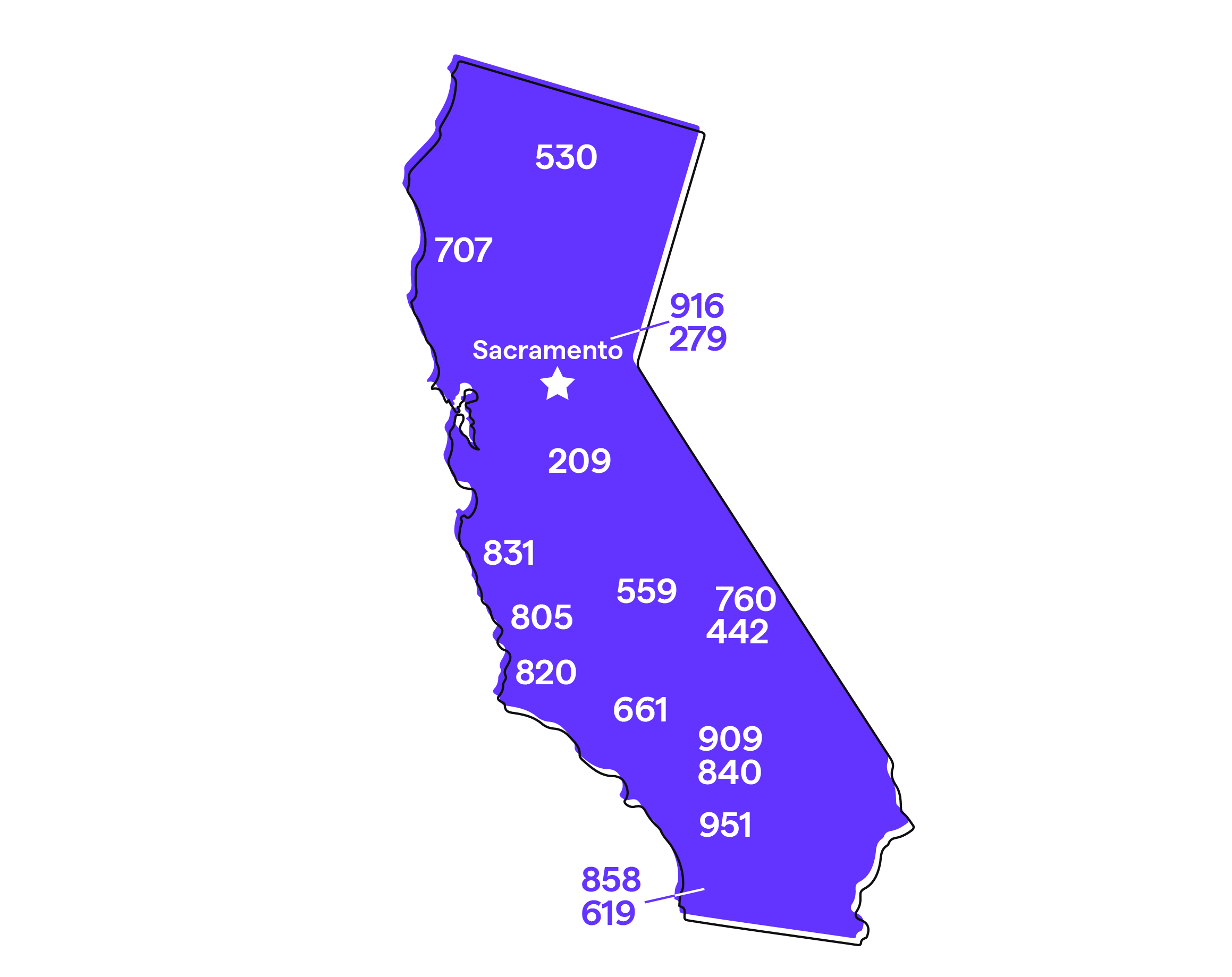
California is home to an astonishing number of area codes, a testament to its vastness and continuous growth. The first area codes were introduced in 1947 as part of the North American Numbering Plan (NANP), with California initially assigned three: 213 (for Southern California), 415 (for Northern California), and 916 (for the state’s central and eastern regions including Sacramento). Over the decades, as the population surged and demand for telephone numbers skyrocketed, these original codes were split and overlaid, leading to the complex mosaic seen today.
Today, California boasts over 30 active area codes, with new ones continuously being introduced to meet demand. This proliferation means that simply asking “What’s California area code?” elicits an answer that’s a geographical map of the state, rather than a single digit.
Navigating California’s Key Regions by Area Code
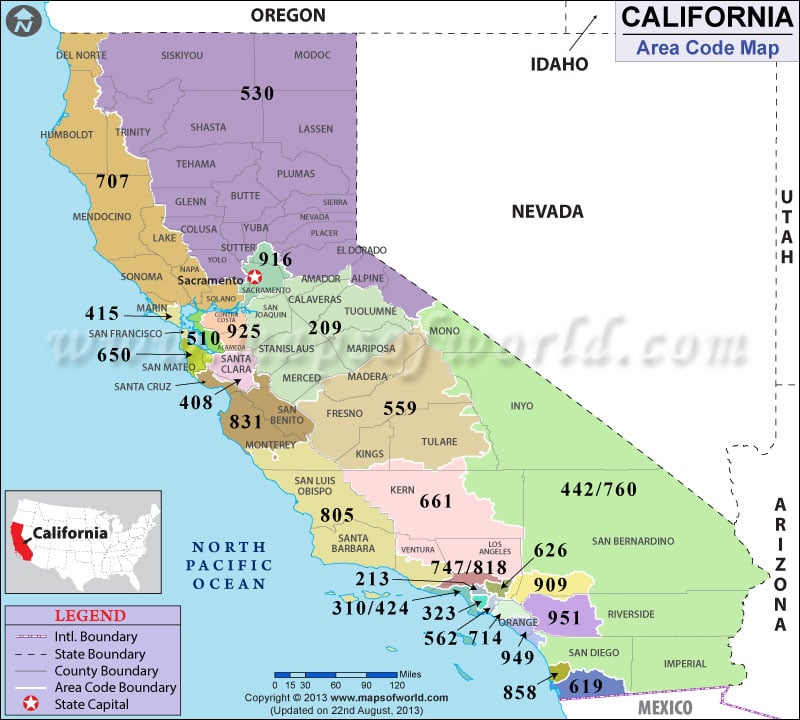
To simplify the vast landscape of California’s area codes, it’s helpful to categorize them by major regions. This offers travelers a practical framework for understanding which codes apply to which destinations.
Southern California: Los Angeles and Beyond
Southern California is arguably the most complex due to its dense population centers and sprawling urban areas.
- Los Angeles County: The heart of Southern California is a prime example of area code overlays and splits. The original 213 code now primarily covers Downtown Los Angeles, while 323 covers surrounding central Los Angeles areas. The glamorous Westside, including Beverly Hills and Santa Monica, falls under 310, which also has an overlay of 424. The San Fernando Valley is served by 818, with 747 as an overlay. Further north within Los Angeles County, the Santa Clarita Valley uses 661.
- Orange County: Home to Disneyland and beautiful beaches, Orange County is covered by 714 and its overlay, 657.
- San Diego and Surrounding Areas: San Diego itself uses 619 and 858. The broader San Diego County and parts of the Imperial Valley extend into 760, which also has a 442 overlay.
- Inland Empire: This rapidly growing region, encompassing cities like Riverside and San Bernardino, is primarily served by 909 and 951.
Northern California: The Bay Area and Capital Region
Northern California is defined by the iconic San Francisco Bay Area and the state capital.
- San Francisco: The city and county of San Francisco historically used 415, which now has a 628 overlay.
- Oakland and East Bay: Across the bay, cities like Oakland, Berkeley, and Fremont are covered by 510, with 341 serving as its overlay.
- San Jose and South Bay: The tech hub of San Jose and the surrounding Silicon Valley region utilize 408, with 669 as its overlay.
- Sacramento and Surrounding Counties: The state capital and its adjacent areas fall under 916, which now has an overlay of 279.
- Wine Country and North Coast: The famous wine regions of Napa and Sonoma, extending up to the North Coast into areas like Eureka, are primarily served by 707.
Central California and Coastal Gems
Beyond the major metropolitan areas, California’s central and coastal regions offer distinct experiences, each with their own numbering systems.
- Central Valley: The agricultural heartland of California, including cities like Fresno and Bakersfield, is largely covered by 559 and 661 respectively (note 661 also extends into Los Angeles County).
- Central Coast: The picturesque central coast, home to cities like Santa Barbara and San Luis Obispo, uses 805, which has a newly implemented 820 overlay. Further north along the coast, Monterey, Carmel, and Santa Cruz are under 831.
- Eastern California / Sierra Nevada: This vast, less populated region including areas near Yosemite and Lake Tahoe generally uses 760, which extends significantly across the state.
Practical Tips for Travelers Regarding California Area Codes
Navigating California’s many area codes needn’t be a source of confusion. A few simple tips can ensure smooth communication throughout your journey.
Dialing Protocols: 10-Digit vs. 7-Digit Dialing
Perhaps the most important practical tip for any traveler to California (and indeed, much of the United States) is the prevalence of 10-digit dialing. Due to the widespread use of area code overlays, even for local calls within the same geographic area code, you must dial all ten digits (the three-digit area code followed by the seven-digit telephone number). Gone are the days when you could dial just seven digits for a local call if you shared the same area code. Always assume you need to dial all ten digits.
Understanding Overlay Area Codes
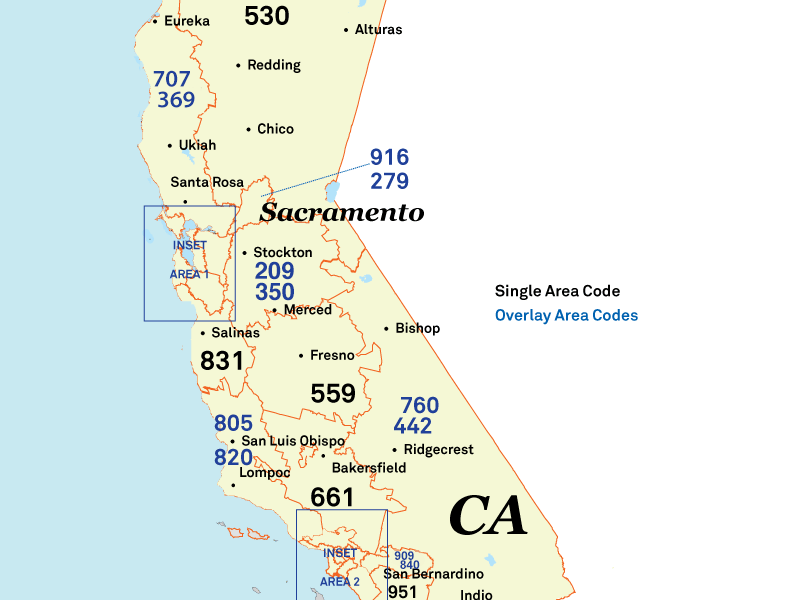
Overlay area codes are crucial to grasp. They occur when a new area code is assigned to the same geographic region as an existing area code. This means that two or more different area codes can serve the exact same location. For example, in Los Angeles, a business might have a 310 number, while a new restaurant next door might have a 424 number. Both are equally “local” to Santa Monica, but require different area codes to dial. The purpose is simply to create more available phone numbers without splitting existing codes into smaller geographic territories.
Emergency Services and Toll-Free Numbers
For critical situations, remember that 911 is the universal emergency number across the United States and does not require an area code. For non-emergency calls to local police or fire departments, you would use their standard 10-digit number.
Toll-free numbers, typically starting with prefixes like 800, 888, 877, 866, 855, 844, or 833, are national numbers that can be dialed from anywhere in the United States without incurring a charge to the caller. These are common for customer service lines for national businesses and hotels.
International Visitors and Mobile Phones
If you’re an international visitor using your home mobile service with international roaming, you’ll still dial California numbers as you would any other U.S. number, including the country code +1, followed by the 10-digit area code and number. If you opt for a local U.S. SIM card or eSIM for your device, your new number will be assigned a California area code, typically based on where you activate it. From then on, you would simply use the 10-digit dialing protocol for all calls within California and the U.S..
The Future of California’s Numbering System
The demand for new phone numbers in California shows no signs of slowing down. As population centers grow and technological advancements lead to more connected devices, the introduction of new area codes and overlays remains an ongoing process.
Continuous Growth and New Area Code Activations
Telecommunications regulatory bodies continually monitor number availability. When existing area codes near exhaustion, new overlays are planned and introduced. This means that the list of California area codes is dynamic and can change over time. While the fundamental structure (10-digit dialing) remains constant, travelers on repeat visits might occasionally encounter new codes for familiar regions. Staying informed, perhaps with a quick search before a trip, can be beneficial.
Planning Ahead for Seamless Communication
Ultimately, knowing “What’s California area code?” isn’t about finding a single answer, but rather understanding a system. For travelers, the key takeaway is to always be prepared to dial the 10-digit number for any call within California. Before your trip, or upon arrival, take a moment to look up the primary area codes for the specific cities or regions you plan to visit. Many travel apps and online maps can also help you quickly identify the area code for a given location or business. This proactive approach ensures that your communication is always clear and convenient, allowing you to focus on enjoying the unparalleled experiences California has to offer.
LifeOutOfTheBox is a participant in the Amazon Services LLC Associates Program, an affiliate advertising program designed to provide a means for sites to earn advertising fees by advertising and linking to Amazon.com. Amazon, the Amazon logo, AmazonSupply, and the AmazonSupply logo are trademarks of Amazon.com, Inc. or its affiliates. As an Amazon Associate we earn affiliate commissions from qualifying purchases.