
Understanding the demographic landscape of a city as vast and multifaceted as Los Angeles is crucial for anyone planning a visit, considering a move, or simply seeking to grasp the pulse of this global metropolis. While the question “What’s Los Angeles population?” might seem straightforward, the answer reveals a complex tapestry of residents, reflecting the city’s status as a melting pot of cultures, industries, and aspirations. The population of Los Angeles is not merely a number; it’s a dynamic force that shapes its attractions, its character, and its very identity.
The Shifting Sands of Demographic Data
The population of Los Angeles is a constantly evolving figure. Official census data, typically gathered every ten years, provides a foundational understanding, but it’s essential to recognize that these numbers are snapshots in time. Between these official counts, demographers and researchers utilize various estimation methods to track growth, migration patterns, and demographic shifts. These estimations consider factors such as birth rates, death rates, and net migration – the difference between the number of people entering and leaving the city.

Recent Population Estimates
According to the most recent available estimates, the population of the City of Los Angeles hovers around 3.8 to 4 million residents. However, it is imperative to differentiate between the City of Los Angeles and the greater Los Angeles County. Los Angeles County is an administrative region encompassing not only the city itself but also numerous surrounding municipalities and unincorporated areas. When considering the broader metropolitan area, the population swells dramatically, reaching figures often cited in the range of 10 million to over 18 million people, depending on the definition of the metropolitan statistical area used. This distinction is vital for understanding the scale of infrastructure, services, and the sheer diversity of people you encounter across the region.
A Mosaic of Diversity: Ethnic and Cultural Composition
The sheer number of people in Los Angeles is only part of the story. Its true richness lies in the incredible diversity of its population. This is a city that draws individuals from every corner of the globe, creating a vibrant multicultural tapestry that influences its cuisine, its arts, its languages, and its daily life.
Dominant Ethnic Groups
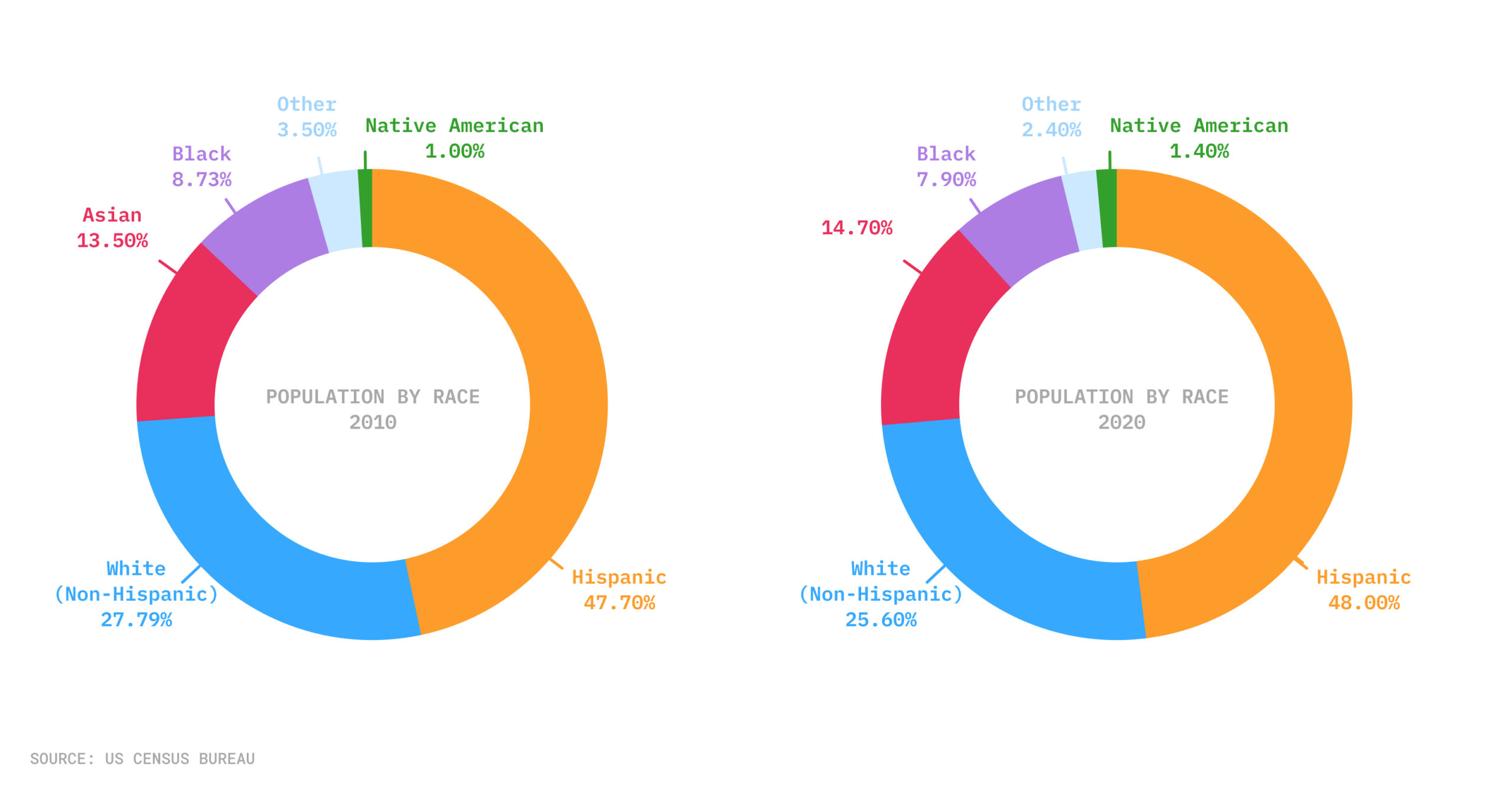
While definitions and categories can vary, demographic data consistently highlights several major ethnic groups that form the backbone of Los Angeles’s population.
- Hispanic/Latino: This is the largest ethnic group in Los Angeles, representing a significant portion of the population. Their influence is deeply embedded in the city’s culture, from its music and festivals to its culinary scene, with vibrant neighborhoods like East Los Angeles showcasing this heritage.
- White (Non-Hispanic): This group also constitutes a substantial segment of the population, contributing to the city’s diverse economic and cultural landscape.
- Asian: Los Angeles boasts one of the largest and most diverse Asian populations in the United States. This includes a significant presence of people of East Asian descent (e.g., Chinese, Korean, Japanese) and Southeast Asian descent (e.g., Filipino, Vietnamese, Thai), with distinct communities found in areas like Little Tokyo and Koreatown.
- Black/African American: The Black community has a long and significant history in Los Angeles, contributing immensely to its cultural and artistic heritage, particularly in areas like Leimert Park.
Beyond these broad categories, the city is home to numerous smaller ethnic and national origin groups, each adding unique flavors to the urban experience. This diversity is not static; it’s a living, breathing aspect of Los Angeles that continues to evolve with ongoing immigration and internal migration.
Age Demographics and Household Composition
The age distribution within Los Angeles is another important facet of its population. Like many major urban centers, it attracts a significant number of young adults and professionals drawn by career opportunities, particularly in industries like entertainment, technology, and international trade. This contributes to a relatively younger median age compared to some other parts of the country.
- Young Professionals: The allure of the entertainment industry and emerging tech hubs means many individuals in their 20s and 30s are drawn to the city.
- Families: While the cost of living can be a factor, Los Angeles also remains a destination for families, with diverse neighborhoods offering varying lifestyles and educational opportunities.
- Retirees: A segment of retirees also chooses Los Angeles for its climate, cultural amenities, and proximity to family.

Household composition in Los Angeles is as varied as its residents. You’ll find single-person households, young couples, multi-generational families living together, and the ubiquitous roommate situations that are often a characteristic of expensive urban environments. This variety in living arrangements influences the types of housing available and the community dynamics within different neighborhoods.
Population Trends and Their Impact on Tourism and Lifestyle
The population figures and demographic makeup of Los Angeles have a direct and profound impact on its tourism sector, lifestyle offerings, and overall visitor experience. Understanding these trends can help travelers and residents alike navigate the city more effectively.
Growth and Urban Sprawl
Los Angeles has historically experienced significant population growth, contributing to its sprawling urban development. This growth necessitates continuous investment in infrastructure, from its complex freeway system and public transportation networks to housing development and utility services. For visitors, this translates into a city that is vast and diverse, with distinct neighborhoods each offering unique attractions. It also means that traffic can be a significant consideration, influencing travel times and the logistics of sightseeing.
Cultural Influence and Lifestyle Choices
The immense population, with its rich cultural diversity, directly fuels Los Angeles’s reputation as a global hub for culture, fashion, and entertainment. The sheer number of people creates a constant demand for diverse culinary experiences, from authentic street tacos to Michelin-starred restaurants. It supports a vibrant arts scene, with numerous museums, galleries, and performance venues catering to a wide array of tastes.
- Culinary Scene: The presence of millions of residents from various backgrounds has fostered an unparalleled culinary landscape. You can find authentic Mexican food in Boyle Heights, exquisite Korean BBQ in Koreatown, and innovative fusion dishes across the city.
- Entertainment and Arts: From the iconic Hollywood Walk of Fame to world-class institutions like the Getty Center and the Los Angeles County Museum of Art (LACMA), the city’s population supports a thriving cultural ecosystem.
- Neighborhood Identity: The dense population has led to the development of distinct neighborhood identities, each with its own charm and character. Exploring areas like Santa Monica with its pier and beach, the bohemian vibe of Venice Beach, or the upscale shopping of Beverly Hills provides a glimpse into the diverse lifestyles that coexist within the city.
The Economic Engine of a Metropolis
The population of Los Angeles is not just a demographic statistic; it’s the driving force behind its robust economy. A large and diverse workforce fuels its key industries, making it a magnet for both domestic and international investment and talent.
Key Industries and Employment Sectors
The city’s economy is incredibly diversified, though some sectors stand out due to the influence of its large population and global reputation.
- Entertainment and Media: The global allure of Hollywood continues to attract a significant portion of the workforce, from actors and directors to crew members and post-production specialists. This industry is synonymous with Los Angeles and draws countless visitors hoping to catch a glimpse of the magic.
- Technology and Innovation: Increasingly, Los Angeles is recognized as a growing tech hub, attracting startups and established companies in areas like aerospace, digital media, and biotechnology.
- International Trade and Commerce: Its strategic location on the Pacific coast makes Los Angeles a major gateway for international trade, with the ports of Los Angeles and Long Beach being among the busiest in the nation.
- Tourism and Hospitality: The constant influx of visitors seeking sun, entertainment, and culture directly supports a massive tourism and hospitality sector, creating jobs in hotels, restaurants, attractions, and transportation.
Cost of Living and Housing Dynamics
It is impossible to discuss the population of Los Angeles without acknowledging the significant impact on the cost of living, particularly housing. The high demand for residential space, driven by a large and growing population and its desirability as a place to live and work, has led to some of the highest housing costs in the United States. This is a critical factor for anyone considering a move or even for long-term visitors staying in vacation apartments. The constant interplay between population growth, housing supply, and economic factors makes the Los Angeles housing market a complex and often challenging landscape.
In conclusion, the population of Los Angeles is a dynamic and multi-faceted entity. It’s not just about a number; it’s about the millions of individuals who contribute to its vibrant culture, its economic prowess, and its unique urban character, making it one of the most fascinating and influential cities on the planet.
LifeOutOfTheBox is a participant in the Amazon Services LLC Associates Program, an affiliate advertising program designed to provide a means for sites to earn advertising fees by advertising and linking to Amazon.com. Amazon, the Amazon logo, AmazonSupply, and the AmazonSupply logo are trademarks of Amazon.com, Inc. or its affiliates. As an Amazon Associate we earn affiliate commissions from qualifying purchases.