
Planning a trip to Chicago, Illinois, often involves mapping out itineraries, booking accommodations, and researching must-see attractions. Amidst the excitement of envisioning deep-dish pizza, architectural river cruises, and vibrant neighborhoods, a seemingly minor detail like an area code might not be top of mind. However, understanding the telecommunications landscape of a major metropolis like Chicago is a surprisingly valuable piece of information for any traveler. It’s not just about making a phone call; it’s about discerning geographical boundaries, understanding local services, and even preparing for emergencies. For visitors, knowing which area code corresponds to which part of the city can offer a deeper insight into its structure and aid in seamless navigation and contact.

Understanding Chicago’s Telecommunications Landscape for Travelers
Chicago, as one of the largest cities in the United States, has evolved its telephone numbering plan over decades to accommodate its expansive growth and increasing demand for communication services. Unlike smaller towns that might have a single, distinct area code, major urban centers like Chicago often employ multiple area codes, sometimes as “overlays,” to ensure a continuous supply of phone numbers. For the modern traveler, this means that while calling a local number within Chicago typically requires dialing all ten digits (area code + seven-digit number), recognizing the area code can instantly inform you about the general location of the person or business you’re trying to reach. This practical knowledge can be particularly helpful when using ride-sharing apps, confirming reservations, or looking up local services, providing a subtle yet effective layer of geographical context crucial for navigating a bustling city.
Navigating Chicago’s Multiple Area Codes
Chicago is served by three primary area codes: 312, 773, and 872. Each of these codes historically, and to some extent currently, corresponds to specific geographical regions within the city and its immediate surrounds. Understanding these distinctions is not just a trivia fact; it’s a practical guide for travelers seeking to interact with various parts of the city.
The 312 Area Code: Downtown and Historic Core
The 312 area code is the original and most iconic code for Chicago, first established in 1947 as one of the initial area codes for North America. It primarily covers the bustling heart of Downtown Chicago, often referred to as the Loop. This includes the central business district, where towering skyscrapers like the Willis Tower (formerly Sears Tower) and the Art Institute of Chicago stand. For travelers, this means that many of the city’s most famous landmarks, luxury hotels, high-end restaurants, and corporate offices will likely use a 312 number.
Beyond the Loop, 312 extends to the immediate surrounding areas vital to tourism. These include the vibrant Magnificent Mile shopping district along Michigan Avenue, the lively River North neighborhood known for its art galleries and nightlife, the upscale Gold Coast residential area, and the lakefront areas encompassing Grant Park, Millennium Park, and Navy Pier. If you are booking a downtown hotel, making a reservation at a fine dining establishment, or contacting a major cultural institution like the Shedd Aquarium, Field Museum, or Adler Planetarium within the Museum Campus, you can almost certainly expect to see a 312 area code. This code truly represents the iconic, bustling heart of urban Chicago.
The 773 Area Code: Beyond the Loop
As Chicago expanded, the demand for phone numbers outstripped the capacity of the original 312 code. In 1996, the 773 area code was introduced to serve the rest of the city of Chicago, essentially encompassing all areas outside the central core previously covered by 312. For travelers, this means that many of Chicago’s diverse and vibrant neighborhoods beyond the immediate downtown area fall under the 773 umbrella.
This includes popular tourist destinations such as Lincoln Park, known for its zoo, extensive green spaces, and charming boutiques; Wrigleyville, home to the historic Wrigley Field and a lively sports scene; and Hyde Park, famous for the University of Chicago and the Museum of Science and Industry. Other notable neighborhoods like Pilsen with its vibrant murals, Andersonville’s Swedish heritage, and the burgeoning West Loop and Fulton Market districts, celebrated for their culinary scenes, are also typically served by the 773 area code. If you’re exploring these distinctive cultural enclaves or visiting friends residing outside the Loop, a 773 number is what you’ll typically encounter.
The 872 Area Code: The Overlay Solution
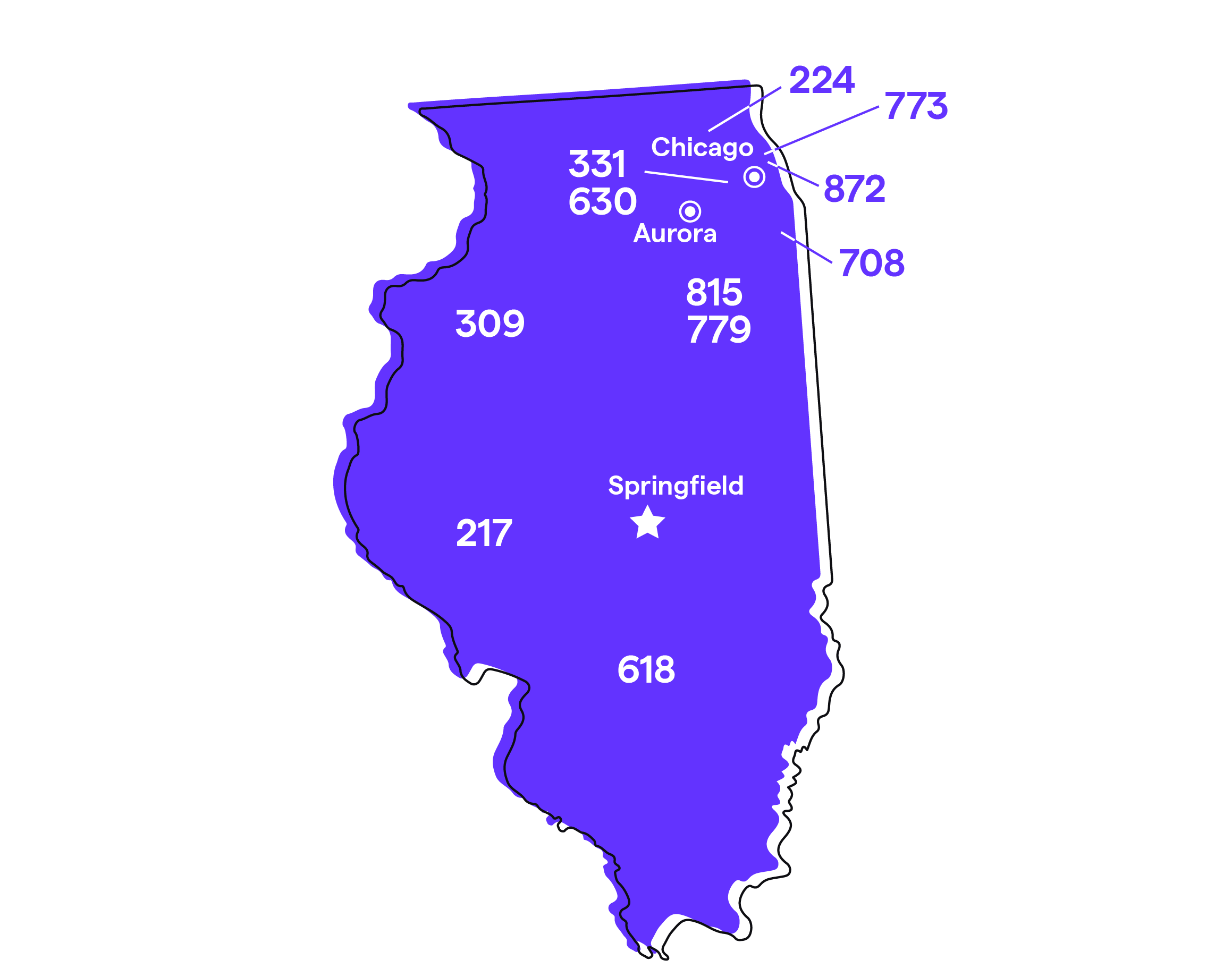
The rapid increase in mobile phones and communication devices once again led to the exhaustion of available numbers. To address this, the 872 area code was introduced in 2009 as an overlay to both the 312 and 773 territories. An overlay means that the new area code covers the exact same geographical region as the existing codes. Therefore, within the city limits of Chicago, you can now find numbers beginning with 312, 773, or 872.
For travelers, this is a crucial distinction. It means that a business or individual located in the Loop could have a 312 or an 872 number. Similarly, a cafe in Lincoln Park could have a 773 or an 872 number. The introduction of 872 effectively made 10-digit dialing mandatory for all local calls within Chicago, regardless of the area code you are calling from or to. The Illinois Commerce Commission mandated this to ensure a sufficient supply of telephone numbers well into the future. While less indicative of a precise location than 312 or 773, encountering an 872 number simply confirms you’re dealing with a local Chicago contact.
Practical Implications for Visitors and Tourists
Knowing Chicago’s area codes isn’t just about successful phone calls; it’s a layer of practical knowledge that enhances the travel experience.
Making Local Calls in Chicago
The most immediate practical implication for travelers is understanding how to make local calls. Due to the 872 overlay, all local calls within Chicago require 10-digit dialing (area code + 7-digit number). This applies whether you are calling from a 312 number to a 773 number, a 312 number to another 312 number, or any combination involving 872. For international visitors, remember to include the country code +1 before dialing the 10-digit Chicago number.
Contacting Businesses and Services
When you’re trying to reach a specific restaurant, book an attraction, or contact a local service provider, seeing the area code can give you an instant clue about its general location. A 312 number likely indicates a business in the prime downtown area or along the Magnificent Mile, which might influence your travel time or chosen mode of transport. A 773 number suggests a location in one of the outlying, diverse neighborhoods, perhaps requiring a longer journey via public transit or a ride-share service. This quick geographical context is especially useful when planning your daily movements across the city. Even for ride-sharing apps, confirming the destination address and looking at the associated contact number can reinforce your understanding of where you are headed.
Emergency Services and Important Contacts
While emergency services (911) do not require an area code, knowing the local codes for non-emergency police lines, hospital administrative offices, or even your hotel’s front desk can be beneficial. Many hospitals in the Cook County area will have a 312 or 773 code depending on their exact location, and most Chicago based numbers will fall under one of these three. When dealing with unexpected situations or needing local assistance, this small piece of information can reduce confusion and speed up communication.

Why Area Codes Matter in Your Chicago Travel Planning
Ultimately, understanding Chicago’s area codes is more than just a technicality; it’s an integral part of navigating the city like a local. It provides a geographical shorthand, helping you visualize where a contact is located within the expansive urban grid. When booking activities, making dinner reservations, or even just looking up a store, the area code serves as an initial spatial cue.
For instance, if you are staying in a 312 area hotel near Millennium Park and want to visit a brewery in Lincoln Park (likely a 773 area), you immediately understand that you’ll be traveling across distinct urban zones. This knowledge informs your transportation choices and time management for the day. Similarly, if you’re trying to reach O’Hare International Airport or Midway International Airport, knowing that numbers associated with these transportation hubs might carry any of the Chicago codes or even an outlying suburban code (like 847 or 708 for parts of the greater metropolitan area and specific suburbs like Evanston) helps you prepare for potential long-distance charges if your phone plan isn’t comprehensive.
By familiarizing yourself with Chicago’s area codes, you gain a small but significant advantage in planning a smoother, more informed, and ultimately more enjoyable travel experience in the Windy City. It’s a practical tip that speaks volumes about understanding the destination itself.
LifeOutOfTheBox is a participant in the Amazon Services LLC Associates Program, an affiliate advertising program designed to provide a means for sites to earn advertising fees by advertising and linking to Amazon.com. Amazon, the Amazon logo, AmazonSupply, and the AmazonSupply logo are trademarks of Amazon.com, Inc. or its affiliates. As an Amazon Associate we earn affiliate commissions from qualifying purchases.