
The world of travel offers a dizzying array of accommodation options, from opulent five-star resorts to cozy boutique guesthouses. Among the most fundamental distinctions, and often a source of confusion for travelers, is the difference between a motel and a hotel. While both provide a place to rest your head, their origins, architectural designs, amenities, target audiences, and overall guest experiences diverge significantly. Understanding these nuances is key to making an informed decision that best suits your travel style, budget, and specific needs, whether you’re embarking on a cross-country United States road trip or planning a luxurious city break in Paris.
The Historical Roots and Evolution
To truly grasp the distinctions between motels and hotels, it’s essential to journey back in time and explore their respective evolutions. Their very names offer a clue to their primary purpose and development.
Birth of the Hotel: A Nexus for Travelers and Society
The concept of a “hotel” predates the automobile by centuries. Early forms of hotels can be traced back to ancient civilizations, providing lodging for merchants, pilgrims, and government officials. In Europe, particularly from the 17th century onwards, inns and coaching houses served as vital stops along established trade routes. These establishments were often multi-story buildings located within city centers or bustling towns, designed to accommodate travelers arriving by horse-drawn carriages or on foot. They were not merely places to sleep but also social hubs, offering dining rooms, common areas, and sometimes even entertainment.
As cities grew and travel became more sophisticated in the 19th and early 20th centuries, hotels evolved into grand, architectural statements. Think of iconic establishments like the Ritz Paris or the historic Waldorf Astoria New York. These institutions catered to affluent travelers, businesspeople, and those seeking an immersive urban experience. Their design prioritized interior elegance, with lobbies serving as reception areas and guest rooms accessed via internal corridors, often reached by elevators. They were, and largely remain, integral parts of the urban landscape, often close to major landmarks and business districts, offering a comprehensive suite of services under one roof.

The Rise of the Motel: Catering to the Automobile Age
The term “motel” is a portmanteau of “motor hotel,” a name that perfectly encapsulates its raison d’être. The birth of the motel is inextricably linked to the advent and widespread adoption of the automobile in the early 20th century, particularly in countries like the United States and Canada. As families and individuals gained the freedom to travel long distances by car, the need arose for convenient, accessible, and affordable roadside accommodation.
Traditional hotels, often situated downtown with limited parking and complex layouts, were ill-suited for the spontaneous nature of road travel. Motorists needed a place where they could pull up directly to their room, unload luggage with ease, and quickly get back on the road the next morning. The first known establishment to officially coin and use the term “motel” was the Milestone Mo-Tel in San Luis Obispo, California, in 1925. This innovation ushered in a new era of accommodation, catering specifically to the burgeoning automotive lifestyle. Motels proliferated along major highways and scenic routes like the legendary Route 66, becoming synonymous with classic American road trips.
Architectural Design and Layout
The most immediate and visually striking differences between motels and hotels lie in their architectural design and physical layout. These structural choices directly impact convenience, privacy, and the overall ambiance of the stay.
Hotels: Verticality and Internal Access
Hotels, by their very nature, are typically multi-story buildings, often towering structures that dominate city skylines. Their design emphasizes verticality, with guest rooms arranged along interior corridors. Access to these rooms is primarily through a central lobby, where guests check in at a front desk. From the lobby, elevators and stairwells transport guests to various floors.
This internal access model offers several advantages. It provides enhanced security, as all guests must pass through a monitored entrance. It also offers a greater sense of privacy and quiet, shielding rooms from external noise and weather conditions. Within this structure, hotels can incorporate a wide range of facilities, such as conference rooms, fitness centers, indoor pools, multiple restaurants, and retail spaces, all seamlessly integrated into the building’s interior. The grandeur of a Grand Hyatt Hotel in Tokyo or a historic St. Regis property perfectly illustrates this design philosophy, creating a self-contained environment for guests.
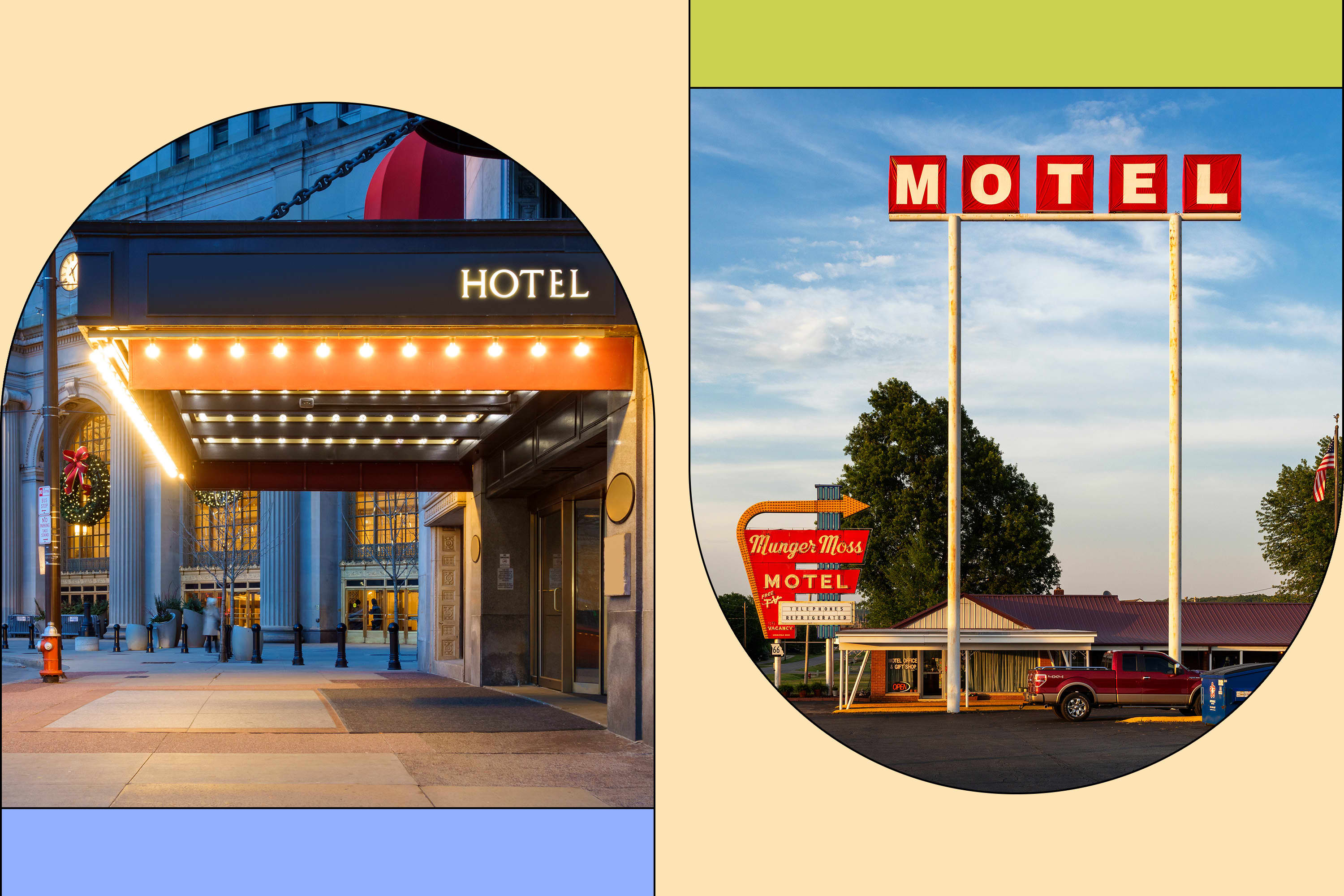
Motels: Horizontality and Exterior Access
Motels, in contrast, are generally low-rise structures, often just one or two stories tall, characterized by their horizontal spread. The defining feature of a motel is its exterior corridor access. Guest rooms typically open directly onto a parking lot or a communal walkway that faces the parking area. This design was revolutionary for the early motorist, allowing for unparalleled convenience. Travelers could park their car immediately outside their room door, making loading and unloading luggage exceptionally easy and quick.
This “park-at-your-door” concept is fundamental to the motel experience. While it offers unmatched convenience for drivers, it can sometimes present trade-offs in terms of privacy and noise levels, as rooms are more exposed to outdoor activity. Many motels also feature a central office or reception area, often separate from the main guest room buildings, where check-in procedures are handled. The layout is typically simple, focused on providing direct access and minimal fuss for transient guests. Chains like Motel 6 or Super 8 are prime examples of this functional and direct architectural approach.

Amenities, Services, and Guest Experience
Beyond architecture, the core differences extend to the range of amenities and services offered, directly shaping the guest experience and the typical length of stay.
Hotel Amenities: A Full Spectrum of Services
Hotels are designed to be full-service establishments, aiming to meet a wide array of guest needs, often encouraging longer stays and providing a comprehensive ‘home away from home’ experience. The amenities in a hotel can be extensive and luxurious, especially in higher-end properties. Common offerings include:
- Dining: Multiple restaurants, cafes, bars, room service available 24/7.
- Recreation: Swimming pools (often indoor or elaborate outdoor complexes), fitness centers, spas, saunas, tennis courts, and even golf courses at resort hotels.
- Business Facilities: Conference rooms, meeting spaces, business centers, high-speed Wi-Fi, and concierge services.
- Guest Services: Bellhops, valet parking, laundry and dry cleaning, turndown service, and comprehensive concierge assistance for booking tours or making reservations.
- Room Features: Generally more spacious rooms, often with separate living areas (suites), minibars, safes, larger bathrooms with premium toiletries, and higher-quality furnishings.
The focus here is on comfort, convenience, and providing an immersive experience, allowing guests to relax and enjoy their surroundings without needing to leave the premises. From a boutique hotel in Miami offering personalized services to a sprawling all-inclusive resort in the Caribbean, the scope of amenities aims to cater to diverse traveler profiles, from luxury travel enthusiasts to families seeking extensive recreational options.
Motel Amenities: Functional and Essential
Motels, by contrast, tend to focus on providing essential and functional amenities necessary for a comfortable overnight stay. Their primary goal is to offer a clean, safe, and convenient place to rest for travelers who are typically in transit. While some modern motels have upgraded their offerings, the core services remain utilitarian:
- Parking: Ample, free parking directly outside or very close to the room.
- Basic Dining: Often a complimentary continental breakfast, vending machines, and perhaps an ice machine. Full-service restaurants are rare.
- Connectivity: Free Wi-Fi, though sometimes more basic than what’s found in a hotel.
- Room Features: Standard rooms with a bed, television, small desk, and a basic private bathroom. Toiletries are usually minimal.
- Limited Services: Often no bellhops, valet, or extensive concierge services. Laundry facilities might be self-service.
The guest experience at a motel is typically more independent and self-sufficient. Travelers checking into a motel are generally not looking for a destination in itself but rather a practical stopover on their journey. The focus is on ease of access, a comfortable bed, and getting back on the road quickly. Chains like Holiday Inn Express or Best Western embody this approach, offering consistent, reliable, and no-frills accommodation.
Location, Target Audience, and Pricing
The strategic placement of these accommodation types, the clientele they attract, and their corresponding price points are crucial factors distinguishing motels from hotels.
Hotels: Urban Hubs and Destination Stays
Hotels are typically found in prime locations within city centers, near major airports, business districts, convention centers, or popular tourist attractions like the Eiffel Tower in Paris or the Colosseum in Rome. Their proximity to these key areas makes them ideal for various types of travelers:
- Business Travelers: Seeking convenience to corporate offices, meeting venues, and transportation hubs.
- Leisure Tourists: Wanting to be close to cultural sites, entertainment venues, and shopping districts, often relying on public transport or taxis rather than personal vehicles.
- Convention Attendees: Needing easy access to large event spaces.
- Luxury Seekers: Desiring high-end services and a sophisticated urban experience.
Due to their prime locations, extensive amenities, and often more robust staffing, hotels generally command higher prices. They cater to a broad demographic looking for a comprehensive stay, ranging from a quick business trip to an extended family vacation where the hotel itself might be part of the destination experience.
Motels: Roadside Convenience and Budget-Conscious Travelers
Motels are strategically situated along major highways, interstate exits, and rural routes, often on the outskirts of towns or cities. Their locations are chosen for maximum visibility and ease of access for motorists. This makes them perfect for:
- Road Trippers: Travelers covering long distances, needing a convenient and quick overnight stop.
- Truck Drivers: Requiring easy parking for large vehicles.
- Budget Travelers: Seeking affordable accommodation without compromising on basic comfort.
- Short-Term Stays: Individuals or families passing through an area, needing a place to sleep before continuing their journey.
The focus on accessibility for drivers means ample parking is a given, often directly in front of the room. This roadside placement and the more streamlined service model allow motels to offer significantly lower prices compared to most hotels. Motels are often the go-to choice for budget travel and spontaneous overnight stays where the destination is primarily elsewhere. They represent a pragmatic choice for travelers prioritizing cost-effectiveness and efficiency over extensive amenities and central urban locations. Think of stopping at a motel near the Grand Canyon after a day of exploring, before heading to the next natural wonder.
Choosing the Right Accommodation for Your Trip
Deciding between a motel and a hotel ultimately depends on your specific travel needs, priorities, and budget. There’s no single “better” option; rather, it’s about finding the perfect fit for your journey.
When a Hotel is Your Best Bet
Choose a hotel when your trip emphasizes the destination itself, and you desire a full-service experience:
- Urban Exploration: If you’re visiting a major city like New York City, London, or Sydney, a hotel’s central location will put you within easy reach of attractions, dining, and public transport.
- Leisure and Relaxation: For vacations where the accommodation is part of the experience – think resorts with spas, fine dining, and recreational activities.
- Business Trips: Hotels offer amenities like business centers, meeting rooms, and concierge services tailored for corporate needs.
- Longer Stays: The comprehensive services, comfort, and internal access make hotels more suitable for extended visits, providing a greater sense of privacy and a wider range of activities on-site.
- Special Occasions: For honeymoons, anniversaries, or luxury getaways, the enhanced services and upscale ambiance of a hotel are often preferred.
- Family with Extensive Needs: Hotels with kid-friendly amenities, multiple dining options, and recreational facilities can be ideal for families seeking convenience and entertainment under one roof.
Booking a hotel often involves exploring various room types, from standard rooms to suites or even apartments within the hotel, and considering specific amenities like indoor pools or pet-friendly policies. Reading reviews on booking platforms can help confirm the quality and suitability of the chosen establishment.
When a Motel is the Ideal Choice
Opt for a motel when your primary focus is efficient travel, cost-effectiveness, and a convenient stopover:
- Road Trips: If you’re driving long distances across the country, a motel offers the unparalleled convenience of parking directly outside your room and easy access back to the highway.
- Budget-Conscious Travel: Motels typically offer the most affordable rates, making them an excellent choice for travelers looking to maximize their budget for other experiences like local food or attractions.
- Short, Overnight Stays: When you simply need a clean, comfortable, and safe place to sleep for a single night before continuing your journey.
- Self-Sufficient Travel: If you prefer to handle your own luggage, don’t require extensive services, and value independence.
- Proximity to Specific Locations: Sometimes motels are located closer to specific, out-of-the-way destinations or event venues where hotels are scarce.
- Last-Minute Bookings: Due to their typically larger number of rooms and focus on transient guests, motels can often accommodate last-minute walk-ins.
Whether you’re exploring national parks in Arizona or visiting relatives in a small town, a motel provides a practical and no-fuss accommodation solution. Comparing options, especially in terms of cleanliness and basic comfort, is still important. Websites dedicated to accommodation comparison can be very useful here.
In conclusion, while both motels and hotels serve the fundamental purpose of providing lodging, they cater to distinct travel philosophies and practical needs. Hotels evolved from urban inns, offering comprehensive services and an immersive experience, often integrated into city life. Motels emerged with the automobile, prioritizing roadside convenience, easy access, and affordability for travelers on the move. By understanding these core differences, you can confidently select the type of accommodation that best enhances your journey, ensuring comfort, convenience, and value for your specific travel plans.