
Navigating the vibrant landscapes and sunny roadways of Florida is an experience sought by millions, from tourists exploring its famous theme parks and pristine beaches to new residents settling into its unique lifestyle. Whether you’re cruising down coastal highways in a rental car, embarking on a family road trip, or simply driving your own vehicle, understanding the local regulations is paramount for a seamless and enjoyable journey. Among the myriad of state-specific laws, vehicle window tinting regulations often catch drivers by surprise. While window tint offers numerous benefits in the Sunshine State – from reducing heat and glare to enhancing privacy – improper tint can lead to fines, inconvenience, and a less-than-ideal vacation or living experience. This comprehensive guide serves as an essential tip for anyone behind the wheel in Florida, ensuring you’re well-informed about what constitutes legal tint and how to stay compliant, allowing you to focus on the beauty and excitement Florida has to offer.

Decoding Florida’s Window Tint Laws
Florida’s window tint laws are designed to balance driver comfort and vehicle privacy with road safety and law enforcement visibility. These regulations are precise, stipulating different Visible Light Transmission (VLT) percentages for various windows on a vehicle. Failing to adhere to these rules can result in citations, which no one wants during their trip or daily commute.
Understanding VLT (Visible Light Transmission)
At the heart of window tint laws is the concept of Visible Light Transmission (VLT). VLT refers to the percentage of visible light that can pass through your car’s windows. A lower VLT percentage means darker tint, allowing less light to pass through. Conversely, a higher VLT percentage indicates a lighter tint, permitting more light to enter the vehicle. For example, a 5% VLT tint is very dark, often referred to as “limo tint,” while a 70% VLT tint is very light, almost clear. Florida law sets specific minimum VLT percentages for different windows, which drivers must meticulously follow. These percentages are critical not just for legal compliance but also for maintaining adequate visibility for the driver and allowing law enforcement to see into the vehicle, especially during traffic stops.
Specific VLT Percentages for Different Windows
Florida statutes outline distinct VLT requirements for various parts of a vehicle:
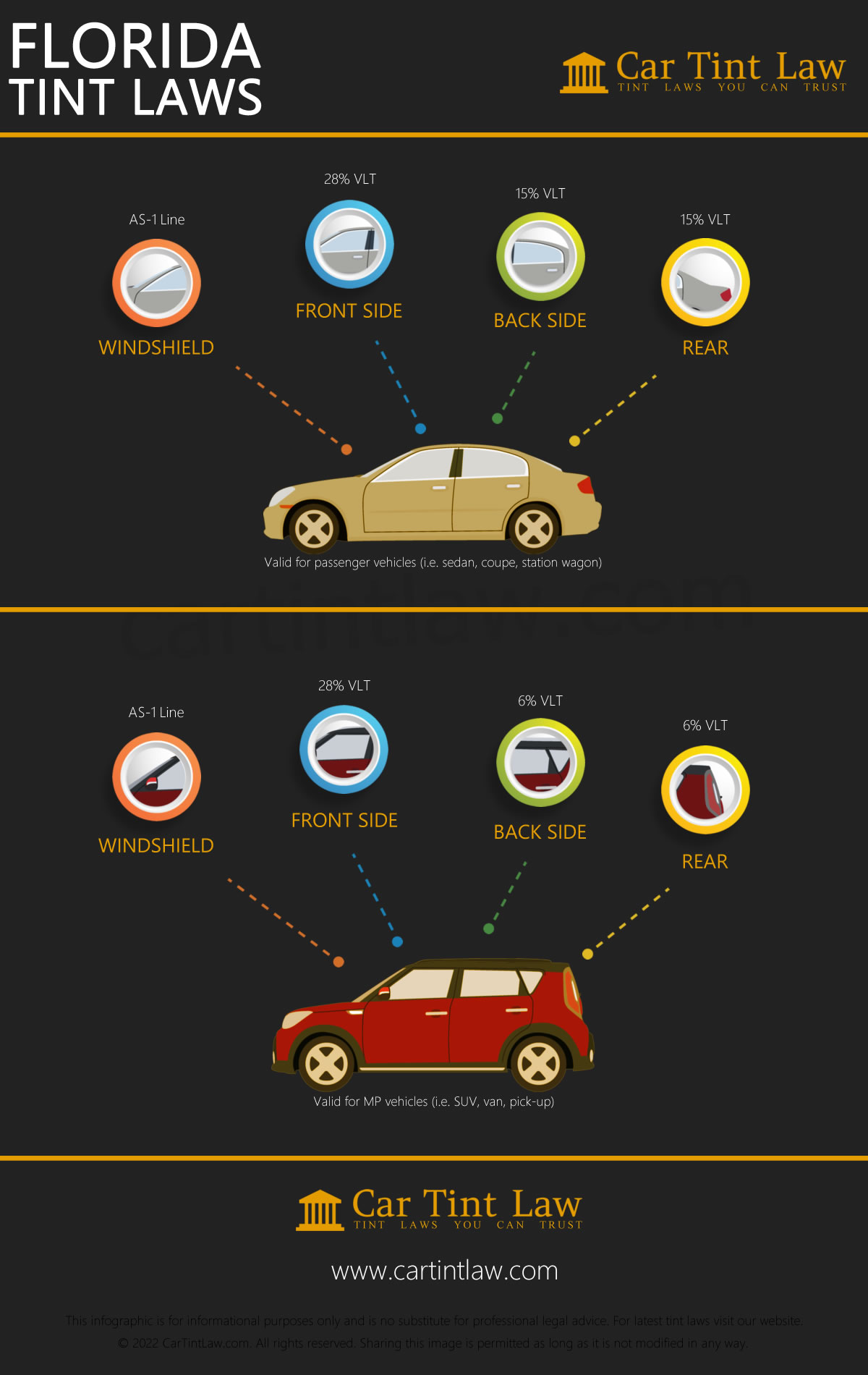
- Front Side Windows: These are the windows on either side of the driver and front passenger. In Florida, these windows must allow more than 28% of visible light through. This means your tint must have a VLT of 28% or higher. This specific percentage aims to ensure that the driver has clear side visibility, especially when checking mirrors or making turns, while still offering some sun protection and privacy.
- Back Side Windows: These are the windows immediately behind the front side windows, extending to the rear of the vehicle. For these windows, the law is more lenient, requiring that they allow more than 15% of visible light through. This darker allowance acknowledges that these windows are less critical for direct driver visibility compared to the front windows, and it provides enhanced privacy for passengers or items stored in the back.
- Rear Window: The rear window (back glass) must also allow more than 15% of visible light through. Similar to the back side windows, this VLT percentage offers significant tinting capabilities for heat reduction and privacy, provided the vehicle is equipped with dual side mirrors that are in good working order. Without functional side mirrors, the rear window would need to be untinted or very lightly tinted to ensure rear visibility.
Windshield Tint Regulations
The windshield has the most stringent regulations due to its paramount role in driver visibility. In Florida, tint is generally not permitted on the primary viewing area of the windshield. However, a small strip of non-reflective tint is allowed along the top of the windshield. This strip must not extend below the AS-1 line, which is a factory-marked line usually found near the top of the windshield. If your vehicle does not have an AS-1 line, the tint strip cannot extend more than 5 inches down from the top of the windshield. This allowance provides some glare reduction, particularly from the overhead sun, without obstructing the driver’s critical field of vision. Any tinting beyond this specified area on the windshield is illegal and can lead to immediate penalties.
Beyond VLT: Other Key Tint Regulations in Florida
While VLT percentages are the cornerstone of Florida’s tint laws, other critical regulations govern the type and application of window film. These additional rules are just as important for ensuring full compliance and avoiding legal complications, especially for tourists unfamiliar with state-specific nuances.
Reflectivity and Color Restrictions
Florida law also places restrictions on the reflectivity and color of window tint. The tint film used on any windows must not be more than 25% reflective. This regulation is in place to prevent tint from creating excessive glare for other drivers, which could be a significant safety hazard, particularly in [Florida](https://lifeoutofthebox.com/florida]’s bright sunshine. Highly reflective tints can also make it difficult for law enforcement officers to see into the vehicle.
Furthermore, certain tint colors are prohibited. Red and amber tints are explicitly forbidden because they can interfere with traffic signal interpretation or be confused with emergency vehicle lighting. While most commonly available tints are gray, black, or bronze, it’s crucial to ensure any chosen tint color is not on the prohibited list. Always opt for standard, non-obtrusive colors to guarantee compliance and avoid drawing unnecessary attention.
Medical Exemptions
[Florida](https://lifeoutofthebox.com/florida] law recognizes that some individuals may require darker window tint than the standard legal limits due to medical conditions. Conditions such as severe photosensitivity, lupus, or other dermatological issues exacerbated by sun exposure can qualify for an exemption. To obtain a medical exemption, an individual must receive a written certification from a licensed physician or optometrist. This certification must state that the medical condition requires the patient to have darker window tint for protection from the sun’s harmful rays.Once certified, the individual must carry this documentation in their vehicle at all times. This exemption allows for a darker tint, often down to 15% VLT on all side and rear windows, and sometimes even on the front windshield (though this is typically a clear UV film that does not significantly reduce VLT). It’s crucial for residents and visitors with such conditions to understand and follow the precise procedure for obtaining and carrying this medical exemption to prevent issues with law enforcement.
Manufacturer’s Certification
For legal tinting, [Florida](https://lifeoutofthebox.com/florida] law requires that the window film installer or the vehicle owner affix a sticker or label to the driver’s side front window. This certification sticker must indicate that the vehicle’s tint complies with [Florida](https://lifeoutofthebox.com/florida]’s window tint laws. This small but significant detail serves as quick proof of compliance for law enforcement officers. Professional tint shops in [Florida](https://lifeoutofthebox.com/florida] are well-versed in these requirements and will typically apply the necessary sticker automatically. If you’re considering tinting your vehicle, or if you’re driving into [Florida](https://lifeoutofthebox.com/florida] from another state with existing tint, ensure that this certification is present and visible to avoid potential issues.
Why Florida’s Tint Laws Matter for Tourists and Residents Alike
Understanding and adhering to [Florida](https://lifeoutofthebox.com/florida]’s window tint laws is more than just a bureaucratic formality; it’s a practical necessity that contributes to a smooth, safe, and enjoyable experience for everyone on the road. For visitors, compliance prevents disruptions to their travel plans, while for residents, it ensures hassle-free daily commutes.
Avoiding Fines and Legal Headaches
The most immediate consequence of illegal window tint is the potential for fines. In [Florida](https://lifeoutofthebox.com/florida], an illegal tint violation is typically a non-criminal traffic infraction, similar to a speeding ticket. While the monetary fine itself might not be exorbitant, it comes with court costs and administrative fees, adding up to an unwelcome expense. More importantly, being pulled over for illegal tint can disrupt travel plans, cause delays, and create unnecessary stress. For tourists, this could mean missing a scheduled attraction in Orlando or a flight from Miami. For residents, it’s an avoidable hassle that detracts from their day. Consistent non-compliance could lead to more severe penalties, including orders to remove the tint, which incurs additional costs and inconvenience. Proactive adherence to the law is the simplest way to sidestep these legal headaches.
Safety and Visibility
[Florida](https://lifeoutofthebox.com/florida]’s tint laws are not arbitrary; they are fundamentally rooted in safety. The specified VLT percentages, especially for front side windows and the windshield, are designed to ensure drivers maintain adequate visibility, particularly during adverse weather conditions, at night, or when changing lanes and checking blind spots. Overly dark tint can severely impair a driver’s ability to see pedestrians, cyclists, and other vehicles, significantly increasing the risk of accidents. Furthermore, law enforcement officers rely on being able to see into a vehicle during traffic stops for their safety and the safety of the occupants. Tint that is too dark impedes this visibility, potentially escalating routine stops into more tense situations. Balancing the desire for heat reduction and privacy with the imperative of road safety is crucial for every driver in the state.Preserving Your Florida Experience
For tourists, a trip to [Florida](https://lifeoutofthebox.com/florida] is often a carefully planned adventure, brimming with anticipation for sun-drenched beaches, thrilling theme parks, and vibrant city life. A traffic stop for illegal window tint can put an abrupt halt to this experience. Imagine driving through Key West‘s picturesque streets only to be delayed by a tint violation. Such incidents can sour the mood, waste precious vacation time, and leave a lasting negative impression. By ensuring your vehicle’s tint is compliant before you even set off, or by being mindful when renting a car in [Florida](https://lifeoutofthebox.com/florida] cities like Tampa, you can proactively safeguard your travel experience. Residents, too, benefit from compliance, as it contributes to stress-free daily commutes and a harmonious driving environment, allowing them to enjoy the lifestyle [Florida](https://lifeoutofthebox.com/florida] offers without unnecessary interruptions.
Practical Tips for Ensuring Your Vehicle Complies
Whether you’re a long-time resident of Florida, a seasonal visitor, or just passing through, taking proactive steps to ensure your vehicle’s window tint complies with state laws is a smart move. Prevention is always better than dealing with the consequences of a violation.
Checking Your Current Tint
If you’re unsure about the legality of your current window tint, there are several ways to check it. The most accurate method is to use a tint meter, a small device that measures the VLT percentage of your windows. Many professional tint shops and some law enforcement agencies have these devices and may offer to check your tint for free or a small fee. Alternatively, you can visually compare your tint to other vehicles you know are compliant, though this is less precise. When in doubt, it’s always best to err on the side of caution or seek professional advice. Remember that tint can fade or change over time, so an older tint job might not be as compliant as it once was.
Professional Installation Benefits
For anyone considering getting new window tint, choosing a reputable, professional installer in [Florida](https://lifeoutofthebox.com/florida] is highly recommended. These professionals are well-versed in the exact VLT percentages, reflectivity limits, and color restrictions specific to [Florida](https://lifeoutofthebox.com/florida] law. They use high-quality films that meet legal standards and are capable of providing the required certification sticker. Attempting a DIY tint job can be challenging to get right in terms of both aesthetics and compliance, potentially leading to bubbles, creases, and, more importantly, illegal tint levels. Investing in professional installation ensures peace of mind, a flawless finish, and guaranteed adherence to state regulations.
Renting a Car in Florida
For tourists arriving in Florida and renting a vehicle, the responsibility for compliant tint still falls on the driver. Reputable car rental agencies typically ensure their fleet vehicles comply with state laws, but it’s always wise to do a quick visual check. If a rental car appears to have unusually dark tint, especially on the front side windows, it’s prudent to inquire with the rental company or request a different vehicle. While it’s rare for rental cars to be non-compliant, being aware of the laws empowers you to avoid potential issues during your travels. Most rental companies operate with standard, legally compliant tinting or no tinting at all beyond the factory default.
Driving into Florida from Another State
Florida’s window tint laws may differ significantly from those in your home state. What’s perfectly legal in Georgia or Alabama might be illegal once you cross the Florida state line. There is no nationwide reciprocity for window tint laws, meaning your vehicle must comply with the laws of the state you are currently driving in, not your state of registration. Before embarking on a road trip to Florida, it is crucial to research Florida’s specific tint regulations and ensure your vehicle meets them. If your tint is too dark, consider having it professionally removed or replaced before your trip to avoid potential fines and delays upon entering the Sunshine State.
The Benefits of Legal Window Tint in the Sunshine State
While complying with [Florida](https://lifeoutofthebox.com/florida]’s legal tint limits is a necessity, it’s also worth highlighting the tangible benefits that appropriate window tint provides, especially in a state renowned for its intense sun and warm climate. These advantages enhance comfort, preserve vehicle longevity, and contribute to overall driving pleasure.
Heat Reduction and UV Protection
One of the primary reasons drivers opt for window tint in [Florida](https://lifeoutofthebox.com/florida] is its remarkable ability to reduce heat buildup inside the vehicle. On a sweltering [Florida](https://lifeoutofthebox.com/florida] day, tint can significantly lower interior temperatures, making the car more comfortable upon entry and reducing the strain on the air conditioning system. This translates to better fuel efficiency and a more pleasant driving experience. Beyond heat, quality window tint blocks a substantial amount of harmful ultraviolet (UV) rays. UV radiation is a major contributor to skin damage and can also accelerate the fading and degradation of car interiors. By filtering out these rays, legal tint acts as a protective barrier for both occupants and the vehicle’s cabin.
Interior Preservation
The relentless [Florida](https://lifeoutofthebox.com/florida] sun can take a severe toll on a vehicle’s interior. Dashboards crack, upholstery fades, and plastic components become brittle over time due to prolonged exposure to UV radiation and intense heat. Legal window tint acts as a crucial defense mechanism against these damaging effects. By significantly reducing UV penetration and interior temperatures, tint helps preserve the aesthetic appeal and structural integrity of your car’s cabin. This protection extends the life of your vehicle’s interior components, maintaining its resale value and keeping it looking newer for longer.

Enhanced Privacy and Security
Within the bounds of [Florida](https://lifeoutofthebox.com/florida]’s legal limits, window tint also offers enhanced privacy and a subtle layer of security. A legal tint makes it more difficult for onlookers to peer into your vehicle, which can deter potential thieves from targeting your car, especially if you have valuables inside. This added sense of privacy can also make occupants feel more comfortable, particularly in crowded areas or during long commutes. While it’s not a foolproof security measure, it adds a psychological barrier that can make your vehicle a less attractive target, contributing to a more relaxed and secure feeling as you explore [Florida](https://lifeoutofthebox.com/florida]’s diverse environments.
In conclusion, understanding “What’s The Legal Tint In Florida?” is an essential piece of knowledge for anyone driving within the state, whether you’re a tourist soaking up the sun in Sarasota or a resident commuting through Jacksonville. By adhering to the specific VLT percentages for different windows, respecting reflectivity and color restrictions, and understanding the nuances of medical exemptions and certification requirements, you can ensure a compliant and hassle-free driving experience. Legal window tint offers a host of benefits, from protecting you and your vehicle from the intense [Florida](https://lifeoutofthebox.com/florida] sun to enhancing privacy and security. By staying informed and choosing responsible tinting practices, you can fully enjoy all that Florida has to offer, without the unwelcome interruption of a traffic stop or the expense of a fine. Drive safe, drive smart, and enjoy the beautiful Sunshine State!
LifeOutOfTheBox is a participant in the Amazon Services LLC Associates Program, an affiliate advertising program designed to provide a means for sites to earn advertising fees by advertising and linking to Amazon.com. Amazon, the Amazon logo, AmazonSupply, and the AmazonSupply logo are trademarks of Amazon.com, Inc. or its affiliates. As an Amazon Associate we earn affiliate commissions from qualifying purchases.