
Embarking on a road trip across the vast and vibrant landscapes of Texas, or perhaps settling into the rhythm of daily life in one of its bustling cities, often involves a vehicle. From the scorching summer sun to the desire for privacy, window tinting is a popular choice for many drivers. However, before you customize your ride with a sleek, dark finish, it’s crucial to understand the legal landscape surrounding window tint in the Lone Star State. For both intrepid travelers exploring Texas’s diverse attractions and residents seeking comfort and compliance, knowing “What’s the legal tint in Texas?” is more than just a legal formality – it’s a key aspect of safe, enjoyable, and worry-free travel and lifestyle.
The regulations surrounding window tint are designed to ensure visibility for drivers and law enforcement, maintaining road safety for everyone. While aesthetics and personal comfort are valid reasons for tinting, they must align with the state’s specific guidelines. This comprehensive guide will break down the intricacies of Texas’s window tint laws, exploring the specific percentages, permissible locations, and special conditions that every driver should be aware of. Whether you’re planning a visit to the historic San Antonio River Walk, commuting through Houston‘s urban sprawl, or simply enjoying the scenic routes connecting Austin to Dallas, understanding these rules will help you navigate the roads confidently and lawfully.
Navigating the Lone Star State: Understanding Texas Window Tint Laws for Travelers and Residents
Texas tint laws are part of the broader Texas Transportation Code, specifically designed to regulate the amount of light that can pass through a vehicle’s windows. These regulations are primarily concerned with Visible Light Transmission (VLT), which dictates how transparent your windows must remain. Ignoring these laws can lead to fines and potential safety issues, making it essential for anyone driving in the state to be informed.
The Basics of Visible Light Transmission (VLT)
VLT is expressed as a percentage, indicating the amount of visible light that can pass through the window film and glass. A higher VLT percentage means more light can pass through, making the tint lighter. Conversely, a lower VLT percentage means less light can pass through, resulting in a darker tint. For example, a 70% VLT tint allows 70% of visible light to penetrate, while a 5% VLT tint (often referred to as “limo tint”) allows only 5% of light through, making it very dark.
Texas laws specify different VLT percentages for different windows on a vehicle, acknowledging the varying needs for visibility from different angles. It’s not just about the film itself; the VLT measurement includes the original factory tint of the glass, which can often be around 70-80% VLT even before any aftermarket film is applied. This means that if you add a 35% VLT film to a window that already has a factory tint of 75% VLT, the actual combined VLT will be lower than 35%, potentially putting you out of compliance. Professional installers use meters to accurately measure the combined VLT.
Front, Rear, and Side: Decoding Texas Tint Percentages
The specific VLT percentages allowed in Texas vary depending on which window you are tinting. These distinctions are critical for both driver visibility and ensuring that law enforcement can see into the vehicle, especially during traffic stops.
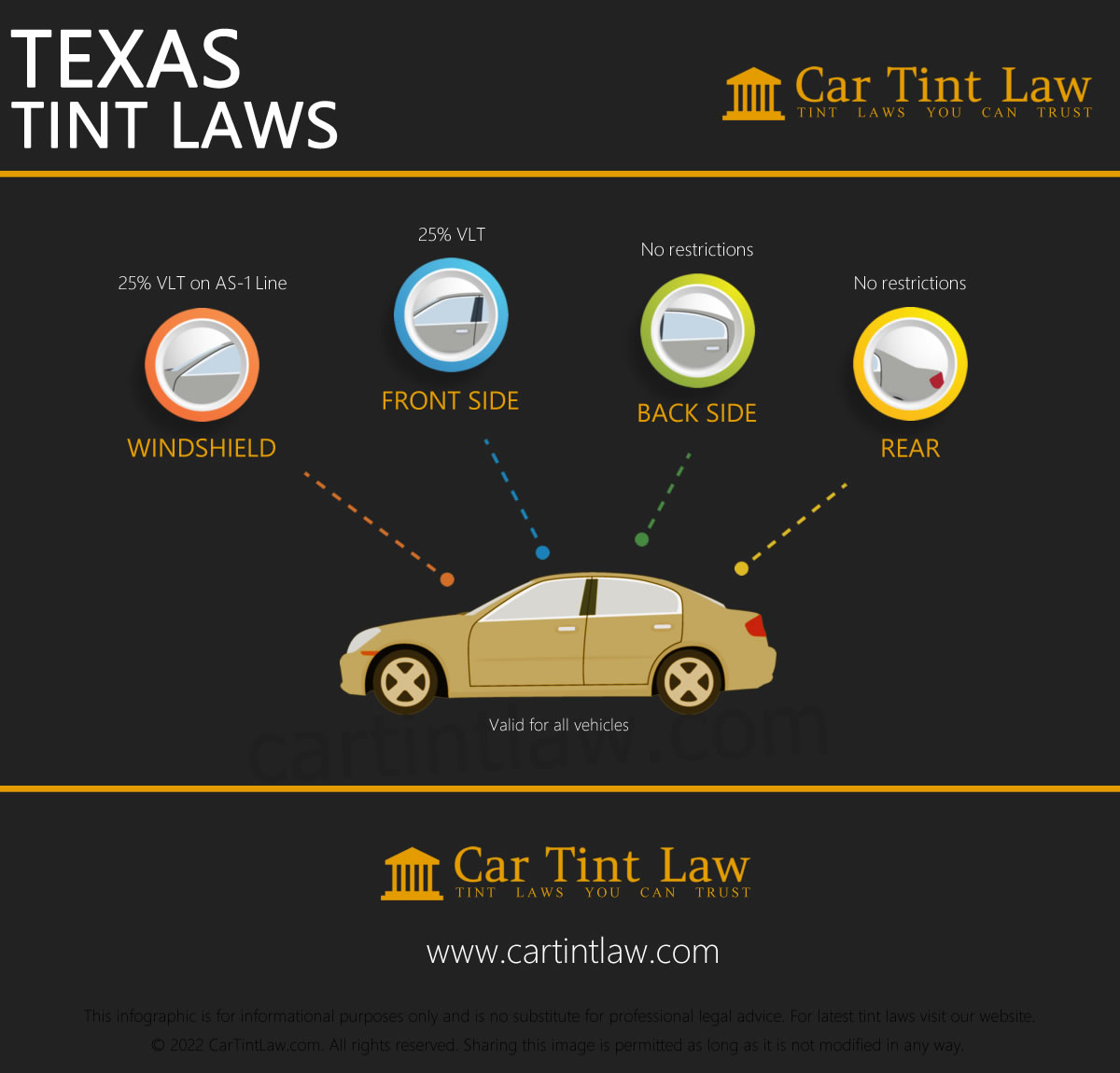
- Windshield: The rules for the windshield are very strict. Non-reflective tint is allowed only on the top 5 inches of the windshield, or above the AS-1 line, whichever is lower. The AS-1 line is a marking usually found on the upper part of the windshield, indicating the manufacturer’s safe tinting zone. Below this line, the windshield must remain clear, meaning no tint film is allowed. This is crucial for maintaining maximum visibility, particularly in adverse weather conditions or at night.
- Front Side Windows: These are the windows on either side of the driver and front passenger. For these windows, the tint film must allow more than 25% of light in. This means the VLT must be above 25%. So, a 30% VLT or 35% VLT tint would be acceptable, but a 20% VLT would not. This percentage aims to strike a balance between privacy/heat reduction and the ability for drivers to see clearly out of their side windows and for law enforcement to see occupants inside the vehicle.
- Rear Side Windows: These are the windows behind the driver and front passenger seats. In Texas, if your vehicle has dual outside rearview mirrors, there are no restrictions on the darkness of the tint for the rear side windows. This means you can opt for very dark tints, such as 5% VLT, if you wish. Most modern vehicles are equipped with dual outside rearview mirrors, making this a common allowance. However, if your vehicle only has a single rearview mirror (uncommon for newer vehicles), then the rear side windows must also adhere to the “more than 25% VLT” rule.
- Rear Window: Similar to the rear side windows, if your vehicle has dual outside rearview mirrors, there are no restrictions on the darkness of the tint for the rear window. This allows for maximum privacy or heat reduction in the back of the vehicle. If, for some reason, your vehicle lacks dual mirrors, then the rear window would also need to be above 25% VLT.
In addition to VLT, there are also rules about the reflectivity of the tint. Window tint in Texas must not be more than 25% reflective. Highly reflective tints can cause glare for other drivers, posing a safety hazard.
Special Considerations: Medical Exemptions and Tint Colors
While the VLT percentages and reflectivity limits are standard, Texas law does provide for certain exceptions and prohibits specific tint characteristics.
- Medical Exemptions: Individuals with a medical condition that makes them unusually sensitive to sunlight (such as lupus, severe photodermatitis, or other photosensitivity conditions) may be granted an exemption to the standard tinting laws. To qualify, a written prescription or a statement from a licensed physician or optometrist is required, indicating the medical necessity for darker window tint. This documentation must be carried in the vehicle at all times and presented to law enforcement upon request. The exemption typically allows for darker tints than usually permitted, but the specific allowances may vary.
- Prohibited Tint Colors: Texas law prohibits certain colors of window tint. Specifically, red, blue, and amber tints are illegal, regardless of their VLT percentage. These colors can interfere with law enforcement’s ability to distinguish between emergency vehicle lights and can generally cause confusion on the road. Most legal tints come in shades of black, charcoal, or bronze.
- Certification Stickers: Aftermarket window tint installers are often required to place a sticker on the driver’s side window jamb, certifying that the tint meets Texas law. While not explicitly mandated for all vehicles, it’s a good practice and can help demonstrate compliance if questioned by law enforcement. Always ensure your installer is reputable and familiar with Texas regulations.
Why Texas Tint Laws Matter: Beyond Just Legalities
Understanding Texas’s tint laws extends beyond merely avoiding a ticket. These regulations play a significant role in enhancing safety, comfort, and the overall experience of driving and living in the state. From battling the intense summer heat to providing a sense of privacy, window tint serves multiple purposes, all while operating within a framework designed for public well-being.
Enhancing Your Texas Road Trip Experience (Comfort & Safety)
For travelers embarking on an epic Texas road trip, whether through the rugged beauty of Big Bend National Park, the historic charm of San Antonio, or the coastal allure of Galveston, appropriate window tint can significantly improve the journey. The Lone Star State is renowned for its intense sunshine, especially during the long summer months. Legal window tint can offer:
- Heat Reduction: A significant benefit of window tint is its ability to block solar heat. This can make the interior of your car considerably cooler, reducing the strain on your air conditioning system and improving fuel efficiency. For long drives across arid regions like those near El Paso or through the plains around Amarillo, this comfort factor is invaluable.
- UV Protection: Quality window films block a high percentage of harmful ultraviolet (UV) rays. This protects occupants from sun exposure, which can contribute to skin damage and premature aging. It also helps to prevent the interior of your vehicle – seats, dashboard, and upholstery – from fading, cracking, and deteriorating due to sun damage. This is particularly important for rental cars or personal vehicles that will be spending many hours under the intense Texas sun.
- Glare Reduction: The bright Texas sun can cause significant glare, making driving uncomfortable and potentially dangerous. Tint reduces glare from the sun, snow, and even headlights at night, improving visibility and reducing eye strain for the driver and passengers. This is especially beneficial when driving into the sunrise or sunset on long stretches of highway.
- Safety and Security: While not its primary purpose, tint can add a layer of safety. In the event of an accident, the film can help hold shattered glass together, preventing shards from flying and injuring occupants. Furthermore, darker tints can deter smash-and-grab thefts by making it harder for potential criminals to see valuables inside the vehicle, a small but notable benefit in bustling tourist areas or urban centers like Dallas or Fort Worth.
Practical Implications for Texas Living and Vehicle Ownership
For residents of Texas, legal window tint becomes an integral part of daily life and vehicle maintenance. The climate, combined with the desire for personal space, drives many to consider tinting their vehicle windows.

- Daily Commuting Comfort: Whether navigating the extensive highway systems of Houston or the often-congested streets of Austin, daily commuters spend a significant amount of time in their cars. Legal tint contributes to a more comfortable commute by managing interior temperatures and reducing sun glare, making the drive more pleasant and less fatiguing.
- Vehicle Longevity: The harsh Texas climate can take a toll on vehicle interiors. UV rays are a major culprit behind faded dashboards, cracked leather, and deteriorating plastics. By blocking UV radiation, legal window tint helps preserve the interior of your vehicle, maintaining its aesthetic appeal and resale value over time.
- Privacy: While the front side windows have clear VLT restrictions to ensure visibility, the allowance for darker tints on rear and rear side windows offers a degree of privacy for passengers and items stored in the back of the vehicle. This is particularly appreciated by families or those who frequently transport sensitive equipment or personal belongings.
- Environmental Impact: By reducing the heat inside your car, window tint lessens the demand on your air conditioning system. This, in turn, can lead to lower fuel consumption and reduced emissions, contributing to a slightly smaller carbon footprint – a small but meaningful lifestyle choice for environmentally conscious Texas residents.
Ensuring Compliance: Tips for Drivers and Visitors in Texas
Adhering to Texas’s window tint laws is straightforward if you know what to look for and how to ensure your vehicle is compliant. For both long-term residents and temporary visitors, a few key steps can prevent potential issues and ensure a smooth driving experience.
Checking Your Tint: What to Look For
If you’re unsure whether your current tint is legal, or if you’re considering purchasing a used vehicle in Texas, there are ways to assess its legality.
- Visual Inspection: For the windshield, ensure that tint only extends to the top 5 inches or the AS-1 line. For front side windows, a quick visual check can give you an idea. If they appear significantly darker than a standard factory window or are noticeably darker than the rear windows (if those are very dark), they might be too dark.
- VLT Meter: The most accurate way to check your tint’s legality is with a VLT meter. These devices measure the exact percentage of light passing through the window. Many automotive shops, tint installers, and even some law enforcement agencies have these meters. If you are concerned, a professional tint shop can perform a quick check for you.
- Look for Certification: Check the driver’s side window jamb for a sticker from the installer certifying that the tint meets Texas standards. While not always present, it’s a good sign of compliance.
- Prohibited Colors: Visually inspect the tint for any red, blue, or amber hues. If present, the tint is illegal.
Penalties and Enforcement: What Happens if You’re Non-Compliant
Driving with illegal window tint in Texas can result in a traffic citation. The penalties are generally considered a misdemeanor and typically involve a fine. While usually a relatively minor offense compared to more serious traffic violations, it can still be an inconvenience and an unexpected expense for travelers or residents alike.
- Fines: The base fine for an illegal tint violation can vary by county and municipality, but typically ranges from around $100 to $200, plus court costs.
- Repair Order: In addition to a fine, you might receive a “fix-it ticket” or be required to remove the illegal tint within a certain timeframe and provide proof of compliance to the court. Failure to do so could result in further penalties or additional fines.
- Vehicle Inspection: Illegal tint can also cause your vehicle to fail its annual Texas safety inspection, preventing you from renewing your registration until the issue is resolved.
- Safety Stop: Law enforcement officers can pull you over if they suspect your tint is illegal, potentially leading to further scrutiny of your vehicle and driving status.
For visitors to Texas from other United States states or countries, it’s important to note that your home state’s tint laws may differ from Texas’s. While some discretion may be exercised for out-of-state plates, it’s ultimately your responsibility to ensure your vehicle complies with local laws when driving within Texas.
Professional Installation and Verification
The best way to ensure your vehicle’s window tint is legal in Texas is to have it professionally installed by a reputable tint shop that is familiar with state laws.
- Expert Knowledge: Professional installers have up-to-date knowledge of the specific VLT percentages, reflectivity limits, and color restrictions. They can advise you on the best tint options that meet your needs while staying within legal bounds.
- Quality Materials and Installation: They use high-quality films that offer superior UV protection, heat reduction, and durability, and they apply them correctly to avoid bubbles, peeling, or other defects.
- Accurate Measurement: Professional shops use VLT meters to ensure the final tint, including the factory glass, meets the legal requirements.
- Certification: Many will provide a certification sticker, which can be helpful if questioned about your tint’s legality.
When seeking professional installation, always ask if they are familiar with Texas tint laws and request documentation of the VLT rating if not a sticker.
Texas Tint Laws in the Broader Context of Travel and Lifestyle
The nuances of window tint laws, while seemingly minor, are intrinsically linked to the broader travel and lifestyle experience in Texas. They reflect a balance between individual preference and public safety, impacting everything from the comfort of a family road trip to the daily commute of a local professional.
From Austin to El Paso: Driving Across Diverse Texas Landscapes
Texas is a state of immense geographical and cultural diversity. From the vibrant live music scene of Austin to the historic missions of San Antonio, the sprawling metropolis of Houston to the desert vistas surrounding El Paso, each destination offers unique attractions and experiences. Driving between these locales often means long hours on the road, where the sun can be a relentless companion.
For tourists, adhering to tint laws means they can enjoy the scenic drives to places like Guadalupe Mountains National Park or the beaches of Corpus Christi without the stress of potential legal issues. It ensures that the focus remains on the breathtaking landscapes and the anticipation of new experiences, rather than concerns about traffic stops. Similarly, for those exploring the Texas State Capitol in Austin or visiting Space Center Houston, a legally tinted vehicle offers comfort and protection during their travels, allowing them to arrive refreshed and ready to engage with the local culture and attractions. The ability to manage interior temperatures and glare through legal tint enhances the journey itself, making the distances feel shorter and the overall travel experience more enjoyable.
The Lifestyle Choice: Balancing Aesthetics, Privacy, and Legality
For many Texas residents, window tint is more than just a functional addition; it’s a lifestyle choice. It contributes to the overall aesthetic of their vehicle, offering a sleek, customized look that reflects personal style. Beyond aesthetics, it’s about creating a personal sanctuary within their car – a private space that is cooler, more comfortable, and offers a sense of seclusion from the outside world.
Balancing these desires with legal requirements is key. Texas laws, particularly the allowance for darker rear window tints, acknowledge these lifestyle preferences while maintaining strict controls on front window visibility for safety. This balance allows drivers to enjoy the benefits of tinting – enhanced privacy, significant heat and UV protection, and a refined appearance – without compromising safety or breaking the law. It’s about making informed choices that align with both personal needs and community regulations, ensuring that the driving experience in Texas is safe, comfortable, and legally sound for everyone on the road.
In conclusion, knowing “What’s the legal tint in Texas?” is an essential piece of information for anyone behind the wheel in the Lone Star State. By understanding and adhering to these regulations, drivers can enjoy the many benefits of window tinting – from enhanced comfort and UV protection to increased privacy – all while contributing to road safety and avoiding unnecessary legal complications. Whether you’re a tourist marveling at The Alamo or a resident navigating your daily routine, compliance with Texas window tint laws ensures a smoother, more enjoyable, and legally sound journey.
LifeOutOfTheBox is a participant in the Amazon Services LLC Associates Program, an affiliate advertising program designed to provide a means for sites to earn advertising fees by advertising and linking to Amazon.com. Amazon, the Amazon logo, AmazonSupply, and the AmazonSupply logo are trademarks of Amazon.com, Inc. or its affiliates. As an Amazon Associate we earn affiliate commissions from qualifying purchases.