
Understanding the climate of Corpus Christi, Texas is paramount for any traveler or visitor planning their itinerary. This vibrant coastal city, nestled along the Gulf of Mexico, experiences a unique subtropical climate characterized by warm temperatures year-round, abundant sunshine, and a gentle sea breeze that often mitigates the summer heat. For those considering a visit, whether for its renowned beaches, burgeoning culinary scene, or rich historical attractions, grasping the nuances of its weather patterns will significantly enhance the overall experience.
Understanding Corpus Christi’s Climate Patterns
Corpus Christi boasts a humid subtropical climate, denoted as Cfa in the Köppen climate classification. This classification signifies hot, humid summers and mild winters, with precipitation distributed relatively evenly throughout the year, though often with a slight peak in the late summer and early fall due to tropical systems. The city’s coastal location plays a pivotal role in moderating its temperatures, preventing the extreme highs and lows sometimes experienced inland. The prevailing sea breezes, particularly during the afternoon, offer a welcome respite from the humidity and contribute to the city’s appeal as a year-round destination.

Seasonal Temperature Overview
The temperature in Corpus Christi, Texas can be best understood by examining its distinct seasons. While distinct, the transitions between them are often gradual, with a general trend of increasing warmth from spring to summer and decreasing warmth from fall to winter.
Spring (March – May)
Spring in Corpus Christi is a period of pleasant and warming temperatures. March typically sees average highs in the low 70s Fahrenheit (around 21-23°C), with nighttime lows settling in the comfortable 50s F (10-15°C). As spring progresses into April and May, temperatures gradually climb. By May, average highs are frequently in the mid-80s F (29-31°C), with evenings remaining balmy in the 70s F (21-23°C). This season is ideal for outdoor activities, from exploring the Texas State Aquarium to enjoying a leisurely stroll along Cole Park. Rainfall during spring is moderate, often occurring in scattered thunderstorms, which can briefly cool the air.
Summer (June – August)
Summers in Corpus Christi, Texas are characteristically hot and humid. June, July, and August are the warmest months, with average daily high temperatures consistently hovering in the upper 80s to low 90s F (31-34°C). However, the “feels like” temperature, influenced by the high humidity, can often exceed 100°F (38°C). The sea breeze is crucial during these months, offering a degree of relief, especially along the coast. Evenings provide little respite from the heat, with lows often remaining in the mid-70s F (23-25°C). Despite the heat, summer is a prime season for beach-goers and those seeking water-based activities, with temperatures in the Gulf of Mexico reaching their warmest, typically in the high 80s F (30-31°C). This period also carries the highest risk of tropical activity, though direct impacts are not a daily occurrence.
Autumn (September – November)
As summer transitions into autumn, Corpus Christi experiences a gradual cooling trend, though it remains remarkably warm well into the season. September can still feel very much like summer, with average highs in the low 90s F (32-34°C). However, by October, temperatures begin to moderate, with highs typically in the mid-80s F (29-31°C) and lows dropping into the 60s F (15-20°C). November brings a more distinct autumnal feel, with average highs in the low 70s F (21-23°C) and evenings cooling into the 50s F (10-15°C). Autumn is often considered one of the most pleasant times to visit Corpus Christi, Texas, offering a comfortable climate for exploring attractions like the USS Lexington Museum and enjoying the vibrant downtown area. Rainfall tends to decrease compared to the summer months, although the risk of tropical storm activity persists through November.
Winter (December – February)
Winters in Corpus Christi, Texas are mild and generally pleasant, providing a stark contrast to the frigid temperatures experienced in many other parts of the country. December, January, and February are the coolest months, but “cool” in this context means average daily highs typically ranging from the mid-60s to low 70s F (18-22°C). Freezing temperatures are rare and usually short-lived, with overnight lows often settling in the 40s F (4-9°C). While occasional cold fronts can bring a temporary dip in temperature, sunny skies and mild conditions are more common. This makes winter an attractive time for visitors seeking to escape harsher climates, offering opportunities for fishing, birdwatching, and enjoying the city’s outdoor spaces without the intense summer heat. The South Texas Botanical Gardens & Nature Center remains a beautiful destination year-round, with winter offering a unique perspective on its flora.
Key Factors Influencing Corpus Christi’s Temperature
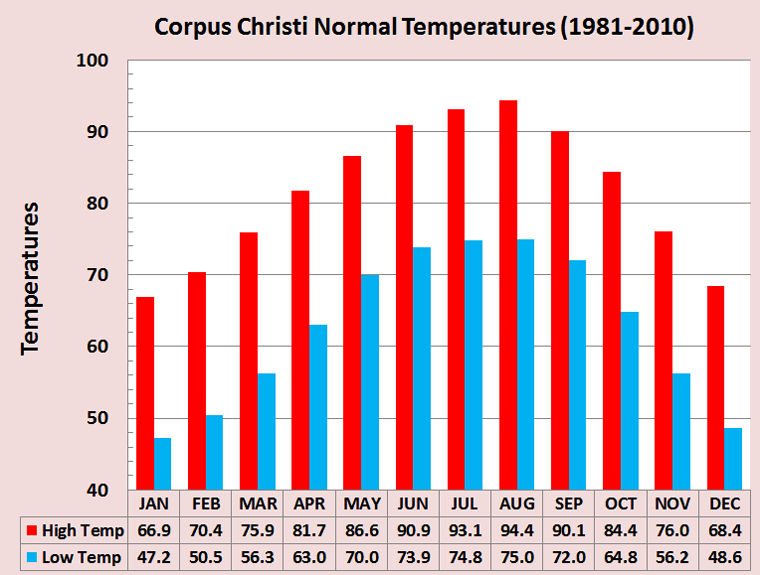
Several geographical and meteorological factors contribute to the distinct temperature profile of Corpus Christi, Texas. Understanding these elements provides a deeper appreciation for the city’s climate.
The Moderating Influence of the Gulf of Mexico
The most significant factor shaping Corpus Christi’s temperature is its proximity to the Gulf of Mexico. The vast body of water acts as a natural thermostat. During the summer, the gulf absorbs a tremendous amount of solar radiation, keeping its surface temperature warm, but also radiating heat more slowly than land. This means that while the land heats up considerably, the adjacent ocean’s temperature helps to moderate the extreme highs that might otherwise occur. Conversely, in winter, the ocean retains heat longer than the land, preventing temperatures from plummeting as drastically as they would in inland locations. The cooler winter air over the land mass is then warmed by the slightly warmer gulf waters, contributing to the mild winter temperatures.
Prevailing Sea Breezes
The daily cycle of sea breezes is another critical element influencing temperature, particularly during the warmer months. Due to differential heating between land and sea, a localized wind system develops. As the land heats up faster than the water during the day, the air above the land rises, creating an area of lower pressure. Cooler, denser air from over the Gulf of Mexico then flows inland to replace it, creating a sea breeze. In Corpus Christi, this breeze typically picks up in the late morning and becomes most pronounced in the afternoon, offering a refreshing coolness and helping to lower the perceived temperature, especially along the coast and at popular spots like Padre Island National Seashore.
Humidity Levels
While the Gulf of Mexico provides moderating temperatures, it also contributes significantly to the city’s humidity levels. The warm waters constantly evaporate, releasing moisture into the air. This results in high relative humidity throughout much of the year, particularly during the summer. High humidity can make even moderately warm temperatures feel much hotter, as it hinders the body’s ability to cool itself through perspiration. Understanding humidity is as crucial as knowing the actual temperature when planning activities in Corpus Christi, Texas.
Planning Your Visit Based on Temperature
Armed with an understanding of Corpus Christi, Texas’s climate, visitors can better plan their trips to maximize enjoyment and comfort, whether they are visiting for the annual Bayfest or a quiet retreat.
Packing Essentials for Different Seasons
Packing appropriately is key to enjoying the weather. During the hot and humid summer months, lightweight, breathable clothing such as cotton and linen is essential. Sun protection, including hats, sunglasses, and high SPF sunscreen, is non-negotiable. Hydration is paramount, so carrying a reusable water bottle is advisable. For spring and autumn, layers are a good strategy, as temperatures can fluctuate between day and night. Light jackets or sweaters will be useful for cooler evenings. Winter visits require lighter layers than most northern destinations but may still benefit from a light coat or fleece for the cooler mornings and evenings. Footwear should prioritize comfort for walking and exploring, with options for water-friendly shoes for beach activities.
Ideal Times for Outdoor Activities
The mild temperatures of spring (March-May) and autumn (September-November) are generally considered the most ideal for extensive outdoor exploration. These periods offer comfortable warmth for visiting attractions like the Texas State Aquarium, exploring the South Texas Botanical Gardens & Nature Center, or enjoying activities on the Nueces River. While summer is undeniably beach season, visitors should be prepared for intense heat and humidity, and plan activities like swimming, surfing, or relaxing on the sand for the cooler parts of the day, or taking advantage of indoor attractions like the Art Museum of South Texas. Winter offers a unique opportunity for those seeking to escape the cold, with mild temperatures suitable for fishing charters, dolphin watching tours, and enjoying the coastal scenery without the oppressive summer heat.

Considering Weather-Related Events
While Corpus Christi, Texas is a beautiful destination year-round, visitors should be aware of potential weather-related events, particularly during the hurricane season, which officially runs from June 1st to November 30th. While direct hits are not a daily threat, tropical storms and hurricanes can impact the region, bringing heavy rainfall, strong winds, and potential disruptions. It is always prudent to monitor weather forecasts and advisories if traveling during this period. Beyond tropical systems, scattered thunderstorms can occur throughout the year, sometimes bringing brief, intense downpours and a refreshing drop in temperature. These events are usually short-lived and can add a dramatic flair to the coastal sky.
LifeOutOfTheBox is a participant in the Amazon Services LLC Associates Program, an affiliate advertising program designed to provide a means for sites to earn advertising fees by advertising and linking to Amazon.com. Amazon, the Amazon logo, AmazonSupply, and the AmazonSupply logo are trademarks of Amazon.com, Inc. or its affiliates. As an Amazon Associate we earn affiliate commissions from qualifying purchases.