
Planning a trip to Reno, Nevada, and wondering about the weather? Understanding the climate is crucial for packing the right gear, planning your activities, and ensuring a comfortable and enjoyable experience in the “Biggest Little City in the World.” Reno boasts a unique high-desert climate, characterized by four distinct seasons, with significant temperature variations between day and night, and generally sunny skies throughout the year. This article delves into the nuances of Reno’s weather, offering insights to help you make the most of your visit, whether you’re drawn to its vibrant downtown, the majestic Sierra Nevada Mountains, or the exciting Nevada gaming scene.
Seasonal Weather Patterns in Reno
Reno’s location, nestled in the high desert east of the Sierra Nevada, dictates its climate. While the nearby Lake Tahoe region often receives abundant snowfall, Reno itself experiences a more moderate, yet still distinct, seasonal cycle. The city is known for its arid conditions, with low humidity and plenty of sunshine year-round. This means that even in warmer months, the dry air can make temperatures feel more manageable, and in winter, the sun often shines brightly even when temperatures are below freezing.
Spring: A Season of Transition and Blooming (March – May)
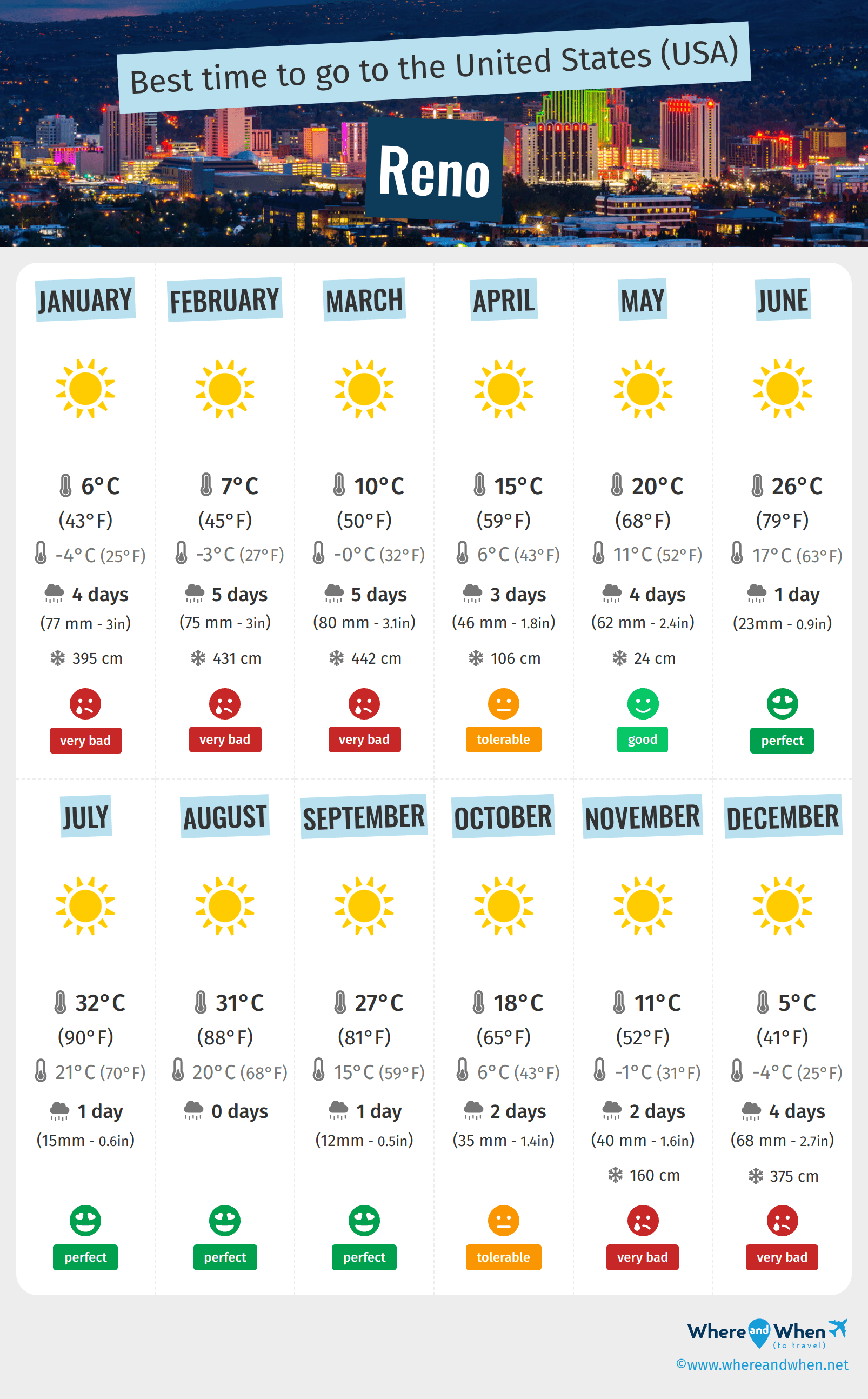
Spring in Reno is a gradual awakening from winter’s chill. March can still bring a taste of winter, with occasional snow showers and freezing temperatures, especially in the early part of the month. However, as April arrives, temperatures begin to climb, and the landscape starts to show signs of life. Daytime highs typically range from the 50s to the 70s Fahrenheit (10-21°C), while evenings can still be quite cool, often dropping into the 30s and 40s Fahrenheit (4-10°C). This transitional period is ideal for outdoor activities like hiking in the foothills surrounding the city or exploring the Truckee River Walk, as the crowds are generally smaller than in peak summer. Wildflowers begin to bloom, adding color to the arid terrain.
Summer: Sunny and Warm with Cool Evenings (June – August)
Summer is Reno’s warmest and driest season. Expect long, sunny days with very little rainfall. Daytime temperatures regularly soar into the 80s and 90s Fahrenheit (27-37°C), with occasional heatwaves pushing temperatures into the triple digits. However, the low humidity and the significant diurnal temperature variation mean that evenings cool down considerably, often to the comfortable 50s and 60s Fahrenheit (10-20°C). This makes outdoor dining and evening strolls a pleasure. Summer is the prime time for exploring the region’s natural beauty, including day trips to nearby destinations like Virginia City or indulging in water sports on Pyramid Lake. It’s also a peak season for many of Reno’s outdoor festivals and events.
Autumn: Crisp Air and Vibrant Foliage (September – November)
Autumn in Reno is a spectacular display of nature’s artistry, combined with pleasant weather. September often carries over the warmth of summer, with comfortable daytime temperatures in the 70s and 80s Fahrenheit (21-27°C). As October progresses, the air becomes noticeably crisper, and temperatures begin to dip. Daytime highs will typically be in the 50s and 60s Fahrenheit (10-20°C), with evenings becoming increasingly chilly, often dropping into the 30s Fahrenheit (around 0-4°C). This season is renowned for the stunning fall colors that paint the surrounding hillsides, particularly in the higher elevations. It’s an excellent time for scenic drives, hiking, and enjoying the harvest season, with local farmers’ markets offering a taste of regional produce.
Winter: Cold and Sunny with Occasional Snow (December – February)
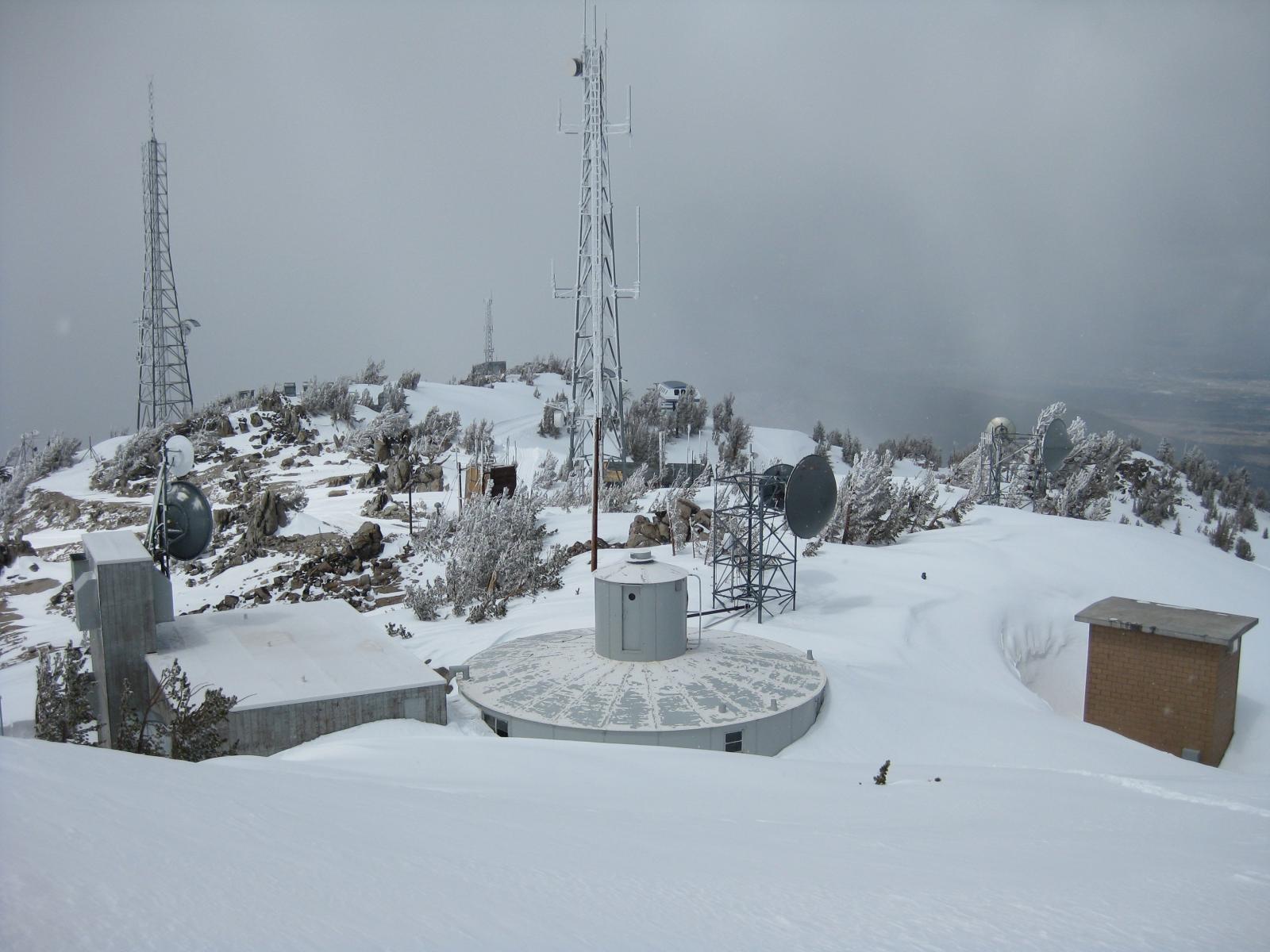
Reno’s winters are cold but often sunny. While the city is not a major ski destination like nearby South Lake Tahoe, it does receive snowfall, typically ranging from 20 to 40 inches annually. Snowfall is often intermittent, with sunny days interspersed with snow events. Daytime temperatures generally hover in the 30s and 40s Fahrenheit (0-10°C), while nighttime temperatures frequently drop below freezing, into the teens and 20s Fahrenheit (-10 to -1°C). The dry air, however, makes the cold feel less biting than in more humid climates. Winter is a great time to experience the cozy side of Reno, perhaps by enjoying the city’s indoor attractions, dining, and, of course, its famous casinos. For those seeking snow sports, the ski resorts in the Sierra Nevada Mountains are a short drive away.
Factors Influencing Reno’s Weather
Reno’s weather is shaped by a confluence of geographical and atmospheric factors that create its unique high-desert environment. Understanding these influences can provide a deeper appreciation for the climate patterns observed throughout the year.
Altitude and Topography
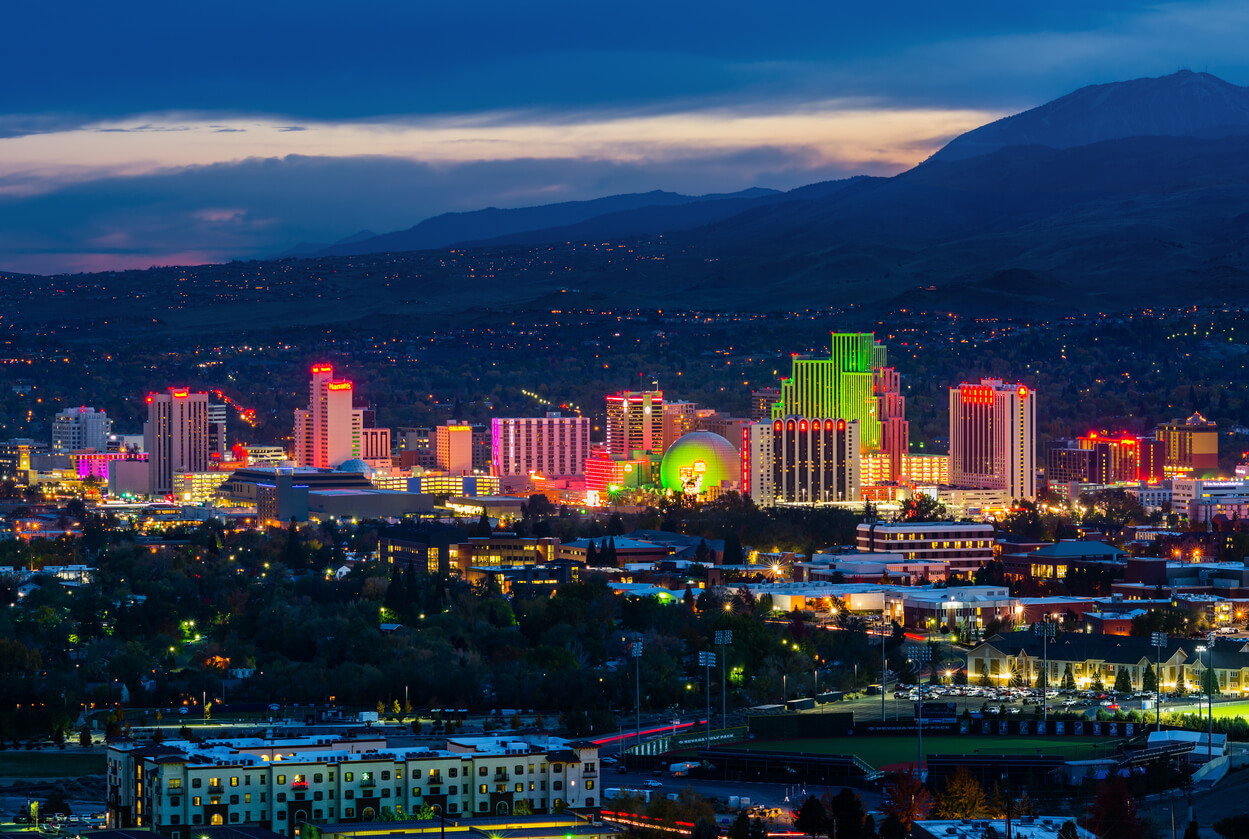
Reno sits at an elevation of approximately 4,500 feet (1,370 meters) above sea level. This significant altitude plays a crucial role in moderating temperatures. While the high altitude contributes to cooler average temperatures compared to lower-lying desert cities, it also allows for intense solar radiation during the day, leading to warm afternoons, especially in summer. The surrounding topography, particularly the imposing Sierra Nevada Mountains to the west, acts as a significant weather barrier. These mountains create a rain shadow effect, meaning that much of the moisture carried by weather systems from the Pacific Ocean is dropped on the western slopes of the mountains, leaving Reno and the Great Basin relatively dry.
Aridity and Sunshine
As a high-desert city, Reno experiences low humidity and a consistently high number of sunny days throughout the year. This aridity is a defining characteristic of the climate. The lack of moisture in the air means that temperatures can fluctuate dramatically between day and night. On a hot summer day, the dry air helps to dissipate heat, and evenings can be surprisingly cool. Conversely, on a cold winter day, the sun can still feel warm on your skin, even if the ambient temperature is below freezing. This dry climate also contributes to the crispness of the autumn air and the clear, star-filled skies often seen on winter nights. The prevalence of sunshine makes Reno an excellent destination for outdoor enthusiasts year-round, as outdoor activities are rarely hampered by overcast skies.
Packing Essentials Based on Reno’s Climate
To fully enjoy your time in Reno, Nevada, it’s essential to pack appropriately for its diverse and often fluctuating weather. The key is layering, as temperatures can vary significantly from morning to afternoon, and from indoor heated environments to outdoor conditions.
Layering for Variable Temperatures
The cornerstone of any Reno packing strategy is the ability to layer. This means bringing a mix of lightweight and mid-weight clothing that can be added or removed as needed. For spring and autumn, a good foundation includes t-shirts or long-sleeved shirts, a fleece jacket or sweater, and a windproof and water-resistant outer shell. Evenings can get quite chilly, so a warmer jacket or coat is advisable. In summer, lightweight, breathable fabrics are essential for daytime comfort, but always pack a light jacket or sweater for the cooler evenings. Winter demands more substantial layers, including thermal base layers, a warm insulated jacket, gloves, a scarf, and a hat. Remember that even on sunny winter days, the temperature can remain below freezing.
Footwear and Accessories
Comfortable walking shoes are a must, as you’ll likely be doing a lot of exploring, whether it’s through the casinos of Downtown Reno, along the Riverwalk District, or on hiking trails. If you plan on visiting during the winter months or venturing into the mountains, waterproof and insulated footwear is highly recommended. Given the high-desert environment and abundant sunshine year-round, sunglasses and a hat are crucial for protecting yourself from the sun’s rays, regardless of the season. Sunscreen is also a vital accessory, as the sun’s intensity can be higher at Reno’s altitude. For those visiting in the spring or fall, a light scarf can be a versatile accessory for both warmth and style.
Maximizing Your Reno Experience Through Weather Awareness
Understanding Reno’s weather patterns is more than just about packing; it’s about enhancing your overall travel experience. By aligning your itinerary with the prevailing conditions, you can uncover the best of what Reno has to offer, from its natural wonders to its urban delights.
Outdoor Adventures and Timing
Reno’s surrounding landscape offers a wealth of outdoor activities, and the weather dictates the optimal times for these adventures. Spring, with its blooming wildflowers and moderate temperatures, is perfect for hiking in the Peavine Mountain area or exploring the trails around Rancho San Rafael Park. Summer is ideal for water activities on Lake Mead or the Colorado River (though these are further afield, many enjoy them from Reno), or for tackling longer hikes in the nearby mountains before the heat of the day sets in. Autumn’s crisp air and vibrant foliage make scenic drives and photography a highlight, while winter, despite the cold, offers opportunities for snowshoeing and cross-country skiing in higher elevations, or simply enjoying the stark beauty of the desert landscape under a clear blue sky. Always check local conditions and forecasts before embarking on any outdoor excursions.
Indoor Attractions and Seasonal Events
While Reno is known for its outdoor appeal, its indoor attractions provide excellent options for any weather. The city’s vibrant downtown area offers a plethora of casinos, such as the iconic Eldorado Resort Casino and the Silver Legacy Resort Casino, museums like the National Automobile Museum, and a thriving culinary scene. On a cold winter day or a scorching summer afternoon, these indoor havens offer comfort and entertainment. Furthermore, Reno hosts numerous events throughout the year, many of which are weather-dependent. Summer brings a packed calendar of outdoor festivals, air races, and concerts. Autumn hosts harvest festivals and art walks. Winter sees holiday celebrations and the lead-up to the Reno Rodeo (which is actually in July, but the spirit of western events is year-round). Checking the local event calendar in advance can help you time your visit to coincide with specific attractions or festivals that pique your interest, regardless of the weather.
LifeOutOfTheBox is a participant in the Amazon Services LLC Associates Program, an affiliate advertising program designed to provide a means for sites to earn advertising fees by advertising and linking to Amazon.com. Amazon, the Amazon logo, AmazonSupply, and the AmazonSupply logo are trademarks of Amazon.com, Inc. or its affiliates. As an Amazon Associate we earn affiliate commissions from qualifying purchases.