
Detroit, often referred to as the Motor City, is a vibrant metropolis in Michigan, rich in history, culture, and innovation. For any traveler planning a visit, understanding the local weather is paramount. Whether you’re a first-timer eager to explore its iconic landmarks or a seasoned visitor returning for more, the climate will undoubtedly shape your experience. From leisurely strolls through Belle Isle Park to cheering on a sports team at Comerica Park or cozying up in a downtown hotel, Detroit’s weather patterns dictate everything from your packing list to your daily itinerary. This comprehensive guide will delve into what you can expect from the skies above Detroit throughout the year, helping you plan the perfect trip that aligns with your travel preferences and desired activities.
Nestled on the Detroit River, bordering Canada, Detroit’s climate is characterized by four distinct seasons, each offering a unique charm and a specific set of considerations for travelers. Its proximity to the Great Lakes (specifically Lake Erie and Lake Huron) moderates extreme temperatures to some extent but also contributes to lake-effect snow in winter and humidity in summer. Understanding these seasonal nuances is key to maximizing your enjoyment of Detroit’s diverse attractions, from its world-class museums and historic sites to its burgeoning culinary scene and lively entertainment districts. This article will not only cover the typical weather conditions but also provide insights into how they influence travel experiences, accommodation choices, and the overall lifestyle in the city, ensuring your Detroit adventure is as smooth and enjoyable as possible.

Navigating Detroit’s Four Distinct Seasons
Detroit’s climate is a study in contrasts, offering a full spectrum of seasonal changes that influence everything from local culture to tourism trends. Deciphering these patterns is the first step in planning a successful trip, whether you’re seeking vibrant outdoor festivals or cozy indoor explorations.
Spring: A Season of Rebirth and Mild Weather
As winter’s chill recedes, Detroit awakens to the mild embrace of spring, typically from April to May. Temperatures gradually climb from the 40s to 60s Fahrenheit (4-15°C), with crisp mornings giving way to pleasant afternoons. While April can still bring occasional cold snaps and late frosts, by May, the city is usually bathed in comfortable warmth. Rainfall is common during this period, contributing to the lush greenery that begins to emerge across the city’s parks and residential areas.
For travelers, spring is an excellent time to visit before the peak summer crowds. It’s ideal for enjoying outdoor attractions like Belle Isle Park and exploring neighborhoods on foot. The mild temperatures are perfect for visiting the Detroit Zoo or attending a Detroit Tigers baseball game at Comerica Park. Accommodation options might see slightly lower prices compared to summer, offering good value for those seeking budget travel. Packing layers is essential, as temperatures can fluctuate throughout the day, and an umbrella or light raincoat is a wise addition to your luggage.
Summer: Warmth, Sunshine, and Outdoor Festivities
Detroit’s summers, from June to August, are typically warm and often humid, with average daily temperatures ranging from the high 70s to low 80s Fahrenheit (24-28°C). Heatwaves pushing temperatures into the 90s (32°C+) are not uncommon, especially in July and August. Sunshine is abundant, making it the perfect time for outdoor activities and waterfront excursions along the Detroit Riverwalk. Thunderstorms can occur, particularly in the late afternoon or evening, but they usually pass quickly.
This is peak tourism season in Detroit, drawing visitors for festivals, concerts, and sports events. Families flock to attractions like Greenfield Village at The Henry Ford or enjoy boat tours on the Detroit River. Booking accommodations well in advance is crucial, as hotels like the Detroit Marriott at the Renaissance Center or boutique hotels such as the Shinola Hotel can fill up quickly and command higher rates. Light, breathable clothing is a must, along with sunscreen, hats, and plenty of hydration. Many hotels offer excellent amenities like outdoor pools or proximity to water features, which can enhance your summer stay.
Fall: A Kaleidoscope of Colors and Crisp Air
Autumn, spanning September to November, is arguably one of the most beautiful times to visit Detroit. The intense summer heat gives way to crisp, comfortable air, and the city’s trees burst into a spectacular display of reds, oranges, and yellows. Temperatures typically range from the 50s to 70s Fahrenheit (10-21°C) in September, gradually cooling to the 30s and 40s (0-10°C) by November. Rainfall is moderate, and the humidity drops, making for very pleasant conditions.
Fall is excellent for sightseeing and enjoying the city’s natural beauty. It’s an ideal time for walking tours, visiting Eastern Market for seasonal produce, or exploring the cultural institutions like the Detroit Institute of Arts and the Motown Museum without the summer crowds. Accommodation prices may begin to moderate after the summer peak, making it a good option for travelers seeking a balance between good weather and reasonable costs. Layers, a medium-weight jacket, and comfortable walking shoes are recommended to fully enjoy the season.
Winter: A Snowy Wonderland with Indoor Charms
Detroit’s winters, from December to March, are cold and snowy. Average temperatures hover around the 20s to low 30s Fahrenheit (-5 to 0°C), with nighttime lows often dropping into single digits or below zero (-18°C). Snowfall is frequent, and significant accumulations are common, transforming the city into a picturesque, if chilly, landscape. The proximity to the Great Lakes can bring lake-effect snow, increasing snow totals.
Despite the cold, winter in Detroit offers its own unique appeal. It’s the perfect season to immerse yourself in the city’s indoor attractions, such as the Henry Ford Museum of American Innovation or catching a show at the historic Fox Theatre. Outdoor activities like ice skating at Campus Martius Park are popular. Tourism tends to be lower during this period, potentially offering some of the best deals on hotels and flights, appealing to budget travelers. Heavy winter coats, hats, gloves, scarves, and waterproof boots are absolutely essential for staying comfortable outdoors. Many hotels and resorts offer cozy amenities like indoor pools, spas, and fireplaces, creating a warm retreat from the cold.

Planning Your Detroit Trip Around the Weather
The optimal time to visit Detroit largely depends on your travel goals and tolerance for different weather conditions. Each season presents unique opportunities and challenges, making informed planning essential for an enjoyable experience.
Best Time to Visit for Your Interests
For Outdoor Enthusiasts and Festival-Goers: Summer (June-August) is undeniably the prime time. The warm temperatures, long daylight hours, and an abundance of outdoor festivals, concerts, and sporting events make it vibrant. From jazz festivals to riverfront celebrations, the city truly comes alive. However, be prepared for humidity and potential heatwaves.
For Sightseeing and Cultural Exploration (without the crowds): Spring (April-May) and Fall (September-October) offer the best balance of comfortable temperatures and fewer tourists. The mild weather is perfect for exploring historical neighborhoods, visiting museums like the Motown Museum and Detroit Institute of Arts, or enjoying a leisurely walk along the Detroit Riverwalk. Fall, in particular, adds the bonus of stunning foliage.
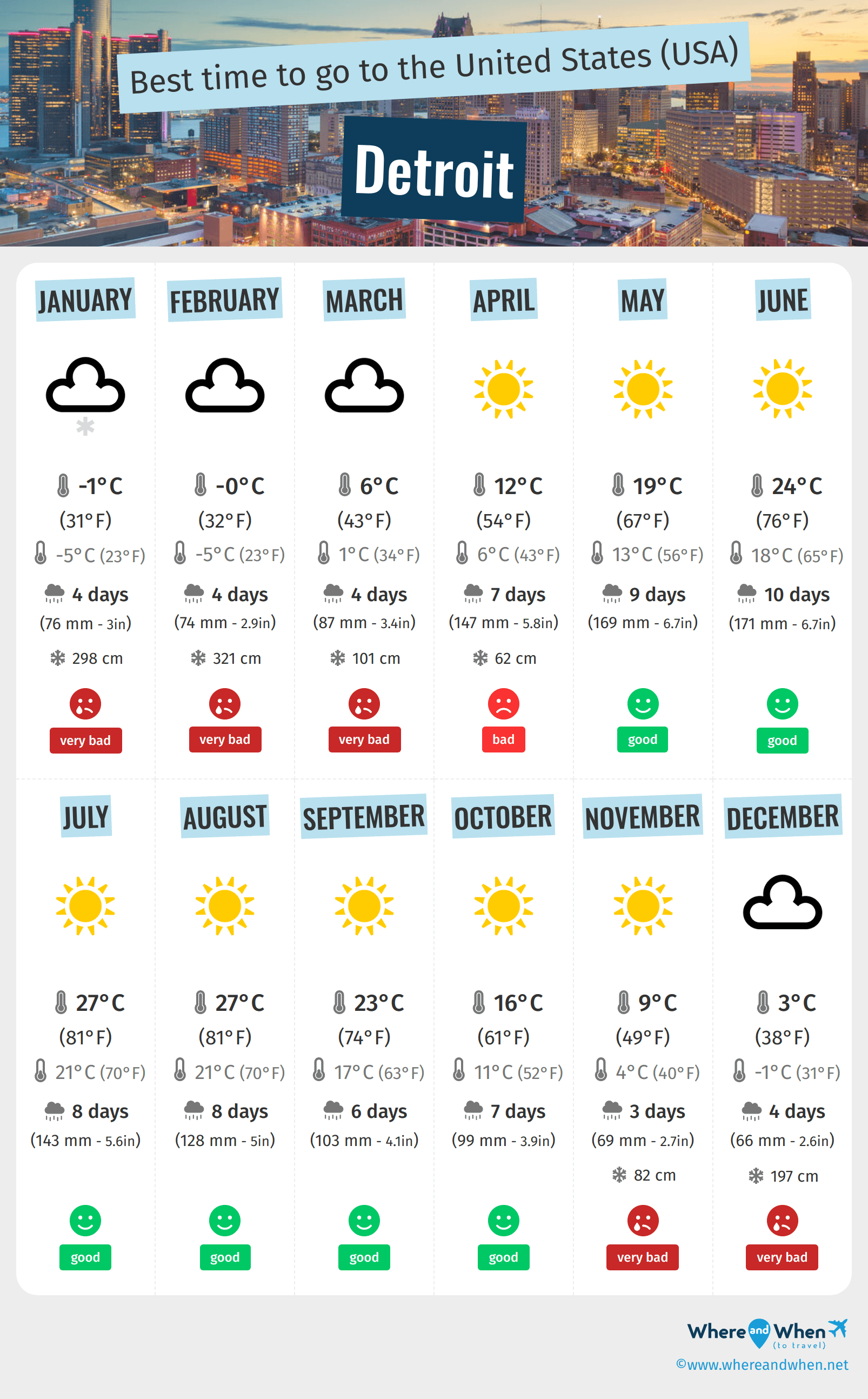
For Budget Travelers and Winter Sports Lovers: Winter (December-March) can be an excellent choice. While the cold and snow require careful packing, you’ll find lower hotel rates and fewer crowds at popular attractions. Ice skating at Campus Martius Park or exploring the city’s cozy indoor dining scene in Greektown are delightful experiences.
Packing Essentials for Every Season
Regardless of when you visit, thinking about layers is always a good strategy for Detroit.
- Spring: Light jacket, umbrella, comfortable walking shoes, long-sleeved shirts, sweaters.
- Summer: Light, breathable clothing (cotton, linen), shorts, t-shirts, swimwear (if staying at a hotel with a pool), sunscreen, hat, sunglasses. A light sweater or jacket for cooler evenings is also advisable.
- Fall: Medium-weight jacket, sweaters, jeans, long-sleeved shirts, comfortable waterproof shoes, scarf for later fall.
- Winter: Heavy winter coat, waterproof boots, hat, gloves, scarves, thermal layers.
Remember to check the 7-day forecast before your trip, as Great Lakes weather can be unpredictable and change rapidly.
Accommodation Considerations Based on Weather
Your choice of accommodation can significantly impact your comfort, especially during extreme weather.
Summer: Look for hotels with excellent air conditioning. An outdoor pool can be a huge bonus for cooling off after a day of sightseeing. Consider hotels with rooftop bars or patios that offer refreshing breezes, such as the Detroit Club or the Detroit Marriott at the Renaissance Center for its stunning river views.
Winter: Prioritize accommodations with robust heating systems, cozy communal areas, and perhaps an indoor pool or spa for relaxation. Hotels connected to the Detroit People Mover or via skywalks (like some downtown properties) can be convenient for navigating the city without constant exposure to the cold. Resorts outside the city might offer amenities like hot tubs or fireplaces, ideal for a snowy retreat.
Shoulder Seasons (Spring/Fall): During these milder periods, you have more flexibility. Many hotels will offer competitive rates, and you can focus on location and specific amenities like fitness centers or on-site dining. Boutique hotels like the Shinola Hotel or the Aloft Detroit at The David Whitney offer unique experiences that pair well with the pleasant weather. For longer stays, especially if you’re working remotely, an apartment or extended-stay suite can provide more comfort and convenience.
Weather’s Influence on Detroit Experiences
The weather in Detroit isn’t just a backdrop; it’s an active participant in shaping the city’s offerings and the traveler’s experience. From iconic landmarks to local culinary delights, seasonal changes dictate accessibility, atmosphere, and even the flavor of your visit.
Attractions & Landmarks: Adapting to the Climate
Detroit’s array of attractions offers options for all seasons. In summer, outdoor landmarks like Belle Isle Park become prime destinations. You can rent kayaks, visit the Belle Isle Aquarium, or simply picnic by the water. The Henry Ford Museum and Greenfield Village are hugely popular, with Greenfield Village’s outdoor historical exhibits being a major draw. Sporting events at Comerica Park (baseball) and Ford Field (football, though mostly indoors) are in full swing.
When the weather turns cold or rainy, Detroit’s indoor gems shine. The Detroit Institute of Arts (DIA) boasts an impressive collection that can easily fill a day, offering a warm and dry escape. The Motown Museum, birthplace of the legendary sound, provides a fascinating historical journey. The Detroit Historical Museum and the Charles H. Wright Museum of African American History are also excellent choices for cultural immersion. Even in winter, Campus Martius Park transforms into a magical ice-skating rink, proving that outdoor fun isn’t limited to warm months.
Local Culture & Food: A Seasonal Culinary Journey
Detroit’s local culture and food scene are deeply intertwined with its seasons. Summer brings vibrant outdoor dining experiences, with patios and rooftop bars bustling with activity. Food trucks proliferate, and the Eastern Market buzzes with fresh, local produce and artisanal goods, often hosting concerts and events. Festivals celebrating music, art, and diverse cuisines are commonplace, showcasing the city’s rich multicultural tapestry. From tasting authentic Coney dogs to exploring the bustling stalls of Eastern Market, summer offers a full sensory experience.
As fall arrives, the focus shifts slightly to hearty comfort foods and seasonal ingredients. Apple picking and cider mills become popular excursions just outside the city, and many restaurants feature autumnal menus. The cooler weather encourages cozying up in Greektown’s lively restaurants or exploring the craft breweries and distilleries that have become a hallmark of Detroit’s revitalized scene. In winter, the city embraces warmth through its culinary offerings. Indoor dining at upscale restaurants like The Apparatus Room at the Detroit Club or enjoying a warm beverage at a local coffee shop become cherished activities. The holiday season also brings unique culinary traditions and festive markets.
Lifestyle & Budget Travel: Maximizing Your Detroit Experience
The weather also plays a significant role in influencing the lifestyle of both locals and visitors, and by extension, travel costs. Peak summer travel, driven by ideal weather and numerous events, means higher demand for hotels, flights, and sometimes even attractions. For those seeking luxury travel, summer offers the best opportunities to enjoy high-end resorts with all amenities, including outdoor pools and waterfront access.
Conversely, winter can be an excellent time for budget travel. With fewer tourists, accommodation prices drop, and you might find deals on flights. While outdoor activities are limited, the focus shifts to indoor entertainment like catching a show at the historic Fox Theatre or exploring the vibrant casino resorts downtown. Shoulder seasons (late spring, early fall) often strike a sweet spot, offering pleasant weather and moderate prices, making them ideal for family trips or those seeking a balance of cost and comfort. Long-term stay options, such as serviced apartments, might also offer better rates during off-peak times, appealing to business travelers or those planning an extended exploration of Detroit’s burgeoning creative scene.
Staying Informed: Weather Resources for Travelers
Having reliable access to weather information is crucial for a stress-free trip to Detroit. Conditions, especially during transitional seasons or near the Great Lakes, can change rapidly.
One of the most dependable sources is the National Weather Service (NWS). Their local office provides detailed forecasts, weather advisories, and warnings specific to the Detroit metropolitan area. Websites like AccuWeather and The Weather Channel also offer comprehensive forecasts, including hourly predictions, radar maps, and extended outlooks, which are invaluable for planning daily activities. Many smartphones also come with built-in weather apps that pull data from these reputable sources.
For a more localized perspective, consider tuning into local Detroit news channels or radio stations once you arrive. They often provide hyper-local updates, traffic implications due to weather, and specific advisories for events or road conditions that might affect your travel plans. When considering specific outdoor attractions like Belle Isle Park or Comerica Park, it’s always wise to check their official websites or social media channels. They will often post updates regarding closures, cancellations, or operational changes due to severe weather. Keeping these resources handy, whether through bookmarks on your phone or downloaded apps, will ensure you’re always prepared for whatever the Detroit skies have in store.
In conclusion, understanding “What’s The Weather In Detroit?” is more than just knowing temperatures; it’s about unlocking the full potential of your visit. Detroit’s four distinct seasons offer a kaleidoscope of experiences, from sun-drenched summer festivals to cozy winter cultural explorations. By aligning your travel dates with your desired activities and being prepared for the seasonal conditions, you can ensure a memorable and enjoyable journey through this resilient and captivating American city. Whether you’re seeking vibrant outdoor adventures or immersive indoor cultural dives, Detroit has something to offer year-round, provided you plan smart and pack right.
LifeOutOfTheBox is a participant in the Amazon Services LLC Associates Program, an affiliate advertising program designed to provide a means for sites to earn advertising fees by advertising and linking to Amazon.com. Amazon, the Amazon logo, AmazonSupply, and the AmazonSupply logo are trademarks of Amazon.com, Inc. or its affiliates. As an Amazon Associate we earn affiliate commissions from qualifying purchases.