
Planning a trip to Palm Springs, California, inherently involves understanding its distinctive climate. Nestled in the Sonoran Desert, this iconic Coachella Valley destination is renowned for its abundant sunshine, dramatic mountain backdrops, and, crucially, its intense desert heat. Far from a uniform experience, the weather in Palm Springs varies significantly across seasons, directly influencing the best times to visit, the activities available, and what travelers should pack. A deep dive into its meteorological patterns is essential for any visitor looking to make the most of their desert escape.
Decoding the Desert Climate: A Year-Round Perspective for Travelers
Palm Springs is characterized by an arid desert climate, marked by extremely hot summers, mild winters, and very little rainfall throughout the year. The city’s geographical location, sheltered by the San Jacinto Mountains to the west and the Santa Rosa Mountains to the south, creates a rain shadow effect, contributing to its consistently clear skies and low humidity. This unique microclimate is what draws millions of visitors annually, but it also necessitates careful planning. Understanding the nuances of each season ensures that travelers arrive prepared for anything from invigorating outdoor adventures to serene poolside relaxation. The daily temperature swings can also be quite significant, with cool evenings often following intensely warm days, particularly during the cooler months. This diurnal range is a classic desert characteristic, making layering a prudent strategy regardless of the season.
Seasonal Shifts: Tailoring Your Travel to Palm Springs’ Climate
The appeal of Palm Springs shifts with the calendar, offering distinct experiences depending on when you choose to visit. Each season presents its own set of weather conditions, dictating the rhythm of local life and the focus of tourist activities.
Winter’s Mild Allure (December – February)
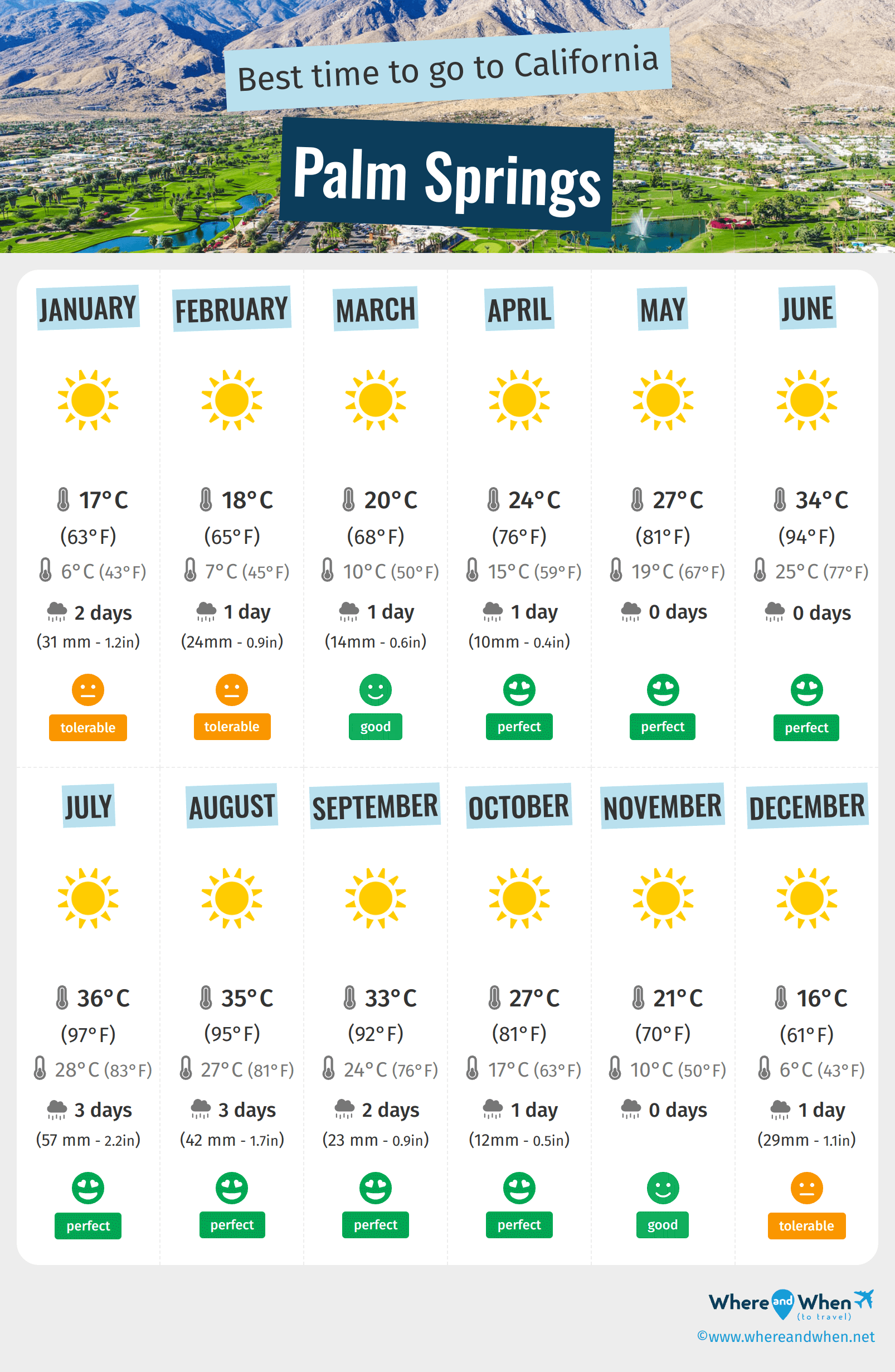
Winter is undeniably the peak travel season in Palm Springs. From December through February, the weather is consistently pleasant, offering a welcome respite from colder climates elsewhere. Daytime temperatures typically range from the mid-60s to low 70s Fahrenheit (18-23°C), with abundant sunshine almost daily. Nights are cool, dipping into the 40s (4-9°C), making evenings ideal for cozying up by a fire pit or enjoying an outdoor meal with a light jacket. Rainfall is minimal, usually amounting to only an inch or two across the entire season. This period is perfect for outdoor activities such as hiking the numerous trails in Indian Canyons, exploring Joshua Tree National Park (just an hour’s drive away), or a scenic ride on the Palm Springs Aerial Tramway to experience snow at higher elevations while the desert floor remains temperate. Events like Modernism Week and the Palm Springs International Film Festival also thrive during these comfortable months, drawing significant crowds. Travelers during this time should pack layers, including light jackets or sweaters for the evenings, along with comfortable shoes for walking and hiking.
Spring’s Vibrant Bloom (March – May)
As winter gives way to spring, Palm Springs transitions into a season of increasing warmth and vibrant desert blooms. March and April maintain comfortable, warm days, typically in the 70s and 80s Fahrenheit (24-30°C), making them highly desirable for travel. May sees a significant jump, often reaching the low to mid-90s (32-35°C), signaling the approach of summer’s intense heat. Spring still offers excellent conditions for outdoor pursuits in the mornings and late afternoons, with the desert flora often at its most spectacular. This period also hosts world-famous events like the Coachella Valley Music and Arts Festival and Stagecoach Festival, which draw massive crowds despite the rising temperatures. For these events and general spring travel, light clothing, wide-brimmed hats, sunglasses, and plenty of sunscreen are essential. Evenings remain pleasant but warmer than winter, often staying in the 60s (15-20°C).
Summer’s Intense Heat (June – September)
Summer in Palm Springs is characterized by extreme heat, making it the off-peak season for many. Daytime temperatures consistently soar well above 100°F (38°C), frequently reaching 110-120°F (43-49°C) or higher, particularly in July and August. Nights offer some relief, usually dropping into the 80s (27-32°C), but the heat remains substantial. Despite the intensity, this period holds a unique charm for travelers seeking uncrowded resorts, significant discounts on accommodation, and a focus on poolside relaxation. Indoor activities such as museum visits, gallery hopping, and dining at air-conditioned restaurants become primary attractions. For those who brave the summer, meticulous planning is paramount: stay hydrated constantly, avoid direct sun exposure during peak hours (10 AM – 4 PM), and dress in the lightest, breathable fabrics. Early morning hikes are possible but require extreme caution and ample water. The summer months also bring the slight possibility of monsoon-like thunderstorms in late summer, which, while rare, can bring dramatic flashes of lightning and brief, heavy downpours.
Autumn’s Gentle Transition (October – November)
Autumn offers a delightful transition, bringing a gradual return to cooler, more comfortable temperatures, signaling the start of the next prime season. October often begins with daytime temperatures in the 90s (32-37°C), but by November, they typically settle into the 70s and 80s (24-30°C). Nights become pleasantly cool again, often dipping into the 50s (10-15°C). The crisp, clear air and decreasing humidity make autumn an increasingly popular time to visit. Outdoor activities become enjoyable once more, from golf and tennis to exploring the various neighborhoods of Palm Springs by foot or bicycle. Events like Desert X, which showcases site-specific art installations across the Coachella Valley, often begin during these months, taking advantage of the favorable climate. Packing for autumn involves light layers during the day and a medium-weight jacket or sweater for the evenings, offering flexibility as temperatures fluctuate.
Maximizing Your Palm Springs Experience: Weather-Driven Activities
The weather in Palm Springs isn’t just a backdrop; it dictates the very rhythm of your vacation. Understanding these patterns allows travelers to strategically plan their itinerary, ensuring comfort and enjoyment.
Outdoor Adventures in Cooler Months
The mild winters and pleasant springs are tailor-made for exploring the natural beauty surrounding Palm Springs. Hiking trails in areas like the Indian Canyons (Andreas Canyon, Palm Canyon, Murray Canyon) or a day trip to Joshua Tree National Park become primary attractions. Cycling through the city’s mid-century modern neighborhoods, playing golf on world-class courses in Palm Desert or Rancho Mirage, and ascending the Palm Springs Aerial Tramway for panoramic views are all optimal when temperatures are moderate. These seasons also invite leisurely strolls through downtown, enjoying outdoor patios at restaurants and shopping boutiques without discomfort.
Embracing the Heat: Poolside Relaxation & Indoor Escapes
During the intense summer months, the focus shifts. Resorts in Palm Springs are designed around the pool, offering refreshing oases with misters, shaded cabanas, and swim-up bars. This is the time for ultimate relaxation, a chance to unwind by the water’s edge and soak in the legendary Palm Springs vibe at a more relaxed pace. When the sun is at its highest, air-conditioned indoor activities take precedence. Exploring the Palm Springs Art Museum, browsing the many vintage and antique shops, indulging in spa treatments, or catching a matinee film are excellent ways to beat the heat. Evening dining, especially in restaurants with good air conditioning or cooled outdoor patios, becomes a highlight, allowing visitors to enjoy the cooler desert nights.
Preparing for Your Trip: Beyond the Forecast
Regardless of when you visit, a few essential items and habits will enhance your Palm Springs experience. Always bring a wide-brimmed hat, high-SPF sunscreen, and sunglasses; the desert sun is powerful year-round. Hydration is crucial; carry a reusable water bottle and drink plenty of fluids, even if you don’t feel thirsty, particularly in the warmer months. Comfortable, breathable footwear is advisable, especially if you plan on exploring on foot. Even during the hottest parts of summer, a light sweater or wrap can be useful for air-conditioned indoor spaces or surprisingly cool evenings. Checking the forecast a few days before your departure is always a good practice, as desert weather can sometimes be unpredictable, with occasional unexpected heat waves or cooler fronts. By respecting the desert environment and preparing accordingly, travelers can ensure a memorable and enjoyable visit to sunny Palm Springs.
LifeOutOfTheBox is a participant in the Amazon Services LLC Associates Program, an affiliate advertising program designed to provide a means for sites to earn advertising fees by advertising and linking to Amazon.com. Amazon, the Amazon logo, AmazonSupply, and the AmazonSupply logo are trademarks of Amazon.com, Inc. or its affiliates. As an Amazon Associate we earn affiliate commissions from qualifying purchases.