
St. Petersburg, Florida, affectionately known as “St. Pete” by locals and visitors alike, boasts a climate that is a significant draw for many seeking sun-drenched escapes. Situated on the Pinellas Peninsula, between the Tampa Bay and the Gulf of Mexico, this vibrant city experiences a subtropical climate characterized by warm to hot summers and mild winters. Understanding its weather patterns is crucial for planning the perfect St. Petersburg vacation, whether you’re aiming for a day at St. Pete Beach, exploring the Salvador Dalí Museum, or enjoying the lively downtown scene.
Understanding St. Pete’s Seasonal Climate
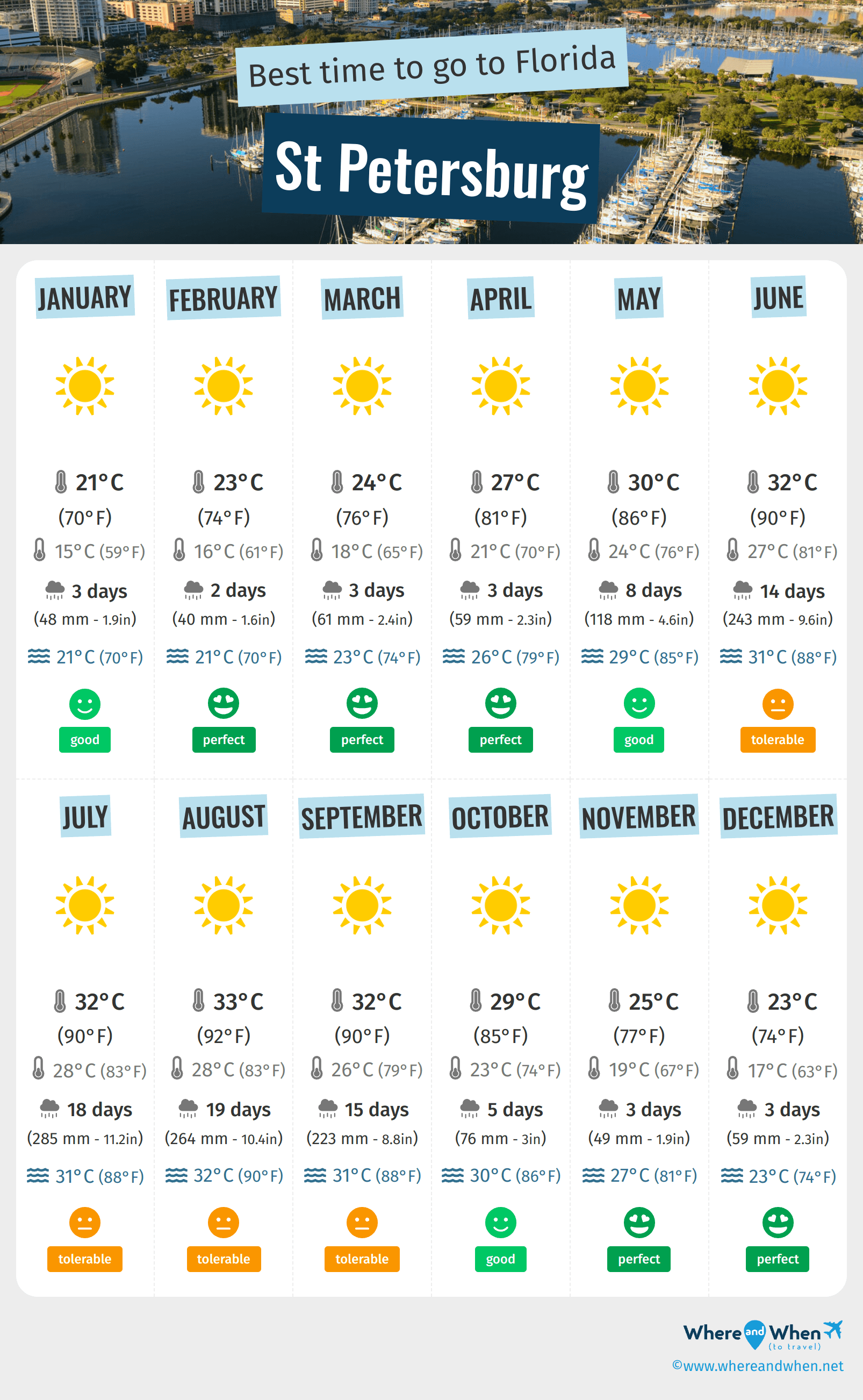
The weather in St. Petersburg can be broadly divided into two main seasons: a wet season and a dry season, with distinct temperature variations throughout the year. The city enjoys an average of 361 days of sunshine annually, a testament to its appeal as a year-round destination. However, there are nuances to consider for each month.
The Warm Embrace of Summer (June – September)
Summers in St. Petersburg are typically hot and humid, with average high temperatures ranging from the upper 80s to the low 90s Fahrenheit (around 31-33°C). Overnight lows usually remain in the mid-70s Fahrenheit (around 24°C), offering little respite from the heat. This period also coincides with the wet season, meaning afternoon thunderstorms are a daily occurrence. These storms are often intense but brief, characterized by heavy downpours and lightning, typically dissipating as quickly as they arrive. While the humidity can be high, the proximity to the Gulf of Mexico often provides a refreshing sea breeze, especially along the coast.
Tips for Summer Travel:
- Stay Hydrated: The heat and humidity demand constant hydration. Carry water bottles and drink frequently.
- Embrace Afternoon Showers: Plan your outdoor activities for the morning or late afternoon. Use the midday for indoor attractions like the Great Explorations Children’s Museum or a leisurely lunch.
- Sun Protection: Sunscreen, hats, and sunglasses are essential year-round, but particularly vital during the summer months.
- Consider Accommodation with Air Conditioning: Ensure your lodging, whether a hotel like The Vinoy Renaissance St. Petersburg Resort & Golf Club or a vacation rental, has reliable air conditioning.
The Pleasant Transition of Fall (October – November)
As summer transitions into autumn, St. Petersburg begins to experience a noticeable shift in weather. The humidity starts to recede, and temperatures become more moderate. October can still feel summery, with highs in the mid-80s Fahrenheit (around 29°C), but by November, temperatures cool to the pleasant mid-70s Fahrenheit (around 24°C). Rainfall decreases significantly, making this one of the most enjoyable times to visit. The skies tend to be clearer, and the air feels fresher, perfect for exploring outdoor attractions like Fort De Soto Park or enjoying a walk along the St. Petersburg Pier.
The Mild and Sunny Winter (December – February)
Winter in St. Petersburg is a dream for those escaping colder climates. It is characterized by mild temperatures and abundant sunshine. Daytime highs typically range from the low 70s to mid-70s Fahrenheit (around 21-24°C), while evenings and nights can cool down to the 50s Fahrenheit (around 10-15°C), making a light jacket or sweater advisable for after sunset. This is the heart of the dry season, with very little rainfall. The low humidity and comfortable temperatures make it ideal for all outdoor activities, from beach days to kayaking in the Weedon Island Preserve. This season is particularly popular with “snowbirds” seeking a warm winter haven.
Tips for Winter Travel:
- Layering is Key: While days are warm, evenings can be cool. Pack layers to adapt to changing temperatures.
- Enjoy Outdoor Dining: Many restaurants offer outdoor seating, which is perfect during the pleasant winter evenings.
- Book in Advance: Due to its popularity during the winter months, booking flights and accommodation well in advance is highly recommended.
The Blossoming of Spring (March – May)
Spring in St. Petersburg offers a delightful continuation of pleasant weather, building upon the mildness of winter. March and April typically see temperatures in the 70s and low 80s Fahrenheit (around 21-28°C), with gradually increasing warmth as the season progresses. Humidity remains relatively low until late May, when it starts to climb, signaling the approaching summer. Rainfall is minimal, and the skies are often clear and blue, perfect for visiting attractions like the Sunken Gardens or enjoying a boat tour on Tampa Bay. Spring is a beautiful time to experience the city’s natural beauty and vibrant outdoor life before the peak summer heat and humidity arrive.

Embracing the Microclimates: Coastal Breezes and Inland Variations
While St. Petersburg generally experiences a consistent climate, slight microclimate variations can occur, particularly between the immediate coastal areas and points further inland. The coastal regions often benefit from a cooling sea breeze, especially during the hot summer months, which can make temperatures feel a few degrees cooler than inland areas. Conversely, areas with more developed surfaces and less green space might experience slightly higher temperatures due to the urban heat island effect.
The Influence of the Gulf of Mexico
The presence of the Gulf of Mexico is the dominant factor shaping St. Petersburg’s weather. The vast body of water moderates temperatures, preventing extreme cold in winter and providing a source of moisture that contributes to the summer rainfall. The sea breeze, a consistent phenomenon during warmer months, is a welcome relief from the heat and humidity. This proximity also means that coastal areas are susceptible to the effects of tropical systems.
Tropical Storms and Hurricanes
Like much of the Gulf Coast, St. Petersburg is located in a region prone to tropical storms and hurricanes during the Atlantic hurricane season, which officially runs from June 1st to November 30th. While direct hits are infrequent, the possibility exists, and residents and visitors should always stay informed about weather forecasts during this period. Preparedness plans and awareness of evacuation routes are important considerations.
Planning Your Visit: Best Times to Experience St. Petersburg’s Weather
The “best” time to visit St. Petersburg largely depends on individual preferences regarding temperature, humidity, and rainfall. However, several periods stand out for their particularly pleasant weather:
Peak Season (Mid-December to April)
This period, encompassing the mild winter and early spring, is considered the peak tourist season. The weather is consistently warm, sunny, and dry, offering ideal conditions for exploring the city’s beaches, parks, and attractions. Many visitors flock here to escape colder northern climates, making it a bustling time. Accommodation prices tend to be higher during these months.
Shoulder Seasons (May, October, November)
These months offer a sweet spot, bridging the gap between the peak and off-peak seasons. In May, the weather is still largely pleasant before the full intensity of summer heat and humidity sets in. October and November bring cooler temperatures, lower humidity, and reduced rainfall, providing excellent conditions for outdoor activities without the peak season crowds. Prices for flights and lodging may be more moderate.

Off-Peak Season (June – September)
This is the summer and early fall period, characterized by high temperatures, significant humidity, and daily afternoon thunderstorms. While it may not be ideal for those who dislike heat and humidity, it offers fewer crowds and often lower prices for accommodation and activities. Visitors during this time can still enjoy the city by planning their days around the weather, focusing on morning activities and utilizing indoor attractions during the heat of the day or during rain showers. The occasional lingering warmth can also be appealing for those who enjoy a truly tropical feel.
By understanding the nuances of St. Petersburg’s weather throughout the year, travelers can better plan their itineraries, pack appropriately, and maximize their enjoyment of this beautiful Florida destination. Whether you’re drawn by the promise of a sunny winter escape or the vibrant energy of a summer beach day, St. Petersburg has a climate to suit many preferences.
LifeOutOfTheBox is a participant in the Amazon Services LLC Associates Program, an affiliate advertising program designed to provide a means for sites to earn advertising fees by advertising and linking to Amazon.com. Amazon, the Amazon logo, AmazonSupply, and the AmazonSupply logo are trademarks of Amazon.com, Inc. or its affiliates. As an Amazon Associate we earn affiliate commissions from qualifying purchases.