
Nestled on the northeastern coast of Florida, Jacksonville stands as a vibrant metropolis, offering an enticing blend of urban sophistication, natural beauty, and a laid-back coastal charm. As the largest city by land area in the contiguous United States, Jacksonville boasts an impressive array of attractions, from pristine beaches and lush golf courses to a thriving arts scene and diverse culinary landscape. For any traveler or prospective resident, understanding the local climate is paramount to truly appreciating all that this dynamic destination has to offer. Whether you’re planning a quick weekend getaway, a leisurely family vacation, or considering a long-term stay, the weather in Jacksonville, Florida plays a pivotal role in shaping your experience.
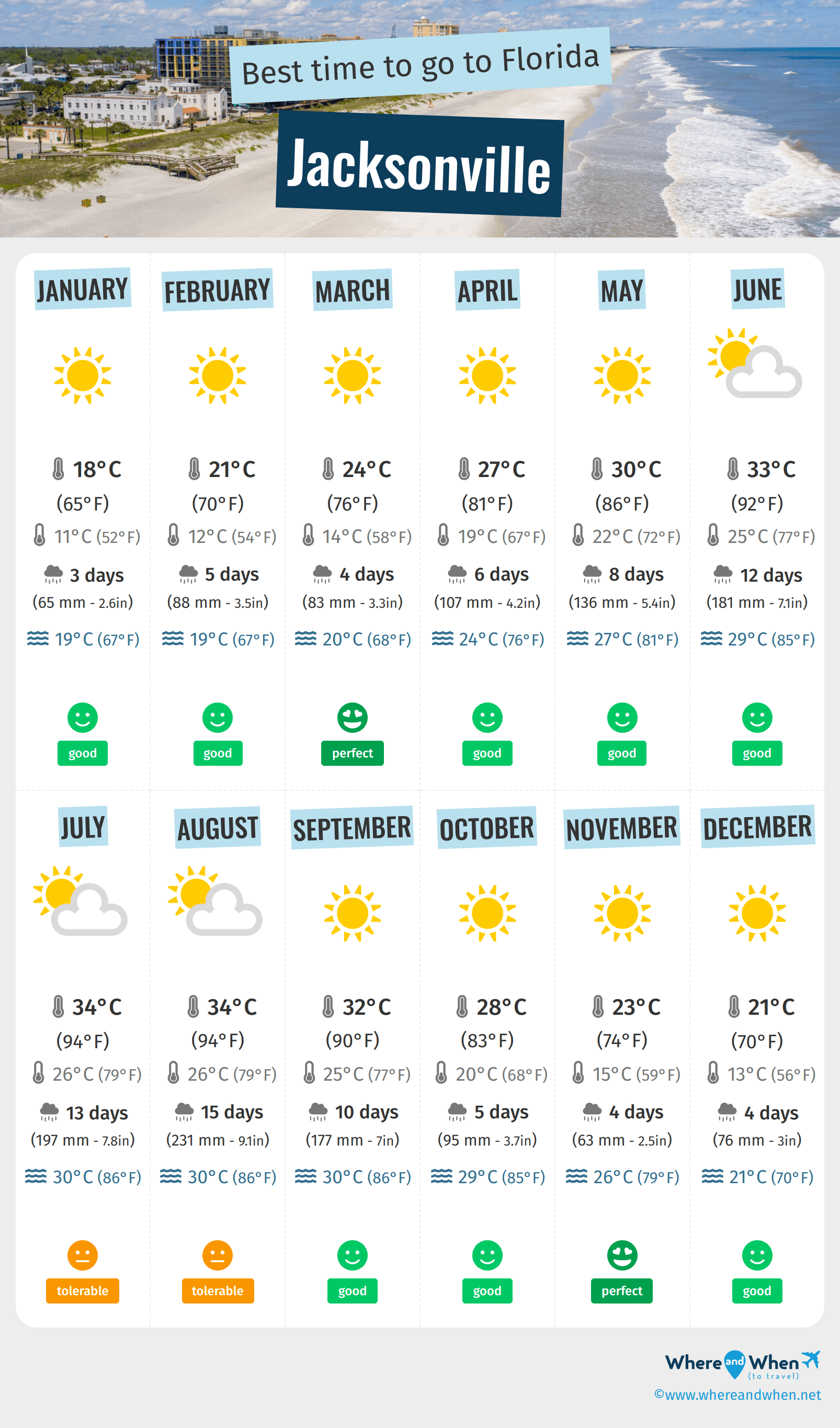
Jacksonville falls within a humid subtropical climate zone, characterized by hot, humid summers and mild, relatively dry winters. This translates into distinct seasons, each presenting its own unique opportunities and considerations for visitors. Positioned along the St. Johns River and in close proximity to the Atlantic Ocean, the city’s weather is often influenced by sea breezes, particularly in coastal areas like Jacksonville Beach, Neptune Beach, and Ponte Vedra Beach. Knowing what to expect, from daily temperatures and humidity levels to rainfall patterns and the occasional tropical storm threat, will empower you to pack wisely, plan your activities effectively, and make the most of your Jacksonville adventure. This comprehensive guide delves into the seasonal nuances of Jacksonville’s weather, offering insights to help you tailor your travel plans and ensure a memorable visit.
Jacksonville’s Climate: A Seasonal Overview
Understanding the yearly rhythm of Jacksonville’s weather is key to enjoying your time here, whether you’re exploring the historic neighborhoods, lounging on the sand, or indulging in local cuisine. Each season brings a different character to the city, influencing everything from outdoor activities to the ambiance of its various districts.
Summer: Hot, Humid, and Thundery (June to August)
Summers in Jacksonville are characterized by heat and humidity, a quintessential Florida experience. Average daytime temperatures typically range from the high 80s to low 90s Fahrenheit (around 30-34°C), with heat index values often feeling much higher due to the significant humidity. Nighttime temperatures offer little respite, usually staying in the comfortable low to mid-70s Fahrenheit (22-24°C).
Rainfall is abundant during these months, primarily in the form of afternoon thunderstorms. These storms are often brief but intense, providing a temporary cooling effect. While they can disrupt outdoor plans, they usually pass quickly, allowing activities to resume. This period also marks the heart of Hurricane Season for the Atlantic basin, which officially runs from June 1st to November 30th. While direct hurricane strikes on Jacksonville are not frequent, tropical systems can bring heavy rains, strong winds, and coastal flooding. Travelers planning visits during this time should monitor weather forecasts closely.
For those planning a summer trip, hotels and resorts in Jacksonville are well-equipped to handle the heat, with robust air conditioning and refreshing swimming pools being standard amenities. Many accommodations, like the Hyatt Regency Jacksonville Riverfront or Omni Jacksonville Hotel in Downtown Jacksonville, offer comfortable indoor environments and easy access to cultural attractions. Coastal properties like One Ocean Resort & Spa provide immediate access to the beach, where ocean breezes can offer some relief. Activities often shift towards early mornings or late afternoons, with mid-day spent in air-conditioned museums such as the Cummer Museum of Art & Gardens or MOSH (Museum of Science & History), or enjoying water sports.
Autumn: Pleasant Transitions (September to November)
Autumn in Jacksonville is widely considered one of the most pleasant times to visit. As September progresses into October and November, the oppressive humidity of summer gradually recedes, and temperatures become more comfortable. Daytime highs in September still linger in the high 80s (around 30°C), but by October, they typically fall into the low to mid-80s (27-29°C), settling into the comfortable 70s (21-26°C) by November. Nighttimes become cooler and crisper, often dropping into the 50s and 60s Fahrenheit (10-18°C), making for enjoyable evenings outdoors.
Rainfall decreases significantly compared to summer, though the tail end of Hurricane Season in September and early October still requires vigilance. By late October and November, sunny days dominate, offering ideal conditions for exploring Jacksonville’s numerous parks, historic districts like San Marco and Riverside Avondale, and championship golf courses such as TPC Sawgrass. The comfortable temperatures and lower humidity are perfect for outdoor tourism, whether it’s a stroll along the St. Johns River Riverwalk, a visit to the Jacksonville Zoo and Gardens, or a fishing excursion. This season is also a popular time for festivals and outdoor events, taking advantage of the superb weather.
Winter: Mild, Sunny, and Invigorating (December to February)
Jacksonville’s winters are a major draw for visitors escaping colder climates. Compared to much of the United States, winter here is exceptionally mild, sunny, and invigorating. Daytime temperatures typically hover in the 60s Fahrenheit (15-20°C), with occasional dips into the 50s (10-14°C) during cold fronts. Nights are cool, often dropping into the 40s (4-9°C), and brief freezes can occur, especially further inland. However, snow is an extremely rare occurrence, a novelty rather than a regular event.
Rainfall is at its lowest during the winter months, contributing to many clear, bright days perfect for outdoor activities. This is peak season for golf, with world-class courses attracting enthusiasts from around the globe. It’s also an excellent time to explore Jacksonville’s natural landmarks, such as the Timucuan Ecological and Historic Preserve, Fort Caroline National Memorial, and Kingsley Plantation, without the summer heat. The mild weather also makes it an ideal season for enjoying the Jacksonville beaches for walks, shelling, or simply soaking in the winter sun, even if the water is too cool for swimming for most. Accommodation during winter can be highly sought after, particularly for snowbirds and those looking for a warm escape.
Spring: Blooming Beauty and Rising Warmth (March to May)
Spring is another highly favored season for visiting Jacksonville, showcasing a beautiful transition as the city awakens with blooming flora and steadily rising temperatures. March offers a continuation of pleasant, mild conditions, with daytime temperatures generally in the 70s Fahrenheit (21-26°C). By April, temperatures climb into the high 70s and low 80s (25-29°C), and by May, they often reach the mid-80s (29-31°C), signaling the approach of summer.
Humidity begins its gradual increase towards the end of spring, especially in May, but generally remains comfortable through April. Rainfall is moderate, with occasional showers that help maintain the lush greenery. This season is perfect for exploring Jacksonville’s gardens, enjoying outdoor dining, and experiencing events like The Players Championship at TPC Sawgrass, a premier event on the PGA Tour. The beaches become increasingly popular as the ocean water warms up, inviting swimmers and sunbathers. Spring offers a fantastic balance of warmth, sunshine, and natural beauty, making it an optimal time for all kinds of travel experiences.
Planning Your Jacksonville Adventure: Best Times and What to Expect
Choosing the right time to visit Jacksonville largely depends on your priorities and preferred activities. The city’s diverse climate offers something for everyone across the year.
Ideal Seasons for Diverse Experiences
For most visitors, spring (March-May) and fall (September-November) represent the sweet spot for a Jacksonville trip. These seasons offer the most comfortable temperatures, lower humidity, and ample sunshine, creating perfect conditions for a wide range of activities. Whether your interest lies in exploring the Timucuan Ecological and Historic Preserve, enjoying a round of golf, spending time on the beautiful beaches, or simply strolling through urban parks, these months provide an ideal backdrop. Festivals and outdoor events are abundant, showcasing local culture and community spirit. It’s also an excellent time for lifestyle experiences, from luxury dining overlooking the St. Johns River to budget-friendly adventures.
Winter (December-February) is also highly appealing, particularly for those seeking an escape from colder climates. The mild temperatures are excellent for active outdoor pursuits like cycling, hiking, or golf, and perfect for exploring nearby historic cities like St. Augustine or the charming island of Amelia Island. While beach swimming might be chilly, the beaches themselves are wonderful for quiet walks and enjoying the sun. Accommodation options range from cozy boutique hotels in historic districts to family-friendly resorts with heated pools, ensuring comfort regardless of the slight dip in temperature.
Summer (June-August), despite its heat and humidity, remains a popular time for family vacations, especially for those prioritizing beach activities and water sports. The warm ocean temperatures are perfect for swimming, surfing, and paddleboarding. Many attractions offer indoor alternatives or operate with early morning/late afternoon schedules to beat the heat. Jacksonville’s numerous indoor attractions, such as the Jacksonville Zoo and Gardens’ indoor exhibits or the MOSH, become prime destinations. Ensure your accommodation has reliable air conditioning, a crucial amenity during these months.
Essential Packing and Preparation Tips
No matter when you visit, a few universal tips apply to packing for Jacksonville’s climate:
- Year-Round: Light layers are always a good idea, as are comfortable walking shoes. Sunscreen, sunglasses, and a hat are essential due to Florida’s strong UV rays. A reusable water bottle is also recommended to stay hydrated. Don’t forget bug spray, especially if you plan to explore natural areas or enjoy evenings outdoors.
- Summer: Prioritize lightweight, breathable clothing made from cotton or moisture-wicking fabrics. Swimsuits are a must. Pack an umbrella or light rain jacket for sudden afternoon thunderstorms.
- Spring and Fall: Layers are your best friend. Days can be warm, but evenings might require a light jacket or sweater.
- Winter: While mild, temperatures can drop, especially at night or during cold fronts. Pack a medium-weight jacket, sweaters, and long pants. You might even want a scarf or light gloves for early mornings.
Staying informed about weather forecasts is crucial, especially during Hurricane Season. Reputable weather apps and local news channels can provide up-to-the-minute information, allowing you to adjust plans as needed. Many hotels and local tourism boards also offer resources and advice for visitors regarding weather preparedness.
Weather’s Influence on Jacksonville Activities and Lifestyle
The climate of Jacksonville significantly shapes the recreational activities and the overall lifestyle experienced by both residents and visitors. From serene nature walks to exhilarating water sports, the seasons dictate the rhythm of life in North Florida.
Outdoor Recreation Year-Round
- Beaches: The 22 miles of pristine coastline, encompassing Jacksonville Beach, Neptune Beach, and Ponte Vedra Beach, are a major draw. In summer, they are vibrant with swimmers, surfers, and sunbathers. In cooler months, they transform into peaceful havens for walking, jogging, and collecting shells.
- Golf: Jacksonville is a golfer’s paradise, home to numerous championship courses, including the iconic TPC Sawgrass. The mild winters and pleasant spring/fall weather create optimal conditions for hitting the links, making these seasons peak times for golf tourism.
- Water Sports: The St. Johns River and the Atlantic Ocean offer endless opportunities for boating, fishing, kayaking, paddleboarding, and jet skiing. Summer provides the warmest water temperatures, while cooler months are excellent for fishing charters seeking different species.
- Parks and Preserves: Jacksonville’s extensive park system and natural preserves like the Timucuan Ecological and Historic Preserve are accessible year-round. Spring and fall are ideal for hiking and wildlife viewing, while winter offers comfortable temperatures for longer explorations.
Cultural and Culinary Experiences
Jacksonville’s cultural scene thrives regardless of the weather. Museums like the Cummer Museum of Art & Gardens and MOSH (Museum of Science & History) provide engaging indoor activities, perfect for escaping summer heat or a rare winter chill. The city’s vibrant culinary scene, from fine dining in San Marco to casual eateries in Riverside Avondale, can be enjoyed in any season. Outdoor dining becomes a particular pleasure in spring, fall, and mild winter evenings. Local markets and festivals, like the Riverside Arts Market, often adjust their schedules to capitalize on favorable weather.

Conclusion: Embracing Jacksonville’s Ever-Changing Skies
Jacksonville, Florida offers a dynamic climate that, while subtropical, provides distinct seasonal characteristics, each with its own charm and set of considerations. From the vibrant, sun-drenched beaches of summer to the crisp, invigorating air of winter, Jacksonville’s weather invites a variety of travel styles and lifestyle experiences.
Whether you’re planning a luxurious stay at a resort on Amelia Island, a budget-friendly family trip to Jacksonville Beach, or a business stay in Downtown Jacksonville, understanding the seasonal weather patterns is your best tool for a successful trip. By aligning your visit with your preferred activities and packing appropriately, you can fully immerse yourself in the rich culture, natural beauty, and exciting attractions that make Jacksonville a truly exceptional Florida destination. No matter when you choose to come, Jacksonville’s inviting atmosphere and diverse offerings are sure to leave a lasting impression.
LifeOutOfTheBox is a participant in the Amazon Services LLC Associates Program, an affiliate advertising program designed to provide a means for sites to earn advertising fees by advertising and linking to Amazon.com. Amazon, the Amazon logo, AmazonSupply, and the AmazonSupply logo are trademarks of Amazon.com, Inc. or its affiliates. As an Amazon Associate we earn affiliate commissions from qualifying purchases.