
Navigating the requirements for obtaining a driver’s license in Texas is a crucial step for new residents and young drivers alike. This guide aims to demystify the process, covering the different stages of licensing, the necessary documentation, and what to expect along the way. Whether you’re a teenager eager for newfound freedom or an adult who has recently moved to the Lone Star State, understanding these regulations ensures a smooth and successful journey towards becoming a licensed driver in Texas.
The Graduated Driver License (GDL) Program: A Stepping Stone to Full Driving Privileges
Texas employs a Graduated Driver License (GDL) program, designed to introduce new drivers to the responsibilities of driving gradually. This multi-stage approach is particularly relevant for individuals under the age of 18. It’s a layered system that ensures young drivers gain experience and develop safe driving habits under supervised conditions before earning unrestricted driving privileges. The GDL program consists of two distinct phases, each with its own set of rules and requirements. Successfully completing the first phase is a prerequisite for progressing to the second, and eventually, to a full adult license.
Phase One: The Provisional Driver License (Under 18)
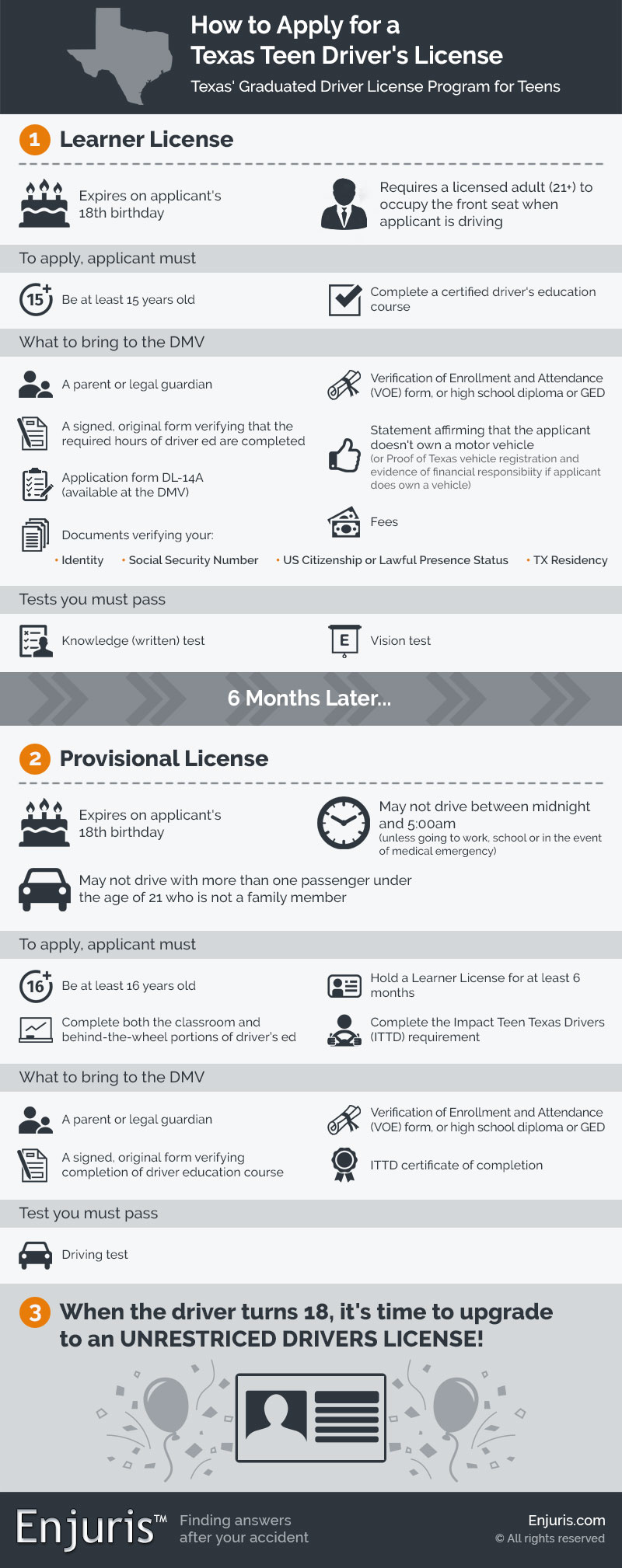
The initial step for most Texans under 18 is obtaining a Provisional Driver License. This phase is not simply about passing a test; it’s about accumulating supervised driving experience. To be eligible for a Provisional Driver License, applicants must meet several key criteria. First and foremost, they must be at least 16 years old. Before even applying for the learner’s permit that precedes this license, individuals must have held a valid learner’s permit for at least six months. During this six-month period, supervised driving practice is paramount.
Requirements for a Learner’s Permit
The journey to a Provisional Driver License begins with a learner’s permit, often referred to as a “permit.” To obtain this, applicants must be at least 15 years old and under 18. They must also have completed a state-approved driver education program or be enrolled in one. This program typically involves classroom instruction and behind-the-wheel training. A crucial component of the application process is the completion of the “ITD” (Impact Texas Teen Drivers) program. This is a free, two-hour informational video course that educates teen drivers about the dangers of distracted driving. Upon completion, a certificate is issued, which is valid for 90 days and must be presented at the Department of Public Safety (DPS) when applying for the actual license.
Furthermore, applicants must pass a written knowledge test administered by the DPS. This test assesses their understanding of Texas traffic laws, road signs, and safe driving practices. It’s imperative to study the Texas Driver Handbook thoroughly to prepare for this exam. Parents or legal guardians must also provide consent for the applicant to receive a learner’s permit.
Supervised Driving Practice and Restrictions
Once the learner’s permit is issued, supervised driving practice can commence. The permit holder must be accompanied by a licensed driver who is at least 21 years old and has at least one year of driving experience. This supervising driver must sit in the front passenger seat. During this phase, there are significant restrictions on driving hours and passengers. For the first six months, provisional license holders cannot drive between midnight and 5 a.m. Additionally, they are prohibited from driving with more than one passenger under the age of 21 who is not a family member. This carefully structured practice period is designed to build confidence and competence in a controlled environment, minimizing risks associated with inexperience.
Phase Two: The Provisional Driver License (After 16th Birthday)
At 16 years old, and after holding a learner’s permit for at least six months and completing the required supervised driving hours, an individual can apply for the Provisional Driver License. This license still comes with certain restrictions, but it signifies a step closer to full driving independence. To obtain the Provisional Driver License, applicants must complete a driver education program, which typically includes 32 hours of classroom instruction and 14 hours of behind-the-wheel training, with at least two of those hours occurring at night.
The Driving Test
A critical milestone in obtaining the Provisional Driver License is passing the driving test. This practical examination assesses the applicant’s ability to safely operate a vehicle in various traffic situations. Examiners will evaluate skills such as vehicle control, adherence to traffic laws, proper signaling, merging, lane changes, and parking. It’s essential to practice these maneuvers extensively with a licensed supervising driver to ensure proficiency. The vehicle used for the test must be in safe operating condition, with functioning brake lights, turn signals, and a valid inspection certificate.
Restrictions of the Provisional License
While more privileges are granted with the Provisional Driver License, it’s not an unrestricted license. The age and passenger restrictions from the learner’s permit phase largely carry over. Specifically, provisional license holders are still prohibited from driving between midnight and 5 a.m., unless it’s for work, school-related activity, or a medical emergency. The passenger limitation also remains in place: no more than one passenger under the age of 21 who is not a family member is allowed. These restrictions are in effect until the driver turns 18, at which point the Provisional Driver License automatically converts into a standard, unrestricted driver’s license.
Obtaining a Driver’s License as an Adult (18 and Older)
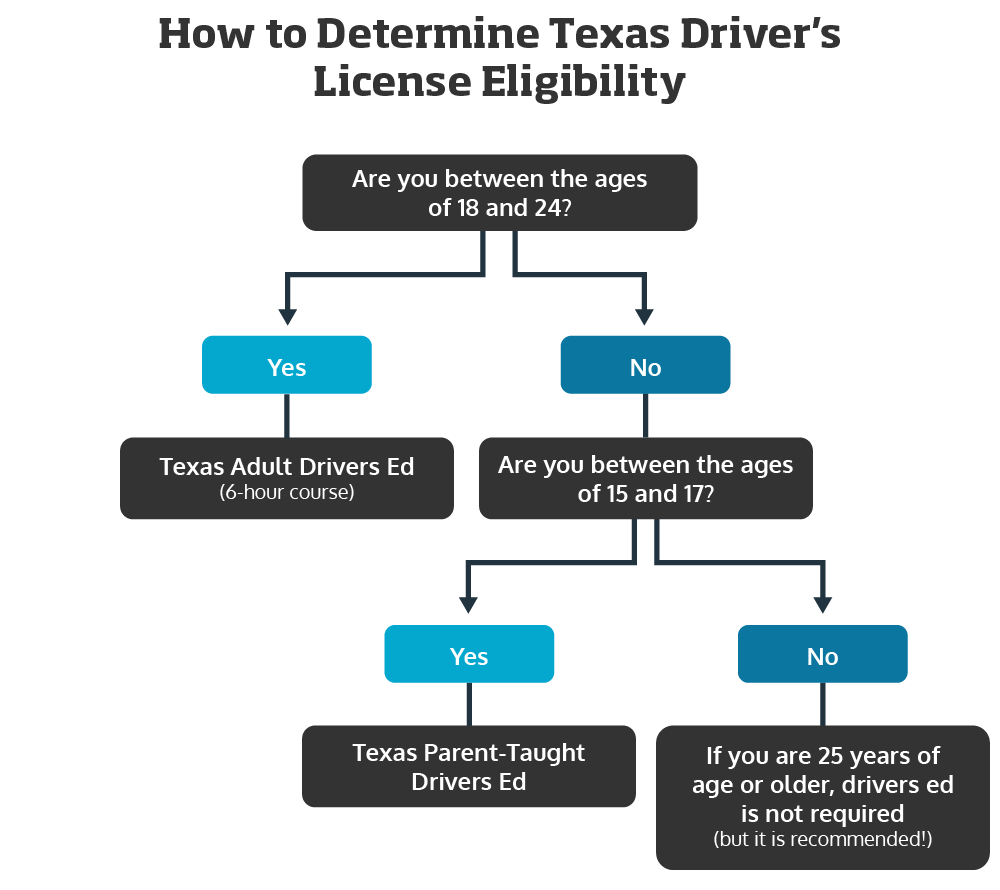
For individuals who are 18 years of age or older and have never held a driver’s license, the process is more streamlined but still requires diligence. The GDL program does not apply to adults. However, they must still demonstrate their knowledge of driving laws and their ability to operate a vehicle safely. The requirements for adult applicants are designed to ensure they possess the fundamental skills and understanding necessary to drive legally and responsibly on Texas roads.
The Adult Driver Education and Licensing Process
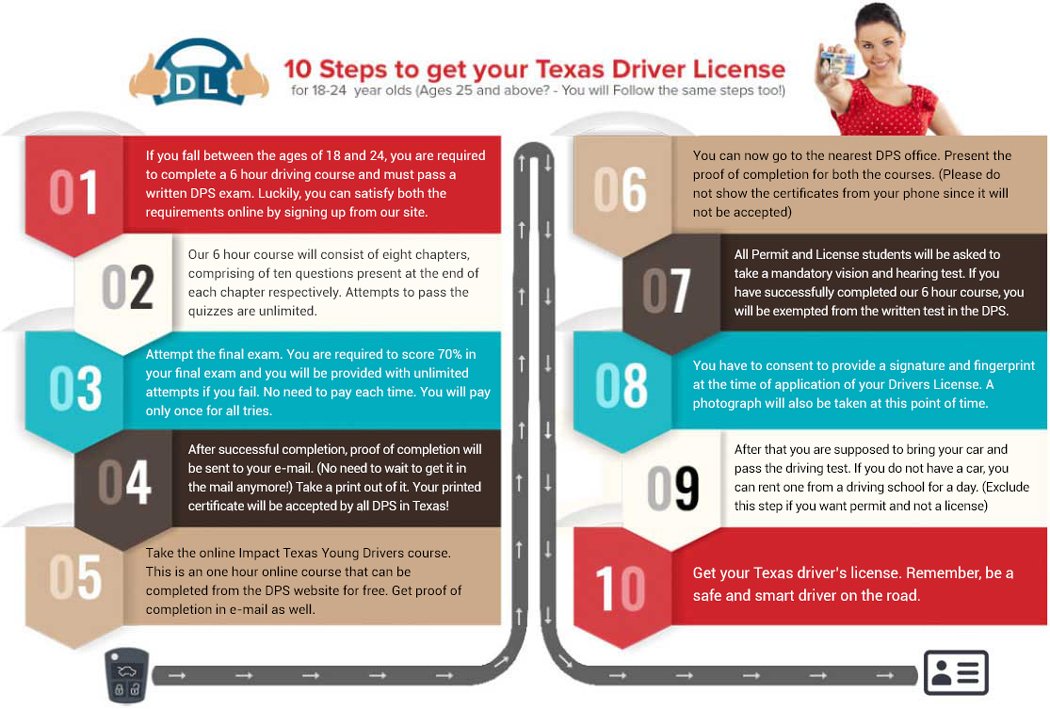
Adult applicants (18 or older) are required to complete an adult driver education course if they have not completed a driver education program prior to their 18th birthday. This course typically consists of a six-hour “Impact Texas Drivers” (ITD) program, similar to the one required for teens, and a written knowledge test. The ITD program is a mandatory component and focuses on educating new drivers about the critical dangers of distracted driving and other road safety issues. It is essential to have a completed ITD certificate before taking the driving test.
Alternatively, adults who have had a learner’s permit for at least 30 days and have completed a driver education program are eligible to take the driving test. For those who have not completed driver education, they will need to pass the written knowledge test and then the driving skills test. The written test covers traffic laws, road signs, and safe driving practices, and thorough preparation using the Texas Driver Handbook is highly recommended.
The Driving Test for Adults
The driving test for adult applicants is similar to the one administered for provisional license holders. It assesses the applicant’s proficiency in operating a vehicle safely and competently. Examiners evaluate a range of driving skills, including starting and stopping smoothly, lane changes, turning, backing, and obeying traffic signals and signs. The vehicle used for the test must meet safety standards and be properly registered and inspected. Passing this test is a testament to the applicant’s readiness to drive independently on public roads.
Required Documentation for All Applicants
Regardless of age, all applicants for a Texas driver’s license must provide specific documentation to the Texas Department of Public Safety (DPS). This typically includes proof of identity, proof of U.S. citizenship or lawful presence in the United States, proof of Texas residency, and proof of a Social Security number. Accepted forms of identification and residency can vary, so it is advisable to check the official DPS website for the most up-to-date list of acceptable documents. Common documents include a birth certificate, U.S. passport, utility bills, school transcripts, and a Social Security card. Failure to present the correct documentation will result in delays or denial of the license application.
Planning Your Visit and Stay: Beyond the Driver’s License
While obtaining a driver’s license is a significant personal milestone, Texas offers a wealth of experiences for visitors and residents alike, from exploring vibrant cities to enjoying the state’s diverse landscapes. Once you have your license in hand, the possibilities for travel and exploration within Texas are vast. The state boasts a rich tapestry of attractions, culinary delights, and cultural experiences that cater to every interest.
Exploring Texas: Destinations and Attractions
Texas is a state of immense scale and diversity, offering something for everyone. For history buffs, the historic missions in San Antonio, such as the Alamo, offer a glimpse into the state’s colonial past. Houston provides a metropolitan experience with world-class museums like the Space Center Houston and a thriving culinary scene. Those seeking natural beauty can venture to the Big Bend National Park for breathtaking desert vistas and hiking opportunities, or explore the piney woods of East Texas. The charming town of Fredericksburg, nestled in the Texas Hill Country, is renowned for its wineries and German heritage. For a taste of authentic Western culture, a visit to Fort Worth‘s Stockyards is a must. Each region of Texas presents unique landmarks and experiences, making it a rewarding destination for any traveler.
Accommodation and Lifestyle: Tailoring Your Texas Experience
When planning your adventures across Texas, choosing the right accommodation can significantly enhance your experience. From luxurious resorts offering a full suite of amenities to charming boutique hotels and convenient apartment rentals for longer stays, Texas has options to suit every budget and lifestyle. Consider the JW Marriott San Antonio Hill Country Resort & Spa for a luxurious family getaway, or explore the historic inns scattered throughout the Texas Hill Country. For those on a budget, numerous well-appointed motels and budget-friendly hotels are available in every major city. The choice of accommodation often influences the overall lifestyle aspect of your trip, whether you’re seeking a relaxing retreat or an active exploration of local culture and activities. Whether you’re planning a weekend escape, a business stay, or a long-term residence, Texas offers diverse lodging options that complement its varied attractions and vibrant lifestyle.
LifeOutOfTheBox is a participant in the Amazon Services LLC Associates Program, an affiliate advertising program designed to provide a means for sites to earn advertising fees by advertising and linking to Amazon.com. Amazon, the Amazon logo, AmazonSupply, and the AmazonSupply logo are trademarks of Amazon.com, Inc. or its affiliates. As an Amazon Associate we earn affiliate commissions from qualifying purchases.