
The journey of Alaska from a vast, unexplored territory to the 49th Us State is a captivating narrative, rich with geopolitical intrigue, economic ambition, and a persistent drive for self-determination. Understanding the precise date of Alaskan statehood is not merely an exercise in historical recall but an exploration of how this monumental event shaped one of the world’s most unique and majestic landmarks. Alaska’s statehood on January 3, 1959, fundamentally altered its trajectory, cementing its place as an integral, albeit geographically distant, component of the United States. This date marks not just a political transition, but the formal recognition of a vast wilderness as a cornerstone of the American national identity, a landmark in itself embodying resilience, grandeur, and an untamed spirit.
The Path to Statehood: A Historical Overview
The story of Alaska’s statehood is deeply rooted in its complex colonial past and its strategic importance. Before it was an American territory, it was Russian America, a vast expanse largely exploited for its fur resources. The groundwork for its eventual Us State status was laid much earlier, beginning with a transaction often misunderstood and initially derided.
From Russian America to the Alaska Purchase
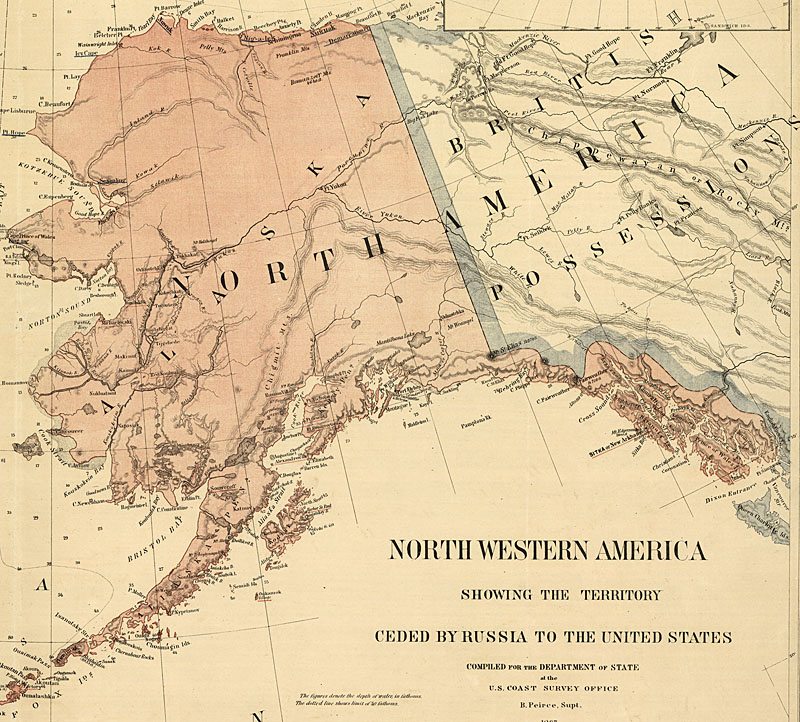
For over a century, the Russian Empire maintained a precarious hold over Alaska, primarily focused on the fur trade. However, by the mid-19th century, Russia found its North American venture increasingly difficult to manage and defend, especially after its defeat in the Crimean War. Sensing an opportunity and driven by a vision of expanding American influence, United States Secretary of State William Seward negotiated the purchase of Alaska from Russia in 1867. This transaction, known as the Alaska Purchase, cost the United States $7.2 million, or approximately two cents per acre.
Initially, many Americans scoffed at the acquisition, dubbing it “Seward’s Folly” or “Seward’s Icebox.” They questioned the value of such a remote, seemingly barren land. Yet, Seward’s foresight was eventually vindicated. The discovery of gold in the Klondike Gold Rush in the late 19th century, though primarily in Canada, spurred significant migration into Alaska, leading to mineral discoveries within its own borders. This influx of prospectors and settlers began to reveal the immense natural resource wealth of the territory, from gold to timber and fisheries, transforming public perception and highlighting its economic potential.
The Territorial Years
Following the Alaska Purchase, Alaska existed for decades under various forms of military and civil rule, often with minimal oversight from Washington D.C. It was officially organized as a territory of the United States in 1912. The territorial period was characterized by slow but steady development, the growth of key towns like Juneau, Anchorage, and Fairbanks, and a growing demand for greater self-governance.
The isolation of Alaska meant that its residents often felt neglected by the federal government, fueling a desire for the full political rights and representation that only statehood could provide. This sentiment gained significant momentum during World War II, when Alaska’s strategic importance became undeniable. The invasion of the Aleutian Islands by Japanese Imperial Forces underscored Alaska’s critical role in national defense and security. Thousands of American troops were stationed there, new infrastructure was built, and the territory became a vital frontline in the Pacific theater. This experience profoundly unified the Alaskan populace and strengthened their resolve for statehood.
The Drive for Alaskan Statehood
The post-WWII era witnessed an intensified campaign for Alaskan statehood. Proponents argued that Alaska possessed the population, resources, and strategic significance to merit equal standing with the other states.
Economic and Strategic Motivations
The economic argument for statehood centered on Alaska’s vast, untapped natural resources. While fishing, mining, and timber industries were already established, the full potential, particularly in oil and natural gas, was just beginning to be recognized. Statehood promised greater control over these resources, allowing local government to manage development and retain a larger share of the profits for public services and infrastructure. Furthermore, as a state, Alaska would have a stronger voice in national policies affecting its economic future.
From a strategic perspective, the Cold War solidified Alaska’s geopolitical value. Positioned as a frontline against the Soviet Union across the Bering Strait, Alaska hosted numerous military bases and played a crucial role in American defense systems. Granting statehood was seen as a way to enhance national security by ensuring a more stable and integrated political structure in this vital region. It also demonstrated the United States’ commitment to its northern frontier, presenting Alaska as a fully invested partner rather than a colonial outpost.
Key Figures and Political Maneuvering

The drive for statehood was championed by dedicated individuals, most notably Ernest Gruening, who served as Alaska’s territorial governor from 1939 to 1953. Gruening was a tireless advocate, traveling extensively and lobbying members of Congress to convey the readiness and necessity of Alaskan statehood. His efforts, alongside other prominent Alaskan leaders, were instrumental in shifting public and political opinion.
A pivotal moment in the process was the drafting of the Alaskan Constitution. In 1955-1956, a Constitutional Convention was held at the University of Alaska Fairbanks, where delegates crafted a remarkably progressive and forward-thinking document. This move was audacious, as Alaska was still a territory, but it effectively demonstrated the people’s capacity for self-governance and their determination to be treated as equals. The constitution was ratified by Alaskan voters in 1956, sending a clear message to Washington D.C. that Alaska was prepared for the responsibilities of statehood.
The final legislative hurdle involved overcoming resistance in Congress, where concerns about Alaska’s sparse population, vast size, and economic viability lingered. However, strong bipartisan support eventually emerged, culminating in the passage of the Alaska Statehood Act by both the House of Representatives and the Senate.
January 3, 1959: A Defining Moment
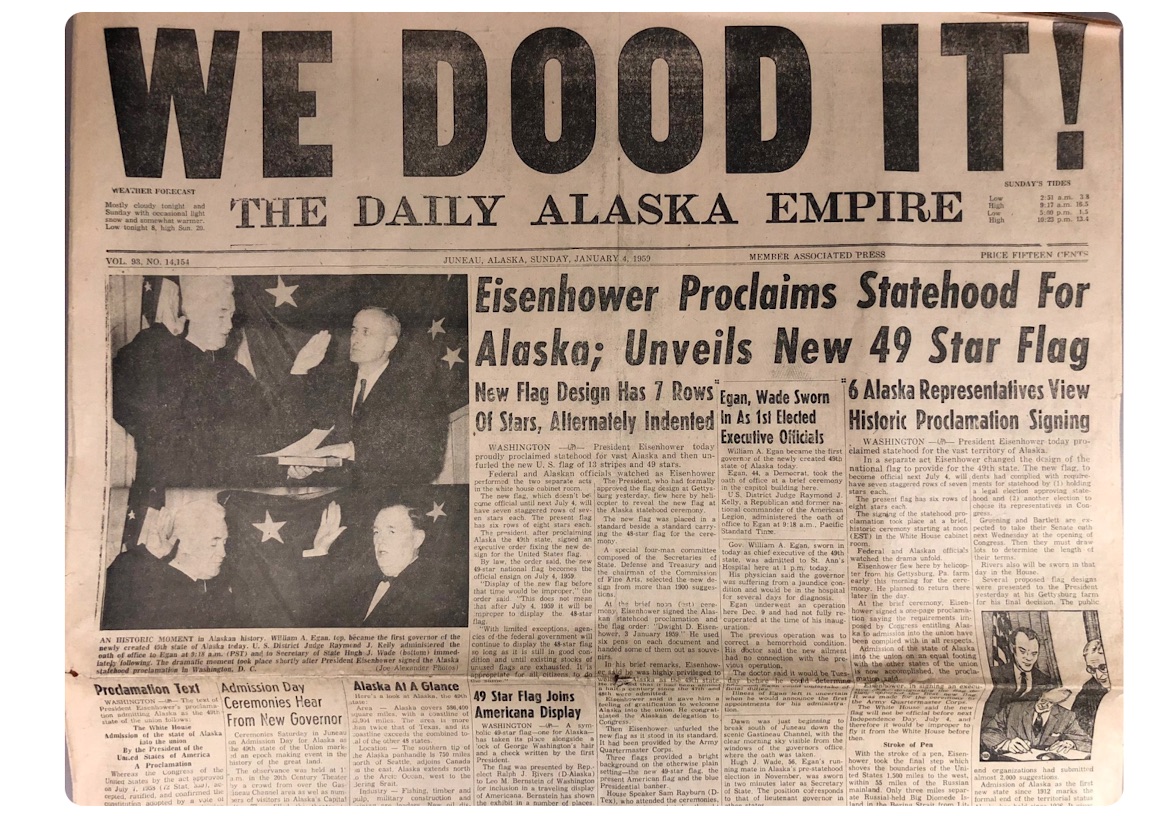
With the passage of the Statehood Act by Congress, the final step was the presidential proclamation. On January 3, 1959, President Dwight D. Eisenhower signed the official proclamation admitting Alaska to the Union. This historic act officially transformed the vast territory into the 49th state of the United States.
Celebrating a New Era
The news was met with widespread jubilation across Alaska. Celebrations erupted in communities from Ketchikan to Barrow, marking the end of decades of territorial status and the beginning of a new chapter of self-governance and full political participation. The iconic 49-star flag, featuring a single star for Alaska (which was quickly replaced by a 50-star version when Hawaii became a state later that year), became a potent symbol of this expanded union.
For Alaskans, statehood meant more than just representation in Congress; it signified validation. It meant the power to determine their own future, manage their vast natural resources, and develop their unique cultural and economic identity. It was a recognition that this land, once deemed worthless, was an indispensable part of the American fabric.
Alaska’s Legacy as a US Landmark
The statehood of Alaska did not just add another star to the flag; it integrated a distinct and monumental landscape into the national consciousness. Today, Alaska stands as a testament to its dramatic history and an unparalleled natural landmark.
Natural Wonders and Cultural Heritage
Alaska is often referred to as “The Last Frontier,” and for good reason. Its statehood allowed for the greater protection and showcasing of its incredible natural wonders, making them accessible as national treasures. From the towering peaks of Mount Denali, North America’s highest mountain, to the pristine wilderness of Denali National Park, the calving glaciers of Glacier Bay National Park, and the brown bears of Katmai National Park, Alaska is a global landmark for biodiversity and untouched beauty. The immense Arctic National Wildlife Refuge further exemplifies its ecological significance, a vast expanse crucial for numerous species and a symbol of conservation.
Beyond its natural grandeur, Alaska’s history of statehood has also brought increased attention and appreciation for its rich cultural heritage. The presence of numerous Indigenous peoples, including the Tlingit, Haida, Tsimshian, Yup’ik, and Inupiat, contributes a deep, ancient layer to the state’s identity. Their traditional lands, languages, and art forms are integral to understanding Alaska as a living landmark, a place where millennia of human history are intertwined with the landscape. Statehood brought challenges for Native Alaskan cultures but also created new avenues for cultural preservation and self-determination, recognizing these communities as foundational elements of Alaskan life.
Impact on American Identity
Alaska’s admission to the Union significantly broadened the scope of the American identity. It added a new dimension of wilderness, frontier spirit, and resourcefulness to the national narrative. Alaska became a symbol of potential, of the wild unknown, and of the enduring capacity for exploration and resilience. Its vastness and extreme environment represented a new kind of American landmark, one that challenged preconceived notions of what a state could be.
The date January 3, 1959, is not just a historical footnote. It is the moment when a unique and magnificent land, with its dramatic landscapes, rich history, and vibrant cultures, officially took its place as a cornerstone of the United States. This statehood allowed Alaska to flourish, preserving its iconic natural landmarks while also developing its economic and social fabric, ensuring its legacy as an enduring and captivating US Landmark for generations to come.
LifeOutOfTheBox is a participant in the Amazon Services LLC Associates Program, an affiliate advertising program designed to provide a means for sites to earn advertising fees by advertising and linking to Amazon.com. Amazon, the Amazon logo, AmazonSupply, and the AmazonSupply logo are trademarks of Amazon.com, Inc. or its affiliates. As an Amazon Associate we earn affiliate commissions from qualifying purchases.