
On August 1, 1876, the magnificent expanse of land known today as Colorado officially joined the United States as its 38th state. This pivotal moment, occurring precisely a century after the nation’s declaration of independence, earned Colorado its enduring nickname: “The Centennial State.” Beyond a simple date on a calendar, this event marked the culmination of decades of exploration, a frantic gold rush, complex political maneuvering, and the determined spirit of pioneers who transformed a wild frontier into a vibrant hub. For modern travelers, understanding Colorado’s journey to statehood is not just a history lesson; it’s an essential key to unlocking the rich tapestry of its culture, its iconic landmarks, and the adventurous lifestyle that defines it. From its towering peaks to its bustling cities, every facet of Colorado today carries echoes of its fascinating past, making it an unparalleled destination for tourism, travel, and unforgettable experiences.

The Path to Statehood: A Gold Rush Legacy
Colorado’s path to statehood was forged in the rugged crucible of the American West, shaped by geopolitical shifts and the relentless pursuit of fortune. Its story begins long before 1876, with vast, untamed landscapes that captivated explorers and dreamers.
Early Exploration and Territorial Days
Before it was even a glimmer in the eye of American expansionists, the land that would become Colorado was claimed by both Spain and France. Following the pivotal Louisiana Purchase in 1803, the United States acquired a significant portion of this territory, opening the door for American exploration. Early expeditions, such as those led by Zebulon Pike in 1806-1807, provided some of the first detailed descriptions of the region. Pike, for whom Pike’s Peak is named, famously declared the Rocky Mountains impassable, and much of the area was initially dismissed as the “Great American Desert” by explorers like Stephen Harriman Long in 1820. This early perception, while inaccurate in its dismissal of the land’s potential, inadvertently preserved Colorado’s natural beauty for a time, delaying widespread settlement.
However, the allure of the unknown, coupled with the spirit of manifest destiny, ensured that the region wouldn’t remain overlooked for long. Trappers, traders, and a handful of early settlers slowly trickled into the area, establishing small outposts and laying the groundwork for future communities. These early pioneers were drawn by the rich fur trade, the fertile river valleys, and the sheer promise of the untamed wilderness. They navigated treacherous terrain and forged relationships with indigenous tribes, creating a complex tapestry of interactions that would define the region for decades. The sparse population and remote nature of the land meant that it remained largely unorganized under various territorial designations, including parts of the Kansas Territory, Nebraska Territory, New Mexico Territory, and Utah Territory. This fragmented administration highlighted the urgent need for a unified government, a need that would soon be catalyzed by an unforeseen discovery.
The Pike’s Peak Gold Rush and Rapid Growth
The quiet isolation of the territory shattered dramatically in 1858 with the discovery of gold near Pike’s Peak, triggering the famous “Pike’s Peak Gold Rush”. The cry of “Gold!” echoed across the nation, drawing tens of thousands of prospectors and settlers westward. This sudden influx of people, often referred to as “fifty-niners” for the peak year of the rush in 1859, transformed the landscape almost overnight. Boomtowns sprang up like mushrooms, the most significant of which was Denver City (now simply Denver), founded at the confluence of the South Platte River and Cherry Creek. This burgeoning city quickly became the commercial and administrative center for the mining region. Other important settlements, such as Golden, also saw rapid development, fueled by the promise of mineral wealth.
The rapid population growth brought both opportunity and chaos. Lawlessness was rampant, and the existing territorial governments were ill-equipped to handle the demands of such a dynamic and rapidly expanding populace. Miners established their own provisional governments, known as “mining districts,” to enforce rules and resolve disputes. The need for formal governance became undeniable, leading to a significant political push for a more organized structure. In response to the booming population and the logistical challenges of governing such a remote and resource-rich area, the United States Congress passed an act on February 28, 1861, officially creating the Colorado Territory. This act, signed into law by President James Buchanan, finally gave the region a unified identity and a pathway toward future statehood. However, the timing was precarious, as the nation was on the brink of civil conflict, which would profoundly impact Colorado’s journey.
“The Centennial State”: A Nation Forged in Gold
The designation of the Colorado Territory in 1861 was a crucial step, but the road to full statehood was fraught with political challenges, economic fluctuations, and the shadow of national conflict.
From Territory to State
The outbreak of the Civil War immediately after Colorado’s territorial organization complicated matters significantly. While geographically distant from the main battlefields, the territory played a vital role in securing Union control of the West, contributing volunteers and resources. The war also meant that congressional attention was focused elsewhere, delaying any immediate consideration of statehood. Furthermore, political alignments within the territory itself were often divided, with some residents advocating for immediate statehood and others preferring to remain a territory, fearing increased taxes and political instability.
After the Civil War concluded in 1865, efforts to achieve statehood intensified. However, a series of legislative hurdles and presidential vetoes, largely due to concerns over Colorado’s relatively small population and its largely Republican political leanings (which could upset the balance of power in Congress), continued to stall the process. Presidents Andrew Johnson and Ulysses S. Grant both initially opposed immediate statehood for various reasons, including post-war reconstruction priorities and political calculations.
Finally, in 1875, Congress passed an enabling act, allowing the residents of Colorado Territory to draft a state constitution. A constitutional convention was held, and the proposed constitution was approved by the people of the territory. On August 1, 1876, President Ulysses S. Grant signed the proclamation admitting Colorado into the Union. The timing was fortuitous, coinciding with the United States’ 100th anniversary of the Declaration of Independence, a celebration known as the Centennial. This synchronicity bestowed upon the new state its iconic and lasting moniker: “The Centennial State”. This moment was a triumph for the resilient pioneers and leaders who had worked tirelessly to transform a wild frontier into a sovereign state.
Enduring Impact of Statehood on Colorado’s Identity
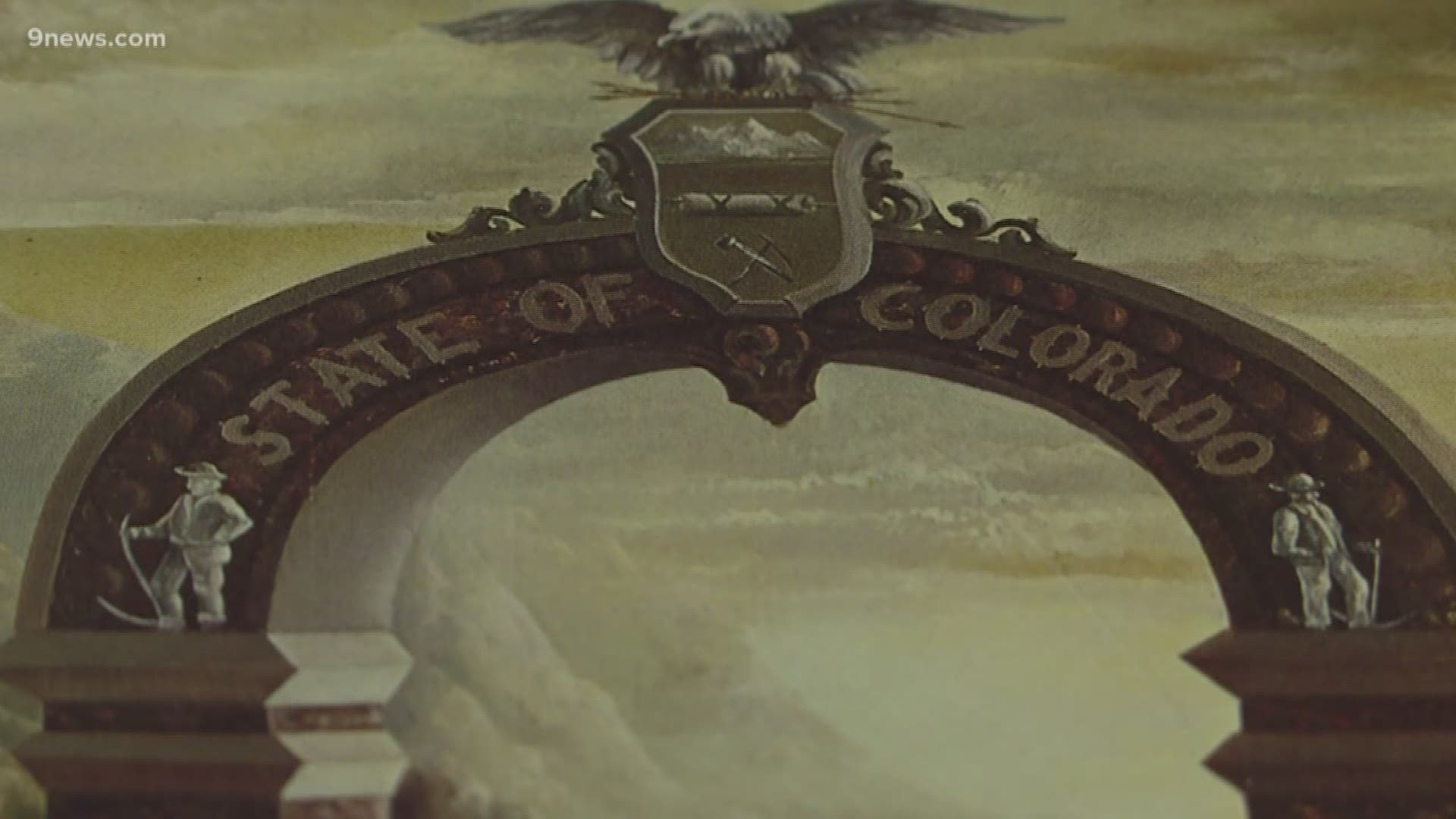
Colorado’s statehood in 1876 was more than a mere administrative change; it solidified the region’s unique identity and accelerated its development into the powerhouse it is today. The immediate impact was profound: a more stable government attracted further investment, spurred the development of infrastructure like railroads, and encouraged agricultural expansion beyond the mining towns. The promise of official state protection and representation in Washington, D.C., gave settlers greater confidence to invest in the future of the state.
The legacy of the Gold Rush and the arduous journey to statehood indelibly shaped Colorado’s character. It fostered a spirit of self-reliance, innovation, and a profound appreciation for its natural resources. The early focus on mining transitioned over time to a more diversified economy, but the pioneering spirit endured, manifesting in Colorado’s current reputation for outdoor adventure, technological advancement, and a forward-thinking approach to conservation and sustainability.
Today, this historical foundation is visible in many of Colorado’s landmarks. Historic mining towns like Central City and Leadville stand as living museums, while the opulent architecture of cities like Denver and Colorado Springs speaks to the wealth generated in those early days. The state’s commitment to public lands, its progressive political landscape, and its thriving tourism industry all have roots in this formative period. The ” Centennial State” nickname isn’t just a historical footnote; it’s a constant reminder of Colorado’s enduring connection to the broader American story and its rapid ascent from a perceived desert to a vibrant state.
Colorado Today: A Tourist’s Paradise Rooted in History
The rich history of Colorado, from its early territorial days to its triumphant statehood, forms the bedrock of its modern appeal. What was once a rugged frontier pursued by hopeful gold seekers is now a premier destination for travel, tourism, and an active lifestyle, attracting millions seeking adventure, relaxation, and cultural immersion.
Unveiling Colorado’s Natural Wonders
The very features that once challenged early explorers – the majestic Rocky Mountains – are now Colorado’s greatest draw. Dispelling the ” Great American Desert” myth, the state boasts a diverse landscape that transitions from high plains to jagged peaks, dense forests, and arid mesas. National parks are primary attractions, offering breathtaking vistas and unparalleled outdoor experiences.
Rocky Mountain National Park, consistently one of the most visited national parks in the country, epitomizes Colorado’s natural grandeur. Here, visitors can hike through alpine meadows, spot diverse wildlife, and traverse the iconic Trail Ridge Road, the highest continuous paved road in North America. For those interested in ancient history, Mesa Verde National Park offers a captivating glimpse into the lives of the ancestral Pueblo people, with incredibly preserved cliff dwellings that are a testament to human ingenuity. The Great Sand Dunes National Park and Preserve, with its towering dunes set against the backdrop of the Sangre de Cristo Mountains, offers a unique opportunity for sandboarding and surreal photographic moments.
Beyond the national parks, Colorado is a playground for all seasons. Winter sports enthusiasts flock to world-renowned ski resorts like Vail, Aspen, Breckenridge, and Telluride, offering pristine powder and luxurious accommodation options. In warmer months, the same mountains transform into havens for hiking, mountain biking, rock climbing, and whitewater rafting on rivers like the Arkansas River. Pike’s Peak, the very landmark that sparked the Gold Rush, remains a popular destination for those wanting to summit a “fourteener” (a peak over 14,000 feet) either by car, cog railway, or foot, offering panoramic views that sweep across the plains to the west.
Urban Gems and Cultural Experiences
While its natural beauty is undeniable, Colorado’s cities offer a vibrant blend of history, culture, and modern amenities, making them attractive stops for any traveler. Denver, the state capital and its largest city, seamlessly blends its Gold Rush origins with a thriving contemporary arts and food scene. Historic neighborhoods like LoDo (Lower Downtown) offer beautifully restored Victorian architecture alongside trendy restaurants, craft breweries, and boutique hotels. The Denver Art Museum, Denver Botanic Gardens, and the Red Rocks Amphitheatre (a natural rock formation that doubles as a world-class concert venue) are just a few examples of the city’s diverse cultural offerings.
Colorado Springs, nestled at the base of Pike’s Peak, is another must-visit. It’s home to the stunning Garden of the Gods Park, famous for its towering red rock formations, and the United States Air Force Academy. The city also serves as a gateway to the mountains and offers a more relaxed pace than Denver. Meanwhile, Boulder, known for its progressive vibe and outdoor-centric lifestyle, offers a unique blend of academic charm, innovative dining, and direct access to hiking trails and the iconic Flatirons. Its pedestrian-friendly Pearl Street Mall is a hub of activity, featuring street performers, local shops, and eclectic eateries.
For those interested in the state’s rich mining heritage, a drive through towns like Georgetown or Silverton offers a tangible connection to the Gold Rush era. These towns, with their preserved Victorian buildings and operational narrow-gauge railways, provide a fascinating look back at the lives of the prospectors and pioneers who shaped Colorado’s destiny. The historic Durango and Silverton Narrow Gauge Railroad offers a scenic journey through some of the most dramatic landscapes in the country, allowing passengers to experience travel much as it was during the boom times.

Accommodation and Lifestyle in the Centennial State
Colorado’s appeal as a destination is amplified by its diverse range of accommodation options, catering to every travel style and budget. From luxurious mountain resorts in places like Aspen and Vail that offer ski-in/ski-out access and world-class spas, to charming historic hotels in Denver’s downtown core, visitors can find the perfect base for their adventures. Boutique hotels in Boulder offer unique, eco-conscious stays, while family-friendly suites and vacation rentals are plentiful in cities and mountain towns alike. For the budget travel enthusiast or those seeking a deeper connection with nature, numerous campgrounds and glamping options are available throughout the state’s national forests and parks.
The lifestyle in Colorado is intrinsically linked to its natural environment. It’s a state that embraces outdoor living, healthy activities, and a strong sense of community. Whether you’re seeking a luxury travel escape with gourmet dining and exclusive spa treatments or an adventurous family trip filled with hiking and exploration, Colorado delivers. Its culinary scene has also flourished, with a focus on farm-to-table cuisine, craft beverages, and diverse international flavors. The accessibility of its landmarks and attractions, combined with well-developed infrastructure, makes planning a trip, from booking hotels to finding local guides, a seamless experience. Colorado offers not just a destination, but a way of life, where the echoes of its Centennial State past blend harmoniously with a vibrant, modern present.
In conclusion, Colorado’s journey to statehood on August 1, 1876, was a testament to the pioneering spirit and the transformative power of discovery. From a rugged and often-misunderstood frontier, it rapidly evolved into a vital part of the United States, earning its place as “The Centennial State.” Today, this rich history underpins every aspect of its appeal as a premier travel destination. Whether you’re drawn by the majestic Rocky Mountains, the vibrant culture of its cities, or the whispers of gold rush history that still resonate in its charming towns, Colorado offers an unparalleled blend of adventure, culture, and natural beauty. Its enduring legacy, forged in the fires of ambition and tempered by the spirit of the West, continues to inspire and welcome travelers from around the globe, eager to explore the wonders of this remarkable state.
LifeOutOfTheBox is a participant in the Amazon Services LLC Associates Program, an affiliate advertising program designed to provide a means for sites to earn advertising fees by advertising and linking to Amazon.com. Amazon, the Amazon logo, AmazonSupply, and the AmazonSupply logo are trademarks of Amazon.com, Inc. or its affiliates. As an Amazon Associate we earn affiliate commissions from qualifying purchases.