
The relocation of a major professional sports franchise is often a watershed moment, reshaping not only the sporting landscape of its new home but also influencing local culture, economic development, and civic pride. The saga of the Brooklyn Dodgers moving to Los Angeles is one of the most significant and studied instances of such a transition. This move, completed in 1958, was a complex interplay of financial imperatives, shifting demographics, and visionary, albeit controversial, leadership. Understanding when and why this iconic franchise chose the West Coast provides a fascinating glimpse into mid-20th century America and the burgeoning identity of Southern California.
The Pre-Move Landscape: Brooklyn’s Beloved Bums
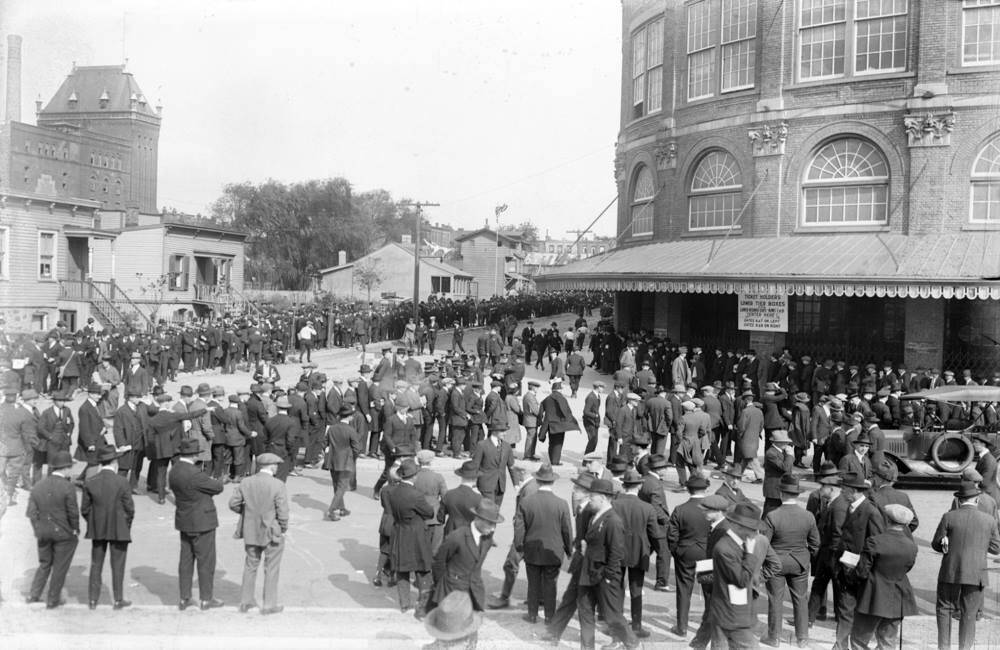
For decades, the Brooklyn Dodgers were more than just a baseball team; they were an integral part of the fabric of Brooklyn, New York. Playing at the legendary Ebbets Field, they cultivated a passionate and diverse fanbase. Known affectionately as the “Bums” due to their history of underdog status and often scrappy play, they were a symbol of resilience and working-class identity. Legends like Jackie Robinson, Sandy Koufax, and Duke Snider became household names, etching their place in baseball lore and the hearts of their fans.
However, behind the romantic image of [Brooklyn] baseball, financial realities were becoming increasingly stark. Ebbets Field, while beloved, was aging, undersized, and located in a densely populated area that offered limited opportunities for expansion or revenue generation. The team’s owner at the time, Walter O’Malley, a shrewd businessman, began to see the limitations of playing in the shadows of New York’s other baseball behemoths, the New York Yankees and the New York Giants.
Challenges in Brooklyn
Several critical factors contributed to the team’s eventual departure from Brooklyn:
- Aging Stadium and Limited Capacity: Ebbets Field, built in 1913, could only seat around 32,000 spectators. In an era where stadium attendance was a primary revenue driver, this capacity was a significant handicap. Furthermore, the surrounding neighborhood offered little room for expansion or the development of modern amenities that could boost revenue.
- Financial Disparities: The Dodgers struggled to compete financially with the more established and wealthier Yankees. Their financial standing was further hampered by their inability to secure a new, larger stadium in New York City. Walter O’Malley’s persistent attempts to secure public support and land for a new ballpark were consistently met with resistance from city officials and powerful political figures like Robert Moses.
- Shifting Demographics and Urban Decay: While Brooklyn remained a vibrant borough, parts of it, like the area surrounding Ebbets Field, began to experience signs of urban decay. This, coupled with the rise of suburban living and the allure of new entertainment options, meant that the team’s traditional fanbase was facing new pressures and opportunities.
Walter O’Malley’s vision was to find a city that could offer him the opportunity to build a state-of-the-art ballpark and a larger, more affluent market to support his team. His eyes, and those of many others in professional sports, were increasingly turning westward.
The Allure of Los Angeles: A New Frontier
In the post-World War II era, Los Angeles was experiencing an unprecedented boom. The city was rapidly expanding, attracting new residents with promises of sunshine, economic opportunity, and a modern lifestyle. It was a burgeoning metropolis eager to establish itself as a major league city.
The Role of Walter O’Malley
Walter O’Malley was not the first to consider moving a baseball team to Los Angeles. The Continental League’s proposed team, the Los Angeles Angels (a different franchise than the current MLB team), had already demonstrated the market’s potential. However, it was O’Malley’s strategic maneuvering and his pursuit of a grander vision that ultimately brought the Dodgers to the West Coast.
O’Malley engaged in a complex series of negotiations and legal battles. He initially sought a new stadium in New York City, but when those efforts failed, he began to explore opportunities elsewhere. Los Angeles presented an attractive proposition: a rapidly growing population, a significant demographic shift with many former East Coast residents now residing there, and a city government eager to attract major league sports to bolster its status.
The city’s leadership, including figures like then-Mayor Norris Poulson, actively courted O’Malley. They recognized the immense civic and economic benefits that a major league baseball team would bring. The prospect of a new stadium, potentially funded or supported by the city, was a powerful incentive.
The Deal is Struck: A Monumental Shift
The transfer of the Brooklyn Dodgers to Los Angeles was finalized in 1958. This date marks the official relocation of the franchise. The move was not just a change of address; it was a complete geographical and cultural shift.
The Initial Move and Temporary Home
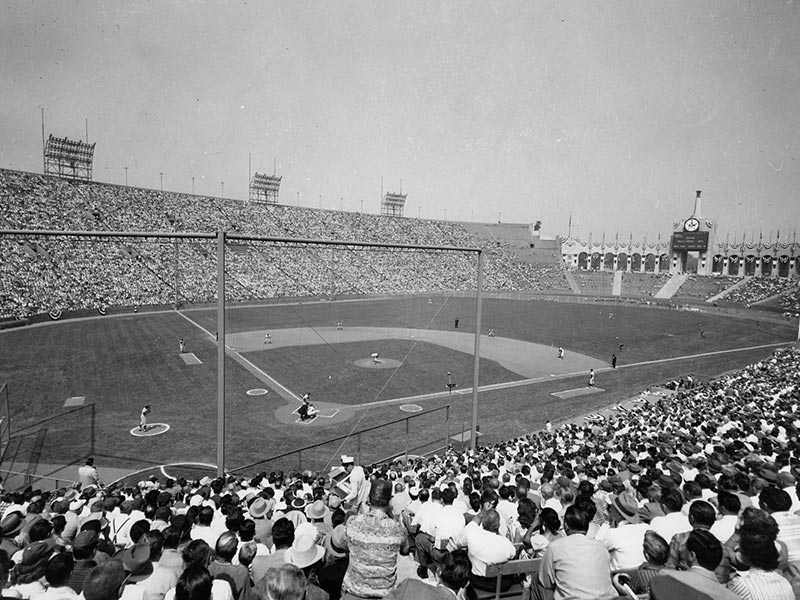
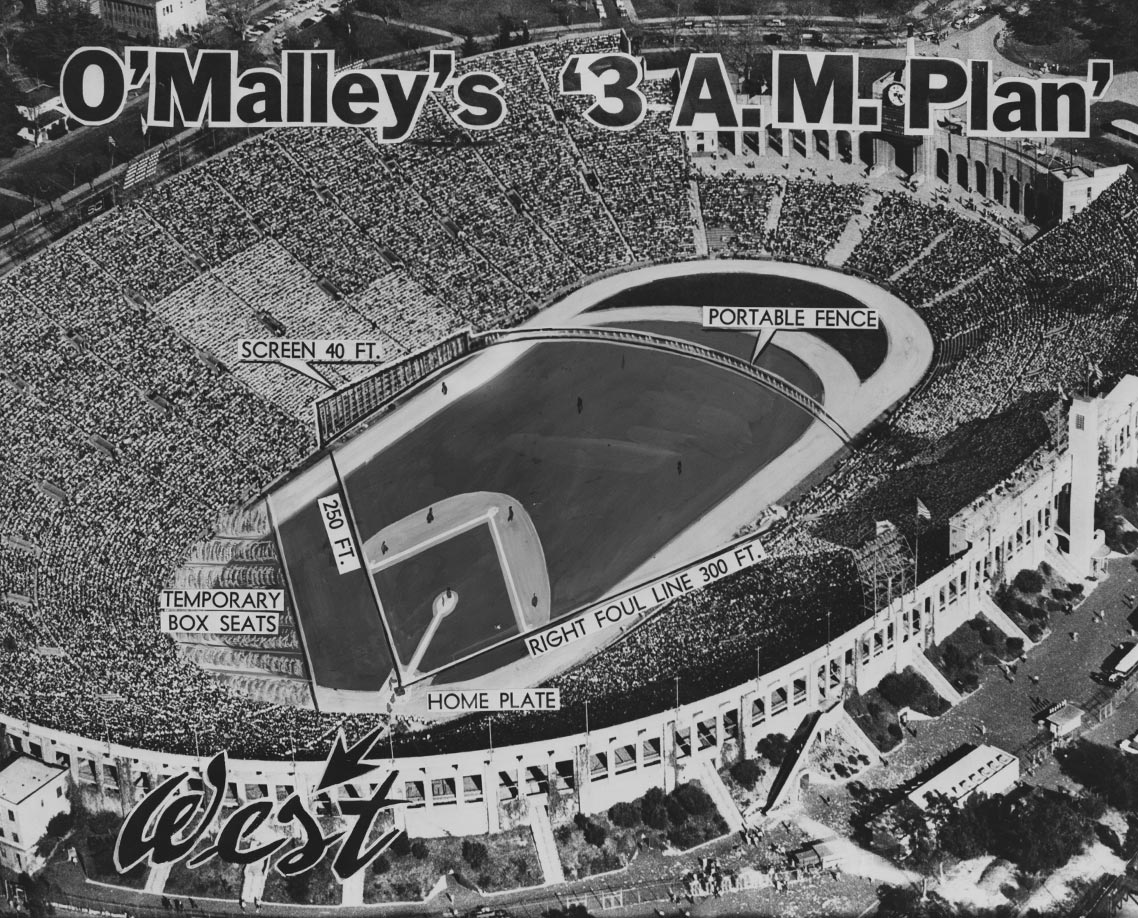
Upon their arrival in Los Angeles, the Dodgers did not immediately have a permanent home. They played their initial seasons in the magnificent Los Angeles Memorial Coliseum. This iconic venue, originally built for the 1932 Olympic Games, had a unique configuration for baseball, with an unusually short distance to the right field foul pole, leading to memorable home run contests. The vast capacity of the Coliseum allowed the team to draw large crowds, far exceeding what Ebbets Field could accommodate. This early success in Los Angeles validated O’Malley’s decision and demonstrated the market’s viability.
The Vision of Chavez Ravine
The ultimate goal for Walter O’Malley was to build a brand-new, dedicated baseball stadium. His chosen site was the hilly area known as Chavez Ravine. The acquisition of this land was itself a contentious issue, involving eminent domain and the relocation of existing residents. However, O’Malley persisted, and his vision culminated in the opening of Dodger Stadium in 1962. Dodger Stadium became, and remains, a jewel of modern sports architecture, renowned for its stunning design, panoramic views, and comfortable fan experience. Its construction was a crucial component of the Dodgers establishing deep roots in Los Angeles.
Impact and Legacy: A New Era of Baseball
The move of the Dodgers to Los Angeles was a pivotal moment in the history of Major League Baseball and the development of Southern California as a major market.
A Catalyst for Expansion
The success of the Dodgers in Los Angeles proved that the West Coast could sustain top-tier professional sports. This paved the way for other franchises to consider similar moves and for expansion into new markets. The San Francisco Giants, who also moved from New York that same year (1958), further solidified baseball’s presence in California. This era marked the beginning of baseball’s westward expansion, fundamentally altering the league’s geography.
Cultural Integration and Identity
The Dodgers quickly became a beloved institution in Los Angeles. They provided a shared experience for a rapidly growing and diverse population. The team’s success, including multiple World Series championships, fostered a strong sense of local identity and pride. The distinct blue of the Dodgers became synonymous with Los Angeles baseball, much like it had been with Brooklyn for generations. The team’s integration into the city’s culture was remarkably swift, transforming them from an East Coast transplant into a quintessential part of the Southern California sports scene.
The Enduring Debate
Despite the ultimate success of the move, the relocation remains a sensitive topic for many, particularly those who remember the Dodgers in Brooklyn. The loss of the team was a profound disappointment and a symbol of what many felt was the erosion of traditional New York City culture. Walter O’Malley is often viewed as a complex figure: a visionary businessman by some, a villain who betrayed a loyal fanbase by others.
Ultimately, the question of “When Did Dodgers Move To Los Angeles?” is answered with 1958. This date signifies the culmination of a significant chapter in baseball history, marking the end of an era in Brooklyn and the dawn of a new, immensely successful one in Los Angeles, forever changing the landscape of American professional sports. The move wasn’t just about baseball; it was about the changing face of America, the growth of new urban centers, and the enduring power of sports to shape civic identity.
LifeOutOfTheBox is a participant in the Amazon Services LLC Associates Program, an affiliate advertising program designed to provide a means for sites to earn advertising fees by advertising and linking to Amazon.com. Amazon, the Amazon logo, AmazonSupply, and the AmazonSupply logo are trademarks of Amazon.com, Inc. or its affiliates. As an Amazon Associate we earn affiliate commissions from qualifying purchases.