
The vast and diverse landscape of the United States is a mosaic of history, geography, and culture, with each state contributing its unique chapter to the national story. Among these, Hawaii and Alaska stand out as the two most recent additions, distinct not only in their geographical separation from the contiguous states but also in their captivating journeys to statehood. These landmark historical events, occurring within months of each other, completed the modern map of the United States as we know it, adding immense strategic, economic, and cultural richness. Understanding when and how these remote territories transitioned into full states provides crucial insight into American expansion, geopolitical considerations, and the enduring quest for self-determination. Far from mere dates on a calendar, their paths to statehood reflect complex narratives of exploration, international relations, economic ambition, and the aspirations of their diverse populations. This article delves into the specific timelines and pivotal moments that saw the “Last Frontier” and the “Aloha State” officially join the union, exploring the forces that shaped their unique destinies.
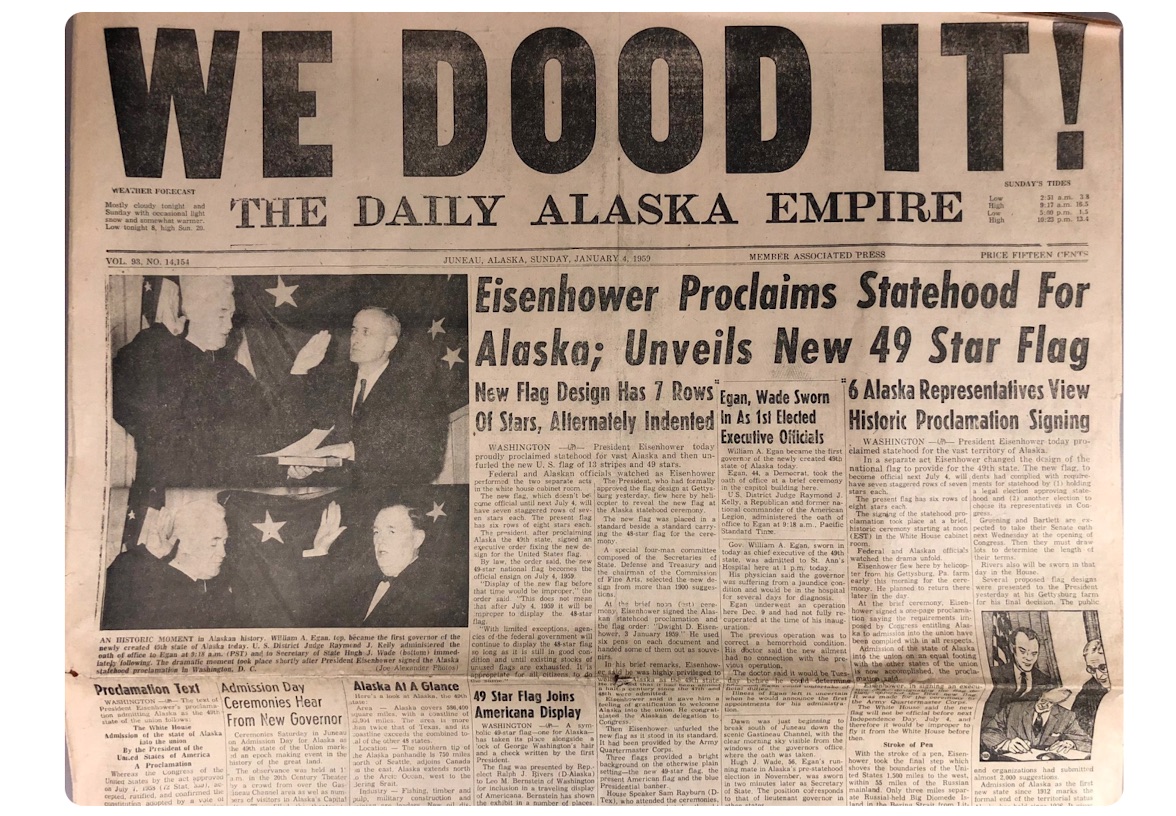
The Path to Statehood: Alaska’s Icy Journey to the 49th Star
Alaska’s journey to statehood is a story deeply intertwined with its vast wilderness, rich natural resources, and strategic geopolitical importance. From its earliest days as a Russian outpost to its eventual integration into the United States, the path was long and often challenging, ultimately leading to its designation as the 49th state.
Early History and Russian Cession
Before becoming an American territory, Alaska was known as Russian America, a colonial possession of the Russian Empire primarily exploited for its lucrative fur trade. However, by the mid-19th century, Russia found its North American holdings difficult and costly to maintain, particularly with the threat of British encroachment. This led to the historic Alaska Purchase in 1867, where United States Secretary of State William H. Seward negotiated the acquisition of the territory for $7.2 million. Initially dubbed “Seward’s Folly” or “Seward’s Icebox” by critics who questioned the value of such a vast, frozen expanse, the purchase proved to be one of the greatest real estate deals in history, eventually yielding immense wealth in natural resources. Upon its acquisition, Alaska was administered by various federal departments before being granted territorial status in 1912.
Territorial Status and Resource Boom
The period following the Alaska Purchase saw a slow but steady growth in American interest, spurred initially by the discovery of gold. The Klondike Gold Rush of the late 19th century, while largely centered in Canada’s Yukon Territory, brought thousands of prospectors through Alaska, leading to the establishment of towns like Skagway and fostering infrastructure development. Later discoveries of gold in places like Nome and Fairbanks, along with a thriving fishing industry and vast timber resources, solidified Alaska’s economic potential. During World War II, Alaska’s strategic importance soared due to its proximity to Japan and Russia, leading to significant military investment and an influx of population. Cities like Anchorage and Fairbanks grew rapidly, and the construction of the Alaska Highway dramatically improved connectivity.
The Push for 49th Statehood
Following World War II, the desire for statehood among Alaskans intensified. They sought greater political representation, control over their own resources, and an end to what they perceived as colonial rule by federal agencies. The “statehood movement” gained significant momentum, led by advocates like Egan, who would become Alaska’s first governor. However, there were hurdles. Concerns in Washington D.C. revolved around Alaska’s small population, its vast size and remoteness, and the potential economic implications of granting statehood. Furthermore, the political leanings of a new state were always a factor in a closely divided Congress. Despite these challenges, persistent advocacy and Alaska’s strategic value during the Cold War ultimately swayed opinion. On January 3, 1959, President Dwight D. Eisenhower signed the proclamation admitting Alaska into the Union as the 49th state, ending nearly a century of territorial status and opening a new chapter for the “Last Frontier.”
Hawaii’s Island Transition: From Kingdom to State
Just months after Alaska joined the Union, the islands of Hawaii followed suit, marking an even more dramatic transformation from an independent monarchy to the 50th star on the American flag. Its path to statehood is a complex narrative of indigenous sovereignty, foreign influence, annexation, and the pursuit of political equality.
A Rich Kingdom’s Legacy
For centuries, the Hawaiian Islands were ruled by a sophisticated and unified monarchy, culminating in the Kingdom of Hawaii established by King Kamehameha I in 1810. This independent nation boasted its own constitution, diplomatic relations with major world powers, and a vibrant indigenous culture. However, by the late 19th century, foreign influence, particularly from American business interests involved in sugar plantations, grew significantly. These interests sought greater political power, eventually leading to increased pressure on the Hawaiian monarchy.
Annexation and Territorial Years
The culmination of these pressures was the illegal overthrow of Queen Liliʻuokalani, Hawaii’s last monarch, in 1893 by a group of American and European businessmen. Despite efforts by the Queen and native Hawaiians to restore the monarchy, the United States eventually annexed Hawaii in 1898, driven by strategic interests in the Pacific, particularly during the Spanish-American War. Hawaii then became an organized territory of the United States in 1900. During its territorial period, Hawaii grew into a vital military outpost, famously housing the naval base at Pearl Harbor. Its strategic importance was dramatically underscored by the attack on Pearl Harbor in 1941, which plunged the United States into World War II.
The Drive for 50th Statehood

After World War II, the movement for Hawaiian statehood intensified. Residents, a diverse mix of native Hawaiians, Japanese, Chinese, Filipinos, and Caucasians, desired full citizenship rights, including the ability to vote for the President and elect their own congressional representatives, rather than rely on a non-voting delegate. Economically, statehood was seen as a way to boost Hawaii’s burgeoning tourism industry and attract investment by reducing perceived political instability. However, just like Alaska, Hawaii faced opposition. Concerns included its non-contiguous location, its unique racial demographics, and fears of its potential political alignment. Critics also raised questions about the legitimacy of the annexation itself. Nevertheless, the growing support within Hawaii and the Cold War’s strategic emphasis on Pacific strongholds ultimately prevailed. On August 21, 1959, President Dwight D. Eisenhower signed the bill admitting Hawaii as the 50th state, completing the circle of American expansion across the Pacific.
Why the Wait? Factors Influencing Statehood
The admission of Alaska and Hawaii in 1959, over 60 years after their initial acquisition as territories, was not a sudden decision but the culmination of decades of debate and various influencing factors. Understanding these challenges provides context for their unique historical trajectories.
Geographical Distance and Isolation
One of the most significant impediments to earlier statehood for both Alaska and Hawaii was their extreme geographical separation from the Continental United States. In an era before modern air travel and instantaneous communication, their remoteness posed logistical challenges for governance and integration. Lawmakers in Washington D.C. often viewed them as distant outposts, difficult to understand and integrate fully into the existing federal system. This geographical isolation also contributed to concerns about their ability to sustain viable economies and populations that could support state-level governance.
Economic and Strategic Considerations
The economic viability of these territories was a constant point of discussion. For Alaska, its resource-dependent economy (fishing, mining, timber) was subject to boom-and-bust cycles, leading to questions about its financial self-sufficiency. For Hawaii, the dominance of the sugar and pineapple plantations raised concerns about its economic diversity. However, it was their strategic importance that ultimately tipped the scales. The onset of the Cold War underscored the critical role of Alaska as a northern defense frontier against the Soviet Union and Hawaii as the strategic command center for the Pacific. Granting them statehood was seen as a way to solidify American sovereignty and defense capabilities in these crucial regions, rather than leave them as mere territories.
Political Debates and Cultural Identity
Beyond geography and economics, significant political and social debates delayed statehood. In Congress, there were concerns about the political leanings of two new states, particularly whether they would favor the Democratic Party or the Republican Party in a closely balanced political landscape. Opponents also raised questions about the diverse racial and ethnic composition of Hawaii, fearing the integration of a non-white majority state. For both territories, the issue of self-determination was paramount, with local populations increasingly demanding full political rights and representation. Ultimately, the growing consensus for civil rights and the strategic imperative during the Cold War overcame these lingering doubts, paving the way for their formal admission.
The Impact of Statehood: Defining Modern Alaska and Hawaii
The momentous decision to grant statehood to Alaska and Hawaii profoundly reshaped their identities and futures. These historical events were not merely administrative changes but pivotal moments that catalyzed their development and redefined their place within the American fabric and on the global stage.
Economic Development and Resource Management
Statehood brought significant economic changes to both regions. For Alaska, it meant gaining control over vast tracts of land and offshore resources, most notably oil. The discovery and subsequent development of the Prudhoe Bay oil field in the late 1960s and the construction of the Trans-Alaska Pipeline System transformed Alaska’s economy, creating immense wealth and funding state services through oil revenues. For Hawaii, statehood signaled stability and encouraged investment, particularly in tourism. The image of Hawaii as an exotic, accessible American paradise flourished, attracting millions of visitors and diversifying its economy beyond its agricultural roots. Both states, as a result of self-governance, gained greater agency in shaping their economic policies and managing their unique natural endowments.
Cultural Preservation and Self-Determination
While statehood brought federal rights and representation, it also intensified discussions around cultural identity and preservation, especially in Hawaii. The formal integration into the United States spurred both an embrace of American ideals and a renewed focus on indigenous rights and cultural heritage. In Hawaii, this has led to ongoing efforts to revive the Hawaiian language, protect sacred sites, and address historical injustices related to the overthrow of the monarchy. In Alaska, statehood provided the framework for the landmark Alaska Native Claims Settlement Act of 1971, which addressed aboriginal land claims and established Native corporations, significantly impacting the self-determination and economic well-being of Alaska’s indigenous peoples. Statehood, therefore, became a complex platform for both assimilation and the assertion of distinct cultural identities.
National and Global Significance
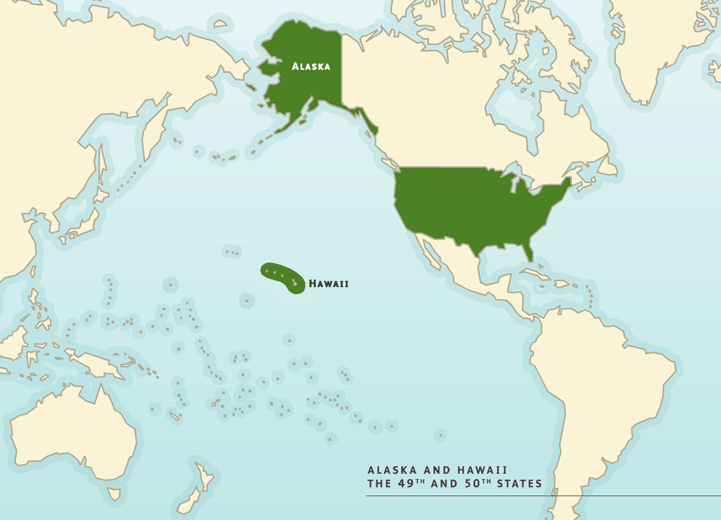
As the 49th and 50th states, Alaska and Hawaii solidified the geopolitical reach of the United States. Alaska remains a critical outpost for national defense, a gateway to the Arctic, and a bellwether for climate change. Its vast wilderness and unique ecosystems are of global environmental importance. Hawaii, positioned at the crossroads of the Pacific, continues to serve as a vital military hub and a cultural bridge between East and West. Both states, through their diverse populations and unique histories, enhance the rich tapestry of American society, embodying the nation’s motto of E Pluribus Unum – “Out of Many, One.” Their statehood was not just an administrative formality but a profound historical landmark, reshaping their landscapes, economies, and cultures while profoundly influencing the United States’ strategic posture and global identity.
The admission of Alaska on January 3, 1959 and Hawaii on [August 21, 1959], brought to a close the most significant period of territorial expansion and integration in American history. These two states, with their distinctive historical paths, geographical positions, and cultural heritages, completed the constellation of the United States, forever changing its character and extending its influence. Their journeys from distant territories to integral parts of the Union remain compelling narratives of determination, political maneuvering, and the enduring vision of a nation stretching from sea to shining sea. Today, their unique contributions continue to shape the American identity, serving as living landmarks of history, nature, and cultural diversity.
LifeOutOfTheBox is a participant in the Amazon Services LLC Associates Program, an affiliate advertising program designed to provide a means for sites to earn advertising fees by advertising and linking to Amazon.com. Amazon, the Amazon logo, AmazonSupply, and the AmazonSupply logo are trademarks of Amazon.com, Inc. or its affiliates. As an Amazon Associate we earn affiliate commissions from qualifying purchases.