
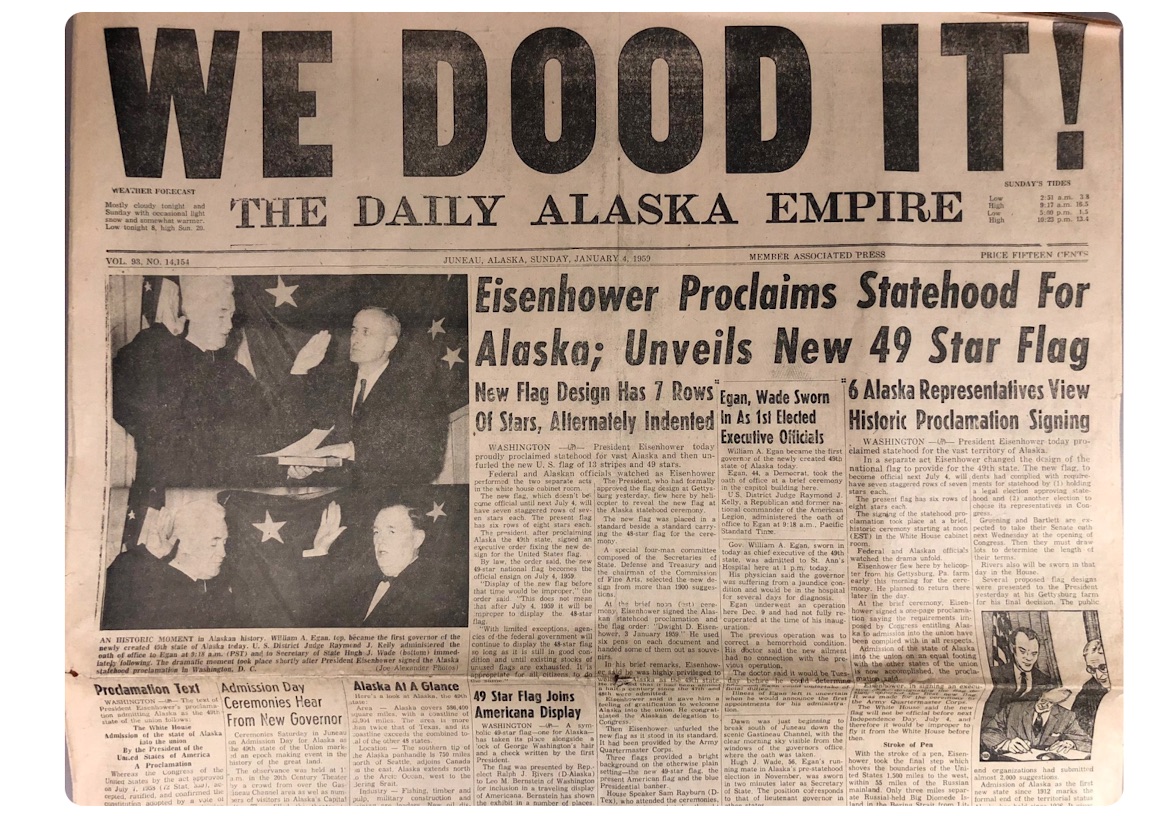
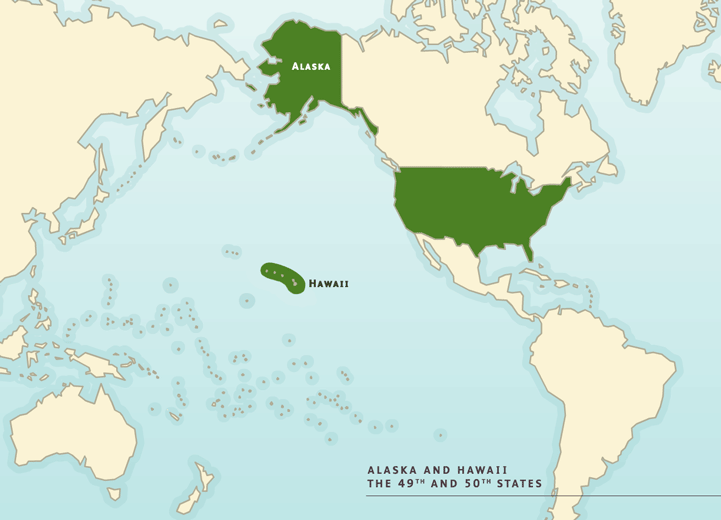
The admission of Alaska and Hawaii into the United States in 1959 marked a pivotal moment in the nation’s history, extending its borders and cultural tapestry to the farthest reaches of the Pacific Ocean and the Arctic Ocean. These two distinct territories, separated by vast distances and possessing unique histories and identities, simultaneously expanded the nation’s physical and geopolitical footprint. Alaska officially became the 49th state on January 3, 1959, followed by Hawaii as the 50th state on August 21, 1959. The journeys to statehood for both locales were complex, shaped by international relations, economic ambition, strategic military considerations, and the enduring aspirations of their diverse populations. Understanding these pathways offers deep insight into the unique cultural and historical landmarks that define these two extraordinary American states today.

Alaska: The Last Frontier’s Transformation
Alaska’s path to statehood is a compelling narrative of remote wilderness evolving into a vital part of the United States. Its acquisition was initially met with skepticism, yet its strategic importance and vast resources eventually secured its place in the union.
From Russian America to U.S. Territory
Prior to becoming a U.S. territory, Alaska was known as Russian America, a fur-trading outpost for the Russian Empire. The sale of Alaska to the United States for $7.2 million in 1867, negotiated by U.S. Secretary of State William H. Seward, was initially dubbed “Seward’s Folly” by critics. They saw little value in the vast, icy land. However, the subsequent discovery of gold during the Klondike Gold Rush in the late 19th century and the increasing recognition of its abundant natural resources, from timber to fish, transformed public perception. This era also saw the establishment of early settlements and the growth of towns like Sitka, which served as the capital of Russian America and later the first capital of the Alaska Territory. These early sites, though often transformed, remain historical landmarks marking the genesis of American presence.
The Fight for Self-Determination
The push for Alaska’s statehood gained significant momentum after World War II. The war highlighted Alaska’s immense strategic value as a defense outpost against potential threats from the Soviet Union during the escalating Cold War. Military installations built during this period, such as those around Anchorage and Fairbanks, became crucial geopolitical landmarks, underscoring Alaska’s importance far beyond its economic resources. Alaskans, tired of being governed from Washington D.C., advocated vigorously for self-rule. Key figures like E. L. Bartlett, Alaska’s delegate to Congress, tirelessly championed the cause. A constitutional convention in 1955-1956 produced a model state constitution, demonstrating the territory’s readiness for statehood. This convention, held at the University of Alaska in Fairbanks, is a significant historical landmark in its own right, symbolizing the collective effort towards self-governance.
Economic Drivers and Strategic Importance
The discovery of vast oil reserves in places like Prudhoe Bay post-statehood further solidified Alaska’s economic significance, leading to the construction of the Trans-Alaska Pipeline System—an engineering marvel and an economic landmark. However, even before this, the fishing, timber, and mining industries contributed substantially. The unique geological landmarks such as Denali (formerly Mount McKinley), the highest peak in North America, and the pristine wilderness of Denali National Park and Preserve were recognized for their environmental and recreational value, attracting increasing numbers of visitors and defining Alaska’s image as “The Last Frontier.” The culmination of these factors led President Dwight D. Eisenhower to sign the Alaska Statehood Act on July 7, 1958, leading to its official admission on January 3, 1959.
Hawaii: The Aloha State’s Complex Journey
Hawaii’s journey to statehood is interwoven with its rich indigenous history, its strategic location, and significant geopolitical shifts, culminating in its recognition as a vibrant and unique state.
From Kingdom to Republic to Territory
The Hawaiian Islands were originally a sovereign Monarchy, unified by King Kamehameha I in the early 19th century. This kingdom maintained diplomatic relations with major world powers for decades. However, by the late 19th century, American business interests, particularly in sugar plantations, grew powerful, leading to increasing U.S. influence. In 1893, American and European businessmen, with the support of U.S. Marines, overthrew the Hawaiian Monarchy of Queen Liliʻuokalani. This event, a controversial landmark in Hawaiian history, led to the establishment of the Republic of Hawaii under President Sanford B. Dole. Five years later, in 1898, the United States formally annexed Hawaii, driven by imperial ambitions and strategic considerations during the Spanish-American War. It became an organized U.S. territory in 1900 under the Organic Act of 1900, retaining its capital at Honolulu. Sites like Iolani Palace in Honolulu, the only official residence of royalty in the United States, stand as powerful landmarks embodying this complex transition from an independent kingdom to a U.S. territory.
World War II and the Push for Statehood
The attack on Pearl Harbor on December 7, 1941, was a devastating turning point, thrusting Hawaii onto the global stage and underscoring its indispensable strategic importance to American defense in the Pacific Ocean. The war years highlighted the loyalty of Hawaiian residents, including its large Asian American population, challenging racial prejudices and strengthening the argument for statehood. Veterans returning from World War II and the Korean War became vocal proponents, demanding full representation and rights. The sacrifices made and the steadfast commitment demonstrated during these global conflicts became a powerful ethical landmark in their plea for equality. The Pearl Harbor site itself, with its memorials, serves as a poignant landmark to this day, commemorating the events that significantly influenced Hawaii’s future.
Cultural Identity and Modern Relevance
Despite the political shifts, Hawaii’s unique cultural identity, deeply rooted in the traditions of Native Hawaiians and enriched by waves of immigration from Asia and other Pacific islands, has endured and flourished. Post-statehood, the distinct “Aloha spirit” and diverse cultural landscape became integral to Hawaii’s national and international appeal. Natural landmarks like the volcanic landscapes of Hawaii Volcanoes National Park on the Big Island and the pristine beaches of Maui have become globally recognized icons. The cultural practices, language, and arts, actively preserved and celebrated, define Hawaii’s identity as a state unlike any other. President Dwight D. Eisenhower signed the Hawaii Admission Act on March 18, 1959, paving the way for its official admission on August 21, 1959, thereby completing the constellation of 50 U.S. states.
The Impact of Statehood: Shaping Modern Landmarks and Identity
The admission of both Alaska and Hawaii in 1959 fundamentally transformed the United States. It expanded the nation’s political boundaries, reinforced its global strategic presence, and brought two vastly different, yet equally rich, cultural landscapes into the national fold. For both states, statehood brought increased federal investment, greater political representation, and enhanced economic development, especially in sectors like tourism, resource extraction, and military defense.
Today, the historical narratives leading to their statehood are woven into the very fabric of their identities, influencing how their natural wonders and man-made structures are viewed as landmarks. Alaska’s rugged beauty, from the vast glaciers of the Alaskan Panhandle to the tundra near Barrow, is now protected and promoted as part of the American heritage. Hawaii’s tropical allure, its significant historical sites such as Kona battlefields and ancient temples, are cherished as unique contributions to the national story. The paths to statehood for Alaska and Hawaii were not merely administrative processes; they were complex, multifaceted journeys that shaped their unique character and elevated them to their current status as iconic American landmarks, both culturally and geographically.
LifeOutOfTheBox is a participant in the Amazon Services LLC Associates Program, an affiliate advertising program designed to provide a means for sites to earn advertising fees by advertising and linking to Amazon.com. Amazon, the Amazon logo, AmazonSupply, and the AmazonSupply logo are trademarks of Amazon.com, Inc. or its affiliates. As an Amazon Associate we earn affiliate commissions from qualifying purchases.