
The stunning archipelago of Hawaii, a name synonymous with paradise, vibrant culture, and unparalleled natural beauty, holds a unique place in the tapestry of the United States. Its journey to becoming the 50th star on the American flag is a compelling narrative of monarchy, foreign influence, political struggle, and ultimately, a transformation that shaped its modern identity. For many travelers, Hawaii is a dream destination, offering everything from pristine beaches and lush rainforests to active volcanoes and world-class resorts. Understanding its history, particularly how it transitioned from an independent kingdom to a U.S. state, enriches the experience of exploring its diverse landscapes and rich cultural heritage. The definitive answer to when Hawaii became a U.S. state is August 21, 1959. However, this single date marks the culmination of centuries of intricate history and decades of dedicated effort.
The Long Road to American Statehood
The path to statehood for Hawaii was neither swift nor simple. It was a complex historical trajectory marked by indigenous rule, the arrival of Western powers, the establishment of a monarchy, its eventual overthrow, and a period as a U.S. territory. This profound evolution laid the groundwork for the modern state that captivates millions of visitors each year. The islands, a crossroads of Polynesian, Asian, and American cultures, bear the indelible marks of each era, making its story as compelling as its scenic vistas.
From Ancient Polynesian Kingdom to Monarchy
Long before Western contact, the Hawaiian Islands were settled by Polynesian navigators, establishing a rich and complex society with its own unique language, religion, and social structure. These early inhabitants developed sophisticated agricultural practices and a profound connection to the land and sea, evident in their traditional laws and spiritual beliefs. For centuries, the islands existed as independent chiefdoms, with various rulers vying for dominance across the separate landmasses. The arrival of Captain James Cook in 1778 marked the first recorded European contact, inadvertently introducing the islands to the outside world and setting in motion a series of events that would forever alter their destiny.
The late 18th and early 19th centuries witnessed a pivotal moment in Hawaiian history: the unification of the islands under one rule. King Kamehameha I, a visionary and formidable warrior, successfully conquered and united all the major Hawaiian Islands, including Oahu, Maui, Hawaii Island (often called the Big Island), and Kauai, establishing the Kingdom of Hawaii in 1810. This was a remarkable feat, creating a sovereign nation recognized by major world powers. Under his leadership and that of his successors, the kingdom developed a modern government, adopted Western laws, and engaged in international trade, maintaining its independence for nearly a century. This era of monarchy also saw the construction of iconic landmarks such as the Iolani Palace in Honolulu, the only official residence of royalty in the United States, which stands today as a powerful symbol of Hawaiian sovereignty and history, a must-visit for any history enthusiast traveling to Oahu.
Foreign Influence and the Overthrow of the Monarchy
The increasing presence of Western missionaries, merchants, and planters throughout the 19th century profoundly impacted the Hawaiian Kingdom. While missionaries brought Christianity and education, they also introduced new societal norms and Western ideas that gradually eroded traditional Hawaiian customs. American and European business interests, particularly in the booming sugar industry, began to exert significant political and economic pressure. These foreign residents, often driven by profit and expansionist ambitions, gradually gained considerable influence within the kingdom’s government and economy.
This growing foreign influence culminated in a series of events that led to the monarchy’s downfall. In 1887, the “Bayonet Constitution” was imposed on King Kalakaua, significantly diminishing the monarch’s power and disenfranchising many native Hawaiians. This set the stage for the dramatic overthrow of the monarchy. In 1893, a group of American and European businessmen, backed by the United States military, orchestrated a coup, deposing Queen Liliuokalani, Hawaii’s last reigning monarch. This act was deeply controversial and has been widely condemned as an illegal seizure of power, a sentiment that resonates with many native Hawaiians to this day. Visitors to historical sites like the Bishop Museum in Honolulu can delve deeper into the rich cultural heritage and the story of the monarchy.

Annexation and Territorial Status
Following the overthrow, the conspirators established the Republic of Hawaii, primarily to facilitate annexation by the United States. Despite initial reluctance from some U.S. presidents, the strategic importance of the islands, particularly after the Spanish-American War and the desire for a Pacific naval base like Pearl Harbor, proved irresistible. In 1898, the United States formally annexed Hawaii, declaring it a U.S. territory. This marked a significant turning point, integrating the islands more formally into the American political and economic system.
As a territory, Hawaii saw a surge in American immigration and investment. The sugar and pineapple industries, exemplified by operations like the Dole Plantation on Oahu, flourished, attracting a diverse workforce from Japan, China, the Philippines, and Portugal. This period significantly shaped Hawaii’s unique multicultural demographic, a blend of ethnicities that contributes to its rich cultural landscape today. The territorial era also cemented Hawaii’s military importance, particularly evident during World War II with the devastating attack on Pearl Harbor in December 1941. This event, now commemorated by the solemn USS Arizona Memorial, underscored Hawaii’s strategic value and brought it into sharp focus on the global stage, further strengthening its ties to the mainland United States.
The Dawn of a New Era: Hawaii Becomes the 50th State
The decades following annexation were characterized by a growing movement for statehood. While economic integration was rapid, political integration took time and effort, reflecting both the unique challenges and the inherent appeal of Hawaii to the American ideal. The quest for statehood was a long and arduous battle, driven by both residents and influential figures on the mainland, culminating in the historic decision that cemented Hawaii’s place in the union.
The Push for Statehood
The aspiration for statehood gained significant momentum throughout the 20th century. Residents of Hawaii, a diverse population of native Hawaiians, haoles (non-native Hawaiians, primarily of European or American descent), and descendants of immigrant laborers, increasingly desired the full rights and representation afforded to citizens of a state. As a territory, Hawaiians could not vote in presidential elections and had only a non-voting delegate in Congress, limiting their political voice. The post-World War II era saw a surge in the statehood movement. Hawaii’s loyal and heroic contributions to the war effort, particularly from its Nisei (second-generation Japanese American) soldiers, dispelled many lingering doubts about its loyalty and American identity.
Economic prosperity also played a role, as full statehood was seen as a way to further stabilize the economy and attract more investment. Political leaders within Hawaii and their allies in Washington D.C. tirelessly campaigned, arguing that Hawaii, with its unique cultural tapestry and strategic military importance, was ready and deserving of equal status within the United States. Concerns about Hawaii’s non-contiguous location and its diverse, non-white majority population had historically posed barriers, but the prevailing sentiment shifted towards embracing this distinct Pacific territory as a full and equal partner.
The Official Date
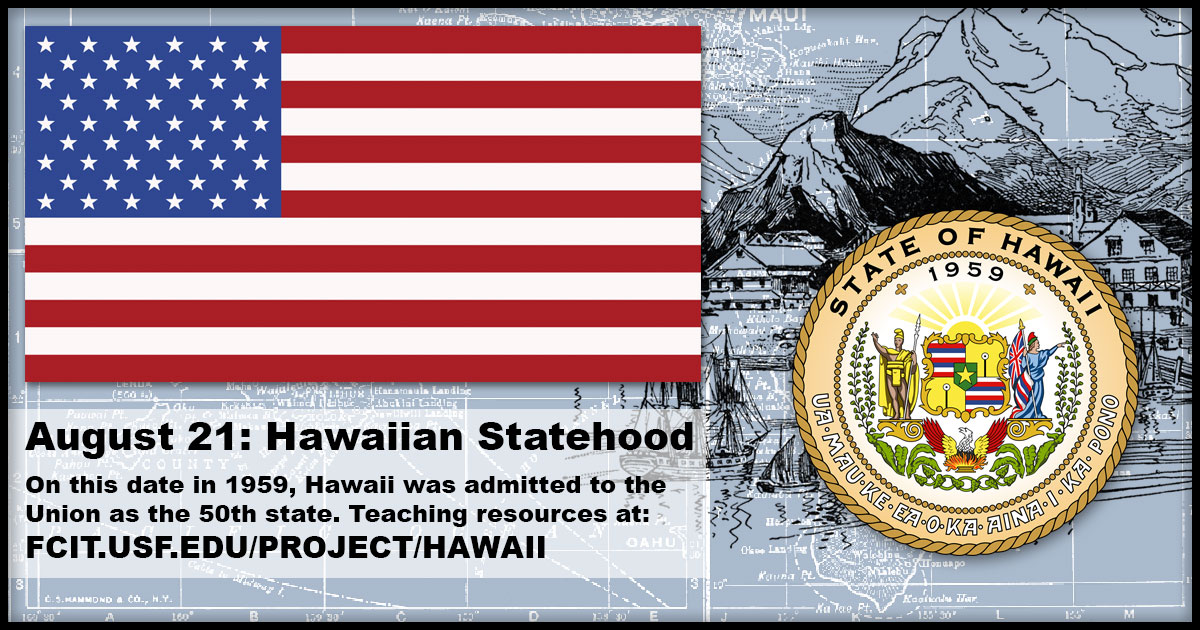
After years of petitions, legislative debates, and a plebiscite in which Hawaiian residents overwhelmingly voted in favor of statehood, the U.S. Congress finally passed the Hawaii Admission Act. On March 12, 1959, President Dwight D. Eisenhower signed the bill into law, paving the way for the official transition. The final step was a public vote by the people of Hawaii to accept the terms of admission. With a resounding 94% in favor, the stage was set.
On August 21, 1959, Hawaii officially became the 50th U.S. state. This momentous day was met with widespread celebrations across the islands, marking the end of a long journey and the beginning of a new chapter. The admission of Hawaii was not just a political act; it symbolized the United States’s expansion beyond its continental borders and its embrace of a truly multicultural identity. It reinforced the notion that the American dream could extend even to the remote, volcanic islands in the Pacific, an exotic paradise that was now fully part of the American fabric. This day profoundly impacted everything from local governance to the burgeoning tourism industry, setting the course for modern Hawaii.
The Enduring Legacy of Statehood on Hawaiian Tourism and Lifestyle
Statehood fundamentally reshaped Hawaii’s economy, society, and global perception. It opened the floodgates for mainstream American tourism, transforming the islands into one of the world’s most coveted travel destinations. The transition from territory to state had a ripple effect across all aspects of Hawaiian life, influencing everything from the development of luxury resorts to the preservation of indigenous culture.
A Gateway to Paradise: Tourism’s Transformation
Prior to statehood, travel to Hawaii was somewhat of a niche, often undertaken by adventurous travelers or those with business ties. With statehood, coupled with the advent of more affordable and accessible air travel, Hawaii exploded onto the mainstream tourism scene. It became “America’s tropical paradise,” a readily accessible exotic escape without the need for passports or foreign currency. This new accessibility transformed its economy, with tourism rapidly becoming the primary industry, overshadowing the traditional agricultural sectors.
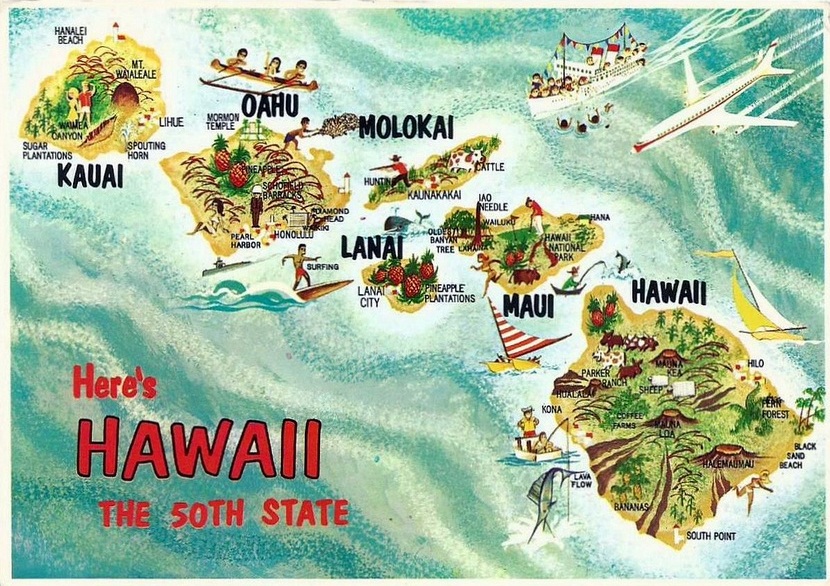
Today, millions flock to Hawaii each year, drawn by its diverse offerings. Oahu, with its iconic Waikiki Beach and the majestic backdrop of Diamond Head crater, remains the bustling hub. Visitors can explore the historical significance of Pearl Harbor, immerse themselves in Polynesian culture at the Polynesian Cultural Center, or surf the legendary North Shore. Maui offers the breathtaking drive along the Road to Hana, the serene beaches of Wailea, and world-class snorkeling at Molokini Crater. The Big Island (Hawaii Island) is a land of extremes, from the active volcanoes of Kilauea to the snow-capped peak of Mauna Kea, alongside the coffee plantations of Kona and the stunning black sand beaches near Hilo. Meanwhile, Kauai, the Garden Isle, enthralls with its dramatic Na Pali Coast and the vast expanse of Waimea Canyon, offering endless opportunities for hiking and nature exploration around Hanalei Bay and Poipu.
Diverse Accommodation and Experiences
The boom in tourism following statehood spurred an exponential growth in accommodation options, catering to every type of traveler and budget. From ultra-luxury resorts to charming boutique hotels and family-friendly vacation rentals, Hawaii offers a spectrum of choices. On Maui, opulent properties like the Four Seasons Resort Maui at Wailea and The Ritz-Carlton, Kapalua provide unparalleled service and amenities, often featuring private villas and exquisite dining experiences. Oahu boasts iconic establishments such as the Hilton Hawaiian Village Waikiki Beach Resort, a sprawling complex with multiple pools and beachfront access, or the family-oriented Aulani, A Disney Resort & Spa in Ko Olina. Even in Honolulu itself, new, modern luxury options like Loews Regency Honolulu reflect the evolving hospitality landscape. On Kauai, the Grand Hyatt Kauai Resort & Spa offers a luxurious retreat amidst lush gardens and stunning ocean views.
Beyond just hotels, the experiential aspect of Hawaiian travel has also diversified. Visitors can partake in thrilling adventures such as surfing lessons at Waikiki Beach, snorkeling in the protected waters of Hanauma Bay, or zip-lining through rainforests at Kualoa Ranch. Cultural experiences abound, from attending a traditional luau to learning to hula or visiting sacred sites. Food tourism thrives, with opportunities to sample authentic Hawaiian cuisine like poke, kalua pig, and fresh seafood, often sourced locally from various islands. Maui Ocean Center offers insight into Hawaii’s incredible marine biodiversity, making it an educational and engaging attraction for families. The emphasis is on creating immersive travel experiences that connect visitors with the unique spirit of Aloha.
Preserving Culture Amidst Modernity
One of the enduring challenges and commitments since statehood has been the preservation of Hawaiian culture and natural resources in the face of rampant tourism and development. While statehood brought economic prosperity, it also intensified concerns about cultural erosion and environmental impact. Efforts to revitalize the Hawaiian language, hula, traditional crafts, and ancient practices have gained significant traction, often championed by native Hawaiians and cultural organizations. Many resorts and tour operators now actively incorporate Hawaiian cultural elements into their offerings, from lei-making classes to historical tours, striving to educate visitors and foster appreciation rather than merely consumption.
Moreover, the protection of Hawaii’s unparalleled natural environment is a paramount concern. Designated national parks, marine sanctuaries, and numerous state parks work to safeguard its delicate ecosystems, from volcanic landscapes to coral reefs. Sustainable tourism practices are increasingly promoted, encouraging visitors to respect the Aina (land) and the Kai (sea). The unique blend of Polynesian heritage and American influence has created a vibrant, resilient culture that continues to evolve, constantly balancing the demands of modernity with a deep reverence for tradition. From wandering down Kalakaua Avenue in Waikiki to exploring the serene beauty of the islands’ untouched corners, the profound history of Hawaii’s statehood is subtly woven into every aspect of this incredible destination.
The journey of Hawaii from an ancient kingdom to the 50th U.S. state on August 21, 1959, is a narrative rich with history, struggle, and transformation. This pivotal moment not only altered its political status but profoundly shaped its identity as a global travel destination. Today, Hawaii stands as a testament to the resilience of its indigenous culture, the beauty of its natural wonders, and the welcoming spirit of its people. For any traveler seeking an experience that blends historical depth with breathtaking landscapes, or luxury accommodations with authentic cultural immersion, Hawaii truly offers a unique and unforgettable journey, forever marked by its storied past and its place within the United States.
LifeOutOfTheBox is a participant in the Amazon Services LLC Associates Program, an affiliate advertising program designed to provide a means for sites to earn advertising fees by advertising and linking to Amazon.com. Amazon, the Amazon logo, AmazonSupply, and the AmazonSupply logo are trademarks of Amazon.com, Inc. or its affiliates. As an Amazon Associate we earn affiliate commissions from qualifying purchases.