
The question of “When Did Hawaii Become A US Territory?” delves into a pivotal moment in the history of the Pacific archipelago, marking a significant shift in its political status and paving the way for its eventual statehood. This transition wasn’t a single, isolated event, but rather the culmination of a complex interplay of geopolitical ambitions, economic interests, and evolving international relations. Understanding this period offers crucial context for appreciating Hawaii’s rich cultural tapestry, its strategic importance, and its enduring appeal as a premier travel destination.
For centuries, the Hawaiian Islands existed as an independent kingdom, a sovereign nation with its own distinct culture, language, and governance. However, by the late 19th century, the world was rapidly changing. The era of colonial expansion was in full swing, and powerful nations were vying for influence and control across the globe. Hawaii, with its strategic location in the Pacific Ocean, its fertile lands, and its growing economic ties to the United States, became increasingly attractive to American interests.
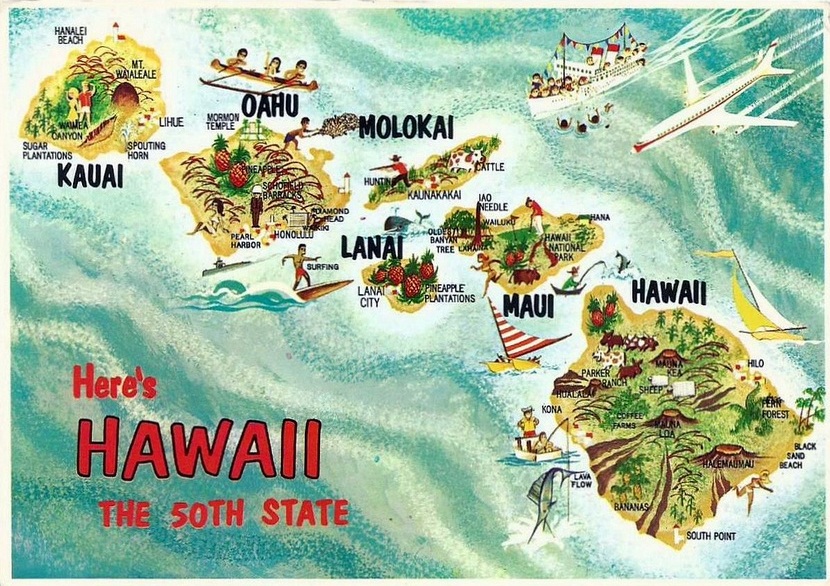
The story of Hawaii’s annexation is intrinsically linked to the rise of American imperialism and the desire to secure a foothold in the burgeoning Pacific trade routes. Missionaries, businessmen, and military strategists from the United States had been establishing a presence on the islands for decades. Their influence grew, often at the expense of native Hawaiian sovereignty and traditions.
The Seeds of Change: Economic and Political Pressures
The economic landscape of Hawaii was transforming dramatically in the decades leading up to its territorial status. American entrepreneurs had invested heavily in the sugar industry, establishing vast plantations that became the backbone of the Hawaiian economy. This economic entanglement created a powerful lobby within the United States that advocated for closer ties with the islands, believing that annexation would protect and further their investments.
The McKinley Tariff of 1890, enacted by the United States, played a significant role in this narrative. This tariff removed the duty-free status of Hawaiian sugar imported into the United States. Prior to this, Hawaiian sugar producers enjoyed a considerable advantage in the American market. The removal of this preferential treatment created economic hardship for Hawaiian sugar planters, many of whom were American citizens or had strong business ties to the United States. This economic pressure fueled a greater desire among these individuals for Hawaii to become part of the United States, which would then allow their sugar to be considered domestic produce and thus avoid tariffs.
Politically, the situation was also becoming increasingly unstable. The Hawaiian monarchy, once a symbol of the islands’ independence, found itself under immense pressure. Queen Liliʻuokalani, who ascended to the throne in 1891, attempted to enact a new constitution that would restore power to the monarchy and disenfranchise the predominantly foreign-born business elite. This move was perceived as a direct threat by those who favored annexation.
The Overthrow of the Monarchy
The culmination of these economic and political pressures arrived in 1893. A group of businessmen and sugar planters, with the support of United States Minister John L. Stevens and a contingent of US Marines, orchestrated the overthrow of Queen Liliʻuokalani. The provisional government, led by Sanford B. Dole, was established with the explicit goal of seeking annexation by the United States.
The US Marines were deployed under the guise of protecting American lives and property, though their presence was widely seen as instrumental in enabling the coup. The provisional government then dispatched envoys to Washington D.C. to negotiate annexation. Initially, President Benjamin Harrison was supportive, and a treaty of annexation was signed in 1893. However, this treaty faced strong opposition in the United States Senate, particularly from those who viewed the overthrow as an illegal and immoral act.
President Grover Cleveland, who succeeded Harrison, withdrew the treaty and launched an investigation. His investigation concluded that the US had acted improperly and that the overthrow was unjust. Cleveland called for the restoration of Queen Liliʻuokalani, but this proved impossible. The provisional government, by this point firmly in control, refused to relinquish power, and the idea of restoring the monarchy was no longer a viable option. The political situation in Hawaii remained in limbo, with the provisional government functioning as a de facto independent republic.
The Road to Territorial Status: A Diplomatic Maneuver

The years following the overthrow were characterized by a sustained diplomatic effort by the provisional government, and later the Republic of Hawaii, to achieve annexation. They understood that public opinion in the United States was divided, and the political climate in Washington D.C. could be unpredictable.
The Spanish-American War and Strategic Importance
The outbreak of the Spanish-American War in 1898 proved to be a turning point. Hawaii’s strategic location in the Pacific became acutely apparent as the United States needed a coaling station and naval base to project power and support its operations in the Philippines. The US Navy recognized the immense value of Pearl Harbor as a deep-water port. This heightened strategic importance provided a powerful new argument for annexation, overriding many of the moral and political objections that had stalled previous efforts.
With the war highlighting Hawaii’s crucial role in American military strategy, the political will in Washington shifted. President William McKinley, who had succeeded Cleveland, was now a strong proponent of annexation. Unlike the treaty that had failed during Harrison‘s presidency, this time annexation was pursued through a joint resolution of Congress, known as the Newlands Resolution.
This resolution was passed on July 7, 1898. It formally annexed the Republic of Hawaii to the United States. However, this was annexation as a territory, not immediate statehood. The Newlands Resolution declared that the islands would be organized and governed as a territory, with a governor appointed by the US President and a legislature elected by the Hawaiian people.
Establishing a Territory: Governance and Evolution
Following the annexation, the United States began the process of establishing a formal territorial government. The Organic Act of 1900 was passed by the US Congress, officially establishing the Territory of Hawaii. This act laid out the structure of the territorial government, including the powers of the governor, the judiciary, and the legislative assembly.
Under territorial status, Hawaii continued to develop its economy, largely centered around sugar and pineapple plantations. American immigration increased, and the islands’ population became increasingly diverse. The territorial period also saw the rise of significant American institutions, including the University of Hawaii.
The territorial government was a complex system. The governor, appointed by the US President, held significant power, and many of the key judicial and executive positions were also filled by presidential appointees. While the Hawaiian people had representation in their local legislature, their ultimate political destiny was still tied to decisions made in Washington D.C.

The Path to Statehood
The journey from a sovereign kingdom to a US territory was a profound transformation for Hawaii. However, the desire for full political equality and representation as a state remained a strong aspiration for many Hawaiian citizens. For decades, Hawaii lobbied for statehood, facing various political obstacles and periods of resistance within the United States.
Factors such as racial prejudice, Cold War security concerns, and political maneuvering in Washington all played a role in delaying statehood. However, the persistent efforts of Hawaiian leaders and the changing demographics and political landscape of the United States eventually created the conditions for a breakthrough.
Finally, on August 21, 1959, Hawaii was admitted to the Union as the 50th state. This marked the final chapter in its long and complex journey from an independent nation to a US territory and, ultimately, a US state. The question “When Did Hawaii Become A US Territory?” is answered by the Newlands Resolution of July 7, 1898, a date that irrevocably altered the course of Hawaiian history and its relationship with the United States, shaping the vibrant and unique destination that Hawaii is today. Understanding this history enriches any visit, from exploring its breathtaking natural landmarks like Diamond Head to experiencing its rich local culture and diverse culinary scene.
LifeOutOfTheBox is a participant in the Amazon Services LLC Associates Program, an affiliate advertising program designed to provide a means for sites to earn advertising fees by advertising and linking to Amazon.com. Amazon, the Amazon logo, AmazonSupply, and the AmazonSupply logo are trademarks of Amazon.com, Inc. or its affiliates. As an Amazon Associate we earn affiliate commissions from qualifying purchases.