
The question of “When did Hawaii become part of the USA?” is often answered with a simple date: August 21, 1959, the day it officially achieved statehood. However, this seemingly straightforward answer merely marks the culmination of a complex, decades-long historical journey, rich with political intrigue, cultural transformation, and strategic maneuvering. To truly understand Hawaii’s integration into the United States, one must delve into its vibrant past as an independent kingdom, the controversial overthrow of its monarchy, and its subsequent period as a U.S. territory.
This narrative is not just a tale of dates and treaties; it’s a story deeply woven into the fabric of the Hawaiian people, their heritage, and the islands’ unique allure that continues to captivate visitors from across the globe. From ancient traditions to modern tourism, Hawaii’s path to statehood shaped its identity, making it the extraordinary destination we know today – a breathtaking blend of Polynesian culture, natural wonders, and American influence.
A Kingdom Forged by Vision: Pre-American Hawaii
Before the arrival of Western powers and the eventual annexation by the United States, Hawaii was a sovereign nation with a rich and sophisticated culture, established by the descendants of Polynesian voyagers. Its history as an independent entity is crucial to understanding the political landscape that unfolded centuries later.
The Rise of the Hawaiian Monarchy
For centuries, the Hawaiian Islands were ruled by independent chiefs, often engaged in fierce rivalries. This changed dramatically at the turn of the 19th century with the rise of King Kamehameha I. Through a series of strategic alliances and military conquests, Kamehameha successfully unified the warring islands into a single, cohesive kingdom by 1810. His vision laid the foundation for a unified Hawaiian identity and a system of governance that endured for nearly a century. This period saw the development of a distinct Hawaiian legal system, administrative structures, and an expanding engagement with the outside world, setting the stage for the kingdom’s role in the wider Pacific Ocean.
Early Contact and Foreign Influence
The first recorded contact between Hawaiians and Europeans occurred in 1778, when British explorer Captain James Cook stumbled upon the islands, naming them the “Sandwich Islands” after his patron. This encounter, while initially peaceful, marked the beginning of a profound transformation for Hawaii. European and American traders, whalers, and missionaries soon followed in Cook’s wake.
The early 19th century brought significant changes to the Kamehameha Dynasty. The influx of Westerners introduced new technologies, diseases, and ideas. American Christian missionaries from New England arrived in 1820, bringing with them a new religion, literacy, and Western social customs, which gradually eroded traditional Hawaiian practices. Simultaneously, the islands’ strategic location in the Pacific made them a vital stopover for trade routes between North America, Asia, and Europe. This growing international interest, particularly from the United States, would ultimately foreshadow the dramatic political shifts to come.
The mid-19th century saw the rise of the sugar industry, predominantly controlled by American businessmen. These powerful sugar planters exerted increasing economic and political influence, leading to calls for greater American involvement in Hawaiian affairs and eventually, annexation. This economic leverage would become a major factor in the subsequent downfall of the monarchy.
The Shifting Tides: From Monarchy to Republic
The late 19th century was a tumultuous period for the Hawaiian Kingdom, marked by increasing foreign pressure and internal strife, culminating in the controversial overthrow of its reigning monarch.
The Overthrow of the Hawaiian Kingdom
The seeds of the monarchy’s downfall were sown over decades of foreign influence and the accumulation of power by a small, but influential, group of American and European businessmen and sugar planters. These individuals, often referred to as the “missionary boys” due to their familial ties to early missionaries, sought to protect their economic interests and promote annexation to the United States.
By the late 1880s, the Hawaiian monarchy found itself in a precarious position. In 1887, a group of armed, non-Hawaiian residents, including powerful American businessmen, forced King Kalākaua to sign the Bayonet Constitution. This document severely curtailed the monarch’s power and disenfranchised most Hawaiian commoners, while granting voting rights to wealthy foreign residents. It was a clear power grab that deeply alienated the native Hawaiian population and set the stage for further conflict.
The final act of the monarchy’s demise occurred on January 17, 1893. Queen Liliʻuokalani, who ascended to the throne in 1891, sought to restore power to the monarchy and the native Hawaiian people by promulgating a new constitution. This move was met with immediate and decisive opposition from the so-called “Committee of Safety,” a group of mostly American and European residents. With the covert support of U.S. Minister John L. Stevens and the presence of armed U.S. Marines from the USS Boston, ostensibly there to protect American lives and property, the Committee of Safety orchestrated the overthrow of the Queen. Although no shots were fired, the presence of American military force effectively intimidated the royalists and prevented any effective resistance. Queen Liliʻuokalani surrendered under protest, appealing to the United States government for restoration.
The Establishment of the Republic of Hawaii
Following the overthrow, the Committee of Safety established the Provisional Government of Hawaii, with Sanford B. Dole as its president. Their ultimate goal was immediate annexation by the United States. However, President Grover Cleveland, upon reviewing the circumstances, deemed the overthrow illegal and urged the restoration of the monarchy. Congress launched an investigation, the Blount Report, which confirmed the illegality of the intervention.
Despite President Cleveland’s stance, and his attempts to reverse the coup, the Provisional Government refused to relinquish power. Instead, on July 4, 1894, they declared the establishment of the Republic of Hawaii, solidifying their control and setting the stage for a new chapter in the islands’ history. Sanford B. Dole remained president, presiding over a government largely dominated by American interests, with a clear agenda for annexation.
The Path to Annexation: Becoming a U.S. Territory
The establishment of the Republic of Hawaii was a stepping stone, not an end in itself. The new government, and a significant segment of the American public, firmly believed that the islands’ destiny lay with the United States.
Strategic Interests and Political Maneuvering
The drive for Hawaii’s annexation was fueled by a convergence of strategic, economic, and ideological factors within the United States. From a strategic perspective, Hawaii’s central location in the Pacific was seen as invaluable for naval power projection and protecting burgeoning American trade routes. The deep-water port of Pearl Harbor on Oahu was especially coveted by the U.S. Navy.

Economically, American sugar planters in Hawaii stood to benefit immensely from annexation, as it would remove tariffs on their sugar exports to the mainland and stabilize their political environment. Ideologically, the concept of Manifest Destiny, which had driven American expansion across the North American continent, found a new outlet in the Pacific.
The political landscape in the U.S. shifted in favor of annexation with the election of President William McKinley in 1896, a staunch expansionist. The outbreak of the Spanish-American War in 1898 provided the final impetus. The war underscored Hawaii’s critical role as a coaling station and naval base for U.S. forces en route to the Philippines. This strategic imperative outweighed the ethical concerns raised by the overthrow of the monarchy.
The Formal Act of Annexation
With overwhelming support in Congress and public opinion swayed by wartime urgency, the annexationists pushed forward. Instead of a treaty, which would have required a two-thirds majority vote in the Senate and faced strong opposition due to the illegality of the overthrow, a joint resolution was pursued. This legislative maneuver required only a simple majority in both the House and Senate.
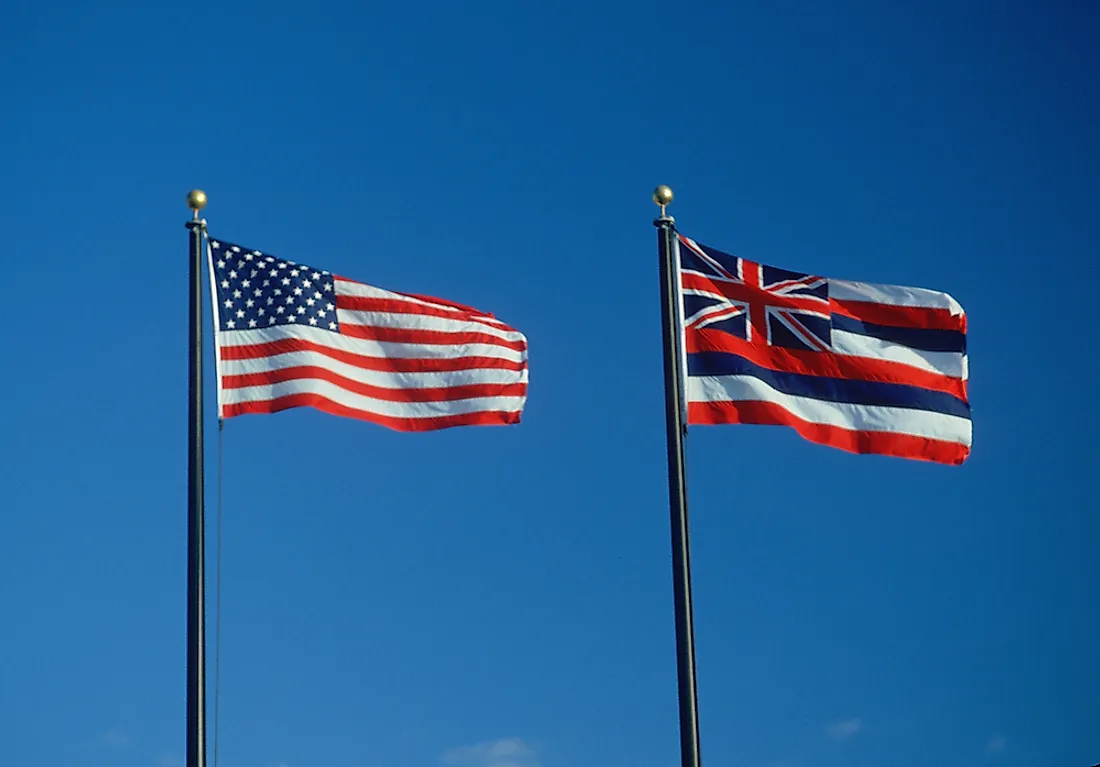
On July 7, 1898, President McKinley signed the Newlands Resolution, formally annexing Hawaii to the United States. Although done at the request of the self-proclaimed Republic of Hawaii, many native Hawaiians viewed this act as illegal and protested vehemently, gathering petitions with tens of thousands of signatures. Despite their objections, the formal transfer of sovereignty took place on August 12, 1898, with the lowering of the Hawaiian flag and the raising of the American flag at ʻIolani Palace in Honolulu. Hawaii was now officially a territory of the United States.
From Territory to State: The Quest for Statehood
Becoming a territory was a significant step, but it did not grant Hawaiians full rights as U.S. citizens. The journey to statehood would be a long and arduous one, spanning over six decades.
The Long Wait for Integration
After annexation, Hawaii was organized into a formal U.S. territory under the Organic Act of 1900. This act established a territorial government with an elected legislature, though the governor was appointed by the U.S. President. While residents were granted U.S. citizenship, they could not vote in presidential elections and had only a non-voting delegate in Congress.
From the early 20th century, a consistent movement for statehood began to grow in Hawaii. Proponents argued that as loyal American citizens, they deserved full representation and self-governance. However, several factors delayed statehood. There were concerns in Washington about Hawaii’s racial composition, as its population was highly diverse, including significant numbers of Japanese, Chinese, Filipino, and Portuguese immigrants, alongside native Hawaiians and Caucasians. Some mainland politicians harbored fears that this diverse population was not “American enough” or might be susceptible to foreign influence. Economic interests also played a role, as powerful sugar and pineapple companies benefited from the territorial status, which allowed for cheaper labor and fewer regulatory burdens.
The attack on Pearl Harbor on December 7, 1941, catapulted Hawaii onto the world stage and profoundly impacted its push for statehood. During World War II, Hawaii was placed under martial law, demonstrating its critical strategic importance and the loyalty of its diverse population, many of whom served valiantly in the U.S. military. The war ultimately helped dispel many of the racial and loyalty concerns that had previously hindered statehood efforts.
Hawaii’s Admission as the 50th State
In the post-World War II era, the momentum for Hawaiian statehood became irresistible. The argument that Hawaiians had proven their loyalty and capability for self-governance gained widespread support. Civil rights movements on the mainland also contributed to a more inclusive national mood.
In 1959, the U.S. Congress finally passed the Hawaii Admission Act, which was then signed into law by President Dwight D. Eisenhower. A plebiscite was held in Hawaii on June 27, 1959, allowing residents to vote on whether they wished to become a state. An overwhelming 94% voted in favor of statehood, signaling a strong desire for full integration into the Union.
Finally, on August 21, 1959, Hawaii was officially admitted as the 50th state of the United States of America, following shortly after Alaska had become the 49th state earlier that year. This marked the definitive end of Hawaii’s journey from an independent kingdom to a U.S. territory, and finally, a full-fledged member of the United States, granting its citizens full rights and representation.
Hawaii Today: A Vibrant U.S. State
Today, Hawaii stands as a testament to its unique and often challenging history. It is a state unlike any other, offering an unparalleled experience to residents and visitors alike, deeply influenced by its storied past.
A Mélange of Cultures and Natural Wonders
Hawaii’s history as a sovereign kingdom, a territorial melting pot, and ultimately a U.S. state has forged a culture that is a vibrant tapestry of Polynesian traditions, Asian influences, and American modernism. The Hawaiian language, once suppressed, is experiencing a resurgence, and cultural practices like hula, surfing, and ancient ceremonies are celebrated and preserved. The renowned Aloha spirit embodies this unique cultural blend – a warmth, hospitality, and respect for the land and people that is distinctly Hawaiian.
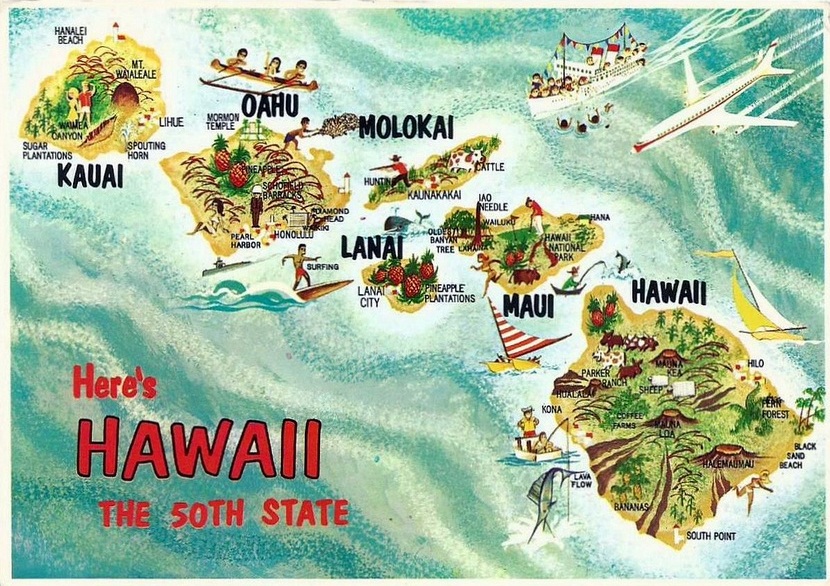
Beyond its rich culture, Hawaii is globally celebrated for its breathtaking natural beauty. From the volcanic landscapes of the Big Island to the lush cliffs of Kauai, the pristine beaches of Maui, and the iconic surf breaks of Oahu, each island offers a distinct and unforgettable experience. These natural wonders, many of which are protected as National Parks like Haleakala National Park and Volcanoes National Park, draw millions of tourists annually, making tourism the state’s largest industry.
Planning Your Visit to Hawaii
For travelers seeking an unparalleled experience, Hawaii truly has it all. Whether you’re interested in adventure travel, a relaxing beach vacation, or a deep dive into local culture, the islands cater to every taste and budget.
Accommodation options are diverse, ranging from opulent luxury resorts and full-service hotels with world-class amenities to charming boutique hotels, cozy vacation rentals, and budget-friendly apartments. Many accommodations offer direct access to famous attractions, stunning beaches, and vibrant city centers like Honolulu. Booking in advance is always recommended, especially during peak seasons, to secure the best rates and locations.
Attractions and experiences abound. You can explore historic landmarks such as Pearl Harbor and ʻIolani Palace, hike through breathtaking landscapes like Waimea Canyon, witness active volcanoes, surf the legendary waves of the North Shore, or immerse yourself in a traditional Lūʻau to experience Hawaiian music, dance, and food. Detailed travel guides are readily available to help plan your itinerary, whether you’re interested in a family trip, a romantic getaway, or a solo adventure.
Hawaii’s journey to becoming part of the USA is a story of resilience, change, and enduring cultural spirit. From its unification under Kamehameha I to its complex political evolution and eventual statehood, this history has shaped the islands into a global destination that offers more than just scenic beauty – it offers a profound connection to a rich and unfolding narrative. As you plan your visit, remember the deep history that underpins every breathtaking vista and warm greeting, making your Hawaiian experience truly enriching.
LifeOutOfTheBox is a participant in the Amazon Services LLC Associates Program, an affiliate advertising program designed to provide a means for sites to earn advertising fees by advertising and linking to Amazon.com. Amazon, the Amazon logo, AmazonSupply, and the AmazonSupply logo are trademarks of Amazon.com, Inc. or its affiliates. As an Amazon Associate we earn affiliate commissions from qualifying purchases.