
The date Hurricane Katrina made landfall near New Orleans is indelibly etched into the annals of American history: August 29, 2005. More than just a date, it marks a pivotal moment when a city renowned for its vibrant culture, historic landmarks, and unparalleled spirit faced one of the most devastating natural disasters in the nation’s history. The story of Katrina is not just about a storm; it’s about the resilience of a community, the catastrophic failure of infrastructure, and the subsequent rebirth that has reshaped New Orleans into the remarkable travel destination it is today. For anyone planning a visit to this iconic Louisiana gem, understanding the context of Katrina provides a deeper appreciation for the city’s unique charm, its vibrant present, and its enduring legacy.
The Storm’s Trajectory and Landfall
Hurricane Katrina did not emerge overnight; its path was tracked for days, building suspense and dread across the Gulf Coast. What began as a tropical depression over the Bahamas on August 23, 2005, rapidly escalated into a meteorological phenomenon that would forever alter the course of many lives.
The Days Leading Up to Disaster
Initially forming over the Atlantic Ocean, the storm was christened Tropical Depression Twelve and quickly intensified as it moved westward. By August 25, it had strengthened into Hurricane Katrina and made its first landfall in Florida as a relatively weak Category 1 storm, causing some damage before re-emerging into the warm waters of the Gulf of Mexico. It was in these nutrient-rich waters that Katrina underwent an explosive intensification, becoming a monstrous Category 5 hurricane with sustained winds of 175 miles per hour on August 28. Forecasters issued increasingly dire warnings, and it became clear that a major metropolitan area was in the storm’s crosshairs. Despite early predictions that suggested a direct hit on New Orleans, the storm’s path shifted slightly eastward in its final hours, sparing the city a direct impact from the eye but setting the stage for a different, equally devastating catastrophe. Mandatory evacuations were issued for New Orleans and surrounding parishes, a desperate measure to save lives in the face of an unprecedented threat.
August 29, 2005: A Date Etched in History
On the morning of August 29, 2005, Hurricane Katrina made its second and most devastating landfall. The eye of the storm first hit near Burrwood, Louisiana, at approximately 6:10 AM CDT, as a strong Category 3 hurricane. Despite the slight easterly deviation, New Orleans was still squarely in the storm’s most dangerous quadrant, experiencing hurricane-force winds and, more critically, a colossal storm surge. A few hours later, Katrina made a third landfall near the Louisiana-Mississippi border near Waveland, Mississippi, still as a powerful Category 3.
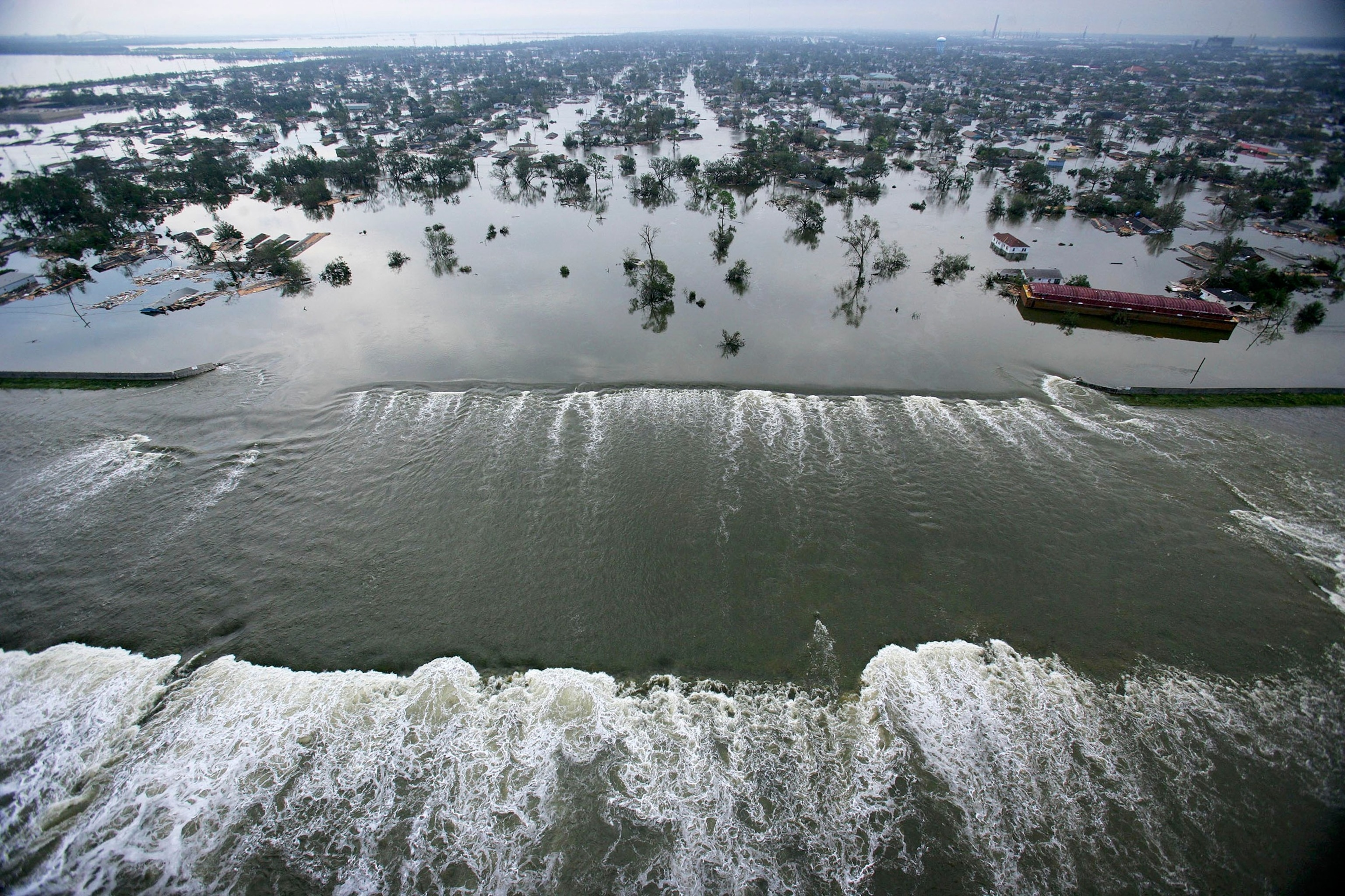
While the city of New Orleans was spared a direct bullseye from the storm’s eye, the sheer size and intensity of Katrina meant the impact was catastrophic. The eastern eyewall, which battered the city, pushed an unimaginable volume of water into Lake Pontchartrain and the city’s surrounding waterways. This immense pressure, combined with critical design flaws, proved to be too much for the city’s aging and inadequate levee system. The consequences would unfold over the next agonizing hours and days, transforming the vibrant Crescent City into a submerged disaster zone.
The Catastrophic Impact on the Crescent City
The hours following Katrina’s landfall were a blur of wind, rain, and rising waters. The real tragedy for New Orleans began not with the wind, but with the water, as the city’s protective barriers failed.
Breaching the Levees
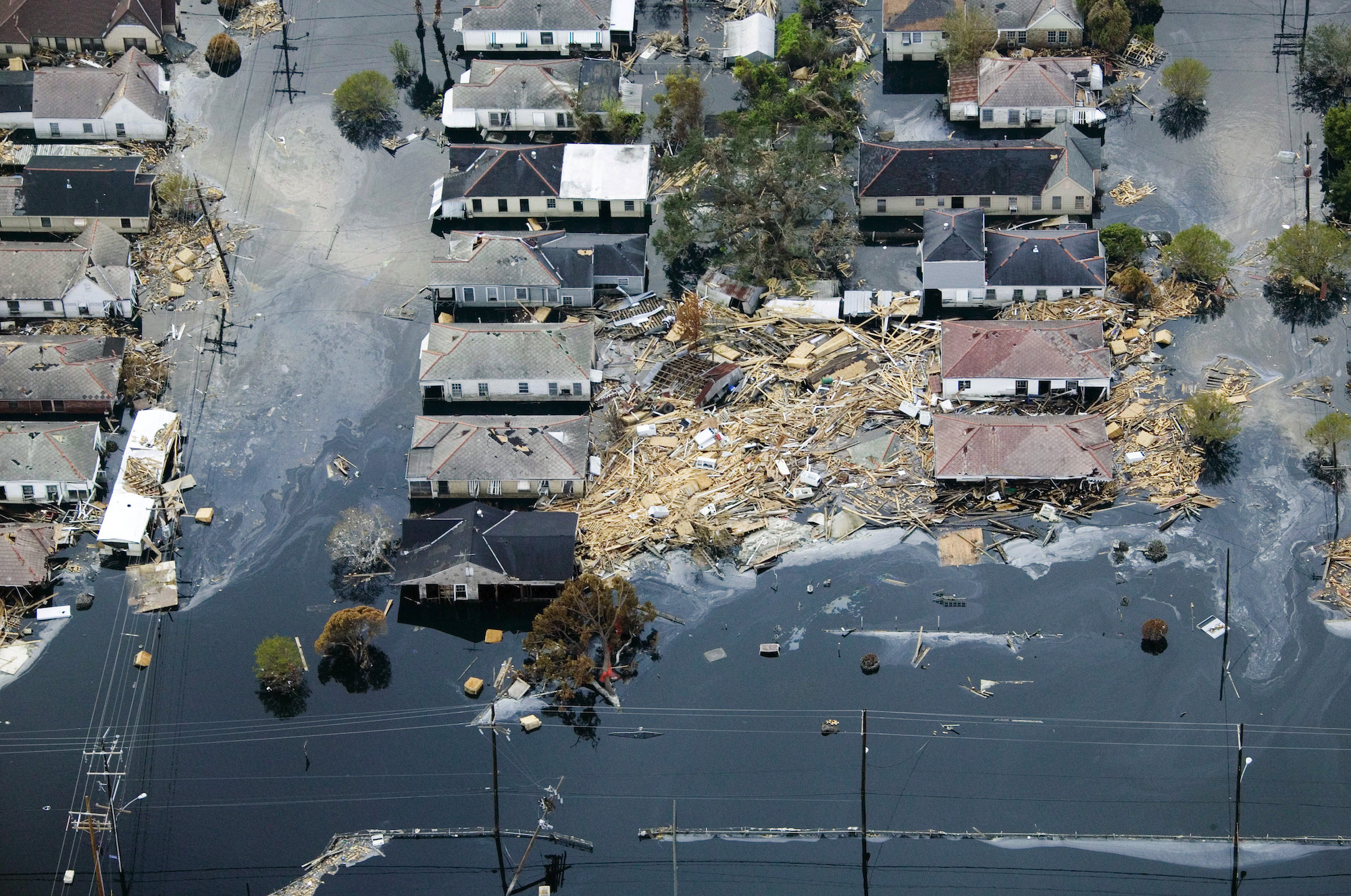
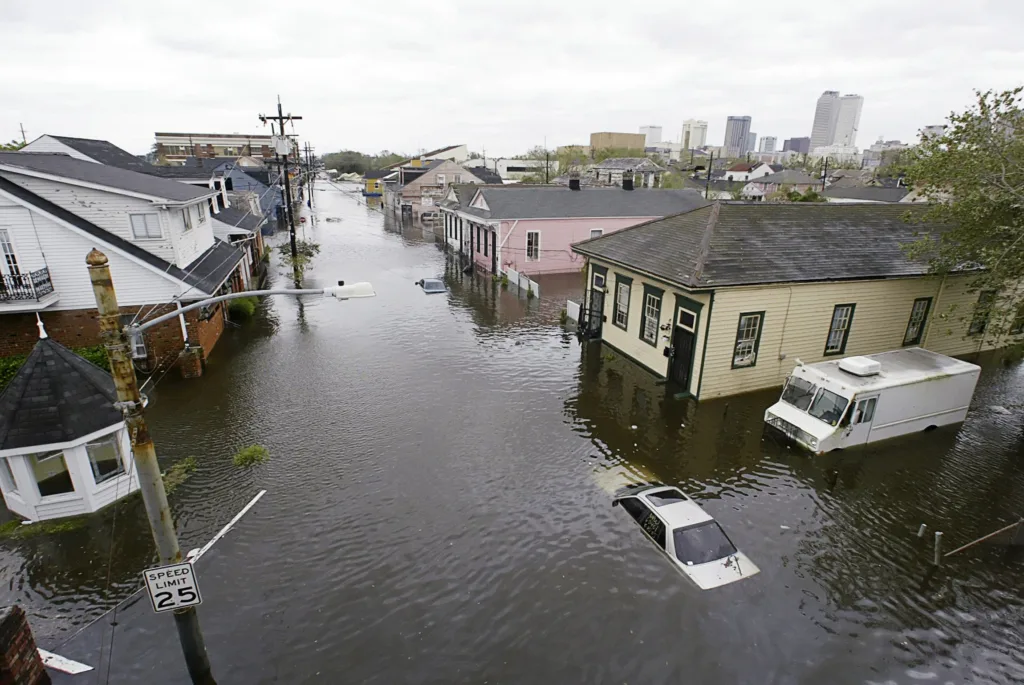
New Orleans is a city uniquely vulnerable to flooding, with large portions lying below sea level, nestled between the Mississippi River and Lake Pontchartrain. Its very existence has historically relied on an elaborate system of levees, floodwalls, and pumps. On August 29, 2005, this system, managed by the U.S. Army Corps of Engineers, proved catastrophically insufficient. The storm surge, estimated at 20 feet in some areas, caused breaches in dozens of locations, most notably along the Industrial Canal, the 17th Street Canal, and the London Avenue Canal. These breaches allowed floodwaters to pour into the city rapidly, creating an inland sea. Within hours, approximately 80% of New Orleans was submerged, with water levels reaching up to 20 feet in some areas. The French Quarter, being on higher ground, was largely spared the worst of the flooding, but the vast majority of residential areas, particularly the Lower Ninth Ward and Gentilly, were utterly inundated.
Immediate Aftermath and Human Toll
The immediate aftermath was one of chaos, despair, and a desperate struggle for survival. Tens of thousands of residents who either could not or chose not to evacuate were stranded on rooftops, in attics, or on elevated highways. With power grids knocked out, communication lines severed, and potable water supplies contaminated, basic services ceased to exist. The situation was compounded by a slow and disorganized governmental response, leaving many feeling abandoned. Makeshift shelters like the Louisiana Superdome and the Ernest N. Morial Convention Center quickly devolved into scenes of humanitarian crisis, lacking food, water, sanitation, and security for the tens of thousands who sought refuge there.
The human toll was immense. Over 1,800 people lost their lives, directly or indirectly, due to Hurricane Katrina across the Gulf Coast, with Louisiana accounting for the vast majority. Hundreds of thousands more were displaced, becoming refugees in their own country, scattered across the United States. The images of suffering and destruction broadcast globally sparked a mixture of horror, outrage, and an outpouring of generosity from around the world. The scale of the catastrophe revealed deep-seated issues of poverty, race, and governmental preparedness, forcing a painful national reckoning.
Economic and Infrastructural Ruin
Beyond the immediate human suffering, Hurricane Katrina inflicted unprecedented economic and infrastructural damage. Estimates of the total damage soared well over $100 billion, making it one of the costliest natural disasters in U.S. history. Thousands of homes and businesses were completely destroyed or rendered uninhabitable. The city’s vital infrastructure, including roads, bridges, power lines, and communication networks, was crippled. The economic backbone of New Orleans, heavily reliant on tourism, energy, and shipping through its port, came to a grinding halt.
For the tourism industry, which accounts for a significant portion of the city’s economy, the devastation was particularly acute. Hotels were flooded, restaurants destroyed, and attractions closed indefinitely. The prospect of rebuilding seemed daunting, almost insurmountable. Yet, from the depths of this despair, a remarkable story of resilience, innovation, and unwavering spirit would begin to emerge, fueled by the determination of New Orleanians and a deep love for their unique city.
The Resilient Spirit: Recovery and Rebirth
The story of New Orleans post-Katrina is not just one of tragedy, but also of extraordinary human spirit and determined recovery. The city’s rebirth has been a testament to its unique culture and the fierce loyalty of its residents.
A Community United in Rebuilding
In the wake of the storm, the federal government initiated massive reconstruction efforts, allocating billions of dollars through agencies like the Federal Emergency Management Agency (FEMA). However, the true engine of recovery was the tireless work of ordinary citizens, volunteers, and non-profit organizations. Programs like Brad Pitt’s “Make It Right Foundation” sought to build sustainable homes in the Lower Ninth Ward. Organizations like Habitat for Humanity brought volunteers from across the globe to help muck out flooded properties and rebuild shattered communities. Neighbors helped neighbors, forming informal networks to share resources, information, and emotional support. This grassroots resilience became a powerful symbol of the city’s refusal to be defeated. The rebuilding process was slow, arduous, and fraught with challenges, but the commitment of New Orleanians to their home never wavered. They returned to pick up the pieces, restore their vibrant neighborhoods, and reclaim their unique way of life.
Reimagining New Orleans for the Future
The disaster also presented an unexpected, albeit painful, opportunity to rebuild New Orleans better and stronger. Significant investments were made in overhauling and strengthening the city’s flood protection system. The new “Hurricane Storm Damage Risk Reduction System” (HSDRRS) is now a robust network of levees, floodwalls, gates, and pumps designed to withstand a 100-year storm, offering a far greater level of protection than the pre-Katrina system. Beyond infrastructure, there was a conscious effort to revitalize neighborhoods, improve public services, and diversify the local economy. The city saw a surge in entrepreneurship, particularly in the technology and creative sectors, attracting new residents and investment. Urban planning initiatives focused on sustainable development and creating more resilient communities, learning from the harsh lessons of the past. This era of rebuilding was not just about concrete and steel; it was about reaffirming the identity of New Orleans and ensuring its future as a vibrant, livable city.
The Return of Tourism and Culture
Crucial to New Orleans’s economic recovery and cultural preservation was the return of tourism. The world fell in love with New Orleans for its unparalleled culture—its soulful jazz, its distinctive Creole and Cajun cuisine, its unique architecture, and its boisterous festivals like Mardi Gras. These elements became the beacons of its rebirth. The French Quarter, largely spared from the worst flooding, played a vital role in signaling to the world that New Orleans was still open for business and brimming with its signature joie de vivre.
Visitors began to return, eager to support the city and experience its revitalized energy. Restaurants reopened, many with renewed vigor and innovative menus. Jazz clubs on Frenchmen Street and in the French Quarter once again filled with the sounds of live music. Iconic hotels like The Roosevelt New Orleans and The Ritz-Carlton, New Orleans underwent extensive renovations and welcomed guests back. Mardi Gras parades, even in the immediate years after Katrina, served as powerful statements of resilience, reminding everyone that the spirit of New Orleans could not be drowned. The city’s cultural ambassadors, from musicians to chefs, tirelessly promoted its revival, proving that its soul was not only intact but perhaps even stronger.
Visiting New Orleans Today: A Testament to Resilience
Today, New Orleans stands as a vibrant, thriving metropolis, a living testament to its enduring spirit. For travelers, it offers an experience richer and more profound, infused with the lessons and triumphs of its recent history.
Modern Attractions and Experiences
A visit to New Orleans today means immersing oneself in a city that has not only recovered but flourished. The city’s hospitality sector is booming, offering a wide range of accommodation options from luxurious resorts and historic boutique hotels like The Eliza Jane and Hotel Monteleone in the French Quarter to charming guesthouses in the Garden District. These establishments have not only been restored but often upgraded with modern amenities while preserving their historic charm.
Culinary tours offer deep dives into the city’s legendary food scene, from traditional Creole gumbo and jambalaya to innovative modern Southern cuisine. Visitors can explore historical landmarks such as Jackson Square, St. Louis Cathedral, and the iconic ironwork balconies of the French Quarter, all of which stand proudly as symbols of continuity and preservation. Beyond the historical, attractions like the National WWII Museum and the Audubon Aquarium of the Americas offer world-class experiences for all ages. New Orleans has seamlessly woven its recovery narrative into its identity, creating a destination that is both timeless and dynamically evolving, inviting travelers to explore its unique blend of history, culture, and innovation.
Beyond the French Quarter: Exploring Diverse Neighborhoods
While the French Quarter remains the quintessential New Orleans experience, the city’s post-Katrina resurgence has also highlighted the distinct character and charm of its other neighborhoods. The elegant Garden District, with its stunning antebellum mansions and lush gardens, provides a serene contrast to the bustling Quarter. Here, travelers can take guided walking tours to admire the architecture, visit historic Lafayette Cemetery No. 1, and enjoy upscale shopping and dining along Magazine Street.
Further afield, areas like Bywater and Tremé offer a deeper dive into local life and culture. Bywater, a historically working-class neighborhood, has become a hub for artists and young professionals, boasting colorful shotgun homes, vibrant street art, and eclectic restaurants and bars. It embodies the creative spirit that fueled much of the city’s post-Katrina revitalization. Tremé, one of the oldest African-American neighborhoods in the United States and the birthplace of jazz, is a living museum of Black history and culture. Visitors can explore the Louis Armstrong Park and Congo Square, visit the Tremé’s Petit Jazz Museum, and experience the profound musical heritage that continues to define New Orleans. These neighborhoods tell powerful stories of community, recovery, and ongoing cultural vibrancy, offering rich travel experiences that extend far beyond the typical tourist trails.
A Legacy of Strength and Spirit
The day Hurricane Katrina hit New Orleans—August 29, 2005—will forever be a landmark date in the city’s complex narrative. It represents a period of immense loss, profound challenges, and ultimately, an extraordinary triumph of the human spirit. The city has not only rebuilt its physical infrastructure but has also reaffirmed its unique cultural identity on the global stage. For travelers, New Orleans offers more than just a destination; it offers an opportunity to witness resilience in action, to celebrate a culture that refuses to be silenced, and to experience the genuine warmth of a community that has faced adversity and emerged with its soul intact. Its story is a powerful reminder that even in the face of monumental challenges, a city’s spirit, its people, and its culture can endure and inspire generations to come. When you visit New Orleans today, you’re not just exploring a city; you’re celebrating a legacy of strength and an indomitable spirit that truly makes it one of the world’s most compelling and unforgettable travel destinations.
LifeOutOfTheBox is a participant in the Amazon Services LLC Associates Program, an affiliate advertising program designed to provide a means for sites to earn advertising fees by advertising and linking to Amazon.com. Amazon, the Amazon logo, AmazonSupply, and the AmazonSupply logo are trademarks of Amazon.com, Inc. or its affiliates. As an Amazon Associate we earn affiliate commissions from qualifying purchases.