
Nestled in the heart of the Pacific Northwest, Idaho stands as a testament to untamed wilderness, pioneering spirit, and a unique cultural identity. While its name often conjures images of vast potato fields and breathtaking mountain ranges, the journey of Idaho to become the 43rd state in the United States is a fascinating narrative interwoven with exploration, discovery, conflict, and the relentless pursuit of opportunity. For travelers and history enthusiasts alike, understanding Idaho’s path to statehood offers profound insights into its present-day character, diverse attractions, and the resilient lifestyle of its people.
Our exploration begins long before the modern concept of state lines, delving into the indigenous cultures that thrived here and the early European and American expeditions that eventually reshaped the landscape. From the arduous treks of fur traders to the frenetic rush of prospectors seeking gold, each chapter contributed to the mosaic that would eventually form the Gem State. By unraveling this history, we not only answer the pivotal question of “When did Idaho become a state?” but also uncover the compelling reasons why this region remains a premier destination for adventure, relaxation, and a deep dive into American heritage.
The Road to Statehood: A Tale of Exploration and Development
The story of Idaho’s statehood is not a straightforward one but rather a complex tapestry woven from various threads of American expansion, economic ambition, and political maneuvering. Before its official recognition, the land that would become Idaho was a frontier, a land of immense potential, and a crucible for disparate groups forging a new existence.
Early Inhabitants and Fur Traders
For millennia, the lands now known as Idaho were home to diverse Native American tribes, including the Shoshone, Nez Perce, and Coeur d’Alene. These indigenous peoples lived in harmony with the land, utilizing its abundant resources for survival and developing rich cultural traditions deeply connected to the natural world. Their trails and gathering sites crisscrossed the majestic mountains and fertile river valleys, forming the earliest pathways through this rugged terrain.
The first significant encounters with non-native explorers came in the early 19th century. Meriwether Lewis and William Clark, leading the iconic Lewis and Clark Expedition, traversed parts of Idaho between 1805 and 1806, famously guided by the legendary Sacagawea. Their journals provided the first detailed accounts of Idaho’s geography, flora, fauna, and indigenous populations, opening the door for subsequent exploration and exploitation.
Following in their footsteps were intrepid fur traders and trappers. Companies like the Hudson’s Bay Company and the American Fur Company established trading posts throughout the region, drawn by the lucrative beaver pelts. These rugged individuals navigated the treacherous waters of the Snake River and braved the harsh winters in the Bitterroot Mountains, setting up temporary settlements like Fort Hall, which later became a pivotal waypoint on the Oregon Trail. While their presence was often transient, these fur traders laid down some of the earliest roots of non-native settlement and carved out the rudimentary infrastructure that would guide future pioneers.
The Gold Rush Era and Territorial Formation
The true catalyst for rapid settlement and, eventually, statehood, was the discovery of gold. In the early 1860s, a series of significant gold strikes in areas like Orofino Creek, the Salmon River Mountains, and the Boise Basin triggered a massive influx of prospectors and settlers. This gold rush transformed the remote frontier into a bustling, if chaotic, hub of activity. Towns sprang up overnight, and the population swelled dramatically, bringing with it a demand for law, order, and structured governance.
At this point, the land that would become Idaho was a patchwork of various territories. Parts of it belonged to the Oregon Territory (until 1859), then the Washington Territory. The sheer distance from territorial capitals and the burgeoning population created administrative challenges, leading to growing calls for a distinct territorial government.
On March 4, 1863, President Abraham Lincoln signed an act creating the Idaho Territory. This vast new territory originally encompassed not only present-day Idaho but also all of modern-day Montana and most of Wyoming. Lewiston was designated as the first territorial capital, though it was later moved to Boise in 1864, reflecting shifts in population and political power. The formation of the Idaho Territory was a critical step, establishing a framework for governance, infrastructure development, and the eventual transition to statehood. It marked the beginning of Idaho’s identity as a unique political entity.
Achieving Statehood: July 3, 1890
Despite its territorial status, the path to statehood for Idaho was protracted and often challenging. For decades, the region struggled with political factionalism, economic instability after the initial gold rush, and fluctuating populations. There were even discussions about partitioning Idaho among its neighboring territories and states, with parts considered for Washington, Montana, and even Nevada.
However, by the late 1880s, several factors converged to push Idaho towards statehood. The population had grown substantially and become more stable, driven by sustained mining operations (silver, lead, zinc), the expansion of agriculture, and the arrival of the railroad, which connected Idaho to national markets and facilitated immigration. The development of irrigation projects opened up vast tracts of land for farming, diversifying the economy beyond mining.
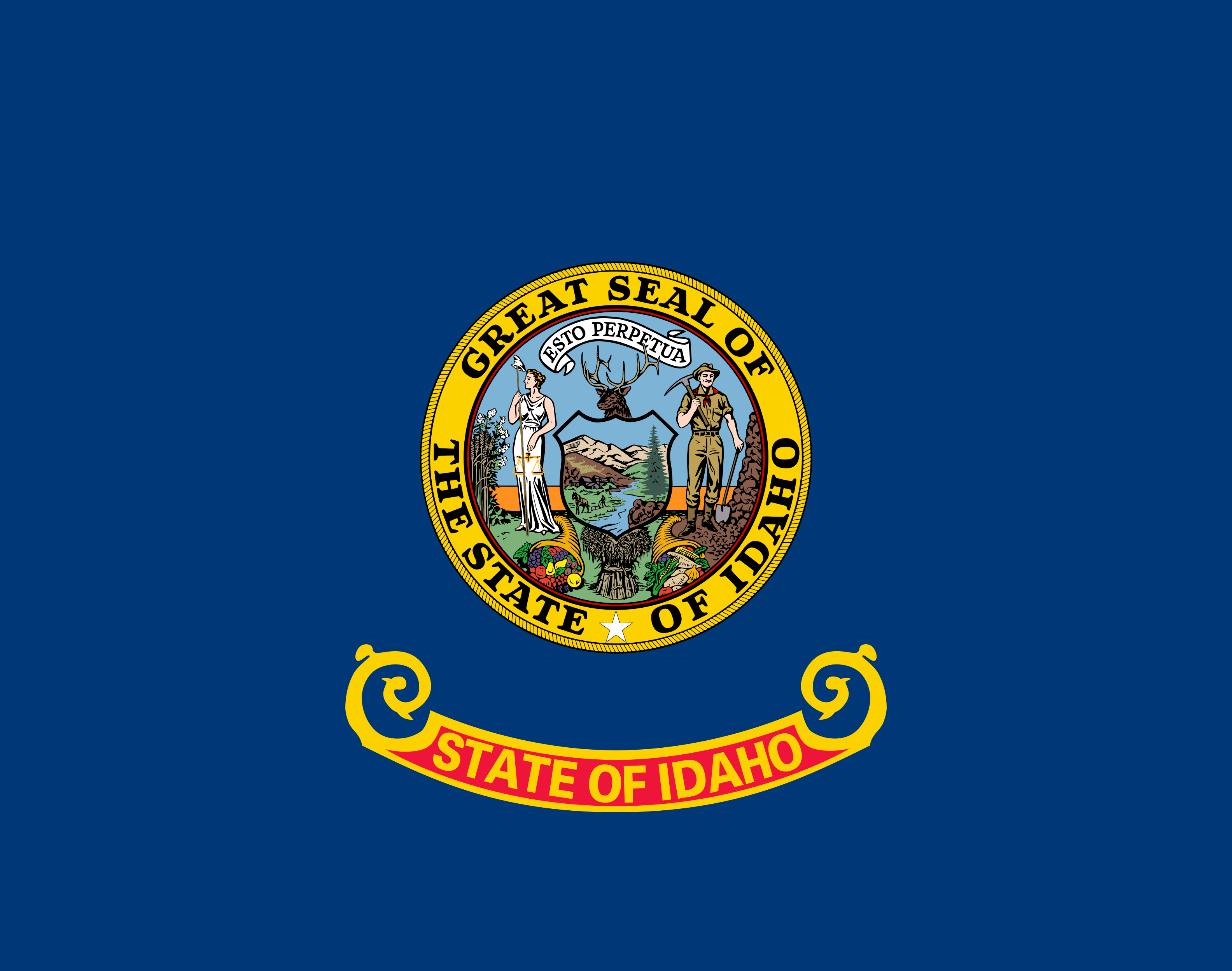
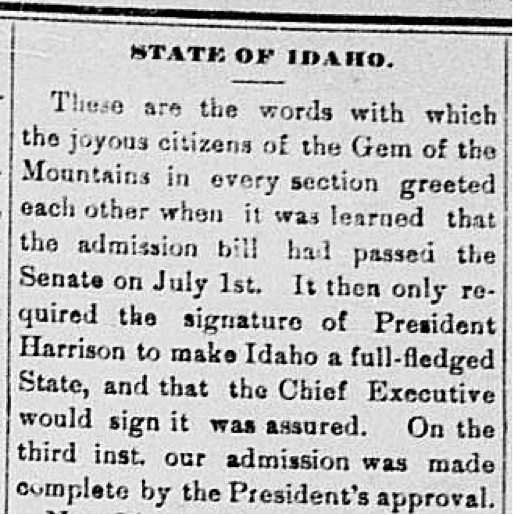
Politically, the national climate was also ripe for new states, particularly those that could contribute to the balance of power in Congress. After several failed attempts, a constitutional convention was held in Boise in 1889, where delegates drafted a state constitution. This constitution was approved by the citizens of the territory, and subsequently, on July 3, 1890, President Benjamin Harrison signed the bill admitting Idaho into the Union as the 43rd state.
This momentous occasion marked the culmination of a century of exploration, settlement, and development. It solidified Idaho’s place on the map, not just as a geographical region but as a fully recognized and contributing member of the United States. From a wild frontier, it had transformed into a sovereign state, ready to chart its own course while retaining much of its pioneering spirit.
Idaho’s Geographic and Cultural Tapestry: Beyond the Potatoes
While Idaho’s journey to statehood is a compelling historical account, its present-day allure for travelers extends far beyond its historical milestones. Often stereotyped for its agricultural output, Idaho is in fact a land of incredible geographic diversity, vibrant cultures, and an abundance of activities that cater to every type of adventurer.
Diverse Landscapes and Outdoor Adventures
Idaho is frequently referred to as the “Gem State” not only for its rich mineral deposits but also for the unparalleled natural beauty that graces its landscape. The state is dominated by the majestic Rocky Mountains, with numerous ranges such as the Sawtooth Mountains, the Bitterroot Mountains, and the Teton Mountains forming a stunning backdrop for outdoor pursuits.
For adrenaline junkies, Idaho offers world-class whitewater rafting and kayaking on rivers like the Salmon River and the Snake River, including navigating the sheer cliffs of Hells Canyon, North America’s deepest river gorge. Hikers and backpackers can explore thousands of miles of trails through pristine wilderness areas, encountering abundant wildlife and breathtaking vistas. Winter transforms much of Idaho into a snowy paradise, with ski resorts like Sun Valley offering slopes that rival any in the world, alongside opportunities for cross-country skiing, snowshoeing, and snowmobiling.
The state is also dotted with picturesque lakes, including the expansive Lake Coeur d’Alene and Lake Pend Oreille, providing perfect settings for boating, fishing, swimming, and lakeside relaxation. Beyond the mountains and waters, Idaho also boasts unique geological formations, such as the otherworldly volcanic landscape of Craters of the Moon National Monument and Preserve, offering a stark contrast to its alpine regions. Close to its eastern border lies a gateway to the iconic Yellowstone National Park, making Idaho an ideal base for exploring this legendary national treasure.
A Rich Agricultural Heritage
While often overshadowed by its mountains, Idaho’s agricultural heritage is deeply ingrained in its identity and economy. Indeed, the state is globally renowned for its potatoes, but its agricultural prowess extends far beyond. Vast fields of wheat, barley, sugar beets, and corn stretch across fertile plains, particularly in the southern regions. The mild climate and rich volcanic soil also support a burgeoning wine industry, with vineyards producing award-winning vintages, especially in the Snake River Valley AVA.
Visitors can explore this agricultural tapestry through farm tours, farmers’ markets in cities like Boise, Pocatello, and Idaho Falls, and by savoring farm-to-table dining experiences that highlight fresh, local ingredients. This connection to the land provides a unique perspective on the lifestyle of many Idahoans and offers delicious culinary experiences for any traveler.
Unique Cultural Experiences and Local Flavors
Idaho’s culture is a blend of its pioneering past, Native American roots, and a contemporary appreciation for the outdoors and community living. Cities like Boise, the state capital and largest city, offer a vibrant urban experience with a thriving arts scene, craft breweries, diverse restaurants, and a lively downtown area. Boise seamlessly blends its history with modern amenities, making it an excellent base for exploring the state.
Beyond Boise, smaller towns each offer their unique charm. Moscow, home to the University of Idaho, boasts a youthful, academic atmosphere. Sandpoint, on the shores of Lake Pend Oreille, provides a laid-back lakeside vibe with access to incredible outdoor activities. Mining towns like Wallace, a historically preserved town, transport visitors back to the silver boom era, offering a tangible link to Idaho’s gold and silver rush past.
Local cuisine is another highlight, extending beyond the famous potato. Idaho offers an array of fresh trout from its many rivers, wild huckleberries (a local delicacy), and an increasing number of craft beverages, including beers, ciders, and wines. Engaging with local festivals, art galleries, and small-town events provides an authentic glimpse into the friendly and welcoming spirit of Idahoans.
Planning Your Idaho Adventure: Where History Meets Modern Exploration
Understanding “When did Idaho become a state?” is merely the first step in appreciating this remarkable destination. For travelers, the rich history and diverse landscapes translate into countless opportunities for unforgettable experiences, from luxury getaways to rugged backcountry explorations.
Iconic Landmarks and Must-Visit Attractions
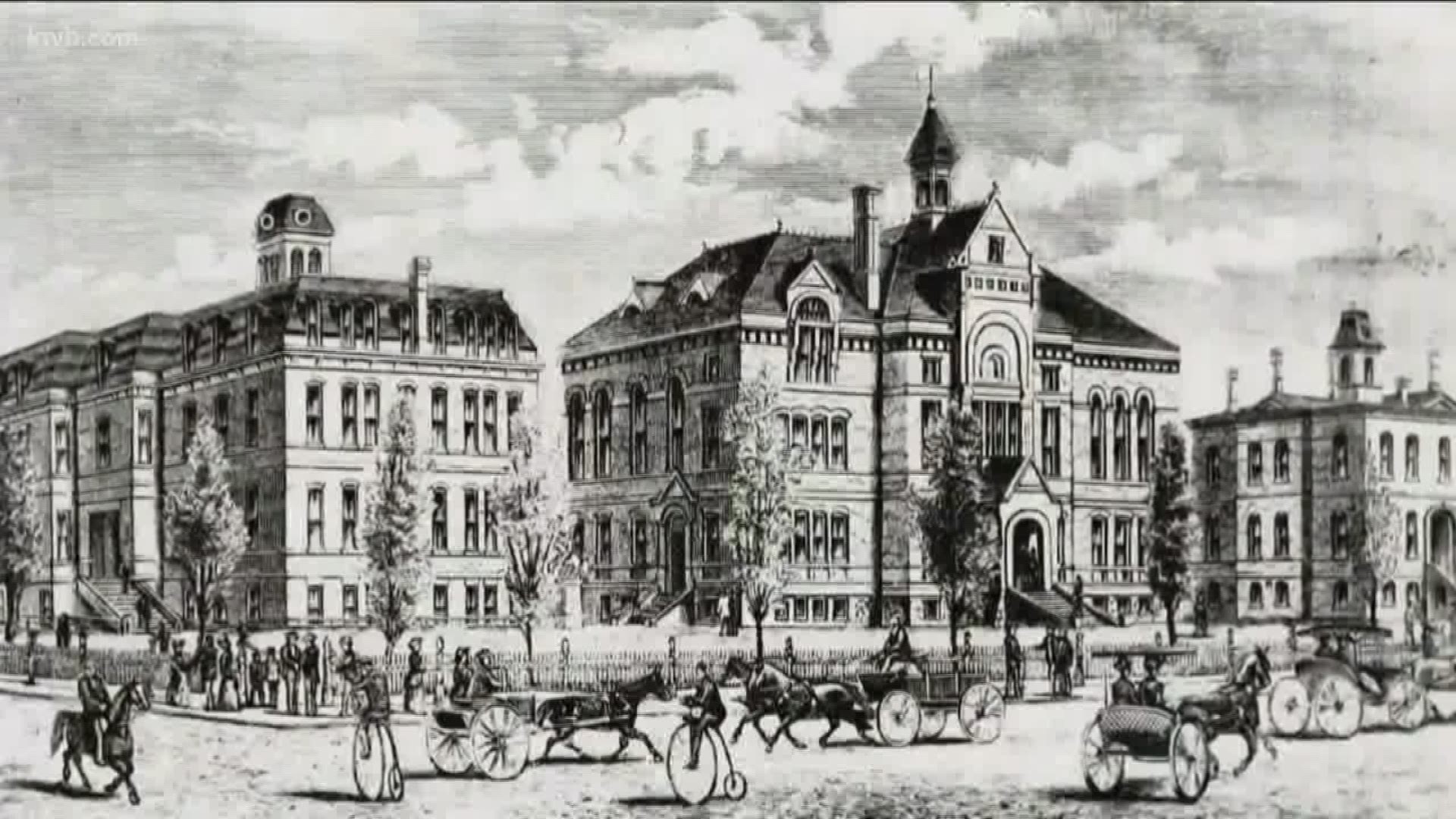
Idaho is replete with landmarks that tell its story and showcase its natural splendor. In Boise, the magnificent Idaho State Capitol stands as a symbol of its statehood, offering guided tours that delve into its political history and stunning architecture. Nearby, the Old Idaho Penitentiary State Historic Site provides a fascinating, albeit sobering, look into the state’s justice system and social history.
For those interested in the pioneering trails, the National Oregon/California Trail Center in Montpelier brings the arduous journey of westward expansion to life. In Northern Idaho, the historic silver mining town of Wallace is a living museum, offering underground mine tours and a glimpse into the tough life of 19th-century prospectors.
Nature’s landmarks are equally compelling. The Sawtooth National Recreation Area offers pristine alpine lakes and granite peaks perfect for hiking and photography. Craters of the Moon National Monument and Preserve invites exploration of its volcanic features, while the Mesa Falls of the Snake River are a testament to Idaho’s powerful waterways. These sites, historical and natural, provide a comprehensive view of Idaho’s enduring legacy.
Accommodation Choices for Every Traveler
Whether you seek lavish luxury, cozy comfort, or budget-friendly options, Idaho offers a diverse array of accommodations to suit any travel style. For those pursuing an opulent escape, The Resort at Coeur d’Alene provides lakeside elegance with a renowned floating green golf course, while Sun Valley Resort offers classic mountain luxury with world-class skiing and amenities. In Boise, upscale hotels like The Grove Hotel combine sophisticated comfort with convenient access to downtown attractions.
Mid-range hotels and charming boutique inns are abundant in cities like Boise, Idaho Falls, and Pocatello, providing comfortable and well-appointed stays for families and couples. For budget-conscious travelers or those seeking a more immersive experience, numerous vacation rentals, campgrounds, and rustic cabins are available, especially in popular outdoor recreation areas. Many of these offer unique experiences, such as staying in a historic log cabin near a hiking trail or a modern apartment overlooking the Boise River. From luxury resorts to cozy B&Bs, Idaho’s hospitality sector is geared towards making every visitor’s stay memorable.
Embracing the Idaho Lifestyle
Visiting Idaho is not just about seeing the sights; it’s about experiencing a unique lifestyle characterized by a deep connection to nature, a friendly community spirit, and a pace of life that encourages enjoyment and appreciation of one’s surroundings. Whether you’re exploring the bustling cultural scene of Boise, fly-fishing in a pristine mountain stream, or sampling local wines in the Snake River Valley, Idaho invites you to slow down and truly engage with its offerings.
For families, the state provides endless opportunities for adventure, from theme parks like Silverwood Theme Park to gentle rafting trips and exploring natural hot springs. Business travelers will find modern facilities and welcoming environments in major cities, often with easy access to outdoor activities for unwinding after work. For those seeking a long-term stay or an extended adventure, the possibilities are vast, from renting a cabin for a month in the mountains to settling into a charming apartment in a historic town.
In conclusion, the question “When did Idaho become a state?” leads us down a fascinating historical path, revealing the resilience, ambition, and natural splendor that define this extraordinary region. From its territorial struggles to its vibrant present as the Gem State, Idaho offers a rich tapestry of experiences for every traveler. Its history is etched into its landscapes, its culture, and the very spirit of its people, making it a truly captivating destination that continues to inspire and enchant all who visit. Discover Idaho, and uncover not just its past, but its boundless present and future possibilities.
LifeOutOfTheBox is a participant in the Amazon Services LLC Associates Program, an affiliate advertising program designed to provide a means for sites to earn advertising fees by advertising and linking to Amazon.com. Amazon, the Amazon logo, AmazonSupply, and the AmazonSupply logo are trademarks of Amazon.com, Inc. or its affiliates. As an Amazon Associate we earn affiliate commissions from qualifying purchases.