
A State Defined by Sunshine: Florida’s Subtropical Climate
Florida, often dubbed the “Sunshine State,” is globally renowned for its warm, subtropical climate, pristine beaches, and vibrant natural landscapes. Its geographical position, stretching deep into the tropics, dictates a weather pattern characterized by mild winters and hot, humid summers, making it a perennial magnet for tourists seeking an escape from colder climes. The vast majority of the state, particularly the central and southern regions, rarely experiences temperatures cold enough for sustained periods to support snowfall. This meteorological reality firmly places any instance of snow in Florida as a significant historical and natural event, a deviation from its established climatic identity.
The state’s climate is largely influenced by its proximity to the Atlantic Ocean and the Gulf of Mexico, which provide moisture and moderate temperatures. The Gulf Stream, a powerful ocean current, further contributes to keeping the eastern coastlines warmer than comparable latitudes elsewhere. This oceanic influence typically prevents the deep, penetrating cold air masses from lingering long enough to produce widespread snow, even when they dip far south from the continental interior.
The Uncommon Winter Chill
Despite its sun-drenched reputation, Florida is not entirely immune to winter’s embrace. Occasional cold fronts, particularly during the months of December, January, and February, can sweep down from the arctic, bringing with them significantly lower temperatures. These cold snaps, while often resulting in frost and freezes that pose challenges for agriculture, particularly the state’s citrus industry, seldom culminate in snowfall. The crucial missing ingredient is often sufficient moisture in the atmosphere at the precise moment when temperatures are at or below freezing from the cloud base to the ground. For snow to form and reach the ground intact, atmospheric conditions across multiple layers must align perfectly, a rare convergence for most of Florida. When such an event does occur, it enters the annals of the state’s natural history as a truly remarkable landmark event.
Tracing the Historical Snowfall Events
The phenomenon of snow in Florida is so infrequent that each occurrence is typically well-documented and becomes a memorable part of local lore. While most instances involve little more than flurries or a dusting that melts quickly, these events are significant because they represent extreme deviations from the norm. For a state accustomed to year-round warmth, even a few flakes descending from the sky can evoke widespread wonder and surprise. Understanding when these rare events happened provides a fascinating glimpse into Florida’s climatic history.
The Great Snow of 1977
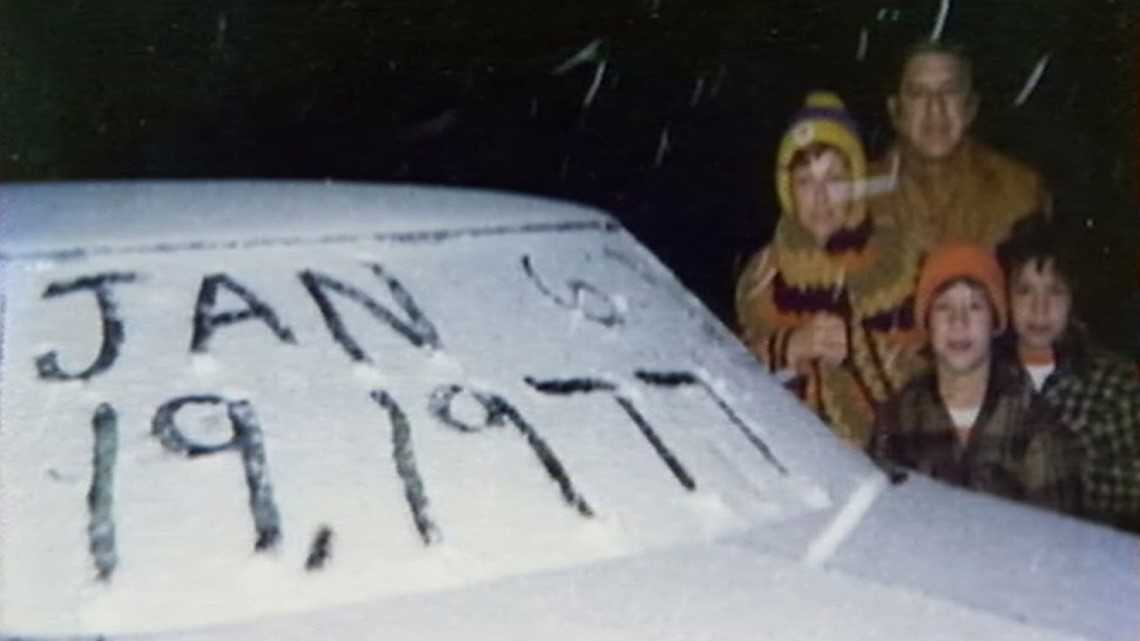
Arguably the most famous and widespread snowfall in modern Florida history occurred on January 19, 1977. This event stands out not only for its novelty but also for the geographical extent of the snow. For the first and, to date, only time on record, snow fell in Miami, making headlines across the globe. While the accumulation in Miami was minimal, mostly just flurries that did not stick, the very sight of snow in such a tropical locale was unprecedented.
Further north, cities experienced more substantial snowfall. Jacksonville, located in the northeastern part of the state, recorded a measurable accumulation of snow, creating a temporary winter wonderland. Reports from Tampa, Orlando, and other central Florida cities also confirmed snow, with some areas receiving up to an inch or more. The event was caused by an unusually deep and strong arctic air mass that plunged southward, combined with sufficient moisture pulled in from the Gulf of Mexico and the Atlantic. For many Floridians, especially children, this was their first and perhaps only encounter with falling snow, turning an ordinary Wednesday into a historic natural spectacle.
Other Notable Occurrences
While 1977 remains a benchmark, other instances of snow have punctuated Florida’s history:
- February 13, 1899: This date marks one of the most severe cold outbreaks in U.S. history, extending deep into Florida. Snowfall was reported across much of the state, including Palatka and Gainesville, with accumulations possibly reaching several inches in northern areas. This event devastated the citrus industry of the time.
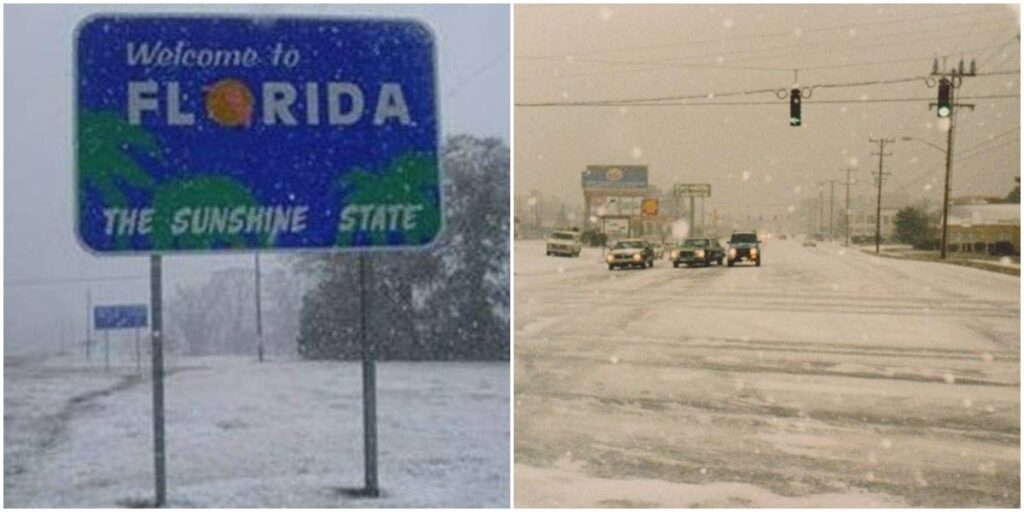
- December 23, 1989: Another significant cold snap brought snow to parts of northern and central Florida just before Christmas. Jacksonville once again saw measurable snow, with some areas reporting up to an inch. Even farther south, cities like Orlando observed flurries, offering a rare “white Christmas” feel, albeit a very brief one.
- January 8, 2010: A dusting of snow was reported in the western Panhandle, specifically around Pensacola, following a potent cold front. While localized, it reminded residents of the state’s occasional vulnerability to freezing conditions.
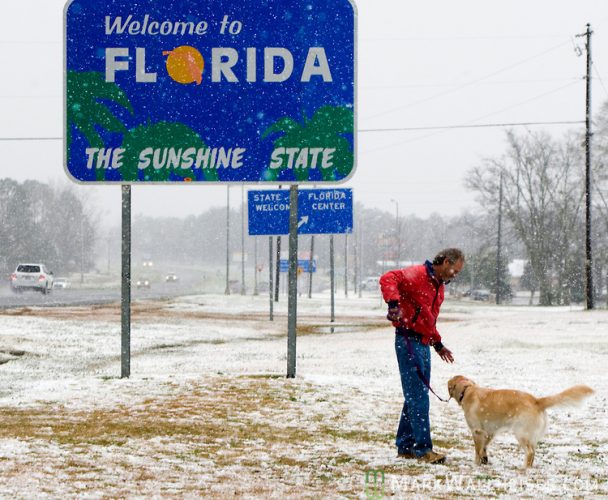
- January 3, 2018: The most recent notable snowfall occurred primarily in Florida’s northernmost counties, particularly in the Panhandle and parts of northeastern Florida near the Georgia border. Tallahassee, the state capital, saw measurable snow, marking its first significant snowfall in nearly three decades. Accumulations of up to 0.1 to 0.2 inches were observed, leading to temporary road closures and creating a fleeting picturesque scene.
The 1989 Freeze and Beyond
The late 1980s, particularly the 1989 Christmas freeze, stands out for its extreme cold, which brought snow flurries to much of northern and central Florida. This event caused widespread damage to agricultural crops and infrastructure. Since then, while cold fronts are common, the precise combination of sub-freezing temperatures and adequate moisture has remained exceedingly rare for central and southern Florida. The 2018 event in Tallahassee reinforces that northern Florida, being closer to temperate climates, is inherently more susceptible to these rare natural occurrences. These events are integral parts of the state’s natural history, providing rare examples of extreme weather events that define climatic boundaries.
The Science Behind Florida’s Rare Snow
For snow to fall and accumulate in Florida, a confluence of highly specific atmospheric conditions must align, making it a rare meteorological landmark event. The primary challenge is Florida’s’s subtropical latitude. While cold air masses frequently push south, they often warm up significantly as they traverse the continental United States and absorb latent heat from the relatively warmer waters surrounding Florida.
Converging Conditions for Flakes
The essential ingredients for snow are:
- Sub-freezing temperatures: Not just at the ground level, but from the cloud base all the way down to the surface. If any layer of air above the ground is above freezing, snow will melt into rain before it reaches the ground.
- Moisture: There must be sufficient moisture in the atmosphere to form clouds and precipitation. In many arctic outbreaks, the air is often very dry, leading to clear, cold conditions rather than snow.
- Lifting mechanism: A weather system, such as a low-pressure system or a strong cold front, is needed to lift the moist air and cool it to condensation levels, forming clouds and precipitation.
In Florida’s rare snow events, such as the 1977 and 1989 occurrences, a particularly strong and deep trough of low pressure typically extends far south into the Gulf of Mexico or the Atlantic. This pattern allows arctic air to penetrate unusually deep into the state while simultaneously drawing moisture from the surrounding warm waters. As this moist air is lifted and cooled by the approaching front or low-pressure system, it precipitates as snow in the freezing air column. The challenge is maintaining those freezing temperatures through the entire atmospheric column, a feat that only a handful of events in Florida’s recorded history have managed to achieve.
Coastal vs. Inland Dynamics
The dynamics of snowfall in Florida can also vary between coastal and inland areas. Coastal regions, influenced by the relatively warmer ocean waters, tend to have slightly higher ground temperatures, making accumulation more difficult. The “urban heat island” effect in major cities can also contribute to this, with metropolitan areas often being a few degrees warmer than surrounding rural areas.
Inland areas, particularly in northern Florida and away from the immediate coastal influence, might have a slightly better chance for snow accumulation under the right conditions. This explains why cities like Tallahassee and Jacksonville have seen more frequent, albeit still rare, measurable snowfalls compared to coastal cities further south. The interaction of land, sea, and atmospheric currents creates a complex meteorological puzzle, where snow in Florida remains an exceptional natural event, a testament to the state’s unique geographical and climatic position.
The Cultural Impact of a Snowy Florida
When snow falls in Florida, it transcends a mere weather event; it becomes a shared historical moment, a unique natural phenomenon that disrupts the norm and creates lasting memories. For a state where residents rarely own snow shovels or winter coats beyond light jackets, the sight of falling flakes or a thin white dusting is extraordinary. It speaks to the wonder and unpredictability of nature, even in the most famously sunny locales.
A Moment of Shared Wonder
The rarity of snow in Florida means that each occurrence is met with widespread fascination and often joy. Children, many of whom have only seen snow in movies or pictures, rush outside to experience it firsthand. Social media lights up with photos and videos of snow-covered palm trees, a truly iconic and contradictory image. Schools may close, not due to heavy accumulation, but because of the sheer novelty and potential for icy patches on roads unaccustomed to such conditions. It provides a rare opportunity for communities to share a collective, often whimsical, experience, etching itself into the local memory as a unique natural landmark event. Businesses might even find a temporary novelty boost from patrons eager to witness the unusual weather.
Preparedness and Adaptation
While snow itself is usually fleeting and non-accumulating in most of Florida, the extreme cold that accompanies it demands attention. State and local agencies are well-versed in preparing for freezing temperatures, primarily due to the impact on agriculture, particularly citrus groves and ornamental nurseries. Farmers employ various methods, such as irrigation and wind machines, to protect crops from frost damage. Infrastructure, including water pipes and roads, is also vulnerable to prolonged freezes, leading to advisories and preventative measures.
For the general public, cold weather preparedness often involves protecting exposed pipes, bringing in pets, and checking on vulnerable neighbors. The memory of past freezes, such as those in 1977, 1989, and more recently, guides these efforts. While snow itself is a delight, it serves as a powerful reminder of the deep cold air masses that can occasionally penetrate this subtropical paradise, highlighting the unique historical climatic events that shape Florida’s natural and social landscape. These rare occurrences, therefore, are not just fleeting weather anomalies but significant historical markers in the life of the “Sunshine State.”
LifeOutOfTheBox is a participant in the Amazon Services LLC Associates Program, an affiliate advertising program designed to provide a means for sites to earn advertising fees by advertising and linking to Amazon.com. Amazon, the Amazon logo, AmazonSupply, and the AmazonSupply logo are trademarks of Amazon.com, Inc. or its affiliates. As an Amazon Associate we earn affiliate commissions from qualifying purchases.