
While Jacksonville, Florida is renowned for its sun-drenched beaches, subtropical climate, and consistently warm temperatures, the question of whether it has ever snowed in this vibrant Northeast Florida city is a point of curiosity for many. For a region largely insulated from the icy grip of winter storms, the rare occurrences of snow are memorable events, transforming the landscape and the community’s outlook for a brief, magical period. Understanding these infrequent snowy interludes requires delving into meteorological records and historical accounts, offering a fascinating glimpse into the atmospheric anomalies that can affect even the most predictable climates.

The Infrequency of Frost: Understanding Florida’s Climate
Florida as a whole experiences a subtropical to tropical climate, characterized by long, hot summers and mild winters. Jacksonville, situated in the northern part of the state, does experience a more pronounced seasonal shift than its southern counterparts, with cooler temperatures and occasional frosts during the winter months. However, the atmospheric conditions necessary for snow formation – namely, sustained temperatures at or below freezing throughout the entire atmospheric column from cloud to ground, combined with sufficient moisture – are seldom met in this region.
The typical winter in Jacksonville involves average high temperatures in the 60s Fahrenheit and lows in the 40s. Freezing temperatures, when they do occur, are usually brief and concentrated in the pre-dawn hours. For snow to fall, these frigid conditions must coincide with precipitation. This confluence of events is what makes snowfall in Jacksonville a rare and noteworthy phenomenon.
Factors Contributing to Snowfall Scarcity
Several climatic factors contribute to the scarcity of snow in Jacksonville:
- Latitudinal Position: While not as far south as Miami or the Florida Keys, Jacksonville is still situated at a latitude that generally favors warmer air masses, particularly those emanating from the Gulf of Mexico.
- Gulf Stream Influence: The moderating influence of the Atlantic Ocean, particularly the Gulf Stream, helps to keep coastal Florida temperatures milder than inland areas at similar latitudes. This oceanic current prevents extreme cold from persisting.
- Prevalent Air Masses: Winter weather patterns in the southeastern United States are often dominated by cold air intrusions from Canada or the central United States. For snow to reach Jacksonville, these cold air masses must be sufficiently strong and persistent, and crucially, they must be coupled with moisture-laden air.
When these elements align, however, the results can be quite extraordinary, etching themselves into the collective memory of the city.
Documented Snowfall Events in Jacksonville, Florida
History records a handful of significant snowfall events in Jacksonville, each a testament to the dynamic nature of weather. These occurrences are not just meteorological curiosities; they often become cherished local legends, discussed for years afterward.
The Major Snow Event of 1989
Perhaps the most significant and widely remembered snowfall in Jacksonville history occurred on January 23, 1989. This event, often referred to as “Snowmageddon” or simply “the big snow,” saw accumulations of 1.1 inches of snow, a substantial amount for the region. The snow began in the early morning hours and continued for several hours, blanketing the city in a thick layer of white.
The impact on Jacksonville was immediate and widespread. Schools were closed, businesses shut down, and traffic came to a standstill as residents, unaccustomed to driving in snow, struggled with the conditions. Children, many experiencing snow for the first time, reveled in the unexpected winter wonderland, building snowmen and having snowball fights. The city’s infrastructure, not designed for freezing precipitation, struggled to cope, but the overall mood was one of awe and excitement.
The 1989 event was part of a larger winter storm system that affected much of the southeastern United States, bringing snow and ice to areas far south of their usual winter precipitation zones. The temperature in Jacksonville hovered just above freezing for most of the snowfall, allowing the accumulation to stick. This particular storm system was a perfect storm of cold air meeting moist atmospheric conditions over northern Florida.
Other Notable, Less Significant Events
While the 1989 event stands out, there have been other instances of lighter snow or wintry precipitation:
- February 18, 1979: This date saw a light dusting of snow, often described as a “flurry event,” with accumulations being minimal and melting quickly. It was enough to be noticed and remembered, but not enough to disrupt daily life significantly.
- January 21, 2014: This date brought a significant winter weather event to northern Florida, including Jacksonville. While the primary precipitation was freezing rain and sleet, some areas in and around Jacksonville did report light accumulations of snow, particularly in the western suburbs. This event caused considerable travel disruption due to icy roads. The total accumulation in Jacksonville was generally less than a tenth of an inch, often mixed with sleet, but the cold and icy conditions were the primary concern.
- December 8, 2017: This date saw a brief period of light snow and sleet in parts of Northeast Florida. Accumulations were very light, with most areas experiencing only a dusting that quickly melted. It was more of a fleeting icy spectacle than a significant snowfall.
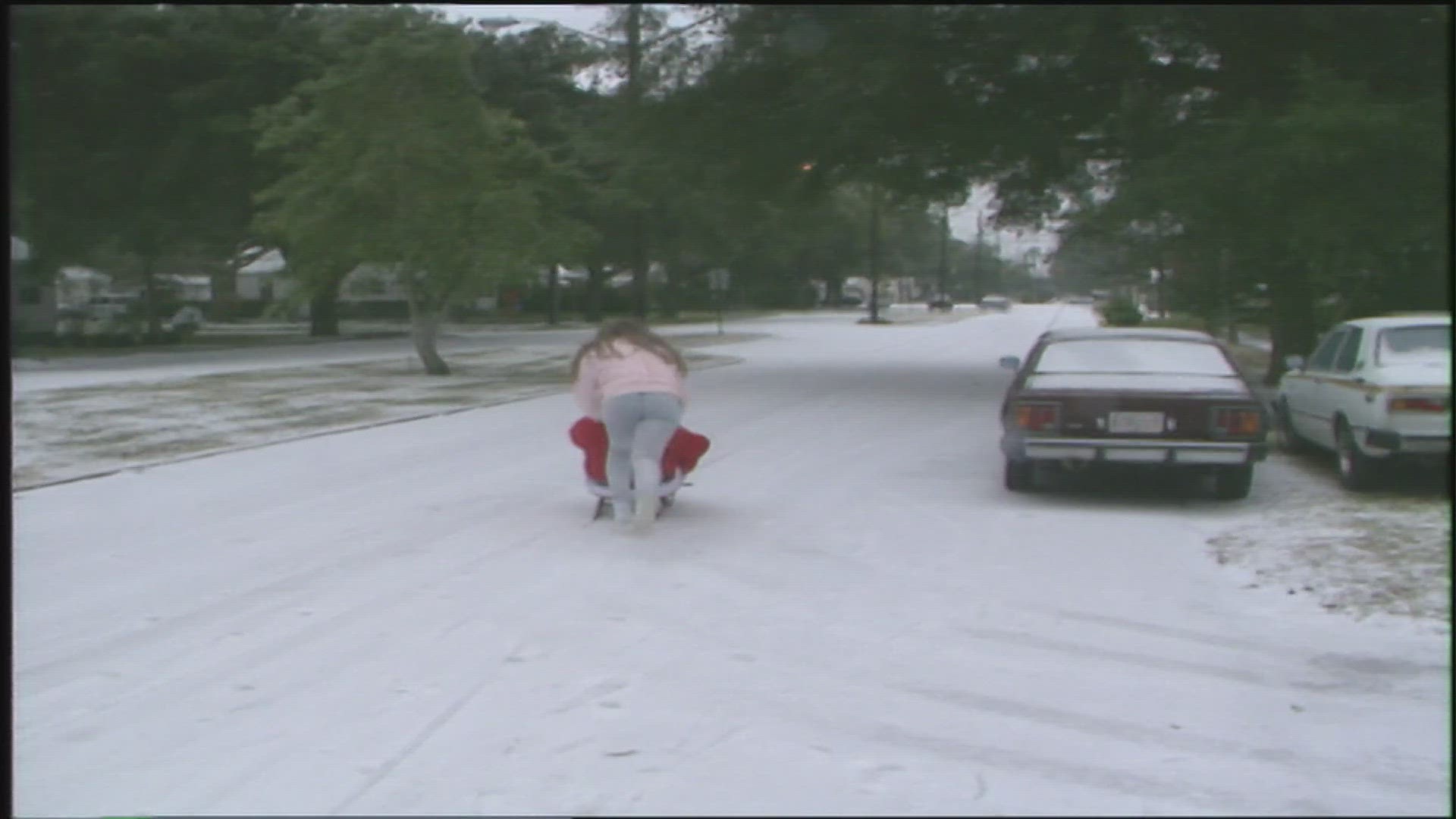
These events, while varying in intensity, underscore that Jacksonville is not entirely immune to the whims of winter weather. The rarity of these occurrences only amplifies their impact and the memories they create.
The Psychological and Cultural Impact of Snow in Jacksonville
The scarcity of snow in Jacksonville imbues it with a special significance. When snowflakes do fall, they represent a break from the ordinary, a disruption of the predictable weather patterns that define life in the Sunshine State. This infrequent occurrence has a unique psychological and cultural impact on the residents.
A Sense of Novelty and Excitement
For many long-time residents, especially those who have lived in Jacksonville their entire lives, snow is a novelty. It transforms familiar streets and landscapes into something ethereal and unexpected. The sheer surprise element generates a palpable sense of excitement. Parks and open spaces become impromptu sledding hills, and children, alongside adults, rush outdoors to experience the ephemeral white blanket.
This excitement often translates into a collective pause in daily routines. Schools close, not just because of travel hazards, but also because the experience of snow is considered an event in itself, one that warrants participation rather than observation from a classroom. Businesses may also experience a slowdown as employees are either off to enjoy the snow or find travel routes impassable.
Community Bonding and Shared Memory
Snowfall events in Jacksonville create shared experiences that foster a sense of community bonding. Neighbors who might otherwise interact infrequently find themselves together, marveling at the unusual weather, helping each other navigate slippery conditions, or simply enjoying the collective wonder. These shared moments become enduring memories, passed down through families and often recounted with vivid detail years later.
The phrase “Remember when it snowed in ’89?” or “Do you recall the sleet in 2014?” often serves as a nostalgic touchstone, a way for residents to connect with their shared history and the unique meteorological experiences of their city. This communal memory reinforces a sense of place and identity, highlighting a characteristic that sets Jacksonville apart from other, more snow-prone regions.
Planning and Preparedness Challenges
On a more practical level, the infrequency of snow presents challenges in terms of preparedness. Unlike cities accustomed to winter weather, Jacksonville lacks widespread snow removal equipment such as plows and extensive salting operations. The city’s emergency services and transportation departments are typically geared towards hurricanes and heatwaves, not blizzards.
Consequently, even a moderate snowfall can paralyze the city. Road conditions can become treacherous quickly, and the lack of experience in dealing with such weather often leads to accidents and widespread disruptions. This highlights the contrast between Jacksonville’s usual climate and the rare instances of winter storms, underscoring the need for adaptability and preparedness for the unexpected.
What the Future Holds: Climate Change and Snowfall in Jacksonville
The question of snowfall in Jacksonville also intersects with broader discussions about climate change. While it might seem counterintuitive, climate change can, in some instances, lead to more extreme weather events, including the potential for more intense, albeit still infrequent, cold snaps that could interact with moisture to produce snow.
Shifting Weather Patterns
Global warming is not a uniform process, and its effects can manifest in complex ways. While the overall trend is towards warmer temperatures, the disruption of atmospheric circulation patterns could, theoretically, lead to more frequent or more severe intrusions of arctic air into lower latitudes. If these cold air masses are coupled with moisture, the conditions for snowfall, however rare, could still arise.
However, the prevailing long-term trend for Florida is a continuation of warming temperatures, suggesting that the overall probability of significant snowfall will likely decrease over the decades. The atmospheric “ceiling” for snow formation will be higher, meaning that for snow to occur, temperatures would need to be exceptionally cold relative to the average for the region.

The Enduring Charm of Rare Snowfall
Regardless of future climatic shifts, the legacy of past snowfall events in Jacksonville remains. These moments, when the ordinary transforms into the extraordinary, are etched into the city’s character. They serve as reminders that even in the most predictable climates, nature holds surprises, and that the occasional flurry of snow in the Sunshine State is a truly special event, a fleeting brush with winter that residents will always cherish. The anticipation of such an event, however remote, adds a unique element to the perception of Jacksonville as a diverse and sometimes surprising travel destination, where the unexpected can indeed happen.
LifeOutOfTheBox is a participant in the Amazon Services LLC Associates Program, an affiliate advertising program designed to provide a means for sites to earn advertising fees by advertising and linking to Amazon.com. Amazon, the Amazon logo, AmazonSupply, and the AmazonSupply logo are trademarks of Amazon.com, Inc. or its affiliates. As an Amazon Associate we earn affiliate commissions from qualifying purchases.