
The question “When did Mexico lose California?” points to a pivotal moment in North American history, marking a dramatic shift in geopolitical power and forever reshaping the landscape of what is now the American Southwest. It’s a question that delves into a complex tapestry of exploration, colonization, revolution, and expansion, culminating in a significant territorial transfer. For travelers and history enthusiasts exploring the vibrant destinations and rich cultural heritage of California today, understanding this historical context provides an invaluable layer of appreciation for its unique character. The simple answer is February 2, 1848, with the signing of the Treaty of Guadalupe Hidalgo. However, the journey to that date is a fascinating narrative, steeped in the ambitions of empires, the struggles of nascent nations, and the dreams of countless individuals who called this land home.

From the sun-drenched beaches of San Diego to the majestic redwoods of Northern California, the echoes of Spanish missions, Mexican ranchos, and American frontier towns are palpable. This article will unravel the historical threads leading to Mexico’s cession of California, examining the events, conflicts, and figures that shaped this monumental change. It will also touch upon how this rich history contributes to the distinctive charm and diverse attractions that draw millions of tourists to California each year, from its historic landmarks to its unique cultural experiences and world-class accommodations.
A Brief History of California Before Mexican Rule
To truly grasp the significance of Mexico losing California, we must first journey back in time, long before either Mexico or the United States laid claim to its vast expanse. This land was, for millennia, home to diverse indigenous peoples, whose intricate societies and deep connections to the environment predated any European arrival.
Indigenous Roots and Spanish Exploration
Before the arrival of Europeans, hundreds of distinct indigenous tribes thrived across California, each with unique languages, cultures, and sustainable practices. Groups like the Chumash, Miwok, Ohlone, and Kumeyaay lived in harmony with the land, developing sophisticated social structures and rich spiritual traditions. Their presence shaped the landscape and its resources in profound ways that are still being uncovered today. While much of their physical heritage was disrupted by later colonization, their enduring legacy is an integral part of California’s story.
The first documented European contact with California occurred in 1542 when Portuguese explorer Juan Rodriguez Cabrillo, sailing under the Spanish flag, explored the coast, naming San Diego Bay and charting much of the coastline. However, actual Spanish colonization did not begin in earnest for another two centuries. Driven by fears of Russian encroachment from the north and a desire to consolidate its claim over the Pacific coast, Spain launched a serious effort to settle Alta California (Upper California) in the late 18th century.
Mission Life and Colonial Influence
The Spanish colonial strategy was multifaceted, involving the establishment of presidios (military forts), pueblos (civilian towns), and, most notably, a chain of Catholic missions. Spearheaded by Franciscan missionary Father Junipero Serra, these missions aimed to convert indigenous populations to Christianity and assimilate them into Spanish colonial society. The first mission, Mission San Diego de Alcala, was founded in 1769, marking the beginning of a system that would see 21 missions stretch along the Camino Real from San Diego to Sonoma by 1823.
These missions were not merely religious centers; they were vast agricultural enterprises, centers of craft production, and crucial outposts of Spanish power. They introduced European crops, livestock, and architectural styles that would leave an indelible mark on California. For modern travelers, these missions are among California’s most evocative landmarks, offering a tangible connection to its colonial past. Visiting sites like Mission Santa Barbara or Mission San Carlos Borromeo de Carmelo in Carmel-by-the-Sea provides a glimpse into the daily life and complex cultural interactions of this era. Many offer museum exhibits, beautiful gardens, and even guesthouses for a unique accommodation experience, blending history with hospitality.
The mission system, however, came at a tremendous cost to the indigenous peoples, who suffered from forced labor, disease, and the suppression of their traditional cultures. The legacy of this period is complex, viewed through dual lenses of architectural beauty and profound human rights abuses.
Mexican Independence and the Era of Alta California
The early 19th century brought radical change across the Americas, and California was no exception. As Spain’s grip on its vast colonial empire began to weaken, a new nation emerged: Mexico.
The Birth of a New Nation and a Vast Frontier
In 1821, Mexico achieved its independence from Spain, and with it, inherited the vast territory of Alta California. Suddenly, this distant province, once governed by royal decree from Madrid, was part of a young, self-governing nation whose capital was Mexico City. The change in governance brought new policies, particularly the secularization of the missions in the 1830s. This act stripped the missions of their lands and properties, redistributing much of it to private citizens, particularly prominent Mexican families who established vast rancho estates.
These ranchos became the dominant economic and social units of Mexican California. Life on a rancho was characterized by cattle ranching, a vibrant vaquero (cowboy) culture, and a distinct blend of Spanish, Mexican, and indigenous traditions. Towns like Los Angeles, San Diego, and Monterey grew slowly, serving as administrative and trading hubs. Monterey, in particular, served as the capital of Alta California during much of the Mexican period, and its historic adobes and presidio remnants offer a fascinating glimpse into this era.
Challenges and Opportunities in Alta California
Despite its immense size and natural resources, Mexican Alta California remained sparsely populated by non-indigenous settlers. The Mexican government, grappling with internal instability and a vast territory, struggled to assert strong control over the distant province. This period saw a rise in local autonomy, with influential Californio families, many of whom were descendants of Spanish settlers, wielding considerable power.
However, the allure of California’s fertile lands and strategic Pacific ports began to attract increasing numbers of foreign traders and settlers, primarily from the United States. American whaling ships frequented Monterey Bay, and overland trails brought a trickle of pioneers eager for new opportunities. These early American arrivals often integrated into Californio society, but their growing numbers and different cultural outlooks inevitably created friction. This influx of foreign interest, combined with Mexico’s tenuous hold, set the stage for the dramatic events that would follow. For today’s visitors, exploring areas like Old Town San Diego State Historic Park or the historic core of Los Angeles at El Pueblo de Los Angeles Historical Monument allows one to walk through the living history of Mexican California, complete with adobe buildings, vibrant plazas, and the enduring scent of authentic Mexican cuisine.
The Seeds of Conflict: Manifest Destiny and Border Disputes
The mid-19th century was a period of intense expansionism for the United States. Driven by an ideology known as Manifest Destiny, which posited that Americans were destined to expand across the North American continent, the young nation cast its eyes westward, directly colliding with Mexican territorial claims.
American Expansionism and Growing Tensions
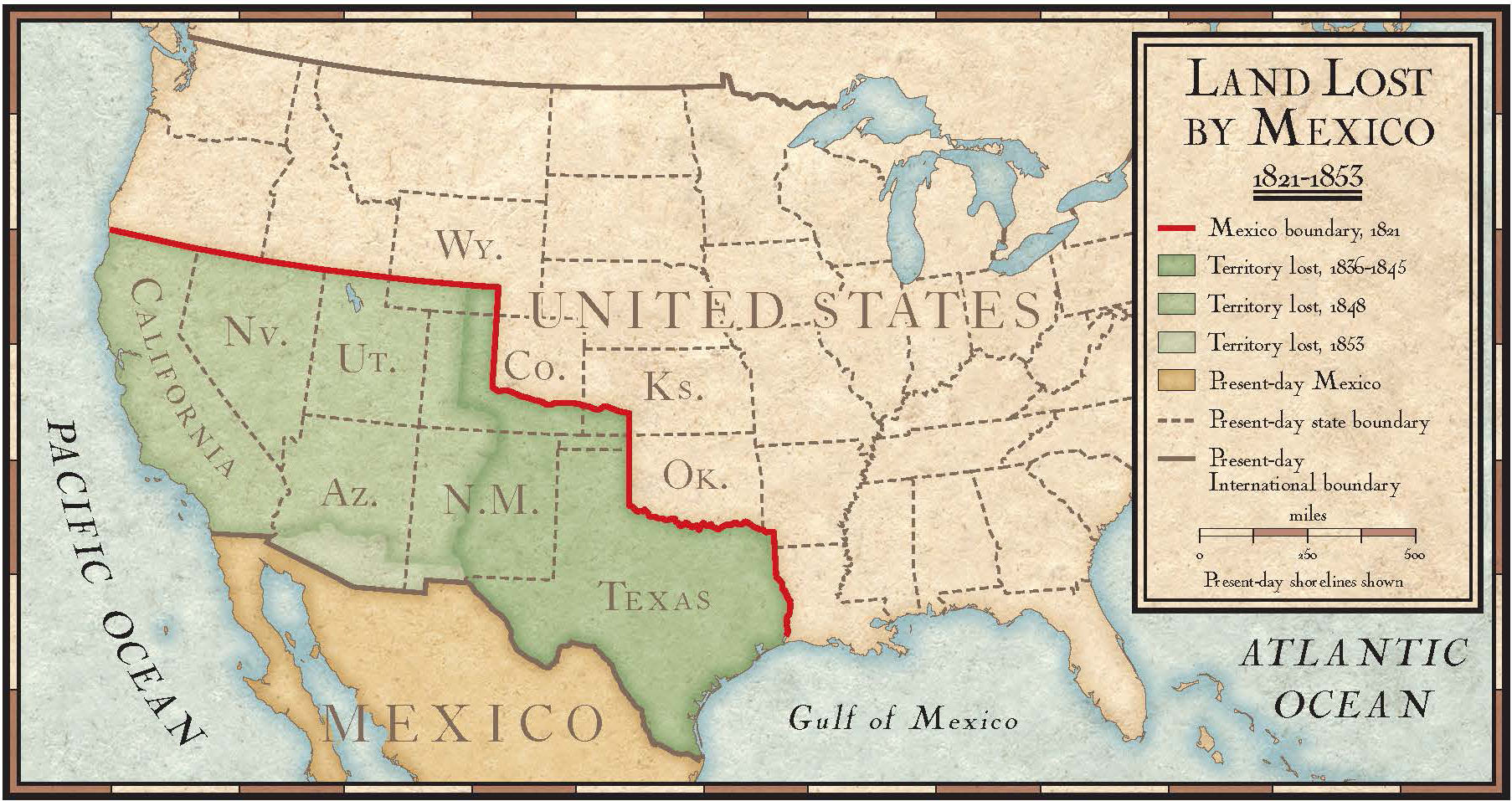
The annexation of Texas in 1845, after a decade of its independence from Mexico, significantly ratcheted up tensions between the two nations. A major point of contention was the precise border between Texas and Mexico, with the United States claiming the Rio Grande and Mexico insisting on the Nueces River. This dispute became the immediate spark for the Mexican-American War.
However, the underlying American ambition extended far beyond Texas. The burgeoning American economy sought Pacific ports for trade with Asia, and the rich lands of California and New Mexico were seen as essential to the nation’s future prosperity and security. American presidents, including James K. Polk, actively pursued the acquisition of these territories through purchase or, if necessary, by force. The stage was set for an inevitable confrontation.
The Bear Flag Revolt and Early Skirmishes
Even before the official outbreak of the Mexican-American War in May 1846, events in California foreshadowed its eventual separation from Mexico. A small group of American settlers, encouraged by the controversial American army officer and explorer John C. Fremont, launched the Bear Flag Revolt in June 1846. These rebels, seizing the Mexican garrison at Sonoma, declared the independent California Republic and hoisted a flag featuring a grizzly bear. While short-lived—the American flag was raised in Monterey just a few weeks later, officially incorporating California into the United States as part of the ongoing war—the revolt symbolized the growing American presence and desire for control in the region.
The capture of Monterey and later Los Angeles by U.S. naval forces in July 1846 effectively placed Alta California under American military occupation. Though there were skirmishes and resistance from the Californios, the tide had decisively turned. Visitors to Sutter’s Fort in Sacramento can experience a vivid recreation of frontier life and its tensions, offering a glimpse into the transitional period when American settlers began to assert dominance.
The Mexican-American War and the Treaty of Guadalupe Hidalgo
The conflict between the United States and Mexico was swift and decisive, fundamentally redrawing the map of North America. It was the moment Mexico formally lost California.
Key Battles and Decisive Moments
The Mexican-American War officially began in May 1846, after a border clash between American and Mexican troops in the disputed territory north of the Rio Grande. The war saw major campaigns on multiple fronts. General Zachary Taylor led American forces into northern Mexico, achieving victories at Palo Alto and Resaca de la Palma, before pushing further south. Another American force, under General Stephen W. Kearny, marched west, seizing Santa Fe in New Mexico before continuing to California to consolidate American control there.
The most ambitious and decisive campaign, however, was led by General Winfield Scott. His forces landed at Veracruz in March 1847 and launched a daring march inland, fighting a series of pitched battles, including Cerro Gordo and Chapultepec, before ultimately capturing Mexico City in September 1847. The fall of the capital effectively ended the military phase of the war, leaving Mexico in a position where it had no choice but to negotiate a peace treaty on American terms.
The Cession of Lands: A New Map Takes Shape
The negotiations for peace culminated in the signing of the Treaty of Guadalupe Hidalgo on February 2, 1848, in the town of Guadalupe Hidalgo, just outside Mexico City. This treaty is the definitive answer to “When did Mexico lose California?”
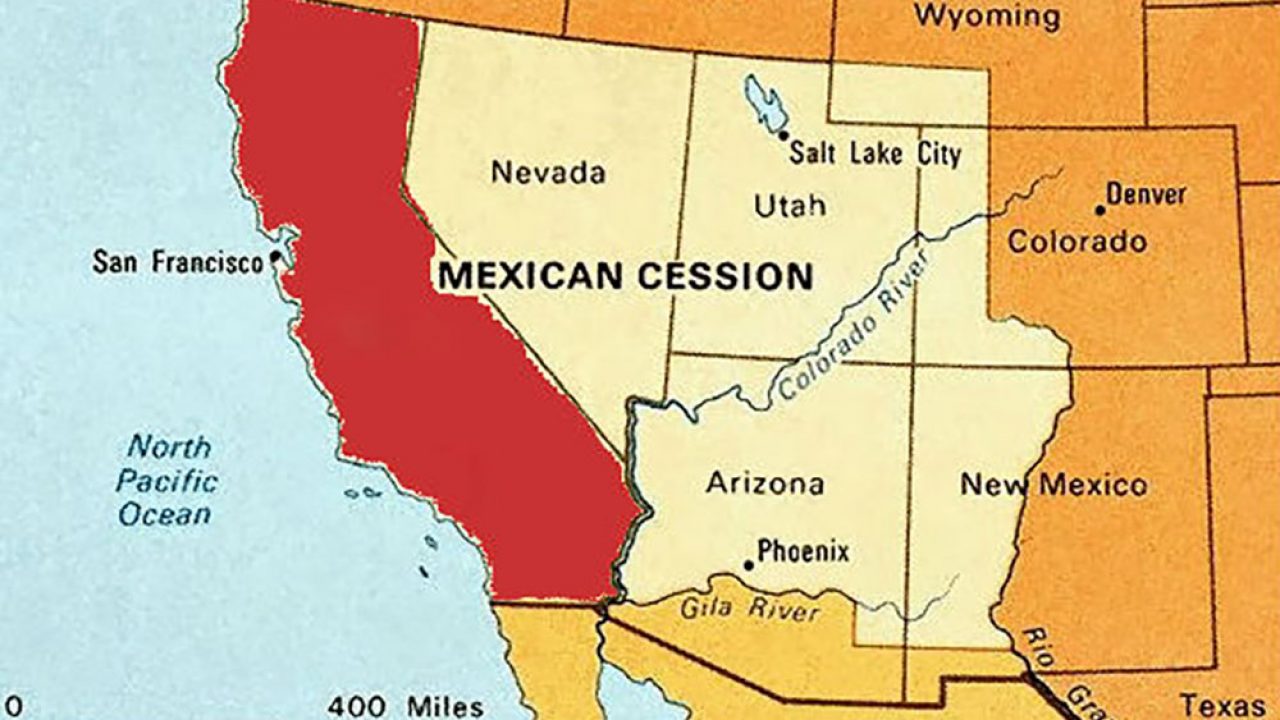
Under the terms of the treaty, Mexico ceded approximately 55% of its pre-war territory to the United States in exchange for $15 million and the assumption of Mexican debts to American citizens. This vast territorial acquisition, known as the Mexican Cession, included not only California but also all of present-day Nevada, Utah, and parts of Arizona, New Mexico, Colorado, and Wyoming. The Rio Grande was also officially recognized as the border between Texas and Mexico.
This monumental land transfer not only solidified the modern borders of the United States but also paved the way for the California Gold Rush, which began just days before the treaty was signed. The gold rush dramatically accelerated American settlement and statehood for California in 1850, profoundly shaping its future development and economic might. For those interested in the grand sweep of American history, this treaty represents one of its most significant turning points, creating a continental nation and setting the stage for its emergence as a global power.
The Lasting Legacy: Cultural Tapestry and Modern California
The transfer of California from Mexico to the United States was not merely a political or geographic event; it was a profound cultural transformation that continues to define the state today. For travelers, understanding this legacy enriches every aspect of a California experience, from its iconic landmarks to its vibrant cuisine and unique lifestyle.
Echoes of Mexico in California’s Culture and Landmarks
Despite becoming an American state, California never truly shed its Mexican and Spanish roots. The influence is evident in countless ways:
- Place Names: Many of California’s most famous cities and geographical features bear Spanish names, a direct link to its past: Los Angeles, San Francisco, San Diego, Santa Barbara, Sacramento, and the Sierra Nevada mountains, among many others.
- Architecture: The Spanish Colonial and Mission Revival architectural styles are iconic throughout the state. From the historic buildings in Old Town San Diego State Historic Park to modern homes and resorts, the red-tiled roofs, stucco walls, and arched walkways speak to a design heritage that predates American annexation. Many luxury hotels, such as the Ojai Valley Inn or the Hotel del Coronado, subtly (or explicitly) incorporate these timeless elements into their design, offering guests a stay rich in local character.
- Cuisine: Mexican food is deeply ingrained in California’s culinary identity, far beyond simple tacos and burritos. From sophisticated Baja-Med fusions to traditional regional dishes, the food scene is a delicious testament to Mexican heritage. Exploring local eateries is an essential part of any California travel guide.
- Festivals and Traditions: Celebrations like Cinco de Mayo and Día de los Muertos are widely observed, particularly in areas with large Hispanic populations, showcasing a continued connection to Mexican culture. Many towns host vibrant festivals that reflect this rich cultural fusion.
Exploring Historical Sites Today: A Journey Through Time
For history buffs and cultural explorers, California offers an abundance of attractions that tell the story of its Mexican period.
- The Missions: Visiting the Spanish Missions, from Mission San Juan Capistrano to Mission San Francisco de Solano in Sonoma, provides a tangible link to the earliest European settlements and their profound impact. Each mission offers unique insights into the architecture, religious practices, and daily life of the era.
- Presidios and Ranchos: The remnants of Spanish presidios, such as the Presidio of San Francisco or the historic Presidio of Monterey, highlight the military aspect of colonial rule. While few original ranchos remain fully intact, their legacy lives on in vast land grants, place names, and even some working ranches that preserve the spirit of that era, such as Rancho Guejito Vineyard.
- Historic City Centers: Wander through the oldest parts of Los Angeles at Olvera Street, or immerse yourself in the vibrant history of Old Town San Diego State Historic Park. These destinations are not just museums but living communities where history is palpable, offering insights into the transition from Mexican to American rule. They are ideal spots to explore local culture, sample authentic food, and find unique souvenirs.
Planning Your Visit: Experiencing California’s Rich Heritage
When planning a trip to California, consider incorporating these historical threads into your itinerary. Beyond the well-known attractions like Disneyland or the Golden Gate Bridge, a deeper dive into the state’s heritage offers a more nuanced and rewarding experience.
- Accommodation: Look for boutique hotels and resorts in historic districts that often reflect Spanish Colonial or Mission Revival architecture, providing a charming and culturally immersive stay. Many offer modern amenities while retaining their historical ambiance. You can compare reviews and booking options on our site for the best deals.
- Culinary Tours: Embark on food tours in cities like San Diego or Los Angeles to discover the authentic flavors of Mexican California. From street tacos to fine dining, the diversity is incredible.
- Cultural Experiences: Check local event listings for festivals, art exhibits, and performances that celebrate the state’s diverse heritage. Many museums, like the California State Parks system, offer guided tours and educational programs that illuminate the complexities of California’s past.
In conclusion, Mexico lost California on February 2, 1848, with the signing of the Treaty of Guadalupe Hidalgo. This event was the culmination of centuries of exploration, colonization, and national ambition. Yet, the story doesn’t end there. The legacy of Mexican California continues to thrive, woven into the very fabric of the state’s identity. For anyone seeking an authentic travel experience, exploring these historical layers offers a profound connection to the heart and soul of this remarkable destination. It’s a journey not just through space, but through time, revealing the enduring impact of a pivotal moment in history on the vibrant, multicultural California we know today.
LifeOutOfTheBox is a participant in the Amazon Services LLC Associates Program, an affiliate advertising program designed to provide a means for sites to earn advertising fees by advertising and linking to Amazon.com. Amazon, the Amazon logo, AmazonSupply, and the AmazonSupply logo are trademarks of Amazon.com, Inc. or its affiliates. As an Amazon Associate we earn affiliate commissions from qualifying purchases.