
The ratification of the 13th Amendment to the United States Constitution is a pivotal moment in American history, marking the abolition of slavery. While the amendment was officially ratified by the required number of states in December 1865, the journey for every state to formally adopt this monumental change was not always immediate or straightforward. For some states, particularly those in the former Confederacy, the process involved complex political dynamics and a significant period of reckoning. Understanding when a state like Mississippi ratified the 13th Amendment offers a crucial lens through which to view the lingering effects of the Civil War and the subsequent era of Reconstruction.
The Path to Abolition: A National Context
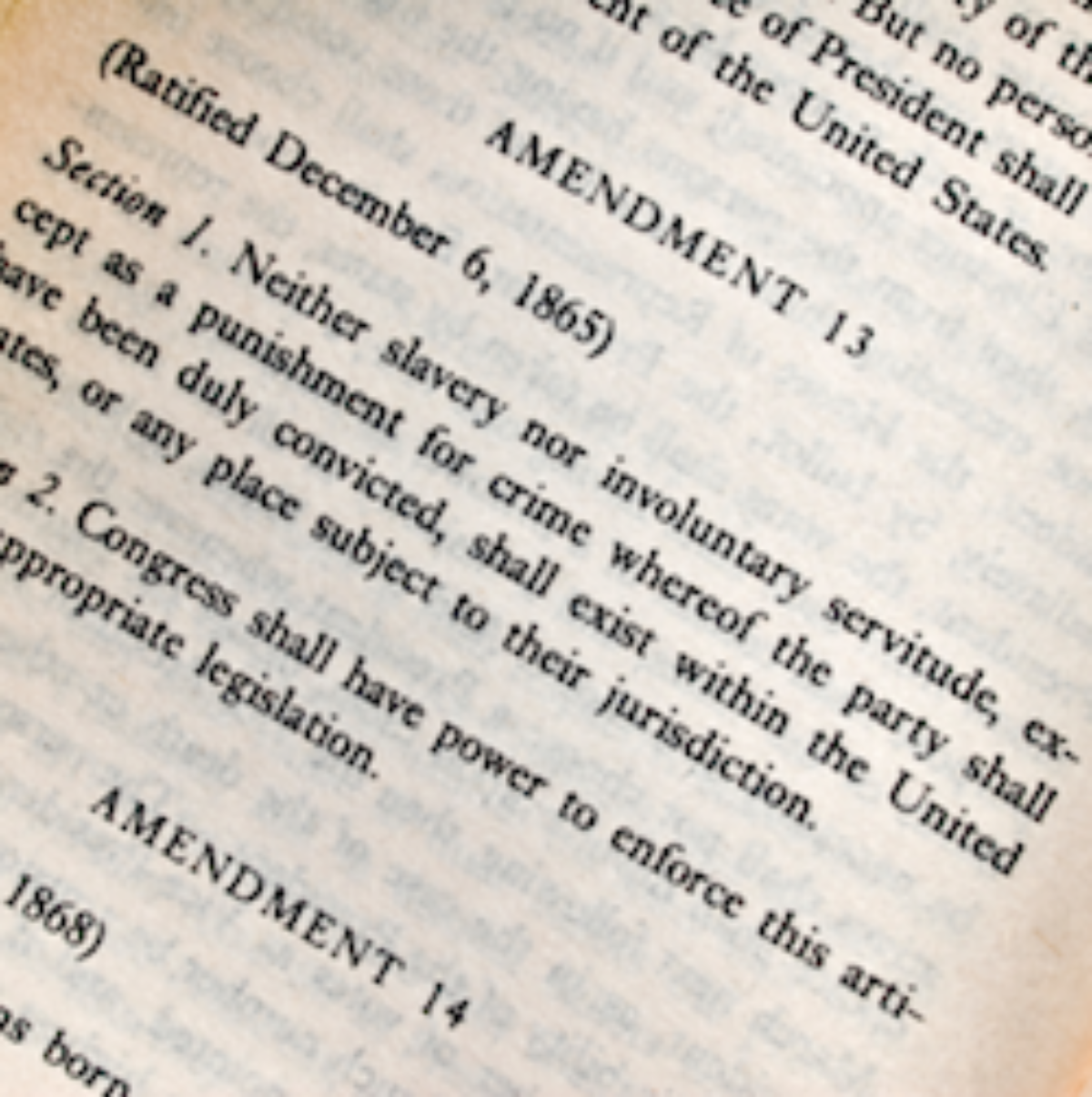
The 13th Amendment, proposed by Congress in January 1865 and ratified by the requisite three-fourths of the states by December 6, 1865, declared that “neither slavery nor involuntary servitude, except as a punishment for crime whereof the party shall have been duly convicted, shall exist within the United States, or any place subject to their jurisdiction.” This constitutional declaration was a direct consequence of the Union victory in the Civil War and the culmination of decades of anti-slavery activism.
The Emancipation Proclamation, issued by President Abraham Lincoln in 1863, had already declared slaves in Confederate-held territory to be free. However, the Proclamation’s reach was limited by the ongoing conflict and did not apply to border states loyal to the Union or to areas of the Confederacy already under Union control. The 13th Amendment provided a permanent and nationwide constitutional solution to the issue of slavery.
The Significance of Constitutional Amendment
A constitutional amendment is the highest form of legal change in the United States. It requires a rigorous process: proposal by two-thirds of both the House of Representatives and the Senate, followed by ratification by three-fourths of the state legislatures. This deliberate and challenging pathway underscores the profound and lasting impact the 13th Amendment was intended to have. It wasn’t merely a piece of legislation; it was a fundamental redefinition of American citizenship and freedom, enshrined in the nation’s foundational document. The amendment’s passage marked a definitive end to the institution that had been a cornerstone of the Southern economy and society for centuries.
Mississippi’s Delayed Ratification: A Complex Legacy
Mississippi, as a leading state in the secession of Southern states and a major slaveholding territory, had a particularly intricate path to ratifying the 13th Amendment. The process was not a swift endorsement of the amendment’s principles but rather a consequence of the Reconstruction policies imposed by the federal government following the Confederacy’s defeat.
Following the surrender of Confederate forces in April 1865, President Andrew Johnson, who succeeded Lincoln, began the process of readmitting the former Confederate states back into the Union. His Reconstruction plan was relatively lenient and focused on requiring the states to nullify their secession ordinances and ratify the 13th Amendment. However, many of these states, including Mississippi, resisted full compliance or sought to circumvent the spirit of the amendment.
The Provisional Government and Federal Mandate
In Mississippi, a provisional government was established under the authority of the federal government. President Johnson appointed William L. Sharkey as provisional governor. Sharkey’s primary tasks were to organize elections for a state constitutional convention and to ensure that the state legislature would take the necessary steps to rejoin the Union. This included the crucial act of ratifying the 13th Amendment.

The state constitution of 1865, drafted by a convention dominated by pre-war white elites and new arrivals, reflected the complex and often contradictory aims of the era. While it acknowledged the abolition of slavery, its provisions and the subsequent actions of the legislature revealed a deep reluctance to embrace the full implications of Black freedom and equality.
The actual vote for ratification in Mississippi was delayed until the state legislature convened. The 1865 Mississippi legislature, elected under the provisional government, was comprised entirely of white men, many of whom had been prominent figures before and during the Confederacy. Their decision to ratify the 13th Amendment was not a spontaneous embrace of civil rights but a pragmatic, albeit reluctant, acceptance of the terms of re-entry into the United States.
On December 22, 1865, the Mississippi legislature officially ratified the 13th Amendment. This date is significant because it places Mississippi among the later states to formally adopt the amendment, long after the initial nationwide ratification. This delay underscores the deep societal divisions and the resistance to fundamental change that characterized the post-war South. It highlights that while the legal framework for abolition was established, the practical and social realities of freedom were still being contested.
The Aftermath: Black Codes and Continued Struggle
The ratification of the 13th Amendment by Mississippi, while a constitutional necessity for rejoining the Union, did not immediately usher in an era of true equality or freedom for newly emancipated African Americans. In fact, in the same legislative session that ratified the 13th Amendment, the Mississippi legislature passed a series of draconian laws known as the “Black Codes.”
These codes were designed to control and restrict the labor and lives of newly freed people. They imposed severe limitations on where Black individuals could travel, what professions they could enter, and how they could assemble. The Black Codes effectively attempted to recreate a system of forced labor and social control that bore a striking resemblance to slavery. For example, the vagrancy laws within the Black Codes could lead to the arrest of unemployed Black individuals, who could then be fined and forced to work for their white employers to pay off the debt.
Reconstruction and Federal Intervention
The passage of the Black Codes in Mississippi and other Southern states provoked outrage in the North and led to a more forceful federal intervention in Reconstruction. Congress, dominated by Radical Republicans, viewed the Black Codes as a violation of the spirit and intent of the 13th Amendment and a dangerous regression. This led to the passage of further civil rights legislation, including the Civil Rights Act of 1866, and the proposal of the 14th and 15th Amendments, which aimed to establish birthright citizenship and voting rights for Black men, respectively.
Mississippi, along with other former Confederate states, was placed under military rule during this more radical phase of Reconstruction. The state was required to adopt new constitutions that guaranteed civil rights for Black citizens and grant them suffrage before being fully readmitted to the Union. Mississippi’s current constitution, adopted in 1890, was a product of the post-Reconstruction era and, as historians have noted, included provisions designed to disenfranchise Black voters.

The Enduring Significance of the 13th Amendment
The story of Mississippi’s ratification of the 13th Amendment is far more than a dry historical footnote. It is a narrative that reveals the profound struggle for freedom and equality in the United States. The delay in ratification, coupled with the subsequent enactment of the Black Codes, illustrates the deep-seated resistance to racial justice that persisted even after the legal abolition of slavery.
The 13th Amendment stands as a monumental achievement, a testament to the moral progress and the eventual triumph of abolitionist ideals. However, its implementation and the subsequent fight for its full realization, particularly in states like Mississippi, highlight the ongoing evolution of American democracy. The amendment’s legacy is intertwined with the broader struggle for civil rights, reminding us that constitutional amendments are often just the first step in a long and arduous journey towards a more just and equitable society. The historical landscape of Mississippi, from its plantation heritage to its civil rights landmarks, serves as a potent reminder of this enduring struggle.
LifeOutOfTheBox is a participant in the Amazon Services LLC Associates Program, an affiliate advertising program designed to provide a means for sites to earn advertising fees by advertising and linking to Amazon.com. Amazon, the Amazon logo, AmazonSupply, and the AmazonSupply logo are trademarks of Amazon.com, Inc. or its affiliates. As an Amazon Associate we earn affiliate commissions from qualifying purchases.