
The story of a sports team is often more than just about wins and losses; it’s a saga deeply woven into the fabric of a city’s identity, its culture, and its collective memory. The relocation of the Brooklyn Dodgers to Los Angeles stands as one of the most poignant and transformative moments in American sports history, an event that reshaped two major metropolitan areas and left an indelible mark on the national consciousness. For travelers and history enthusiasts, understanding this move offers a unique lens through which to explore urban development, cultural shifts, and the enduring power of community spirit. This pivotal event, which saw the beloved team play its last season in Brooklyn in 1957 before relocating for the 1958 season, fundamentally altered the landscape of professional baseball and redefined what it meant to be a fan.
The Heart of Brooklyn: A Legacy Etched in Stone and Spirit
To truly grasp the magnitude of the Dodgers’ departure, one must first appreciate their deep roots in Brooklyn. For over half a century, the team wasn’t just a baseball club; it was an extension of the borough itself – diverse, resilient, and fiercely loyal.
Ebbets Field: More Than Just a Ballpark
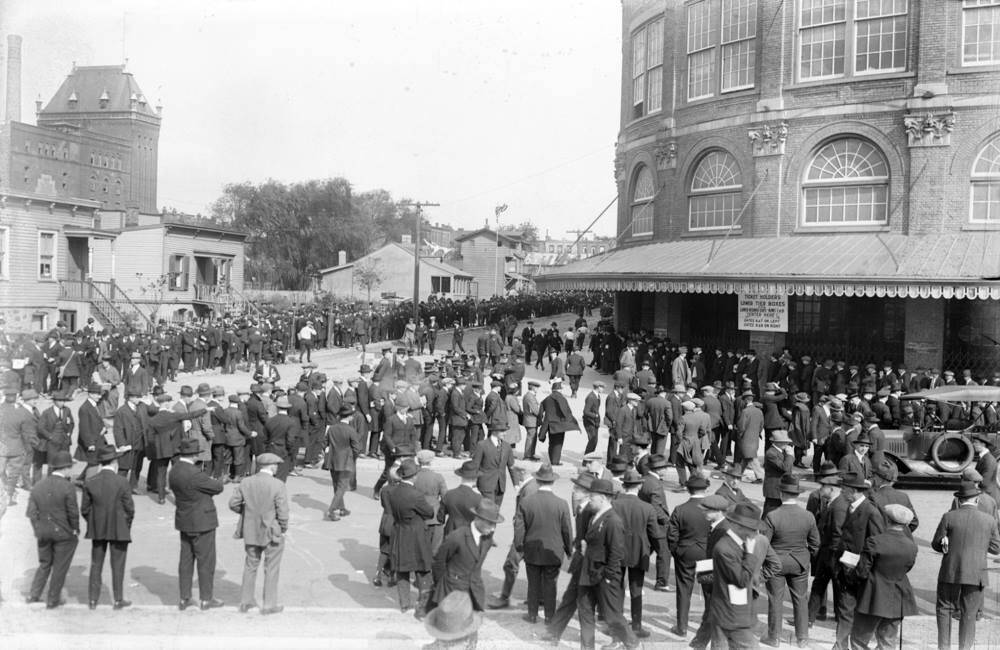
From 1913 until 1957, Ebbets Field was the sacred ground where the Brooklyn Dodgers played, and it was far more than a mere stadium. It was a landmark, a community hub, and a spiritual home for generations of fans. Nestled within the residential Flatbush neighborhood, Ebbets Field had an intimacy that modern, sprawling arenas often lack. Fans famously had unique vantage points, including rooftop seats across the street, allowing the roar of the crowd to spill out into the neighborhood streets, creating an electric atmosphere.
The Dodgers, often affectionately called “The Bums” due to their historical penchant for coming up short in the World Series, embodied the underdog spirit of Brooklyn. Their fans, known for their colorful personalities and unwavering devotion, became as famous as the players themselves. This era was defined by legendary figures like Jackie Robinson, whose breaking of the color barrier in 1947 transcended sports, making Ebbets Field and the Brooklyn Dodgers a crucible of social change and a beacon of hope for equality. Robinson’s courageous journey under the Dodgers’ banner resonated deeply with the diverse working-class communities of Brooklyn, cementing the team’s place not just in sports history but in the broader American civil rights movement.

Visiting Brooklyn today allows travelers to connect with this rich history. While Ebbets Field no longer stands, the spirit of the Dodgers permeates the borough’s numerous vibrant neighborhoods. Historical markers and plaques commemorate the site, and the echoes of those fervent crowds can almost be heard amidst the brownstones and tree-lined streets. Exploring Brooklyn’s local culture, from its iconic pizzerias and historic architecture to its bustling markets and serene parks like Prospect Park, offers a tangible link to the borough that defined an era of baseball.
The Unthinkable Decision: Why the Dodgers Left
The idea that the Brooklyn Dodgers could ever leave Brooklyn was once unfathomable. Yet, beneath the surface of triumphs and passionate fandom, economic realities and urban development conflicts were brewing, setting the stage for one of the most heartbreaking decisions in sports history.
Walter O’Malley’s Vision and the Stadium Dilemma
The primary catalyst for the move was the relentless vision of Brooklyn Dodgers owner Walter O’Malley. A shrewd businessman, O’Malley recognized that Ebbets Field, while beloved, was an aging relic. It lacked adequate parking, was difficult to access for a burgeoning car-centric society, and offered limited revenue streams compared to the modern stadiums being envisioned. He desperately sought to build a state-of-the-art, privately financed domed stadium at the intersection of the Long Island Rail Road and Brooklyn’s subway lines, near the Atlantic Yards in Downtown Brooklyn. His plan was innovative and forward-thinking, promising a better experience for fans and increased profitability for the team.
However, O’Malley’s ambition clashed directly with the urban planning philosophy of Robert Moses, New York City’s powerful “master builder.” Moses had his own vision for New York City and favored public projects. He insisted that any new stadium be publicly owned and located in Flushing Meadows, Queens, where Shea Stadium would later be built for the New York Mets. Crucially, Moses refused to help O’Malley acquire the land through eminent domain for a privately financed stadium in Brooklyn, effectively blocking his preferred plan. This stalemate, fueled by a clash of wills and differing visions for urban development, left O’Malley with a growing sense of frustration and limited options within New York City.
The Lure of the West Coast: A New Frontier
As O’Malley’s efforts in New York City stalled, a compelling opportunity emerged from the burgeoning West Coast. Los Angeles, a rapidly growing metropolis, was eager to establish itself as a major league city. It offered a vast, untapped market for professional baseball and a city government far more receptive to O’Malley’s stadium plans.
Los Angeles County Supervisor Kenneth Hahn spearheaded the effort to bring the Dodgers west, promising O’Malley a generous land deal in Chavez Ravine for a new, privately built stadium. This proposal not only addressed O’Malley’s financial and infrastructural concerns but also offered the allure of a pioneering venture in a vibrant new frontier.
A crucial factor that cemented the move was the willingness of the New York Giants, the Dodgers’ crosstown rivals, to also consider a move to California. The Giants faced similar stadium woes at the Polo Grounds and were enticed by an offer from San Francisco. MLB Commissioner Ford Frick was initially hesitant about approving a single team’s move across the continent, fearing it would leave the remaining team isolated geographically. However, a dual relocation to California – the Dodgers to Los Angeles and the Giants to San Francisco – made logistical and competitive sense, preserving the historic rivalry while expanding MLB’s footprint. With both teams committed, the path to the West Coast was clear.
The Definitive Move: 1957 and Beyond
The decision, once confirmed, sent shockwaves across the nation, triggering immense heartbreak in Brooklyn and immense excitement in Los Angeles. The last game played by the Brooklyn Dodgers at Ebbets Field on September 24, 1957, marked the end of an era.
A Farewell to Brooklyn, A Welcome to Los Angeles
The 1957 season was the last hurrah for the Brooklyn Dodgers. After their final game, the team officially relocated, beginning their new chapter as the Los Angeles Dodgers for the 1958 season. The departure left a gaping hole in the soul of Brooklyn. For many, it felt like a betrayal, a loss of a vital piece of their collective identity. The once vibrant atmosphere around Ebbets Field faded, and the physical landmark itself was eventually demolished in 1960 to make way for the Ebbets Field Apartments, a painful symbol of change for heartbroken fans. This narrative serves as a poignant reminder for travelers about how urban landscapes evolve and how communities grapple with the disappearance of beloved landmarks.
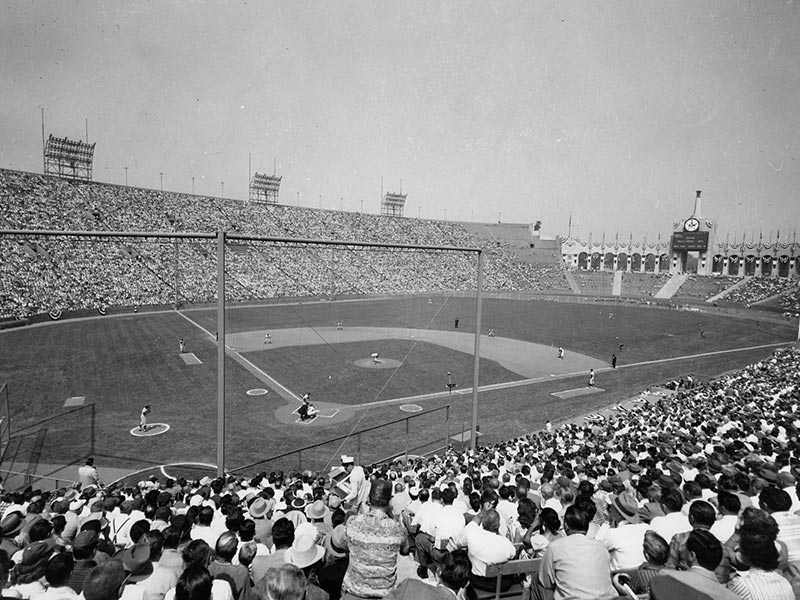
Conversely, the arrival of the Dodgers in Los Angeles was met with unbridled enthusiasm. It signaled Los Angeles’ arrival as a true major league city, ready to embrace the big time. For their first four seasons (1958-1961), while their permanent home was under construction, the Los Angeles Dodgers played at the immense Los Angeles Memorial Coliseum, a storied venue more accustomed to track and field or football. Despite the unconventional baseball setup in the Coliseum, the fans flocked, eager to welcome their new team and prove their worthiness as a baseball city. This temporary arrangement highlighted the immense excitement and civic pride surrounding the Dodgers’ arrival.
Dodger Stadium: A Modern Marvel and a New Home
The culmination of Walter O’Malley’s vision and the city of Los Angeles’ commitment came to fruition with the opening of Dodger Stadium in 1962. Carved into the hills of Chavez Ravine, it was a marvel of modern architecture and engineering for its time. Designed with the automobile in mind, it featured vast parking lots and multi-level entry points, a stark contrast to the dense urban setting of Ebbets Field.
Dodger Stadium quickly became an iconic landmark in Los Angeles, known for its picturesque setting, vibrant color scheme, and fan-friendly design. It represented a new era for baseball, embodying the expansive, forward-looking spirit of Southern California. The Los Angeles Dodgers wasted no time in establishing a new legacy, winning the World Series in only their second year at Dodger Stadium in 1963, and again in 1965. The team, now synonymous with Los Angeles, continued to be a perennial contender, solidifying its place as one of baseball’s most successful and storied franchises.
Echoes and Legacies: The Dodgers’ Enduring Impact on Travel and Culture
The Brooklyn Dodgers’ move wasn’t just a geographical shift; it was a cultural earthquake whose aftershocks are still felt today, influencing how we perceive urban development, sports fandom, and historical memory.
Visiting the Sites: A Journey Through Baseball History
For travelers fascinated by the intersection of sports and history, exploring the past and present homes of the Dodgers offers a unique journey.
In Brooklyn, while Ebbets Field is gone, its memory is preserved in historical markers and the collective consciousness of the borough. A visit to Brooklyn today is an immersion in a vibrant, diverse community that carries the weight of its rich past with pride. Tourists can explore iconic landmarks like the Brooklyn Bridge, stroll through the trendy neighborhoods of DUMBO and Williamsburg, or delve into the borough’s diverse culinary scene. Remembering the Dodgers’ legacy while experiencing modern Brooklyn offers a poignant contrast between what was and what is, highlighting the constant evolution of urban spaces. Local tours often weave in stories of the Dodgers, ensuring their spirit endures.
In Los Angeles, Dodger Stadium remains a must-visit landmark. Attending a game is an iconic LA experience, offering spectacular views of the cityscape, including Downtown LA and the San Gabriel Mountains. Stadium tours provide insights into its history, architecture, and the team’s many championships. Beyond the ballpark, visitors can explore the city’s other famous attractions like Hollywood, Griffith Observatory, and its beautiful beaches, combining a love for sports with a comprehensive travel experience in Southern California. The stadium itself is a testament to the city’s ambition and ability to attract and sustain major cultural institutions.
The Broader Narrative: Sports, Urban Development, and the American Dream
The Brooklyn Dodgers’ move is more than a baseball story; it’s a powerful narrative about urban development, the shifting demographics of post-war America, and the pursuit of economic opportunity. It underscores how professional sports teams are deeply entwined with the economic and social fabric of their cities, acting as cultural anchors and drivers of civic pride. The saga illustrates the complex interplay between private enterprise, public policy, and community sentiment that shapes our cities.
This historical event also speaks to the broader concept of the American Dream – a journey westward in search of new beginnings and grander opportunities. The migration of the Dodgers from the established East Coast to the burgeoning West Coast mirrored the movement of millions of Americans seeking a different lifestyle and new horizons. It reflected the ascendance of California as a major economic and cultural power, challenging the traditional dominance of the Northeast.
In essence, the move of the Brooklyn Dodgers to Los Angeles in 1958 was a watershed moment that transcended sports. It left a profound legacy of heartbreak and renewal, serving as a powerful reminder of how deeply sports teams are embedded in a city’s identity. For those passionate about travel, history, and culture, exploring the narratives of both Brooklyn and Los Angeles through the lens of this monumental relocation offers a rich, layered understanding of American life and the ever-evolving landscapes we call home. It invites us to reflect on the places we visit, not just as destinations, but as living repositories of stories, triumphs, and the occasional, unforgettable heartache.
LifeOutOfTheBox is a participant in the Amazon Services LLC Associates Program, an affiliate advertising program designed to provide a means for sites to earn advertising fees by advertising and linking to Amazon.com. Amazon, the Amazon logo, AmazonSupply, and the AmazonSupply logo are trademarks of Amazon.com, Inc. or its affiliates. As an Amazon Associate we earn affiliate commissions from qualifying purchases.