
The California Gold Rush stands as one of the most pivotal historical events in the shaping of the United States, particularly the Western frontier. It was a period of unprecedented human migration and economic transformation, triggered by a serendipitous discovery that sent ripples across the globe. Understanding its timeline is crucial to appreciating its profound impact on the landscape, demography, and cultural identity of California and beyond. While often romanticized as a singular moment, the Gold Rush was a dynamic era that unfolded over several years, each phase bringing distinct characteristics and consequences. It officially commenced in January 1848 and, while its most feverish period largely subsided by the mid-1850s, its legacy continued to shape the region for decades.

The Spark of Discovery: James W. Marshall and Sutter’s Mill
The genesis of the California Gold Rush can be precisely dated to January 24, 1848. On this fateful day, James W. Marshall, a carpenter working for Swiss pioneer John Sutter, made an astonishing discovery. Marshall was overseeing the construction of a sawmill on the American River at a site known as Coloma (approximately 36 miles northeast of modern-day Sacramento). While inspecting the mill’s tailrace, a channel that carried water away from the water wheel, he noticed shiny flecks in the streambed. These flecks, upon closer inspection, proved to be gold.
The Initial Find and Its Immediate Aftermath
Marshall’s discovery at Sutter’s Mill initially caused a degree of excitement, but also attempts at secrecy. John Sutter, a prominent landowner with vast agricultural ambitions, understood the potential disruption that a widespread gold discovery could bring to his nascent empire. He attempted to keep the news quiet, fearing that his workforce would abandon their duties for the goldfields. However, such a monumental secret was impossible to contain. Word began to trickle out, slowly at first, but with increasing momentum. Crucially, the discovery happened just days before the Treaty of Guadalupe Hidalgo was signed in February 1848, officially ending the Mexican-American War and ceding California to the United States. This timing meant that the vast mineral wealth of California would primarily benefit the new American proprietors, setting the stage for its rapid integration into the Union.
The Spread of the News
Despite Sutter’s efforts, the news spread like wildfire, fueled by various individuals and publications. One of the most significant catalysts was Samuel Brannan, a storekeeper and newspaper publisher in San Francisco. In May 1848, Brannan famously paraded through the streets of San Francisco with a bottle of gold dust, shouting, “Gold! Gold! Gold from the American River!” This public demonstration served as irrefutable proof, sending the city into a frenzy. Soon, ships in San Francisco Bay were abandoned by their crews, merchants closed their shops, and farmers left their fields—all drawn by the allure of instant riches. Within months, news had reached the East Coast of the United States, primarily through letters from returning miners and official reports, including a confirmation from President James K. Polk in his State of the Union address in December 1848. This presidential confirmation transformed a local phenomenon into a national obsession, setting the stage for the massive migration of 1849.
The Peak Years of the Gold Rush (1849-1855)
The period between 1849 and the mid-1850s represents the most intense and iconic phase of the California Gold Rush. It was characterized by an unprecedented influx of humanity, a wild proliferation of mining camps, and the rapid, often chaotic, development of California’s interior.
The Influx of the ‘Forty-Niners’
The year 1849 saw the arrival of the legendary “Forty-Niners”—tens of thousands of prospectors, adventurers, and entrepreneurs from every corner of the globe. They came by various arduous routes. Some embarked on long and dangerous sea voyages around Cape Horn, a journey that could take five to eight months. Others braved the shorter, but equally perilous, route across the Isthmus of Panama, involving a jungle trek followed by another sea voyage up the Pacific coast. The most common route, however, was overland, across the vast North American continent, following trails blazed by pioneers like the Oregon Trail and the California Trail. These overland journeys, often beginning in states like Missouri, were fraught with dangers from disease, harsh weather, and indigenous encounters, taking four to six months. By the end of 1849, the population of California had swelled from around 14,000 non-native inhabitants to over 100,000, creating an instant demand for supplies, infrastructure, and governance.
Mining Techniques and Early Settlements
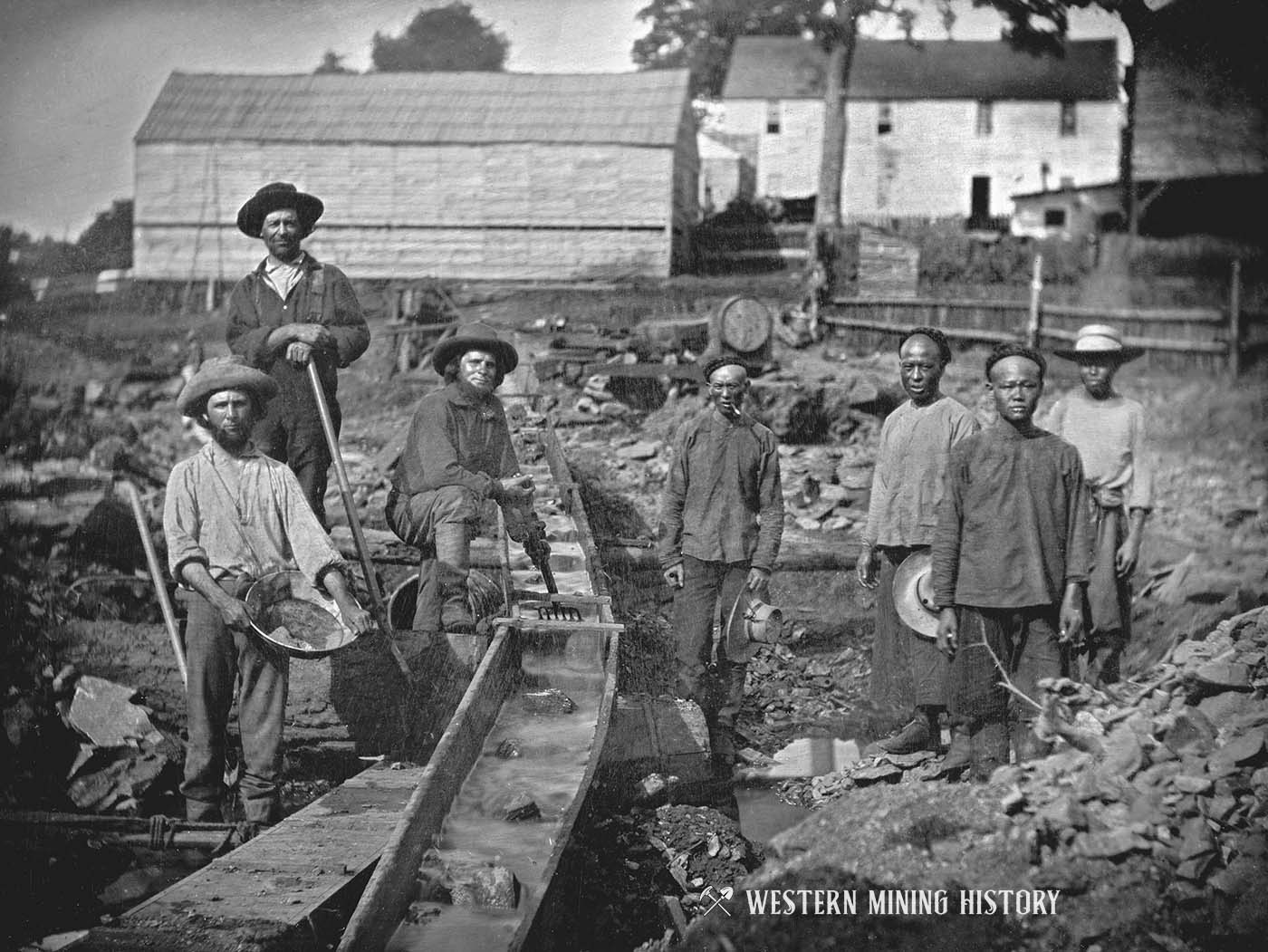
Early gold mining during this period was predominantly “placer mining,” a relatively simple technique where gold-bearing sand and gravel (alluvium) were processed to separate the heavier gold particles. Methods ranged from basic panning in streams and rivers, using a pan to swirl water and sediment, to more advanced techniques like “rockers” (cradles), “long toms,” and sluice boxes, which allowed miners to process larger quantities of material. These techniques were primarily employed in the rich alluvial deposits found in the riverbeds and hillsides of the Sierra Nevada foothills, a region that became known as the “Mother Lode.”
The immediate consequence of this intense mining activity was the explosive growth of mining camps. These were often transient, makeshift settlements that sprung up overnight wherever gold was discovered. Many of these camps, like Columbia, Sonora, and Nevada City, evolved from rough collections of tents and shanties into bustling towns with stores, saloons, banks, and even theaters, reflecting the complex social fabric emerging in the goldfields. These nascent urban centers were a testament to the boom-and-bust nature of the Gold Rush, with their fortunes tied directly to the availability of gold.
The Gold Rush’s Lasting Legacy: Shaping California’s Landscape and Identity
While the feverish search for gold eventually waned, the legacy of the California Gold Rush profoundly and permanently reshaped California, laying the groundwork for its future as a vibrant, diverse, and economically powerful state. Its impact is visible in the physical landscape, the demographic makeup, and the economic infrastructure that emerged.
The Birth and Growth of Key Cities
Before 1848, San Francisco was a small village called Yerba Buena. The Gold Rush transformed it almost overnight into a major port city, serving as the primary gateway for prospectors and supplies arriving by sea. Its population exploded, and its waterfront expanded dramatically through landfill projects. Similarly, Sacramento, strategically located at the confluence of the Sacramento River and the American River (near Sutter’s Mill), became a vital supply center for the northern goldfields and quickly developed into a significant inland city, eventually becoming the state capital. Many other towns in the Mother Lode region, though some later dwindled, owe their very existence and initial boom to the Gold Rush. These urban centers stand as enduring landmarks, their historical districts and foundational layouts telling tales of their Gold Rush origins.
Transformed Geography and Infrastructure
The Gold Rush spurred an immense transformation of California’s geography and the development of rudimentary but crucial infrastructure. Roads and trails were blazed to connect the mines to supply centers. Ports were developed and expanded. The demand for water for mining led to the construction of elaborate ditch and flume systems, channeling water across vast distances—some of these engineering feats still exist in various forms today. While much of the early mining activity caused significant environmental disruption (especially with later hydraulic mining), the need to transport goods and people ultimately led to investments in transportation networks that would serve as the backbone for future development, including early railroads. The very earth was moved, rivers were diverted, and hillsides were stripped, forever altering the landscape in specific regions.
Cultural and Demographic Shifts
The Gold Rush brought an unprecedented wave of immigrants from across the globe, fundamentally altering California’s demographic profile. Alongside Americans from the East Coast, significant populations arrived from China, Europe (especially Ireland, Germany, and France), Latin America (particularly Mexico and Chile), and Australia. This incredible diversity forged a unique multicultural society, albeit one often marked by prejudice and conflict. The Gold Rush also rapidly accelerated California’s path to statehood in 1850, skipping the territorial phase due to its explosive population growth. The “can-do” spirit, individualism, and pursuit of opportunity characteristic of the Gold Rush became deeply ingrained in the Californian identity, a legacy that continues to influence its ethos of innovation and entrepreneurship.
End of the Gold Rush Era: From Placer to Industrial Mining
By the mid-1850s, the easily accessible placer gold began to dwindle. The initial phase of individual prospectors making quick fortunes largely came to an end. This transition marked a shift from individual enterprise to more capital-intensive and industrially organized mining operations, altering the nature of the industry and its environmental impact.
The Transition to Hydraulic and Hardrock Mining
As placer deposits became exhausted, miners turned to more technologically advanced and destructive methods to extract gold from less accessible sources. Hydraulic mining, which began gaining prominence in the mid-1850s and peaked in the 1870s, involved using powerful jets of water to blast away hillsides, washing the gold-bearing gravel into sluices. While incredibly effective, this method caused catastrophic environmental damage, silting rivers, altering landscapes, and destroying farmland downstream. Simultaneously, the discovery of gold veins embedded in hard rock led to “hardrock mining,” requiring deep shafts, tunnels, and complex machinery to extract quartz and other ore. This transition shifted the labor force from independent miners to wage laborers working for large mining companies. The capital required for these operations signaled the end of the romantic era of the individual prospector.
Environmental Impact and Regulation
The environmental devastation wrought by hydraulic mining, particularly in the Yuba and Sacramento River systems, eventually led to public outcry and legal battles. Farmers in the Central Valley, whose lands were being buried under tons of mining debris (known as “slickens”), sued mining companies. The landmark 1884 “Sawyer Decision” effectively banned hydraulic mining in California, a crucial early victory for environmental protection. While hardrock mining continued for many years, this ruling marked a significant turning point, closing a chapter on one of the most destructive aspects of the Gold Rush era and forcing a re-evaluation of industrial practices.
Preserving the Past: Gold Rush Landmarks Today
Today, the California Gold Rush is commemorated through a network of meticulously preserved historic sites, museums, and state parks that offer visitors a tangible connection to this transformative period. These landmarks serve as vital educational resources, ensuring that the stories of the Forty-Niners and the impact of the gold discovery endure.
Historic Sites and State Parks
Numerous sites across California allow visitors to step back in time. Columbia State Historic Park in Tuolumne County is perhaps the best example, a remarkably preserved Gold Rush town where visitors can explore authentic buildings, watch costumed docents demonstrate historic trades, and even try their hand at gold panning. It offers a vivid, immersive experience of what life was like in a bustling mining town of the 1850s. Sutter’s Mill in Coloma is now part of Marshall Gold Discovery State Historic Park, where a replica of the original mill stands, and monuments mark Marshall’s discovery site. These parks protect not only structures but also the very landscape that bore witness to the rush, including remnants of old mining operations.
Other significant sites include Bodie State Historic Park, a genuine ghost town preserved in a state of “arrested decay,” offering a stark glimpse into a hardrock mining town. Empire Mine State Historic Park near Grass Valley showcases one of California’s oldest and richest hardrock gold mines, complete with historic buildings and access to a mine shaft. Old Sacramento State Historic Park preserves the historical core of Sacramento, showcasing the architecture and urban development spurred by the Gold Rush as the city grew into a major supply hub.

Museums and Interpretive Centers
Beyond the physical sites, various museums and interpretive centers offer in-depth narratives and artifacts from the Gold Rush era. The California State Mining and Mineral Museum in Mariposa houses extensive collections of gold specimens and mining equipment. The California History Museum in Sacramento dedicates significant exhibits to the Gold Rush, providing context for the state’s rapid development. These institutions ensure that the complex story of the Gold Rush—its initial spark, its boom-and-bust cycle, its demographic changes, and its enduring impact—is accessible to future generations, allowing us to understand “when” it happened not just as a date, but as a epochal period in the history of a landmark state.
LifeOutOfTheBox is a participant in the Amazon Services LLC Associates Program, an affiliate advertising program designed to provide a means for sites to earn advertising fees by advertising and linking to Amazon.com. Amazon, the Amazon logo, AmazonSupply, and the AmazonSupply logo are trademarks of Amazon.com, Inc. or its affiliates. As an Amazon Associate we earn affiliate commissions from qualifying purchases.