
The year 1848 marks a pivotal moment in American history, a turning point that irrevocably altered the landscape, economy, and demographic fabric of a nascent nation. While the allure of gold had captivated humanity for millennia, no single event quite matched the feverish intensity and global impact of the California Gold Rush. Its beginning wasn’t a grand proclamation but a serendipitous discovery, a shimmering flake in a humble riverbed that would set off a chain reaction across continents. To pinpoint the exact genesis of this monumental phenomenon, we must travel back to a crisp winter morning in the foothills of the Sierra Nevada, where destiny awaited a carpenter and a dream of an agricultural empire.
The official start of the California Gold Rush is universally recognized as January 24, 1848. On this fateful day, a diligent craftsman named James W. Marshall made an extraordinary find. Working for Swiss pioneer John Sutter, Marshall was overseeing the construction of a sawmill along the south fork of the American River in a quiet valley that would later become known as Coloma, California. As he inspected the tailrace of the mill for debris, he noticed something sparkling in the cold water – small, yellowish flakes that, upon closer inspection, proved to be gold. This unassuming discovery, initially viewed with skepticism and even annoyance by Sutter, would soon unleash a torrent of human ambition, migration, and transformation that echoed across the globe and continues to shape the Golden State to this very day.

The Spark That Ignited a Nation: James W. Marshall’s Discovery
The story of the California Gold Rush is intrinsically linked to the individuals whose actions, both intentional and accidental, set its monumental gears in motion. James W. Marshall’s fateful find was not just a historical date; it was the spark that ignited an inferno of opportunity, drawing hundreds of thousands to a remote, newly acquired territory on the Pacific coast.
John Sutter and Sutter’s Mill: An Unlikely Beginning
Before the glimmer of gold captured the world’s imagination, the landscape around Coloma was part of a larger vision held by John Sutter. A German-born Swiss pioneer, Sutter had arrived in California in 1839, establishing an expansive agricultural and commercial empire known as Sutter’s Fort near what is now Sacramento. His dream was to build a flourishing settlement based on farming, trade, and industry. To support his burgeoning empire, he commissioned James W. Marshall to construct a sawmill further up the American River. The lumber from this mill was crucial for expanding Sutter’s operations, from constructing new buildings to fabricating machinery.
When Marshall presented Sutter with the gold flakes, Sutter’s initial reaction was far from celebratory. He understood, perhaps more acutely than anyone else at the time, the destructive potential such a discovery held for his carefully planned agricultural enterprise. A gold rush would undoubtedly lead to a stampede of prospectors, disrupting his workforce, trampling his fields, and undermining his authority. He attempted to keep the discovery a secret, asking his workers to remain discreet. This initial attempt at containment, however, was as futile as trying to hold back a tidal wave. The secret of Sutter’s Mill was destined not to remain hidden.
Today, visitors can journey to Marshall Gold Discovery State Historic Park in Coloma, the very site where Marshall made his iconic find. This landmark offers a fascinating glimpse into the past, with reconstructed buildings, a working sawmill, and interpretive exhibits detailing the initial discovery and its immediate aftermath. For those planning a trip, accommodation options range from charming local bed-and-breakfasts to more modern hotels in nearby towns, allowing travelers to immerse themselves in this historically rich destination.
From Local Secret to Presidential Proclamation
Despite Sutter’s efforts, news of the gold discovery at his mill gradually seeped out. Workers on site, captivated by the prospect of riches, couldn’t contain their excitement. By March 1848, a local newspaper in San Francisco reported rumors of gold, though the initial reaction was one of skepticism. It wasn’t until a storekeeper named Sam Brannan, after personally verifying the find, famously paraded through the streets of San Francisco in May 1848, holding aloft a bottle filled with gold dust and shouting, “Gold! Gold! Gold from the American River!”, that the local population truly took notice. The city, then a small settlement, began to empty as men rushed to the goldfields. Ships were abandoned in the harbor as their crews deserted to seek their fortunes.

The most significant catalyst, however, came from the highest office in the land. In his December 5, 1848, address to Congress, President James K. Polk officially confirmed the discovery of vast quantities of gold in California. He even displayed actual samples of gold, sent from California, to underscore the veracity of his statement. This presidential endorsement, broadcast to the entire nation and beyond, removed all doubt and ignited a global frenzy. Suddenly, the remote territory of California became the focal point of the world’s imagination, a land of instant wealth and unparalleled opportunity. This announcement marked the true beginning of the global California Gold Rush, transitioning it from a local phenomenon to a mass migration of epic proportions.
The Great Migration: “Forty-Niners” and the Global Rush
The news of gold, once verified by the President of the United States, sent shockwaves across the globe. From every corner of the world, individuals—driven by desperation, ambition, or the sheer thirst for adventure—set their sights on California. These hopeful prospectors, who primarily arrived in 1849, earned the iconic moniker of “Forty-Niners.” Their arduous journeys were as diverse as their origins, shaping the very routes and infrastructure that would eventually define American expansion.
Treacherous Journeys: Overland and Sea Routes
The sheer distance and the primitive nature of travel in the mid-19th century meant that reaching the California goldfields was an undertaking of immense peril and endurance. Prospectors generally had two primary options, each fraught with its own set of dangers:
-
The Overland Trails: Tens of thousands of “Forty-Niners” chose the overland route, primarily following trails like the California Trail or the Santa Fe Trail. These journeys, often starting from staging points like St. Joseph or Independence, Missouri, covered thousands of miles across vast plains, treacherous mountains, and arid deserts. Travelers faced extreme weather, disease (cholera was rampant), starvation, and occasional conflicts with Native American tribes. The journey could take anywhere from four to six months, and many never made it, their graves dotting the landscape as a testament to the risks involved. For modern-day travelers, exploring sections of these historic trails offers a sobering perspective on the determination of the pioneers, with historical markers and museums providing context.
-
The Sea Routes: For those who could afford it, or who lived further afield, sea travel offered an alternative, though not necessarily safer, path. There were two main maritime options:
- Around Cape Horn: This was the longest route, involving a grueling four-to-eight-month voyage around the treacherous southern tip of South America. Ships faced violent storms, long periods of confinement, and the ever-present threat of scurvy and other diseases. While lengthy, it avoided the overland hardships.
- Across the Isthmus of Panama: A faster but often more dangerous route involved sailing to the Atlantic side of Panama, crossing the malaria-ridden jungle isthmus by foot or canoe, and then hoping to catch a ship on the Pacific side to California. This route was notorious for its rampant diseases and the difficulties of finding onward passage, as demand often far outstripped supply.
These incredible journeys transformed notions of travel and global connectivity. Many of the companies that facilitated these journeys were precursors to modern tourism operators, navigating complex logistics to move people and goods across vast distances.
Boomtowns and the Transformation of California
The influx of “Forty-Niners” had an immediate and dramatic impact on California’s landscape and population centers. Small settlements exploded into bustling “boomtowns” overnight. San Francisco, in particular, grew from a sleepy village of about 1,000 residents in 1848 to a vibrant city of 25,000 by 1850. It became the primary port of entry, a crucial supply hub, and a melting pot of cultures. The demand for accommodation in these burgeoning towns was astronomical, leading to exorbitant prices for everything from hotel suites to simple tent lodging. Entrepreneurs quickly capitalized on this, establishing restaurants, saloons, shops, and other services.
Many of these boomtowns, such as Sacramento, Nevada City, and Sonora, evolved into permanent cities, their street plans and historic buildings still reflecting their Gold Rush origins. Others, however, faded into obscurity, becoming poignant “ghost towns” when the gold ran out. Today, exploring these historic sites offers a unique experience for travelers. Visitors can stay in historic hotels that once catered to miners, dine in establishments that recall the era, and uncover the rich local culture of perseverance and ambition that defined the period. These landmarks serve as tangible reminders of a time when the pursuit of wealth reshaped an entire region.
Life in the Goldfields: Grit, Gold, and Unprecedented Growth
Life in the goldfields was a stark contrast to the romanticized visions of instant wealth that lured so many. It was a brutal existence, defined by back-breaking labor, rudimentary conditions, and the ever-present uncertainty of striking it rich or failing entirely. Yet, it was also a crucible of innovation, cultural exchange, and rapid societal development.
Pioneering Techniques and Harsh Realities
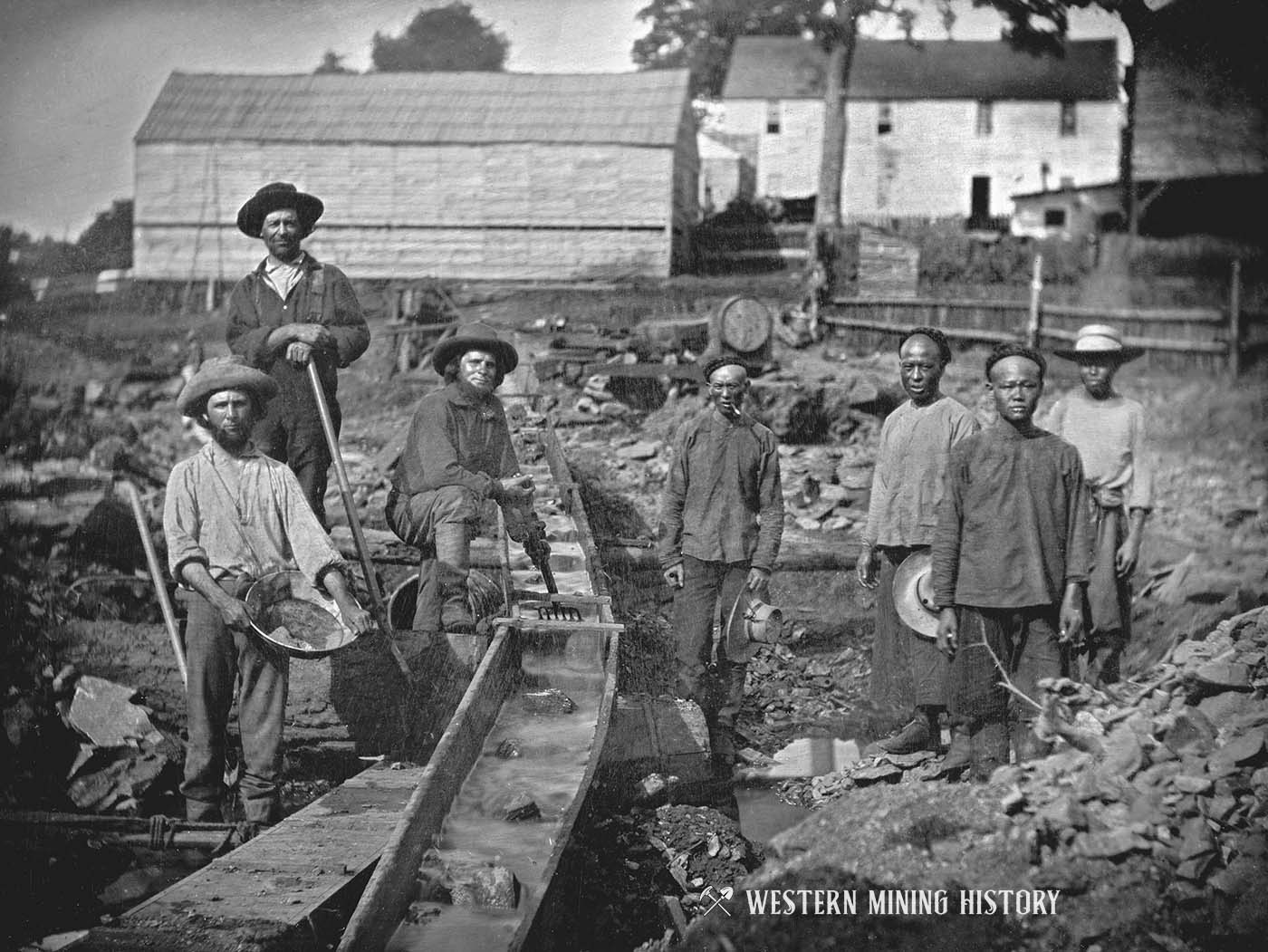
Early prospectors began with the simplest and most iconic method: panning. Using a pan, they would scoop up gravel and water from riverbeds, swirling it to separate the heavier gold flakes from lighter sediment. As the easier-to-reach surface gold diminished, miners developed more sophisticated techniques. Sluice boxes, long wooden troughs with riffles, allowed them to process larger quantities of material. Water was channeled through the box, washing away lighter gravel while gold settled in the riffles. Later, more industrial methods emerged, such as coyote mining (digging shafts) and, controversially, hydraulic mining, which used powerful jets of water to blast away hillsides. While incredibly efficient, hydraulic mining caused immense environmental damage, silting rivers and destroying agricultural land, leading to its eventual restriction.
Regardless of the method, the reality of mining was incredibly harsh. Miners faced grueling physical labor, often standing in frigid water for hours on end. Disease, particularly cholera, dysentery, and scurvy, was rampant due to poor sanitation and nutrition. Accidents were common, and lawlessness was a constant threat in the absence of established legal systems. The cost of living in the goldfields was astronomical; basic supplies were often imported and sold at exorbitant prices. A pickaxe, a loaf of bread, or a simple hotel room could cost many times its value elsewhere. Many came with dreams of riches but left with little more than experience, having spent their fortunes just to survive. This harsh lifestyle often tested the limits of human endurance.
A Melting Pot of Cultures and Lasting Societal Shifts
One of the most profound and enduring impacts of the Gold Rush was the unprecedented demographic shift it caused. People flocked to California not only from the United States but from every continent. Significant populations arrived from China, Europe (especially France, Germany, and the British Isles), Latin America (particularly Mexico and Chile), and Australia. This created an extraordinary cultural melting pot, with diverse languages, traditions, and cuisines coexisting, often uneasily, in the goldfields.
While the promise of gold was universal, the reality was often marked by discrimination and xenophobia. Foreign miners, particularly the Chinese and Latin American populations, faced harsh “foreign miners’ taxes” and violent expulsion from some camps. Despite these challenges, many contributed significantly to the development of California, establishing businesses, building infrastructure, and enriching the cultural tapestry of the state. The legacy of these diverse communities is still visible today in the vibrant cultural districts of San Francisco and other major cities, offering incredible opportunities for tourism focused on local culture and food experiences.
The Enduring Legacy: California’s Rise and the Spirit of Discovery
The California Gold Rush was relatively short-lived in its most feverish phase, largely tapering off by the mid-1850s as placer gold became harder to find and large-scale corporate mining took over. However, its impact was anything but ephemeral. It fundamentally reshaped the United States, transforming a remote frontier into a global economic powerhouse and establishing California as a unique and influential state.
Statehood, Economy, and Infrastructure
Perhaps the most immediate political consequence of the Gold Rush was California’s rapid admission into the Union. The population explosion spurred by the gold discovery meant that California quickly met the requirements for statehood, bypassing the traditional territorial phase. In 1850, it became the 31st state, a free state, intensifying the national debate over slavery and further pushing the nation towards the Civil War.
Economically, the Gold Rush provided a massive boost to the national treasury and global commerce. The sheer volume of gold extracted fueled investment, spurred trade with Asia and Europe, and significantly contributed to the development of San Francisco as a major port and financial center. The need to transport goods and people led to significant infrastructure development, including the burgeoning shipping industry and, eventually, the transcontinental railroad. Companies like Wells Fargo, which started as a banking and express service for miners, grew into national institutions. Modern travel guides to California often highlight these historical connections, showcasing how the state’s economic backbone was forged in the goldfields.
Preserving the Past: Modern-Day Gold Rush Exploration
Today, the spirit of the California Gold Rush lives on, not just in history books but in tangible sites and vibrant communities throughout the state. For the modern traveler, the Gold Rush Country—a scenic region stretching across the Sierra Nevada foothills—offers an unparalleled journey into the past.
- Historic Sites and State Parks: Beyond Marshall Gold Discovery State Historic Park, numerous towns in the region, such as Nevada City, Sonora, and Columbia State Historic Park, have meticulously preserved their Gold Rush-era architecture and atmosphere. These living museums allow visitors to wander through authentic streets, explore old mines, and even try their hand at gold panning.
- Museums and Educational Centers: Major cities like Sacramento and San Francisco host world-class museums dedicated to the era. The California State Railroad Museum in Sacramento details the vital role of rail transport, while the Wells Fargo Museum (with branches in several Gold Rush towns) tells the story of banking and communication during the period. These attractions provide invaluable historical context and are perfect for family trips.
- Accommodation and Lifestyle Experiences: From charming boutique hotels in historic buildings to modern resorts offering amenities for a luxurious travel lifestyle, the region caters to all types of travelers. Visitors can find apartments or villas for longer stays, ideal for exploring the local culture at a relaxed pace. Guided tours are readily available, offering deep dives into mining history, regional food, and the breathtaking nature of the Sierra Nevada foothills. Whether you’re interested in budget travel or a more upscale experience, the Gold Rush Country offers diverse options for booking accommodation and crafting an unforgettable journey.
The California Gold Rush, initiated by a simple glint in a streambed on January 24, 1848, was far more than a treasure hunt. It was a catalyst for monumental change, driving exploration, migration, and the very foundation of modern California and the American West. Its legacy endures, inviting all who visit to discover the rich history and vibrant spirit of an era that truly shaped a nation.
LifeOutOfTheBox is a participant in the Amazon Services LLC Associates Program, an affiliate advertising program designed to provide a means for sites to earn advertising fees by advertising and linking to Amazon.com. Amazon, the Amazon logo, AmazonSupply, and the AmazonSupply logo are trademarks of Amazon.com, Inc. or its affiliates. As an Amazon Associate we earn affiliate commissions from qualifying purchases.