
The question of when the state of Mississippi abolished slavery is more complex than a single date, reflecting a convoluted historical journey marked by legal technicalities, fierce resistance, and a profoundly delayed final act. Understanding this timeline is crucial for appreciating the historical landscape of the United States and the enduring legacy of slavery, particularly in states like Mississippi that were deeply entrenched in the institution. Delving into this history not only illuminates a dark chapter but also highlights the significance of constitutional amendments as monumental landmarks in the nation’s ongoing pursuit of justice and equality.
The Peculiar Institution: Slavery’s Deep Roots in Mississippi
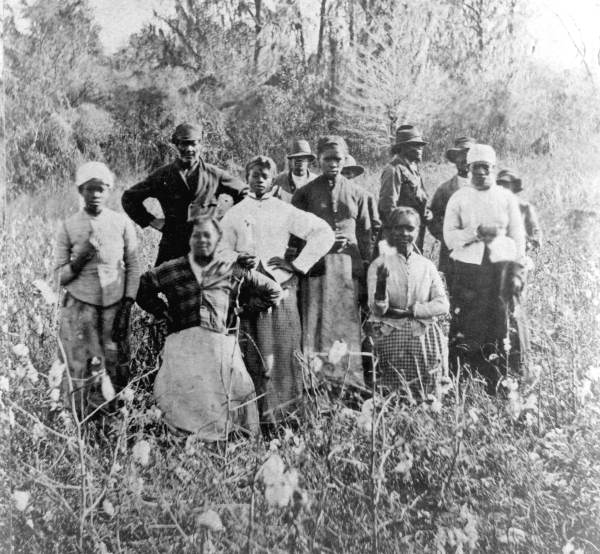
To comprehend the timeline of abolition, one must first grasp the pervasive nature of slavery in Mississippi. By the mid-19th century, Mississippi stood as a quintessential example of the “Cotton Kingdom,” its economy, society, and political identity inextricably linked to enslaved labor. This reliance made abolition a contentious issue, fiercely resisted by the state’s dominant planter class.
Economic Reliance and Social Structure
From its territorial beginnings, Mississippi’s economy was built on agriculture, with cotton emerging as the dominant cash crop. The fertile soil of the Mississippi Delta, combined with advancements like the cotton gin, created immense demand for a large, exploitable labor force. Enslaved African people provided this labor, enduring brutal conditions on plantations that stretched across the state. The economic prosperity generated by cotton fueled a powerful aristocracy, whose wealth and influence were directly proportional to the number of enslaved individuals they owned. This system not only dictated economic policy but also shaped the entire social hierarchy, with racial subjugation as its bedrock. The notion of white supremacy was deeply ingrained, providing the ideological justification for the dehumanizing practice of chattel slavery. This economic and social structure meant that any threat to slavery was perceived as an existential threat to Mississippi’s way of life and its ruling class.
The Cotton Kingdom and Human Chattel
By 1860, Mississippi had the highest percentage of enslaved people in its population of any state, with approximately 436,631 enslaved individuals comprising 55% of the total population. These numbers underscore the profound human cost and the vast scale of the institution. Plantations, often vast and highly organized, were economic engines powered by forced labor. The sale and trade of enslaved people were integral to this system, tearing families apart and treating human beings as mere commodities. Cities like Natchez, with its grand antebellum mansions, serve as stark physical landmarks of the wealth accumulated through this brutal institution, while the fields surrounding them represent the sites of unimaginable suffering. The “Cotton Kingdom” was not merely an economic model; it was a deeply entrenched social order designed to perpetuate racial control and economic exploitation, making the path to abolition an inherently revolutionary act.
The Road to Secession and the Confederacy
Mississippi’s commitment to slavery was so profound that it became a leading voice for secession when the institution was threatened. The state played a critical role in the formation of the Confederacy, perceiving the preservation of slavery as non-negotiable.
Mississippi’s Stance on States’ Rights and Slavery
For Mississippi, the concept of “states’ rights” was predominantly a euphemism for the right to maintain slavery without federal interference. As abolitionist sentiments grew in the northern states and political tensions escalated over the expansion of slavery into new territories, Mississippi became increasingly vocal in defending its “peculiar institution.” The election of Abraham Lincoln in 1860, who campaigned on a platform of preventing the expansion of slavery, was seen as an unacceptable provocation. On January 9, 1861, Mississippi became the second state to secede from the Union, declaring that “Our position is thoroughly identified with the institution of slavery.” This act of secession was a landmark political decision, irrevocably tying the state’s destiny to the defense of slavery and setting the stage for the Civil War.
The Civil War’s Impact on Emancipation
The outbreak of the Civil War in April 1861 fundamentally altered the discourse around slavery. What began as a war to preserve the Union gradually transformed into a war for freedom. As Union forces pushed into Confederate territory, the strategic importance of slavery as the Confederacy’s economic and logistical backbone became undeniable. Enslaved people, recognizing the opportunity for freedom, often fled to Union lines, contributing to the Union war effort as laborers and soldiers. Major campaigns within Mississippi, such as the Siege of Vicksburg, were critical turning points. The fall of Vicksburg in July 1863, a strategic landmark on the Mississippi River, effectively split the Confederacy and accelerated the process of emancipation for those within Union-controlled areas of the state.
Emancipation Proclamation and Wartime Realities
While the Civil War provided the context for slavery’s end, Abraham Lincoln’s Emancipation Proclamation marked a pivotal legal and moral landmark. However, its immediate impact in Mississippi was complex and limited by wartime realities.
Lincoln’s Declaration and its Limited Reach

On January 1, 1863, President Abraham Lincoln issued the Emancipation Proclamation, declaring that all enslaved people in the rebellious states “are, and henceforward shall be free.” This landmark executive order immediately changed the legal status of millions. For Mississippi, as a state in rebellion, the proclamation theoretically freed its entire enslaved population. However, the practical enforcement of the proclamation was contingent on Union military control. In areas still under Confederate rule, slaveholders continued to exert their authority. Therefore, while a momentous legal declaration, the Emancipation Proclamation initially offered freedom only to those within reach of Union armies, making it a promise yet to be fully realized across the state.
Union Occupation and Enslaved People’s Agency
As Union forces advanced through Mississippi, particularly after the fall of Vicksburg and the subsequent campaign to Jackson, the practical end of slavery began to unfold. Enslaved people, seizing the opportunity, often self-emancipated, fleeing plantations and seeking refuge and employment with Union camps. They joined the Union army, forming crucial regiments of U.S. Colored Troops, and worked as laborers, spies, and guides. This agency of enslaved individuals was a powerful force in dismantling the institution from within. Union occupation effectively broke the power of slaveholders, leading to the rapid disintegration of the plantation system in occupied areas. The presence of Union soldiers served as a de facto enforcement mechanism for the Emancipation Proclamation, bringing the promise of freedom to hundreds of thousands in Mississippi.
Constitutional Abolition: The 13th Amendment and Mississippi’s Reluctance
While the Emancipation Proclamation was a critical step, the complete and nationwide abolition of slavery required a constitutional amendment. Mississippi’s resistance to this federal mandate highlights its deep-seated commitment to the institution, leading to an extraordinary delay in ratification.
Federal Mandate vs. State Resistance
The permanent abolition of slavery across the United States came with the ratification of the Thirteenth Amendment to the U.S. Constitution. Passed by Congress in January 1865 and ratified by the necessary three-fourths of states by December 1865, this amendment unequivocally abolished slavery and involuntary servitude, except as punishment for a crime. For former Confederate states like Mississippi, ratification of the Thirteenth Amendment was a condition for readmission to the Union during the early stages of Reconstruction Era. However, reflecting its deep resistance to federal authority and the complete dismantling of its societal structure, Mississippi initially refused to ratify the amendment. Its state legislature, still dominated by former Confederates and those resistant to racial equality, rejected it in December 1865.
The Long Road to Ratification
Despite Mississippi’s initial rejection, the Thirteenth Amendment became national law in December 1865 due to the ratification by other states. This meant that slavery was legally abolished in Mississippi regardless of its state legislature’s stance. However, the act of a state formally ratifying a constitutional amendment is a symbolic and declarative gesture of its acceptance of federal law. [Mississippi](https://lifeoutofthebox.com/mississippi] took an exceptionally long time to complete this formality. After being forced by federal authorities to hold a constitutional convention in 1868 and subsequent readmission to the Union, it was understood that Mississippi was bound by the Thirteenth Amendment. Yet, no formal legislative ratification vote took place until much later.
The Final Symbolic Act of 1995
Remarkably, the state of Mississippi did not officially ratify the Thirteenth Amendment until 1995. This astonishing delay, 130 years after it became federal law, makes Mississippi the last state to formally acknowledge the abolition of slavery. The catalyst for this final act came after a professor at the University of Mississippi and a film editor, researching for a Steven Spielberg documentary, discovered that the state’s ratification was never officially filed with the U.S. Archivist. Although the Mississippi State Capitol had passed a resolution to ratify in 1995, the paperwork was never formally submitted to Washington, D.C. for certification. Following this discovery, the state corrected the oversight, with the certified document finally received by the U.S. Archivist on February 7, 2013, solidifying Mississippi’s official recognition of the Thirteenth Amendment. This bureaucratic but deeply symbolic act serves as a poignant historical landmark, underscoring the deep entrenchment of slavery and the protracted struggle for its full legal and moral repudiation in the Deep South.
The Enduring Legacy: Remembering a Complex Past
The long, drawn-out process of slavery’s abolition in Mississippi left an indelible mark on the state and the nation. Today, recognizing this complex history is vital for understanding contemporary issues of race, justice, and memory. The landmarks of this past are not just physical sites but also the legal and social milestones that continue to shape collective consciousness.
Historical Sites and Commemoration
Across Mississippi, various sites serve as solemn reminders of the era of slavery and its abolition. Plantations, once centers of forced labor, are now often museums that grapple with their past, telling the stories of both owners and the enslaved. Cemeteries, battlefields of the Civil War, and the historic districts of cities like Vicksburg and Jackson all bear witness to the profound upheavals of the 1860s. Efforts to establish historical markers and educational programs at these sites aim to provide a more complete and honest narrative, moving beyond romanticized versions of the past to acknowledge the pain, resilience, and fight for freedom. These physical landmarks offer tangible connections to the abstract legal milestones, helping to contextualize the true meaning of abolition.

Education and Reconciliation
The delayed formal ratification of the Thirteenth Amendment by Mississippi underscores the persistent challenges in confronting and reconciling with a difficult past. Understanding “when” slavery was abolished in Mississippi therefore encompasses not only the legal end dictated by the federal government in 1865 but also the state’s much later, symbolic acceptance in 1995 and 2013. This journey highlights the importance of ongoing education about the history of slavery, the Civil War, and the Reconstruction Era. Such education is crucial for fostering an informed citizenry and promoting dialogue about the lingering effects of systemic racism and inequality. The legislative halls where the Senate and House of Representatives once debated and delayed, now stand as powerful conceptual landmarks, urging reflection on the responsibility of government and society to uphold fundamental human rights and historical truth. The story of Mississippi’s abolition of slavery is a testament to both the force of federal law and the enduring, often painful, process of a state confronting its own history.
LifeOutOfTheBox is a participant in the Amazon Services LLC Associates Program, an affiliate advertising program designed to provide a means for sites to earn advertising fees by advertising and linking to Amazon.com. Amazon, the Amazon logo, AmazonSupply, and the AmazonSupply logo are trademarks of Amazon.com, Inc. or its affiliates. As an Amazon Associate we earn affiliate commissions from qualifying purchases.