
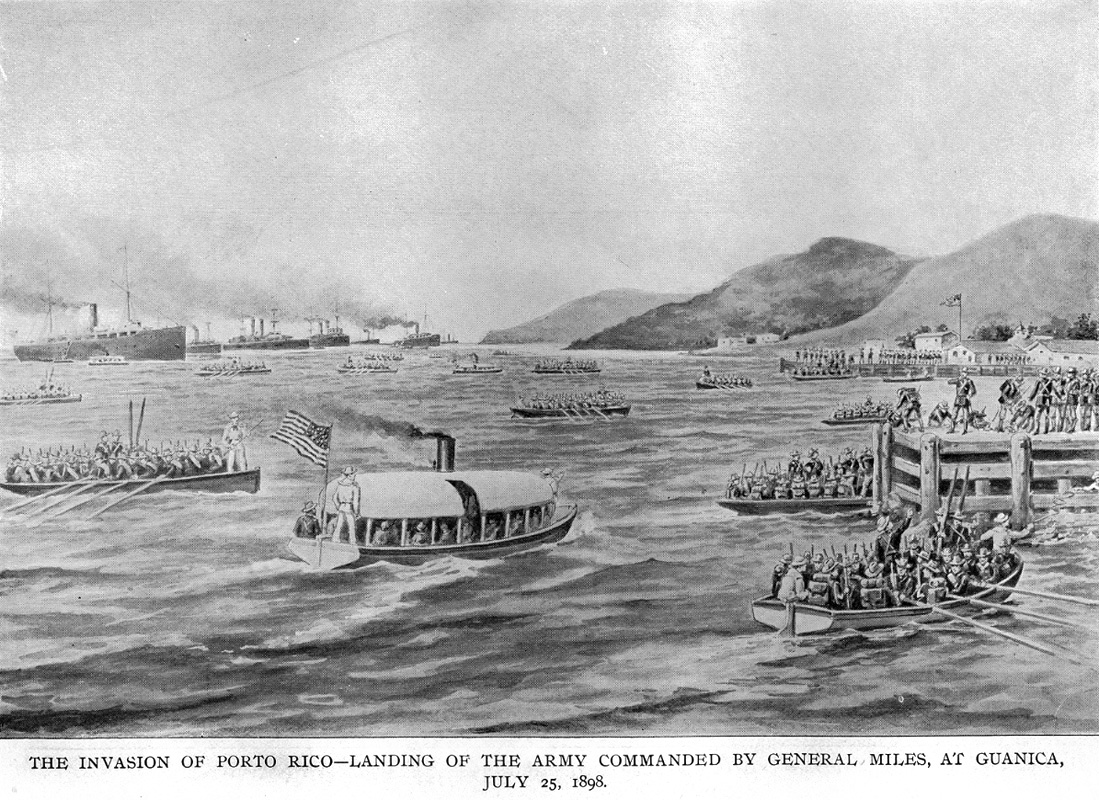
The question of when the United States acquired Puerto Rico is not a simple one with a single, neatly defined date, but rather a pivotal moment in history marked by a treaty and a subsequent era of political evolution. The acquisition of Puerto Rico by the United States was a direct consequence of the Spanish-American War, a conflict that dramatically reshaped the geopolitical landscape of the Caribbean and the Pacific. The war, which erupted in April 1898, pitted the United States against Spain, a declining imperial power. The primary catalyst for the war was the Cuban struggle for independence, but it quickly broadened to include other Spanish territories.

The Treaty of Paris and the Cession of Puerto Rico
The culmination of the Spanish-American War was the signing of the Treaty of Paris on December 10, 1898. This treaty officially brought the conflict to an end and dictated the terms of Spain’s surrender and the transfer of its overseas territories. Under the terms of this agreement, Spain ceded Cuba, Guam, and Puerto Rico to the United States. In return for Cuba’s independence (though it remained under U.S. military occupation for some time), the United States paid Spain the sum of $20 million. This payment was primarily for the Philippines, which also changed hands from Spanish to American control, but the cession of Puerto Rico and Guam was part of the same sweeping agreement.
Therefore, the formal acquisition of Puerto Rico by the United States occurred on December 10, 1898, with the signing of the Treaty of Paris. This date marks the legal and political transition of sovereignty from Spain to the United States. However, the story of Puerto Rico’s relationship with the United States is far more complex and continues to evolve.
A New Era of Governance and Identity

Following the signing of the Treaty of Paris, Puerto Rico transitioned from being a Spanish colony to an unincorporated territory of the United States. This status meant that the U.S. Constitution did not fully apply to the island, and its residents were not granted full citizenship rights initially. The Foraker Act of 1900, also known as the Organic Act of 1900, established a civilian government in Puerto Rico, with a governor appointed by the U.S. President and an island legislature. While this marked a step away from military rule, it also solidified the U.S.’s control and established a framework for governance that reflected the territory’s subordinate position.
The Path to U.S. Citizenship
A significant milestone in the relationship between Puerto Rico and the United States was the passage of the Jones-Shafroth Act in 1917. This act granted statutory citizenship to Puerto Ricans, meaning they became citizens of the United States by an act of Congress, rather than by constitutional amendment. This was a monumental step, offering a sense of belonging and national identity that had been debated for years. However, it is crucial to note that this citizenship is often referred to as “statutory” citizenship, as opposed to “constitutional” citizenship that citizens born in the fifty states possess. This distinction has implications for political rights and representation, as Puerto Ricans living on the island cannot vote in U.S. Presidential elections and have a non-voting representative in the U.S. Congress.
The journey of Puerto Rico since 1898 has been one of navigating a unique political status, fostering a distinct cultural identity, and seeking greater self-determination. The island has experienced periods of economic development, political activism, and ongoing debates about its future – whether it should remain a territory, become a state, or achieve full independence.
The acquisition of Puerto Rico was not just a territorial gain for the United States but the beginning of a complex and enduring relationship. For travelers, understanding this history adds depth to any visit, allowing for a richer appreciation of the island’s resilient culture, its stunning landmarks, and the vibrant spirit of its people. Exploring Old San Juan, with its centuries-old fortifications like El Morro and Castillo San Cristóbal, offers a tangible connection to the Spanish colonial past, while the modern-day energy of cities like Ponce and the natural beauty of places like the El Yunque National Forest showcase a Puerto Rico that is continuously forging its own path.
The accommodation options on the island are as diverse as its history, ranging from luxurious resorts on the coast to charming boutique hotels in historic districts and comfortable apartments for longer stays. Whether you are seeking a budget-friendly adventure or a lavish escape, Puerto Rico offers a spectrum of experiences. Understanding when and how the United States acquired Puerto Rico provides essential context for appreciating the island’s unique character and its integral place within the broader narrative of American history and its evolving geopolitical sphere. The island’s story is a testament to resilience, cultural fusion, and the ongoing quest for self-definition, making it a compelling destination for those interested in more than just sun and sand. The vibrant tourism industry thrives on this rich tapestry, offering immersive experiences that highlight local culture, delicious cuisine, and unforgettable activities, all set against a backdrop shaped by centuries of history and a unique political destiny.
LifeOutOfTheBox is a participant in the Amazon Services LLC Associates Program, an affiliate advertising program designed to provide a means for sites to earn advertising fees by advertising and linking to Amazon.com. Amazon, the Amazon logo, AmazonSupply, and the AmazonSupply logo are trademarks of Amazon.com, Inc. or its affiliates. As an Amazon Associate we earn affiliate commissions from qualifying purchases.