
The acquisition of Florida by the United States represents a pivotal chapter in American expansion, a complex narrative interwoven with colonial rivalries, diplomatic maneuvering, and military confrontations. Far from a simple transaction, the process spanned centuries, beginning with European discovery and culminating in a landmark treaty that reshaped the geopolitical landscape of North America. Understanding when the United States officially claimed Florida requires delving into its rich, multi-layered history, tracing its journey from a contested frontier to an integral part of the American republic. This exploration reveals not just a territorial transfer, but a profound shift in power dynamics and cultural identity for a region steeped in diverse influences.
Florida’s Early European Encounters and Colonial Legacy
The saga of Florida began long before the United States was even conceived, with the arrival of European explorers in the early 16th century. Its strategic location, fertile lands, and perceived riches made it an attractive prize for the burgeoning colonial powers of the era.
Spanish Exploration and First Settlements
In 1513, Juan Ponce de León, a Spanish explorer, became the first documented European to reach the peninsula, naming it “La Florida” in honor of Spain’s Easter celebration, Pascua Florida. This moment marked the beginning of over two centuries of Spanish dominion. Early attempts at colonization were met with fierce resistance from indigenous peoples and harsh environmental challenges, leading to several failed ventures. However, in 1565, Pedro Menéndez de Avilés founded St. Augustine on Florida’s northeastern coast, establishing the oldest continuously inhabited European-established settlement in the continental United States. St. Augustine served as the administrative and military hub for Spanish Florida, a strategic outpost protecting the vital trade routes of the Spanish Empire.
Shifting Colonial Powers: Spain, France, and Great Britain
For much of its early history, Florida remained a sparsely populated but highly contested borderland, frequently subjected to territorial claims and military skirmishes involving Spain, France, and later, Great Britain. The French established a short-lived presence at Fort Caroline near modern-day Jacksonville in the 1560s, only to be brutally expelled by the Spanish. Over time, British colonial expansion from the north, particularly from Georgia and the Carolinas, placed increasing pressure on Spanish Florida.
A significant shift occurred in 1763 with the conclusion of the Seven Years’ War (known in North America as the French and Indian War). Under the terms of the Treaty of Paris (1763), Spain ceded Florida to Great Britain in exchange for Havana, Cuba, which the British had captured during the war. This marked the first time Spain relinquished control of Florida. The British divided the territory into two distinct colonies: East Florida, with its capital at St. Augustine, and West Florida, extending from the Apalachicola River to the Mississippi River and including parts of present-day Alabama, Mississippi, and Louisiana, with its capital at Pensacola. During this British period (1763–1783), Florida saw considerable economic development, particularly in agriculture, as the British encouraged immigration and investment.
The American Revolution and Florida’s Spanish Return
The upheaval of the American Revolution once again redefined Florida’s allegiance, albeit indirectly, leading to its temporary re-acquisition by Spain.
Florida as a British Colony During the Revolution
Unlike the thirteen colonies to the north, East Florida and West Florida remained loyal to the British Crown during the American Revolution. They served as havens for Loyalists fleeing the rebellious colonies and as strategic bases for British military operations against the American forces. However, Spain, allied with France against Great Britain, saw an opportunity to regain its lost territories. Spanish forces, led by Governor Bernardo de Gálvez of Louisiana, launched successful campaigns against British strongholds along the Gulf of Mexico, capturing Baton Rouge and Mobile in West Florida, and eventually taking Pensacola in 1781.
The Treaty of Paris (1783) and Spanish Reassertion
When the American Revolution officially concluded with the signing of the Treaty of Paris (1783), a new geopolitical order emerged. While the United States gained independence and vast territories stretching to the Mississippi River, Spain was awarded both East Florida and West Florida in recognition of its wartime contributions. This outcome placed a foreign power directly along the southern frontier of the newly independent United States, setting the stage for future disputes and ambitions. The return to Spanish rule was short-lived, however, and characterized by neglect and instability, creating a power vacuum that attracted American settlers, adventurers, and military attention.
Rising Tensions and American Ambition
The period following the American Revolution saw increasing friction between the United States and Spain over Florida. The young American republic, driven by concepts of manifest destiny and westward expansion, viewed Spanish Florida as a persistent irritant and a strategic necessity.
Border Disputes and Native American Conflicts
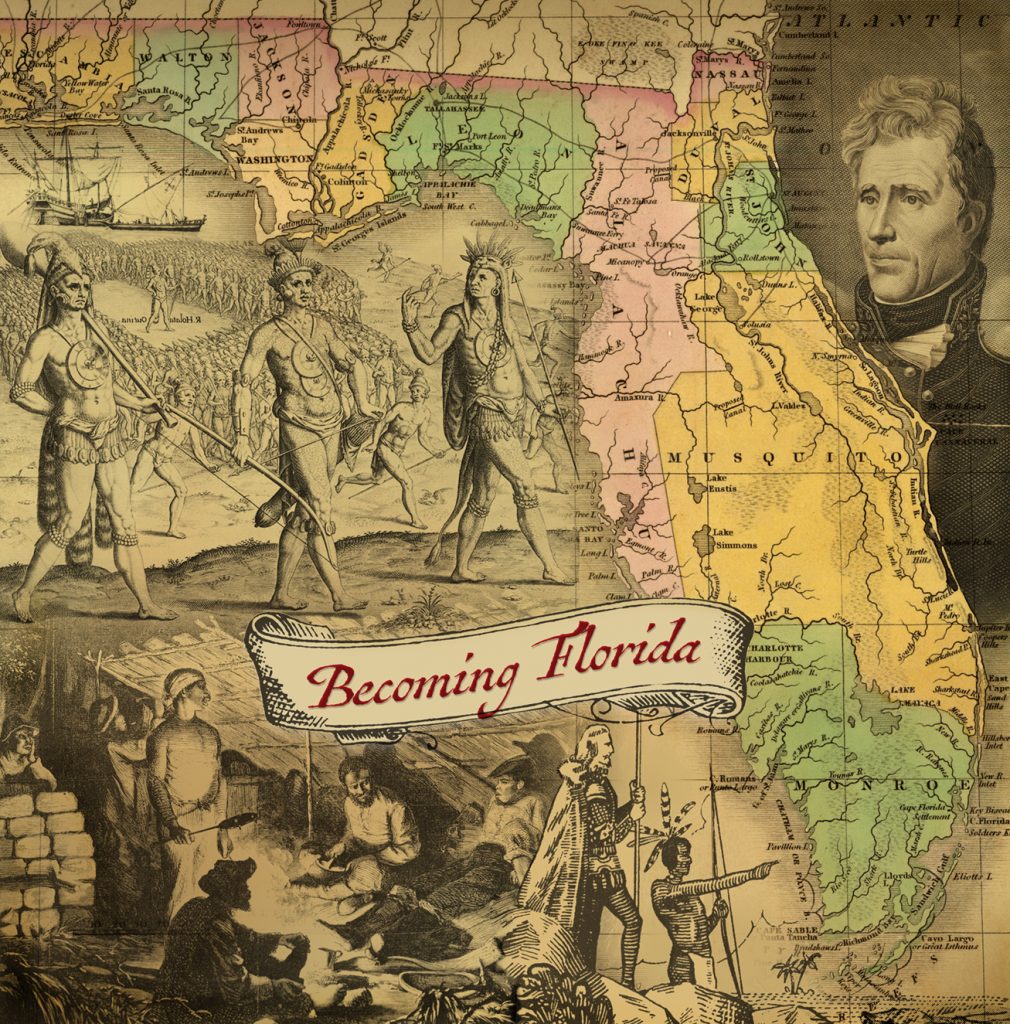
The ill-defined borders between Spanish Florida and the United States became a constant source of tension. Spain’s inability to effectively govern its vast territories meant that Florida became a haven for runaway enslaved people from American plantations, as well as a base for Native American groups, primarily the Seminole and Creek, who launched raids into American territory. These raids often involved British agents and traders who maintained influence among the Native American communities, further exacerbating American fears of foreign interference on its borders. American settlers, meanwhile, often encroached into Spanish territory, fueling skirmishes and calls for intervention.
The First Seminole War and Andrew Jackson’s Role
The escalating conflicts reached a boiling point during the First Seminole War (1816–1819). General Andrew Jackson, a formidable military leader, was tasked with securing the Georgia border against Seminole and Creek raids. Exceeding his orders, Jackson led his forces deep into Spanish Florida, seizing Pensacola and St. Marks, and executing two British subjects accused of inciting Native American attacks. Jackson’s unauthorized invasion sparked an international crisis, but it also demonstrated Spain’s tenuous hold on Florida and strengthened the hand of American diplomats who argued for its cession. The incident clearly signaled the United States’ resolve to secure its southern border, by force if necessary.
The Adams-Onís Treaty of 1819: A Definitive Transfer
The diplomatic fallout from Jackson’s actions, coupled with Spain’s internal struggles and its preoccupation with independence movements in its Latin American colonies, ultimately paved the way for a negotiated settlement.
Diplomatic Negotiations Between the United States and Spain
Secretary of State John Quincy Adams and Spanish Minister Luis de Onís engaged in lengthy and often contentious negotiations. Adams expertly leveraged Spain’s weakened position and its inability to control Florida effectively. The alternative to cession, Adams subtly implied, might be a continued pattern of American incursions and eventual annexation. For Spain, parting with Florida was seen as a way to resolve lingering border disputes, gain recognition for its claims to Texas, and free up resources to deal with more pressing imperial matters.
Terms of the Treaty and Formal Cession
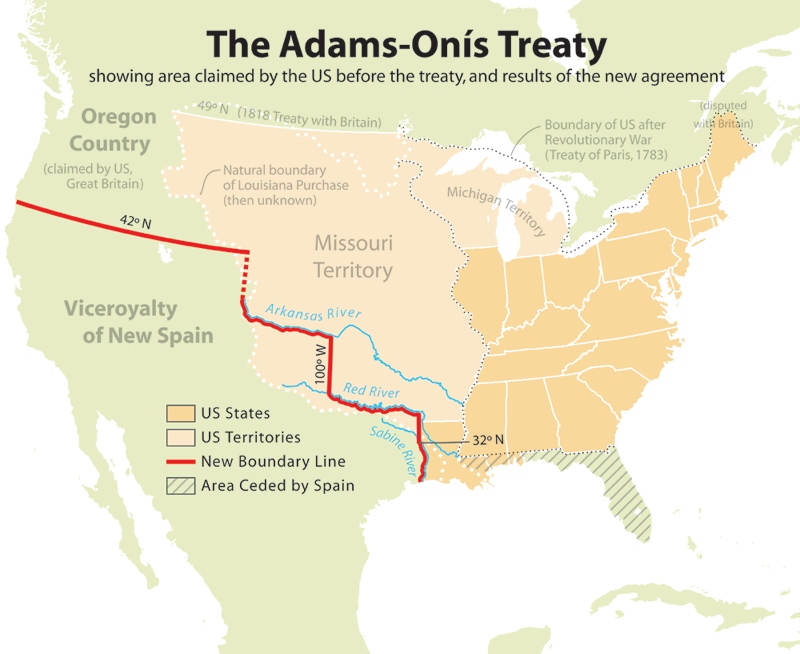
The negotiations culminated in the signing of the Transcontinental Treaty, also known as the Adams-Onís Treaty, on February 22, 1819. Under the terms of this landmark agreement, Spain formally ceded all of Florida to the United States. In return, the United States agreed to assume up to $5 million in claims by American citizens against Spain and to formally relinquish its claims to Texas. The treaty also established a definitive western boundary for the United States, running from the Sabine River in Louisiana northwest to the Arkansas River, then north to the 42nd parallel, and west to the Pacific Ocean, effectively delineating the Oregon Country claims.
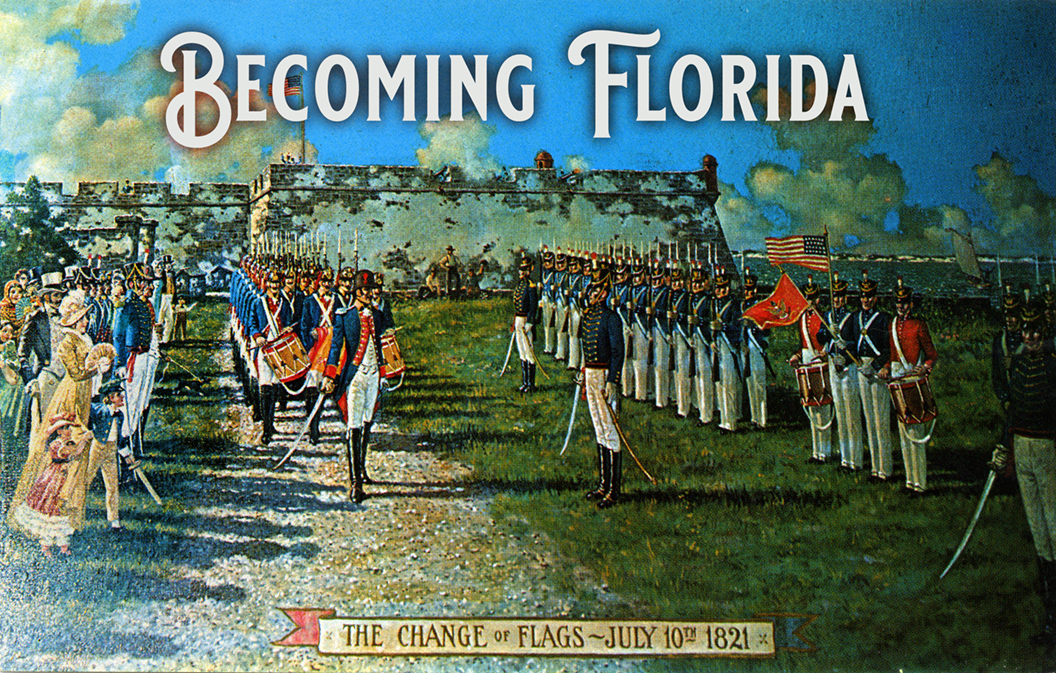
While the treaty was signed in 1819, its ratification by both governments took some time. The Spanish government delayed ratification, primarily due to internal political turmoil and concerns over American recognition of its Latin American colonies. However, under renewed pressure from the United States and facing dire financial straits, King Ferdinand VII finally ratified the treaty on October 24, 1820. The exchange of ratifications formally took place in Washington D.C. on February 22, 1821, officially transferring sovereignty of Florida to the United States.
Florida as a United States Territory and Statehood
With the formal transfer completed in 1821, Florida began its new chapter under American governance, transitioning from a colonial frontier to a rapidly developing territory.
Territorial Governance and Expansion
Upon receiving Florida, the United States initially organized it as the Florida Territory. Andrew Jackson was appointed as its first military governor, though his tenure was brief. The territorial period, lasting from 1821 to 1845, was marked by significant population growth, primarily from American settlers moving south from Georgia and the Carolinas. These settlers rapidly expanded cotton and sugar plantations, further intensifying conflicts with the remaining Seminole tribes, leading to the brutal Second Seminole War (1835–1842) and the forced removal of most Native American populations to lands west of the Mississippi River. The territorial capital was established in 1824 at Tallahassee, a strategically chosen location midway between the former capitals of St. Augustine and Pensacola.
The Path to Statehood
As the population grew and American institutions became firmly established, the call for statehood intensified. The issue of slavery, however, complicated Florida’s admission to the Union. As a slave-holding territory, its entry would disrupt the delicate balance between free and slave states in Congress. The solution arrived with the admission of Iowa as a free state, allowing Florida to enter as a slave state. Thus, on March 3, 1845, Florida officially became the 27th state of the United States, marking the final step in its long journey from a contested colonial outpost to an integral part of the American nation.
The question of “When did the United States get Florida?” can be definitively answered with the date of the exchange of ratifications for the Adams-Onís Treaty, February 22, 1821. This moment marked the legal and diplomatic transfer of sovereignty, although the process of integrating Florida into the American fabric, both politically and culturally, would continue for decades, culminating in its statehood in 1845. The story of Florida’s acquisition stands as a testament to the dynamic forces of empire, expansion, and diplomacy that shaped the early history of the United States.
LifeOutOfTheBox is a participant in the Amazon Services LLC Associates Program, an affiliate advertising program designed to provide a means for sites to earn advertising fees by advertising and linking to Amazon.com. Amazon, the Amazon logo, AmazonSupply, and the AmazonSupply logo are trademarks of Amazon.com, Inc. or its affiliates. As an Amazon Associate we earn affiliate commissions from qualifying purchases.