
The history of Hawaii is a complex tapestry of indigenous culture, royal sovereignty, and eventually, incorporation into the United States. Understanding when and how this Pacific archipelago became an American territory requires looking past the simple date of annexation and examining the decades of geopolitical shifts, economic interests, and political upheaval that defined the late 19th century.
The Early Interest and the Reciprocity Treaty
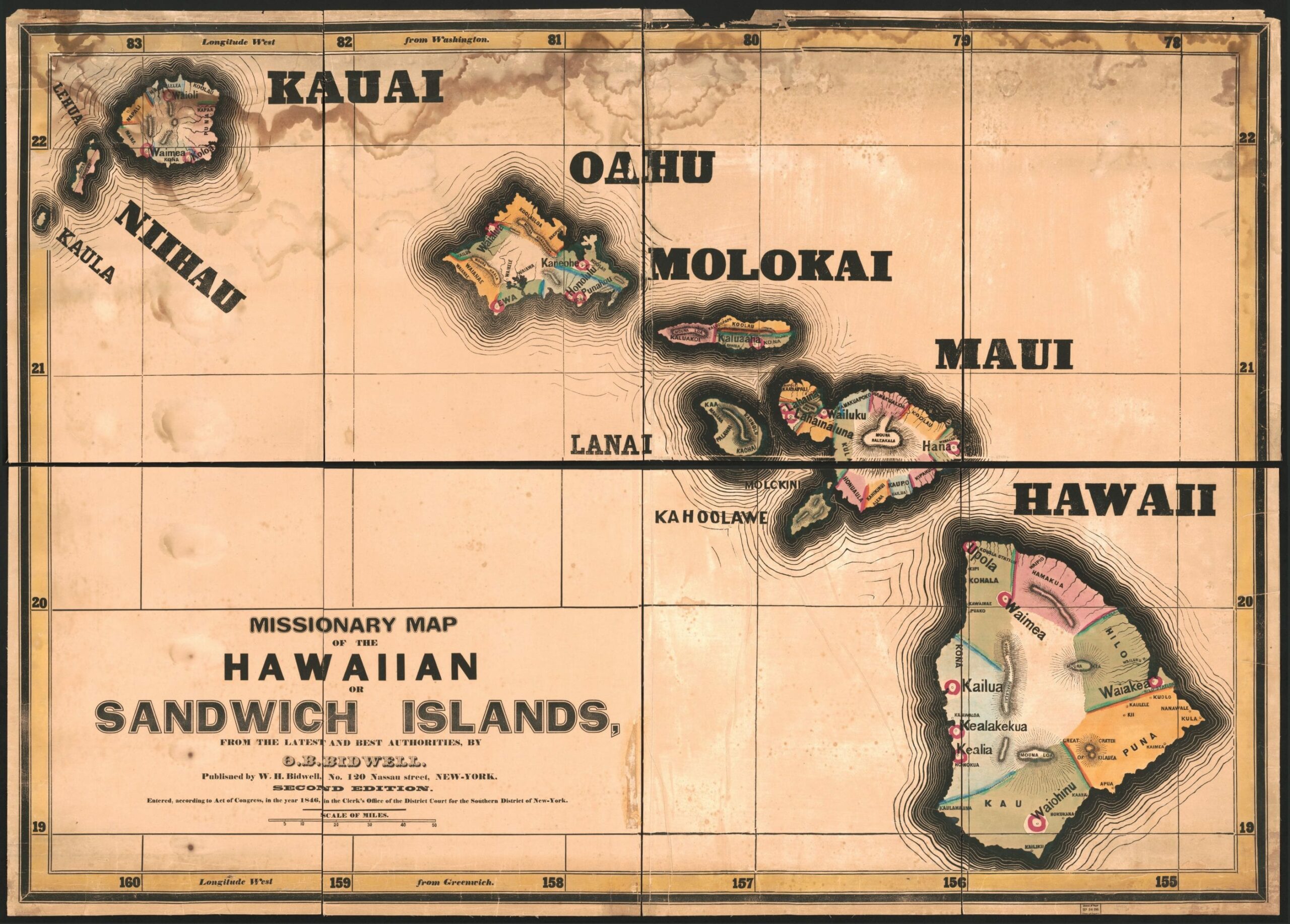
Long before the flag was raised over Iolani Palace, American influence began to permeate the islands through commerce and religion. In the early 1800s, New England missionaries arrived, seeking to convert the native population to Christianity. While their religious impact was profound, the economic impact of the sugar industry proved to be the primary catalyst for political change.
The Rise of Sugar Plantations
As the sugar industry expanded, American businessmen—many of whom were the children of those original missionaries—gained significant control over the land and economy of Oahu and the other islands. By the mid-1800s, the economic ties between the Kingdom of Hawaii and the United States were undeniable.
The Reciprocity Treaty of 1875
The pivotal moment in this economic integration occurred in 1875 with the signing of the Reciprocity Treaty. This agreement allowed Hawaiian sugar to enter the American market duty-free. It effectively made the islands an economic satellite of the United States. This dependency gave the American planter class enormous leverage, setting the stage for their eventual challenge to the Hawaiian monarchy.
The Overthrow of the Monarchy
The tension between the native monarchy and the foreign-dominated business interests reached a boiling point in the late 1880s. When King Kalakaua was forced to sign the “Bayonet Constitution” in 1887, his power was severely curtailed, and the voting rights of non-white residents were drastically reduced.
The Reign of Queen Liliuokalani
In 1891, Queen Liliuokalani ascended to the throne. She was a staunch nationalist who sought to restore power to the Hawaiian people and revise the constitution to remove the influence of the planter class. Her attempt to enact these changes in early 1893 provided the pretext for the American-led coup.
The January 1893 Coup
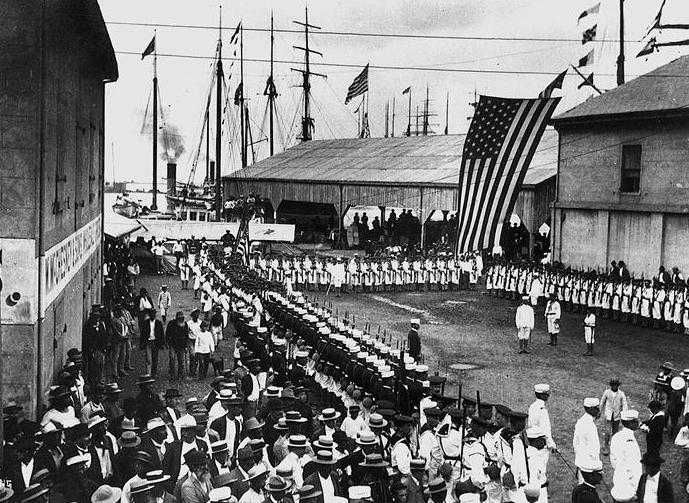
On January 17, 1893, a group of businessmen and sugar planters, supported by the United States Minister to Hawaii, John L. Stevens, orchestrated a coup. With the presence of United States Marines who had landed in Honolulu under the guise of protecting American lives and property, the Queen chose to abdicate her throne under protest to avoid bloodshed. She hoped that the United States government would investigate the illegal nature of the intervention and restore her to the throne.
The Path to Annexation
The period following the overthrow was one of profound uncertainty. While the provisional government, led by Sanford B. Dole, lobbied for immediate annexation, the administration of President Grover Cleveland in Washington D.C. initially resisted.
The Blount Report
Grover Cleveland appointed James H. Blount to investigate the events in Hawaii. The subsequent Blount Report concluded that the United States had played a direct, unauthorized role in the overthrow and recommended the restoration of the Queen. However, the provisional government refused to step down, declaring themselves the Republic of Hawaii in 1894 and biding their time until a more favorable administration occupied the White House.
The Spanish-American War
The geopolitical climate shifted dramatically with the outbreak of the Spanish-American War in 1898. The need for a mid-Pacific naval base became a strategic necessity for the American military. Pearl Harbor was viewed as essential for projecting power across the Pacific Ocean.
The Newlands Resolution
With the surge of expansionist sentiment during the war, President William McKinley signed the Newlands Resolution on July 7, 1898. This act formally annexed the islands to the United States. It was not a treaty, as the Senate failed to ratify one, but rather a joint resolution that bypassed the constitutional requirement for a two-thirds majority.
Legacy and Statehood
Following the 1898 annexation, the islands underwent a rapid transition. The Organic Act of 1900 established the Territory of Hawaii, placing the islands under a formal governance structure that integrated them into the American political system while maintaining the distinct cultural heritage of the native people.
Cultural Preservation and Change
Throughout the 20th century, Hawaii faced an ongoing struggle to maintain its cultural identity against a backdrop of rapid westernization. The suppression of the Hawaiian language in schools and the influx of military and civilian populations from the mainland fundamentally altered the social landscape of islands like Maui, Kauai, and the Big Island.
The Road to Statehood
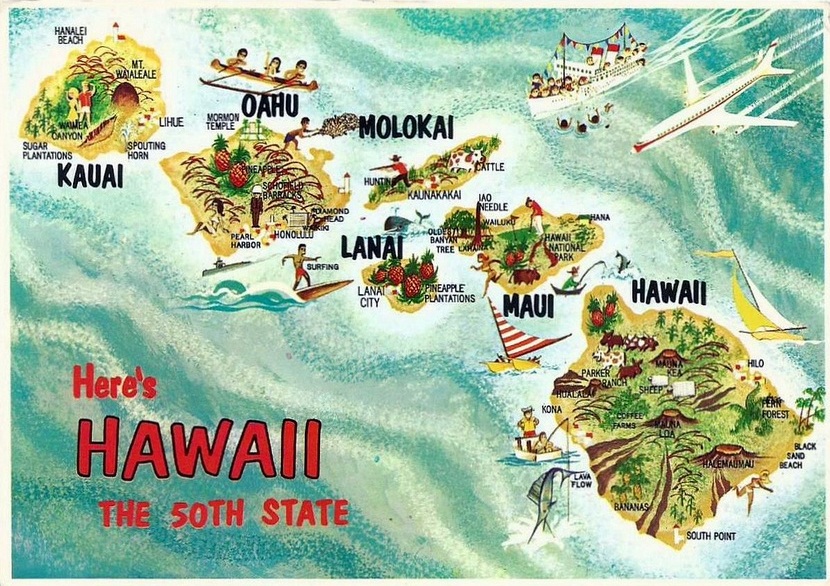
The path to becoming the 50th state was long and often fraught with political debate regarding the rights of the indigenous population. On August 21, 1959, Hawaii officially became a U.S. state. While this marked the end of the territorial period, it sparked a resurgence in the Hawaiian cultural renaissance in the late 20th century, as people sought to reclaim traditional practices, language, and knowledge.
Remembering the History
Today, visitors to Honolulu can engage with this history at sites like the Bishop Museum, which documents the genealogy and heritage of the islands. Understanding the transition from an independent kingdom to a state is essential for any traveler seeking a deeper, more respectful experience of the islands. Whether walking the grounds of the State Capitol or learning about the royal history at the Aliiolani Hale, one cannot help but appreciate the resilience of the Hawaiian people. The story of Hawaii is not just one of political annexation, but one of a persistent spirit that continues to define the islands to this day.
LifeOutOfTheBox is a participant in the Amazon Services LLC Associates Program, an affiliate advertising program designed to provide a means for sites to earn advertising fees by advertising and linking to Amazon.com. Amazon, the Amazon logo, AmazonSupply, and the AmazonSupply logo are trademarks of Amazon.com, Inc. or its affiliates. As an Amazon Associate we earn affiliate commissions from qualifying purchases.