
Florida, often dubbed the Sunshine State, is a perennial magnet for travelers worldwide, renowned for its pristine beaches, world-class theme parks, vibrant cities, and unique natural wonders. Millions flock to its shores annually, impacting everything from the bustling hotels and resorts to the charming local eateries and intricate tourism operations. Amidst this dynamic landscape, a significant economic shift has been underway: the gradual increase of the minimum wage. For both seasoned travelers planning their next getaway and aspiring hospitality professionals considering a career in the state, understanding when and how the minimum wage goes up in Florida is crucial. This economic adjustment has far-reaching implications, influencing everything from the cost of your morning coffee to the overall operational strategies of luxury resorts and the livelihood of countless individuals who power Florida’s tourism engine.
This article delves into the specifics of Florida’s minimum wage schedule, exploring its historical context, current trajectory, and the anticipated impact on the state’s dominant travel, accommodation, and lifestyle sectors. We will examine how these changes might subtly reshape the visitor experience, affect local businesses, and influence the cost of a Florida vacation, ensuring you’re well-informed whether you’re booking a suite in Miami, exploring the attractions of Orlando, or simply enjoying the relaxed pace of the Florida Keys.
Understanding Florida’s Minimum Wage Schedule
The trajectory of Florida’s minimum wage is not merely a legislative decision but a constitutional mandate, reflecting a broader public consensus on fair compensation. This commitment to a living wage has set Florida on a clear path towards an increased minimum hourly rate, directly affecting a significant portion of its workforce, particularly within the service-oriented tourism industry.
The Constitutional Amendment and Annual Increases
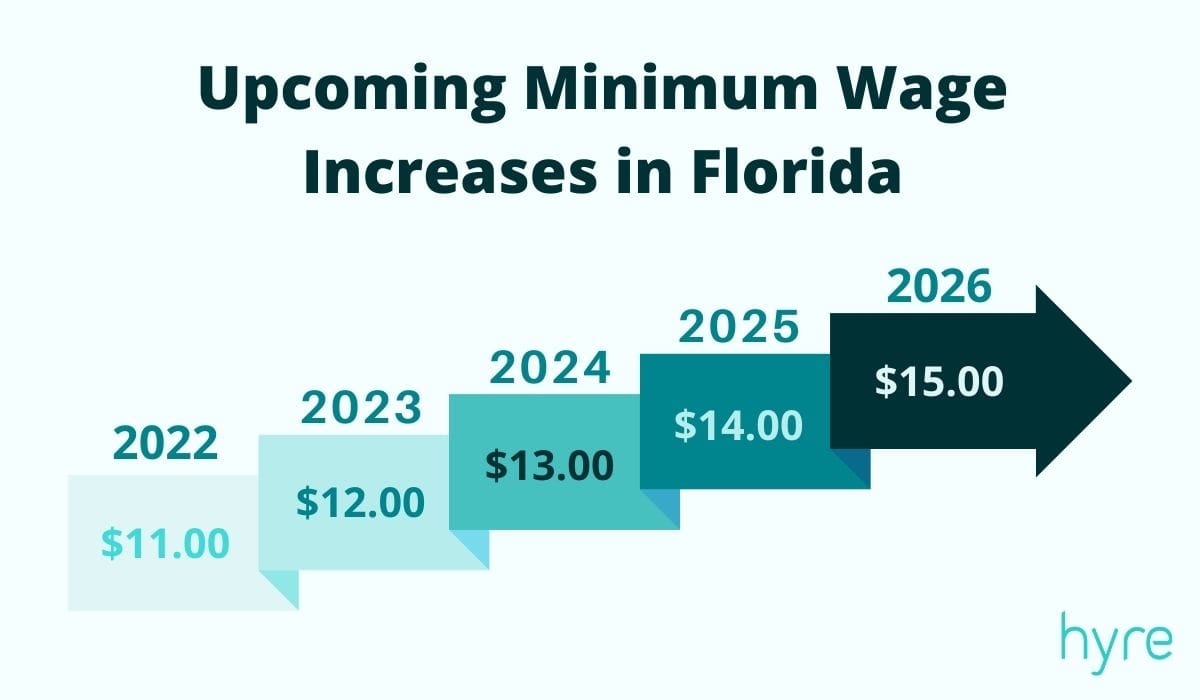
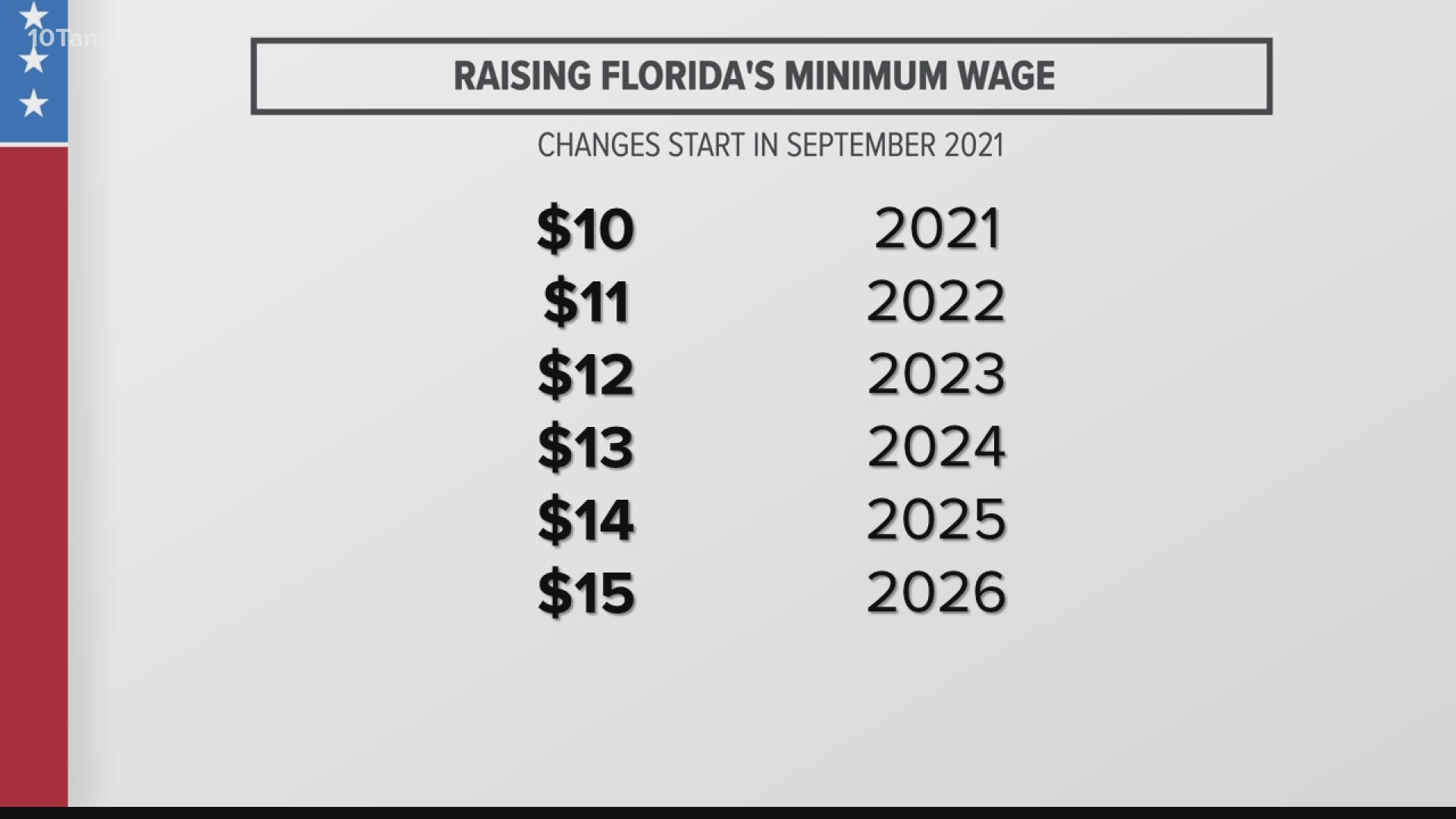
The journey towards a higher minimum wage in Florida officially began with the passage of Amendment 2 in November 2020. This groundbreaking constitutional amendment stipulated a phased increase in the state’s minimum wage, with the ultimate goal of reaching $15 per hour by September 30, 2026. Prior to this, Florida’s minimum wage was adjusted annually based on inflation, but Amendment 2 established a more aggressive and predictable schedule for increases.
The schedule outlined by Amendment 2 is critical for both employers and employees to track. Beginning September 30, 2021, the minimum wage rose from $8.65 to $10.00 per hour. Since then, the increases have occurred annually on September 30th:
- September 30, 2021: Increased to $10.00 per hour.
- September 30, 2022: Increased to $11.00 per hour.
- September 30, 2023: Increased to $12.00 per hour.
- September 30, 2024: Scheduled to increase to $13.00 per hour.
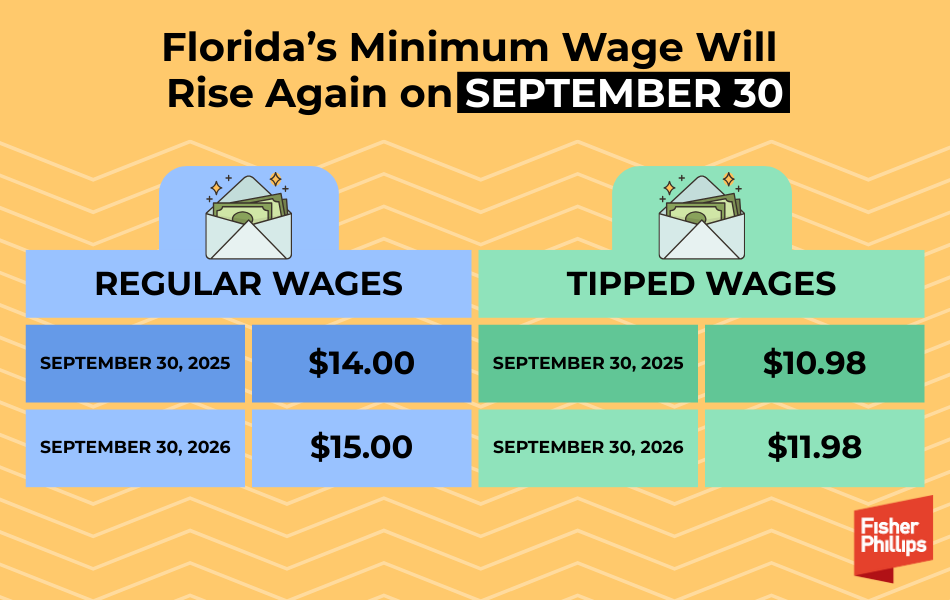
- September 30, 2025: Scheduled to increase to $14.00 per hour.
- September 30, 2026: Scheduled to reach $15.00 per hour.
After reaching the $15.00 per hour mark in 2026, subsequent annual adjustments will resume based on the cost of living, mirroring the pre-Amendment 2 mechanism. This structured approach provides certainty for businesses, allowing them to plan their budgets and staffing needs with a clear understanding of future labor costs. For employees, it offers a predictable path towards improved financial stability. It’s important to note that the minimum wage for tipped employees is also adjusted, typically allowing employers to take a tip credit of $3.02 per hour, meaning their direct wage will be lower but their combined earnings (wage + tips) must meet or exceed the standard minimum wage.
Historical Context and Future Projections
Before Amendment 2, Florida’s minimum wage followed federal guidelines and annual inflation adjustments, often lagging behind other states with more aggressive wage policies. The shift to a constitutionally mandated increase signals a significant change in the state’s economic philosophy regarding labor compensation. This move aligns Florida with a growing number of states and municipalities across the United States that have committed to a $15 per hour minimum wage, recognizing its potential to reduce poverty, stimulate local economies, and improve the quality of life for low-wage workers.
Looking ahead, the successful implementation of the $15 minimum wage by 2026 will undoubtedly shape Florida’s economic landscape for years to come. While some businesses initially expressed concerns about increased operational costs and potential job losses, proponents argue that higher wages can lead to reduced employee turnover, increased productivity, and a stronger consumer base. These projections are particularly relevant for Florida’s service-heavy economy, where employee satisfaction and retention directly impact the quality of the visitor experience.
Impact on Florida’s Travel and Tourism Industry
Florida’s travel and tourism industry is a colossal economic driver, generating billions in revenue and supporting millions of jobs. From theme park giants to boutique hotels, the sector is heavily reliant on a vast workforce. The rising minimum wage inevitably introduces a significant variable into its operational costs and overall dynamics.
The Hospitality Sector: Hotels, Resorts, and Accommodation
The accommodation sector, encompassing everything from luxurious five-star resorts and sprawling family-friendly hotels to quaint bed-and-breakfasts and modern vacation rental apartments, is particularly sensitive to labor costs. Housekeeping staff, front desk agents, bellhops, concierge services, and maintenance teams are all integral to delivering the seamless guest experiences Florida is known for. As the minimum wage increases, these establishments face higher payroll expenses.
To offset these costs, some hotels and resorts may explore various strategies. These could include modest adjustments to room rates, which might be absorbed as part of general inflation, or by optimizing staffing schedules. Additionally, there could be a greater investment in technology to enhance efficiency, such as automated check-in kiosks or robotic cleaning assistants, though personal interaction remains a cornerstone of premium hospitality. For guests, this could mean a slight uptick in the price of their stay, but potentially also an improvement in service quality as better wages attract and retain more skilled and motivated staff. Boutique hotels and smaller accommodations might feel the pinch more acutely than large chains with greater economies of scale, possibly influencing their pricing or the amenities they offer.
Dining and Attractions: A Tourist’s Perspective
Dining out is an indispensable part of any Florida vacation, whether it’s savoring fresh seafood on Key West, enjoying fine dining in Miami, or grabbing a quick bite near Walt Disney World Resort in Orlando. Restaurants, cafes, and bars employ a substantial number of minimum wage earners, including kitchen staff, hosts, and busboys. Similarly, major attractions like Universal Orlando Resort, Busch Gardens Tampa Bay, and numerous smaller local attractions rely on a large pool of employees for ticketing, concessions, ride operation, and guest services.
The most direct impact for tourists might be a modest increase in the cost of food and beverages. Restaurants may adjust menu prices to cover their increased labor expenses. Similarly, while theme park ticket prices are typically set well in advance and reflect broader operational costs, the wages of their front-line staff are a component. For a tourist, these incremental increases, while perhaps not individually striking, could collectively add to the overall budget for a Florida trip. However, many visitors acknowledge that paying fair wages contributes to a better experience through more engaged and satisfied service personnel.
Local Businesses and Service Providers
Beyond the large hotels and theme parks, Florida’s tourism ecosystem thrives on countless local businesses and independent service providers. This includes guided tours, transportation services, souvenir shops, small retail stores, and various leisure activity operators. These smaller enterprises often operate on tighter margins and may have less flexibility to absorb increased labor costs.
For travelers, this could manifest in slightly higher prices for specialized tours, boat rentals, or even taxi and ride-share services if their drivers are classified as employees rather than independent contractors. The flip side is that these local businesses might benefit from a stronger local economy driven by increased consumer spending among higher-paid residents. It’s a delicate balance between maintaining affordability for tourists and ensuring sustainable operations for the businesses that define Florida’s unique local flavor. For those planning an immersive experience into local culture or nature, such as exploring Everglades National Park with a local guide, these economic shifts are part of the broader picture of their travel spend.
Lifestyle and Economic Considerations for Travelers
Understanding the rising minimum wage in Florida isn’t just about economic policy; it’s about how these changes ripple through the daily lives of residents and, by extension, the experiences of travelers. For many, Florida represents not just a destination but a lifestyle choice, whether for a temporary escape or a permanent relocation.
Budgeting for a Florida Vacation
For travelers, budgeting for a Florida vacation now includes accounting for the subtle shifts introduced by rising labor costs. While major expenses like flights and primary accommodation might see less direct impact from the minimum wage alone, daily expenditures on food, local transportation, gratuities, and souvenir purchases are more likely to reflect the change.
Budget Travelers: Those meticulously planning budget travel should factor in slightly higher costs for dining at casual restaurants, fast food, and certain entry-level services. Opting for self-catering accommodations, utilizing grocery stores, and taking advantage of free attractions can help manage these adjustments.
Mid-Range Travelers: This group might experience a balanced impact. While they might see small price increases, they are also likely to benefit from potentially improved service quality from better-compensated staff across hotels and attractions.
Luxury Travelers: For those indulging in luxury travel, the impact might be less noticeable in terms of percentage of their total spend, but they too contribute to an economy where higher wages support the high-quality service they expect.
Regardless of travel style, being aware of the general trend of increasing costs for service-related items is a wise approach to planning. It ensures that expectations are aligned with the economic realities of a growing and evolving state.
Job Market and Quality of Service
One of the often-cited benefits of a higher minimum wage is its potential to improve the quality of the workforce and, consequently, the quality of service. In a state like Florida, where tourism is paramount, the hospitality industry relies heavily on its employees to deliver memorable experiences.
Higher wages can attract a larger pool of talent to roles traditionally associated with minimum wage, leading to a more skilled, motivated, and stable workforce. This can result in lower employee turnover, which means less time and money spent on training new staff, and more experienced individuals serving guests. For a traveler, this could translate into more knowledgeable hotel staff, friendlier restaurant servers, and more efficient service at attractions. The investment in human capital through fair wages is often seen as an investment in the overall visitor experience.
Moreover, a higher minimum wage can improve the overall lifestyle of Florida residents working in the tourism sector, allowing them greater disposable income. This can indirectly boost local economies as these residents spend more on goods and services, including local travel and leisure activities within their own state.
Exploring Florida’s Diverse Destinations Amidst Changes
Florida’s allure lies in its incredible diversity, offering everything from adrenaline-pumping theme park adventures to serene natural escapes. As the economic landscape shifts with rising wages, the unique character and visitor experience of each destination continues to evolve.
Major Tourist Hubs
The impact of minimum wage increases is felt acutely in Florida’s major tourist hubs, where the concentration of hospitality businesses is highest.
- Orlando: Home to Walt Disney World Resort and Universal Orlando Resort, Orlando employs hundreds of thousands in its theme parks, hotels, and related services. While the giants like Disney and Universal often pay above minimum wage, their vast ecosystem of vendors, restaurants, and smaller hotels still relies on competitive wages. Visitors might see slight adjustments in dining costs around the parks or in peripheral accommodations, but the overall draw of these world-class attractions remains undiminished.
- Miami: Known for its vibrant nightlife, art deco architecture, and stunning South Beach, Miami’s luxury hotels, high-end restaurants, and bustling entertainment venues are significant employers. The minimum wage increase ensures that even entry-level positions in this glamorous city offer a more livable wage, potentially enhancing the service experience across its diverse offerings, from a casual cafe in Little Havana to a beachfront resort.
- Tampa: As a growing urban center with attractions like Busch Gardens Tampa Bay and a burgeoning culinary scene, Tampa also sees its hospitality sector adapting. The city’s blend of business and leisure travel means its hotels and restaurants cater to a wide demographic, all while navigating the new wage landscape.
- Florida Keys: This unique string of islands, culminating in historic Key West, thrives on tourism. The laid-back atmosphere and myriad water activities are supported by local businesses. The minimum wage increase here is particularly important for local residents who often face higher costs of living in these island communities, helping to ensure that the charm of the Keys is sustainable for both visitors and those who call it home.
Beyond the Mainstream: Exploring Hidden Gems
While the major hubs garner significant attention, Florida is also home to countless smaller cities, natural landmarks, and cultural sites that offer distinct experiences. Places like St. Augustine, the nation’s oldest city, with its historical tours and charming inns, or the tranquil beauty of Everglades National Park, where ecotourism operators lead guided adventures, are equally affected.
For these hidden gems, the minimum wage increase can be a double-edged sword. On one hand, it might push up prices for local tours, accommodations, and dining in small towns, potentially impacting their affordability. On the other hand, it can empower local communities, improve living standards for residents, and help preserve the unique character of these destinations by enabling local talent to thrive. Travelers seeking authentic experiences in these areas can support local economies more directly by understanding that the prices they pay contribute to the livelihoods of those who make these special places what they are.
In essence, whether you’re planning a thrilling adventure at a theme park or a peaceful retreat into nature, understanding Florida’s evolving minimum wage helps contextualize the pricing and service standards you’ll encounter, making your travel planning more informed and your experience more enriching.
The ongoing increase in Florida’s minimum wage is a significant economic development with broad implications across the state, particularly for its powerhouse travel and tourism industry. From the bustling streets of Miami to the magical kingdoms of Orlando and the serene shores of the Florida Keys, businesses are adapting, and the workforce is seeing a tangible improvement in compensation.
For travelers, this means being mindful of potential, albeit often subtle, adjustments in the cost of services, dining, and accommodations. While a Florida vacation might see minor price shifts, these are often offset by the benefits of a more motivated and stable hospitality workforce, potentially leading to an enhanced quality of service and a more satisfying overall experience. The commitment to a $15 per hour minimum wage by 2026 reflects a broader societal trend towards fair compensation, ensuring that those who make Florida a world-class destination are themselves able to thrive. As the Sunshine State continues to welcome millions of visitors, its evolving economic landscape underscores a commitment to both vibrant tourism and a sustainable, equitable lifestyle for its residents. Florida remains an unparalleled destination, continuously adapting to ensure its appeal for generations of travelers to come.
LifeOutOfTheBox is a participant in the Amazon Services LLC Associates Program, an affiliate advertising program designed to provide a means for sites to earn advertising fees by advertising and linking to Amazon.com. Amazon, the Amazon logo, AmazonSupply, and the AmazonSupply logo are trademarks of Amazon.com, Inc. or its affiliates. As an Amazon Associate we earn affiliate commissions from qualifying purchases.