
For many outdoor enthusiasts, the call of the wild in Florida isn’t just about sun-drenched beaches or theme parks; it’s about the thrilling pursuit of whitetail deer. Deer hunting in the Sunshine State is a deeply ingrained tradition and a significant component of its vibrant tourism landscape, attracting both seasoned hunters and curious newcomers eager to experience the state’s unique ecosystems. Understanding “when” to hunt is paramount, as Florida’s hunting seasons are meticulously regulated by the Florida Fish and Wildlife Conservation Commission (FWC) and vary significantly by region and weapon type. This comprehensive guide will illuminate the intricacies of Florida’s deer hunting seasons, helping you plan an unforgettable and compliant hunting tourism adventure.
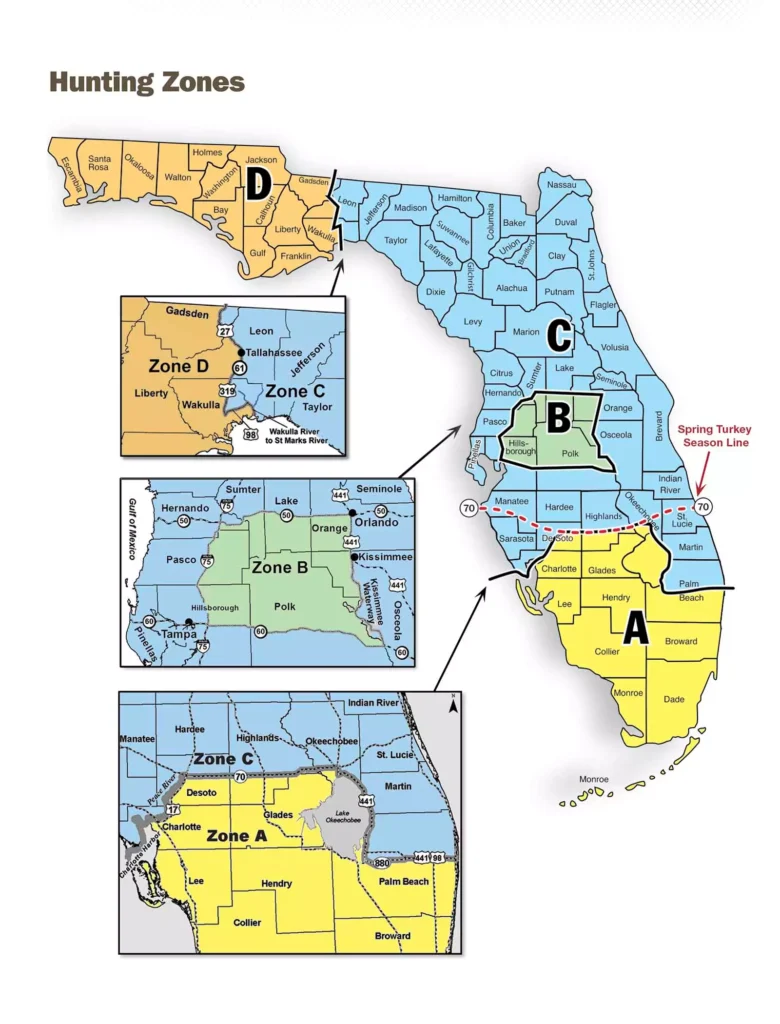
Understanding Florida’s Diverse Hunting Zones
Florida’s unique geography and climate dictate a staggered approach to deer hunting seasons. To manage wildlife populations effectively and provide varied opportunities, the state is divided into distinct zones, each with its own set of regulations and timelines. Recognizing these zones is the first step in planning your hunting trip, ensuring you align your visit with the open seasons for your chosen area.
North vs. South: A Tale of Two Zones
The most significant distinction in Florida’s hunting regulations lies between the Northern and Southern zones. The North Florida Zone generally encompasses the Panhandle and extends down to roughly the latitude of Gainesville. This region often experiences cooler temperatures and distinct seasonal changes, which influence deer breeding cycles and, consequently, hunting season dates. The deer population here, while primarily whitetail, adapts to these temperate conditions.
Conversely, the South Florida Zone covers the vast expanse from roughly Orlando southward, including the humid, subtropical environments leading towards Miami and the Everglades. The warmer climate in this zone means deer breeding patterns are often later and more prolonged, necessitating different hunting season structures to ensure sustainable management. Hunters planning a trip to the southern reaches must pay close attention to these specific dates.
Central Florida’s Unique Offerings
While often grouped with either north or south, Central Florida presents a transition zone, sometimes adhering to dates closer to the north and at other times closer to the south, or even having its own distinct periods for certain weapon types. This region, characterized by its sprawling pine forests, vast ranches, and numerous wildlife management areas (WMAs), offers diverse habitats that support healthy deer populations. Hunters exploring areas around Orlando and Lakeland will find a mix of public and private land opportunities, each contributing to Florida’s rich hunting tourism sector. Always consult the latest FWC regulations for the specific county or WMA you intend to hunt in.
Navigating Deer Hunting Seasons: Key Dates and Regulations
Florida’s deer hunting calendar is a mosaic of different seasons, each permitting specific weapon types and catering to various hunting preferences. These seasons are designed to offer a variety of challenges and opportunities while maintaining strict conservation principles.
Archery Season: A Test of Skill
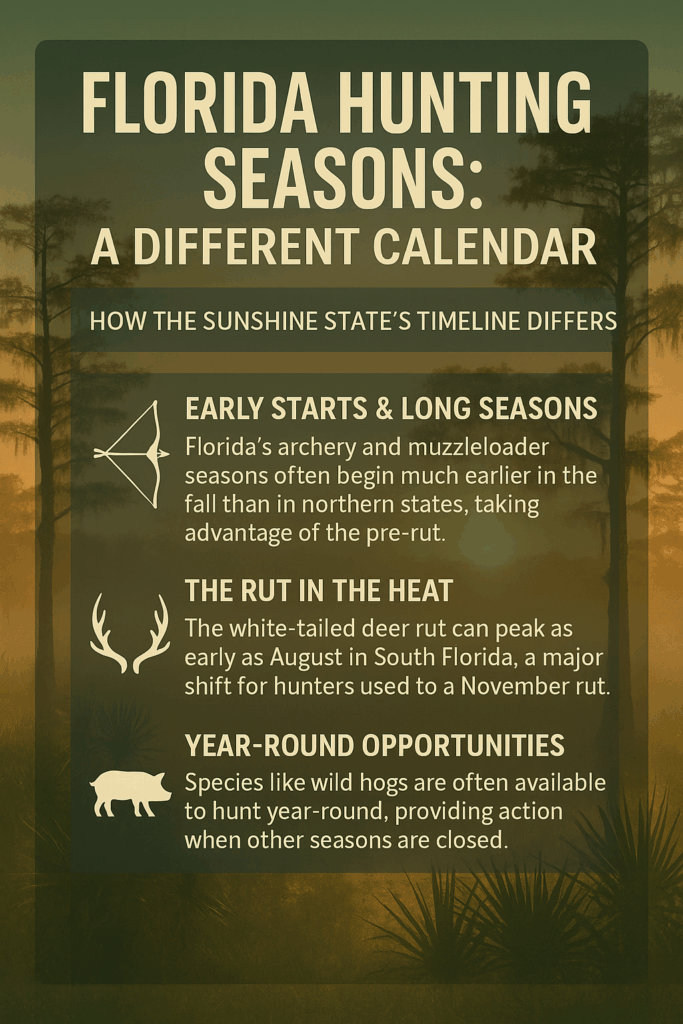
Archery season typically kicks off the deer hunting calendar, usually beginning in late July or early August in the South Florida Zone and late September in the North Florida Zone. This season is highly prized by traditionalists and those seeking a closer, more challenging encounter with deer. It requires immense patience, stealth, and precision. During this period, only bows are permitted, making it a truly primitive hunting experience. For tourism, this offers a unique draw for archers worldwide looking to test their skills in a new environment.
Crossbow Season: Bridging the Gap
Following archery season, or sometimes running concurrently, is crossbow season. This season typically starts in early to mid-September in the South Florida Zone and early October in the North Florida Zone. Crossbows, while still requiring skill, can offer a slightly less demanding physical challenge than traditional bows, making deer hunting more accessible to a broader range of participants, including older hunters or those with physical limitations. This expands the demographic for hunting tourism, inviting more visitors to experience Florida’s outdoors.
Muzzleloading Gun Season: A Blast from the Past
Muzzleloading gun season often immediately follows crossbow season, typically beginning in late September to early October in the South Florida Zone and late October in the North Florida Zone. This traditional hunting method, utilizing single-shot firearms loaded from the muzzle, transports hunters back to earlier eras. The slow reloading process and limited range add an element of historical challenge and authenticity, making it a unique draw for those interested in heritage tourism and traditional hunting practices.
General Gun Season: The Peak Experience
The general gun season is arguably the most popular and longest of the deer hunting seasons, attracting the largest number of hunters. It typically commences in mid-October in the South Florida Zone and early November in the North Florida Zone. During this period, centerfire rifles, shotguns, and other modern firearms are permitted. This season offers the greatest flexibility and opportunity, making it a prime time for hunting tourism, drawing groups and families looking for a classic Florida hunting experience. It’s often when hunters are most likely to bag a deer, given the broader range of effective weaponry.
Youth Deer Hunts: Fostering the Next Generation
In addition to the primary seasons, the FWC often designates special youth deer hunts, typically held on specific weekends during the general gun season or sometimes before it. These hunts are designed to introduce young people (usually under 16) to hunting in a safe and mentored environment. They are crucial for preserving the hunting tradition and promoting responsible wildlife stewardship among future generations. For family tourism, these hunts provide an incredible opportunity for parents to share their passion for the outdoors with their children in a structured, educational setting.
Essential Gear and Preparations for a Florida Deer Hunt
Beyond knowing when to hunt, successful and ethical deer hunting in Florida requires thorough preparation and the right equipment. This aspect of the tourism experience ensures safety, comfort, and compliance.
Licensing and Permits: Your Gateway to the Outdoors
Before setting foot in the woods, every hunter must possess a valid Florida hunting license. Non-residents have options for annual licenses or short-term licenses (e.g., 3-day or 7-day), which are perfect for a hunting tourism trip. Additionally, a deer permit is required, often bundled with other tags like a Florida management area (WMA) permit if you plan to hunt on public lands. All licenses and permits can be conveniently purchased online through the FWC website, over the phone, or at licensed agents throughout the state. Ensuring these are in order is non-negotiable for a legal and enjoyable trip.
Weaponry and Ammunition: Matching the Season
The choice of weapon is dictated by the specific season you’re participating in. Archers need reliable bows and appropriate arrows. Crossbow hunters require well-maintained crossbows and bolts. Muzzleloaders demand attention to detail in loading and cleaning. General gun season offers the widest array of choices, from high-powered rifles to shotguns. Always ensure your chosen firearm is in good working order, sighted in, and that you are using the correct ammunition for both your weapon and the game. Familiarity with your equipment is key for accuracy and safety.
Clothing and Comfort: Battling the Florida Elements
Florida’s weather can be unpredictable, even during hunting season. While the Panhandle might experience crisp, cool mornings in November, South Florida can still be hot and humid well into fall. Layered clothing is often the best approach, allowing you to adapt to changing temperatures. Lightweight, moisture-wicking fabrics are crucial for comfort in humid conditions. Camouflage patterns appropriate for Florida’s green, dense vegetation are advisable. Always include rain gear, as sudden showers are common. Don’t forget sturdy, waterproof boots suitable for traversing diverse terrain, from dry pine flats to marshy areas.
Safety First: Protocols and Best Practices
Safety should be every hunter’s top priority. This includes knowing and following all FWC regulations, which are designed to protect both hunters and wildlife. Always wear hunter orange (during general gun season and some WMA hunts), even if not strictly required, to increase your visibility to others. Familiarize yourself with the area you’re hunting in, use maps and GPS, and inform someone of your hunting plans and expected return time. The four cardinal rules of firearm safety — treat every firearm as if it were loaded, always point the muzzle in a safe direction, be sure of your target and what is beyond it, and keep your finger off the trigger until ready to shoot — are paramount.
Enhancing Your Florida Deer Hunting Tourism Experience
Deer hunting in Florida is more than just the act of hunting; it’s an immersive tourism experience that can be enriched through various avenues, from expert guidance to exploring the state’s broader natural attractions.
Guided Hunts and Outfitters: Expertise at Your Service
For non-resident hunters or those new to Florida’s specific conditions, engaging with a professional hunting outfitter or guide can significantly enhance the experience. Florida boasts numerous reputable outfitters, particularly in areas like Ocala and the Panhandle, who possess intimate knowledge of local deer populations, land access, and optimal hunting strategies. They can provide everything from lodging and meals to blinds, stands, and game retrieval services, making for a seamless and productive tourism package. This is an excellent option for those seeking a premium, hassle-free hunting vacation.
Public vs. Private Lands: Choosing Your Terrain
Florida offers diverse hunting opportunities on both public and private lands. Public lands, primarily managed by the FWC as Wildlife Management Areas (WMAs), offer accessible and affordable hunting. However, they often come with stricter regulations, quota hunts (requiring a drawn permit), and higher hunter pressure. Private lands, on the other hand, provide more controlled environments, often with lower hunter density and potentially larger deer. Access to private land usually involves leasing rights or booking a guided hunt through an outfitter. Understanding the pros and cons of each will help you select the best fit for your hunting tourism goals.
Beyond the Hunt: Exploring Florida’s Natural Beauty
A deer hunting trip to Florida doesn’t have to be solely about the hunt. The state is a treasure trove of natural wonders, offering numerous complementary tourism activities. After a morning in the stand, consider exploring nearby state parks, going freshwater fishing in one of Florida’s many lakes, bird watching, or even airboat tours through the wetlands. For families, pairing a hunting trip with a visit to Florida’s world-renowned theme parks or coastal attractions in cities like Sarasota or Jacksonville can create a truly memorable and diverse vacation experience.
In conclusion, understanding “When Is Deer Hunting Season In Florida?” is key to unlocking a unique segment of the state’s tourism. By delving into the zone-specific dates, weapon regulations, essential preparations, and options for enhancing the experience, hunters can plan a responsible, ethical, and immensely rewarding adventure. Whether you’re a seasoned archer or a first-time general gun hunter, Florida’s diverse landscapes and abundant wildlife offer an unparalleled opportunity to connect with nature and create lasting memories.
LifeOutOfTheBox is a participant in the Amazon Services LLC Associates Program, an affiliate advertising program designed to provide a means for sites to earn advertising fees by advertising and linking to Amazon.com. Amazon, the Amazon logo, AmazonSupply, and the AmazonSupply logo are trademarks of Amazon.com, Inc. or its affiliates. As an Amazon Associate we earn affiliate commissions from qualifying purchases.