
Navigating the roads of Florida offers a vibrant tapestry of experiences, from sun-drenched beaches to bustling urban centers. Whether you’re a long-time resident, a new transplant, or a visitor exploring the Sunshine State, understanding its traffic laws is paramount for safety and compliance. Among the most critical, and often misunderstood, regulations are those concerning school buses. These large, yellow vehicles are the daily transporters of our most precious cargo: children. Consequently, the laws governing how drivers interact with school buses are strictly enforced and carry significant implications for road safety. This comprehensive guide aims to demystify when and how you are legally required to stop for a school bus in Florida, ensuring that your travels are both smooth and responsible.
Understanding Florida’s School Bus Stop Law
At its core, Florida’s school bus stop law is designed to create a safe zone for children entering and exiting the bus. The general principle is straightforward: when a school bus stops and activates its flashing red lights and extended stop arm, drivers must stop. However, the nuances lie in the specific road configurations and traffic conditions.
The Basic Rule: Flashing Lights and Stop Sign
The primary indicators that a school bus is stopping to load or unload passengers are its flashing red lights and its stop sign, which extends from the left side of the bus. When these signals are active, it means children are either getting on or off the bus, and a temporary safety perimeter is established around the vehicle. All drivers approaching the bus, in most scenarios, are legally obligated to stop immediately and remain stopped until the red lights are deactivated, and the stop arm is retracted. This seemingly simple rule is often complicated by the type of roadway, which dictates whether opposing traffic also needs to stop.
Distinguishing Between Divided and Undivided Highways
The critical factor in determining whether you must stop, regardless of your direction of travel, is the nature of the roadway: specifically, whether it’s an undivided or a divided highway. An undivided highway is typically a two-lane road or a multi-lane road without a physical barrier separating the directions of travel. A divided highway, conversely, features a distinct physical median or barrier, such as a raised concrete divider, a grassy median, or even a wide unpaved strip, that physically separates the traffic flow. Understanding this distinction is not just academic; it dictates your legal obligation and potential liability.
The Role of Children Crossing
The underlying rationale for these laws is the safety of children. When a school bus stops, children may need to cross the road to reach their homes or the bus itself. The stop arm and flashing lights signal to all drivers that children might be present in or near the roadway. Your stop ensures that these children can cross safely without the risk of being struck by moving vehicles. It’s a collective responsibility, and every driver plays a crucial role in safeguarding young lives.
Common Scenarios and Specific Exceptions
While the basic rule is clear, its application varies based on road design. Florida Statute 316.172 provides precise definitions for different road types, which drivers must understand to comply with the law.
Two-Lane Roads (Opposite Directions)
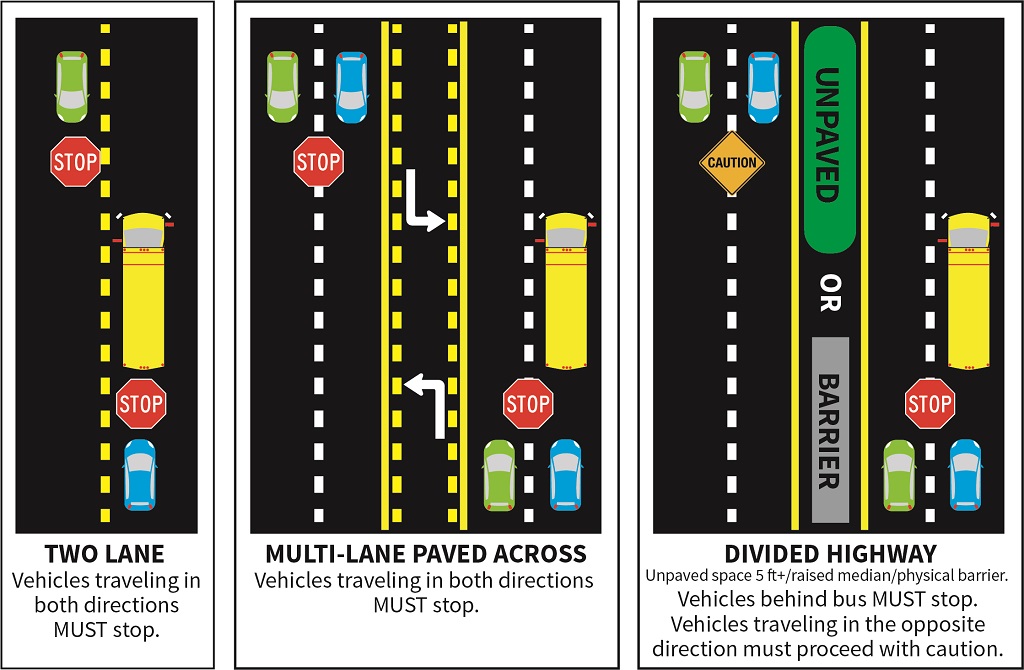
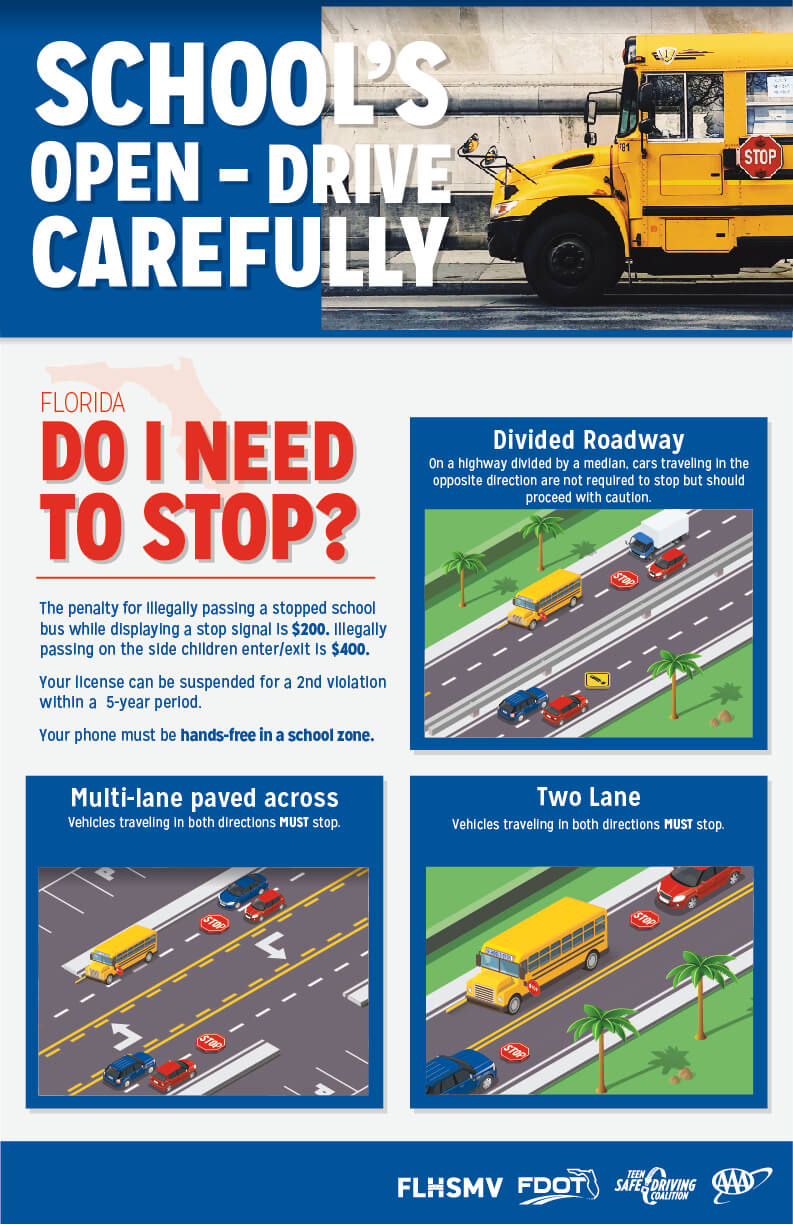
On a two-lane road (one lane in each direction), when a school bus stops and displays its red flashing lights and stop arm, all traffic traveling in both directions must stop. This is the most straightforward scenario and often the most strictly enforced because children frequently need to cross this type of road. There are no exceptions here; your immediate stop is mandatory.
Multi-Lane Roads with No Physical Barrier
Imagine a four-lane road (two lanes in each direction) without a physical median, perhaps only a painted yellow line separating the directions of travel. In this scenario, when a school bus stops and activates its warning signals, all traffic traveling in both directions must stop. Just like a two-lane road, the absence of a physical barrier means children could be crossing multiple lanes of traffic, making it imperative for all vehicles to halt. This includes vehicles in the lane immediately next to the bus, as well as those in the opposing lanes.
Divided Highways with Physical Barriers
This is where the primary exception applies. If you are on a divided highway with a distinct physical barrier (such as a raised median, guardrail, or a wide unpaved strip) separating your direction of travel from the school bus’s direction, you are generally not required to stop. The physical barrier is considered sufficient to prevent children from crossing directly into your path of travel. However, it’s crucial to understand what constitutes a “physical barrier” and to exercise extreme caution regardless. Even on a divided highway, if you are traveling in the same direction as the bus, you must stop.
What Constitutes a “Physical Barrier”?
The definition of a “physical barrier” is critical. It refers to a concrete median, a raised island, a grassy divider, or any other structural element that physically separates traffic flows. A painted median, turn lane, or merely a double yellow line is not considered a physical barrier under Florida law. If there’s no physical obstruction that would prevent a child from easily crossing from one side of the road to the other, you must stop. When in doubt, err on the side of caution and stop. It’s always better to be safe than sorry, especially when children’s lives are at stake.

Penalties and Consequences of Violating the Law
Violating Florida’s school bus stop law is not a minor infraction. It is taken very seriously by law enforcement and the courts due to the severe safety implications. The consequences are designed to deter dangerous driving practices around school buses.
Fines, Points, and License Suspension
A first-time offense for illegally passing a stopped school bus in Florida typically results in a minimum fine of $200. However, the exact fine can vary significantly depending on the county and the specific circumstances of the violation, potentially reaching several hundred dollars. More importantly, this violation carries points against your driver’s license – usually four points. Accumulating too many points within a certain period can lead to mandatory driving school, increased insurance premiums, or even driver’s license suspension. Repeated violations can result in higher fines and more severe penalties, including longer license suspensions. These penalties underscore the state’s commitment to protecting students.
The Importance of Safety: Protecting Our Children
Beyond the legal and financial ramifications, the most significant consequence of illegally passing a school bus is the potential for catastrophic injury or death to a child. Drivers who fail to stop create an incredibly dangerous situation, as children may dart out unexpectedly, assuming all traffic will stop. The yellow school bus is an internationally recognized symbol of child transport, and its flashing red lights and stop arm are universally understood signals to halt. Prioritizing safety over saving a few seconds on your commute is a moral imperative and a legal obligation.
Best Practices for Driving Safely Around School Buses
Developing safe driving habits around school buses is essential for every driver in Florida. These practices extend beyond mere legal compliance to encompass a proactive approach to road safety.
Anticipation and Awareness
Always be aware of your surroundings, especially during typical school commuting hours (early morning and mid-afternoon). If you see a school bus in the distance, begin to slow down and prepare to stop. Watch for yellow flashing lights, which indicate the bus is preparing to stop and activate its red lights and stop arm. This early warning gives you ample time to react safely and smoothly, preventing abrupt stops or potential rear-end collisions. Maintain a safe following distance from school buses, allowing you to see their warning signals and react appropriately.
Minimizing Distractions
Driving around school buses demands your undivided attention. Put away your phone, avoid eating, and minimize other distractions that could divert your focus from the road. A moment of inattention could mean failing to see a child, missing the flashing red lights, or misinterpreting the road conditions. Focused driving ensures you can make quick and correct decisions, protecting children and preventing legal trouble.
Teaching Younger Drivers
For parents of new or younger drivers, it is crucial to emphasize the importance of school bus safety laws. Review the specific scenarios and exceptions in Florida with them. Explain not only the legal requirements but also the moral responsibility involved. Role-playing different situations and discussing potential hazards can significantly improve their understanding and adherence to these critical safety rules. The habits formed early in a driver’s career often last a lifetime.
Florida’s Commitment to School Bus Safety
Florida is continually seeking ways to enhance school bus safety, employing a multi-faceted approach that combines enforcement, technology, and public education.
Enforcement and Technology (Bus Cameras)
Many school districts in Florida have equipped their school buses with external cameras, often mounted to capture footage of vehicles illegally passing a stopped bus. These cameras serve as powerful enforcement tools. If a driver is caught on camera violating the law, the footage can be used by law enforcement to issue citations. This technological advancement significantly increases the chances of offenders being identified and penalized, acting as a deterrent against unsafe driving practices. Drivers should assume that if they illegally pass a school bus, they will be caught.
Ongoing Education Efforts
Beyond enforcement, state and local authorities, alongside school districts, regularly conduct public awareness campaigns. These initiatives aim to educate both new and experienced drivers about the specifics of Florida’s school bus stop law. Educational materials, public service announcements, and community outreach programs reinforce the message of caution and compliance. The goal is to foster a culture of safety where every driver understands their role in protecting students on their daily commute.
In conclusion, understanding and adhering to the school bus stop laws in Florida is not just about avoiding fines and points on your license; it’s about safeguarding the lives of children. By being vigilant, aware, and prepared to stop, you contribute to a safer environment for everyone on Florida’s roads. Drive smart, drive safe, and always prioritize the well-being of our students.
LifeOutOfTheBox is a participant in the Amazon Services LLC Associates Program, an affiliate advertising program designed to provide a means for sites to earn advertising fees by advertising and linking to Amazon.com. Amazon, the Amazon logo, AmazonSupply, and the AmazonSupply logo are trademarks of Amazon.com, Inc. or its affiliates. As an Amazon Associate we earn affiliate commissions from qualifying purchases.