
The Boston Massacre, a pivotal event that dramatically escalated tensions between the American colonists and Great Britain, occurred on March 5, 1770. This tragic incident, often depicted as a bloody confrontation between unarmed civilians and British soldiers, was a crucial turning point on the road to the American Revolution. For anyone interested in American history, experiencing the sites and stories of the Boston Massacre in present-day Boston offers a profound connection to the past, making it an essential destination for history buffs and curious travelers alike.
Boston, a city steeped in revolutionary fervor and historical significance, provides an unparalleled opportunity to walk in the footsteps of those who shaped the nation. Understanding “when” the Boston Massacre happened is just the beginning; delving into its causes, its immediate aftermath, and its enduring legacy reveals the complex tapestry of events that led to the birth of the United States. This article will explore the historical context of the massacre, its profound impact, and how modern travelers can immerse themselves in this rich history, from exploring historic landmarks to finding the perfect accommodation for their historical journey.
The Fateful Day: March 5, 1770
To truly grasp the significance of the Boston Massacre, one must first understand the volatile environment that gripped colonial Boston in the late 1760s. The city was a hotbed of revolutionary sentiment, simmering with resentment against British imperial policies. The presence of British troops, intended to maintain order and enforce unpopular acts of British Parliament, only exacerbated the friction, turning ordinary citizens into reluctant participants in an unfolding drama.
A Tense Atmosphere in Colonial Boston
By 1770, relations between the American colonists and the British Empire had deteriorated significantly. Following the costly French and Indian War, Great Britain sought to replenish its coffers by imposing a series of taxes and regulations on its Thirteen Colonies. Acts such as the Stamp Act of 1765 and the Townshend Acts of 1767 were met with fierce resistance, particularly in Boston. Colonists argued vehemently against “taxation without representation,” a principle that would become a rallying cry for independence.
In response to colonial protests and growing unrest, especially concerning customs enforcement, the British government dispatched troops to Boston in 1768. The sight of red-coated soldiers patrolling the streets, a constant reminder of British authority, was deeply resented by the local populace. These soldiers were often seen as an occupying force, creating a palpable tension that permeated daily life. Skirmishes and confrontations between soldiers and citizens became increasingly common, fueled by economic competition (as soldiers often sought part-time work), cultural differences, and political animosity. The city was a powder keg, waiting for a spark.
The Tragic Incident Unfolds
That spark ignited on the evening of March 5, 1770, on King Street (now State Street), directly in front of the Old State House and the Custom House. The incident began when a young wigmaker’s apprentice, Edward Garrick, confronted a British sentry, Private Hugh White, over an unpaid bill. The exchange quickly escalated, attracting a growing crowd of colonists. Taunts, insults, and projectiles – including snowballs, ice, and oyster shells – were hurled at Private White.
Fearing for his safety and overwhelmed by the mob, Private White called for reinforcements. Captain Thomas Preston arrived with a small detachment of seven soldiers, attempting to disperse the increasingly agitated crowd. Despite Captain Preston’s efforts to control his men and calm the mob, the situation spiraled out of control. Accounts vary, but at some point, a soldier’s musket discharged, possibly accidentally, or perhaps in response to a cry of “Fire!” from the crowd. This shot triggered a volley of fire from the other soldiers.
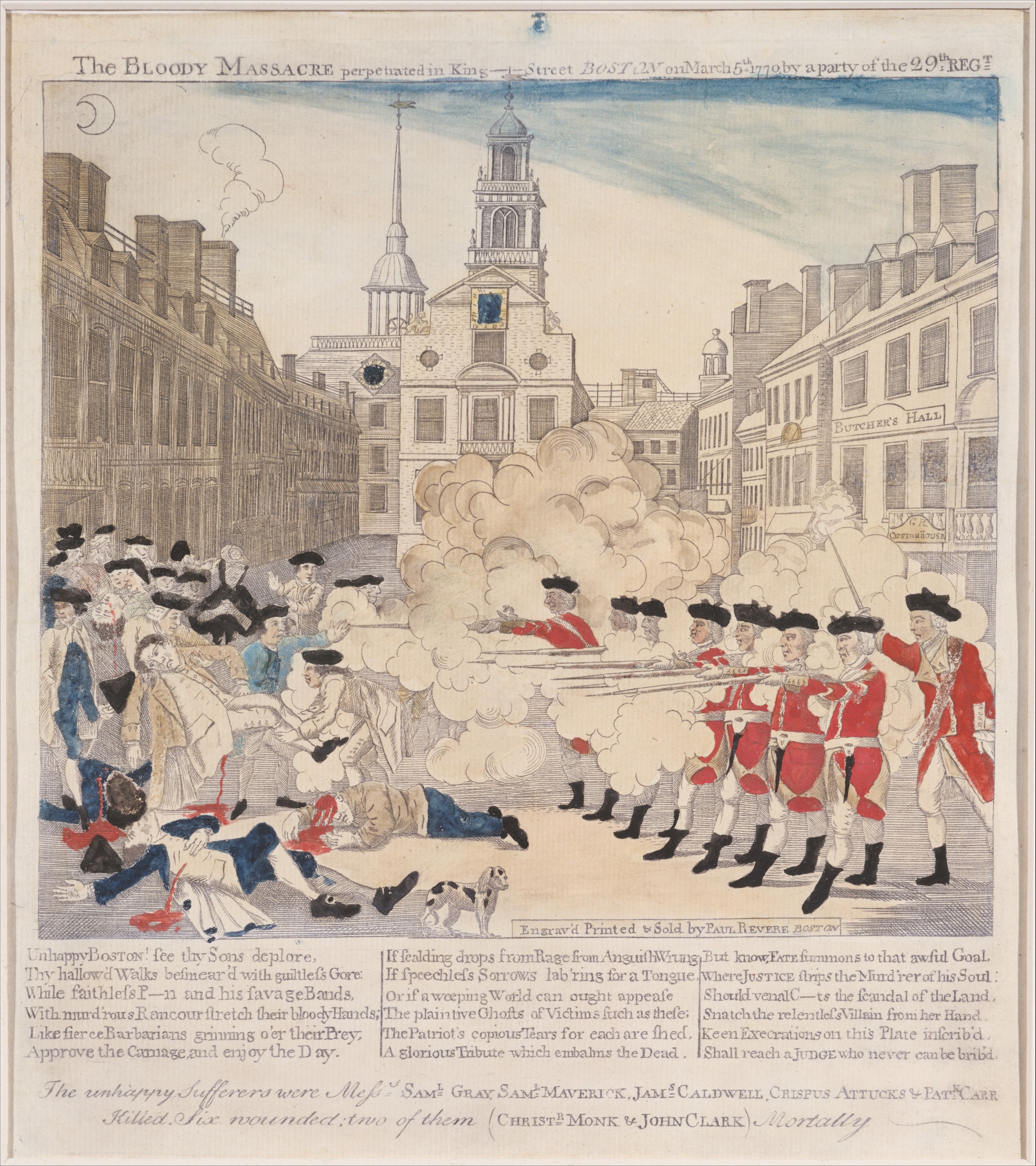
When the smoke cleared, five colonists lay dead or mortally wounded. The first to fall was Crispus Attucks, a seaman of mixed African and Native American descent, often considered the first casualty of the American Revolution. Other victims included James Caldwell, Samuel Gray, Patrick Carr, and John Adams (not the future president, but a ropemaker who died later from his wounds). The immediate aftermath was chaos, but the long-term repercussions would prove to be monumental, forever etching March 5, 1770, into the annals of American history.

Aftermath and Legacy: Fueling the Revolution
The Boston Massacre sent shockwaves through the colonies, galvanizing opposition to British rule and providing a powerful symbol for those advocating for independence. The events of that night, swiftly dubbed a “massacre” by colonial propagandists, became a critical piece of the emerging narrative of British tyranny.
The Trial and its Impact
In the immediate wake of the incident, Captain Thomas Preston and his eight soldiers were arrested and charged with murder. The trial, held in the fall of 1770, was a high-stakes affair that underscored the deep divisions within the colony. Remarkably, two prominent Patriots, John Adams (the future second president of the United States) and Josiah Quincy II, agreed to defend the British soldiers. They believed that even those accused of heinous crimes deserved a fair trial, a testament to the principles of justice they sought for their nascent nation.
Their defense argued that the soldiers had acted in self-defense, provoked by a riotous mob. The jury, composed primarily of colonists, ultimately acquitted Captain Preston and six of his soldiers. Two soldiers, Hugh Montgomery and Matthew Kilroy, were found guilty of manslaughter, branded on their thumbs, and released. While the verdict demonstrated a degree of legal impartiality, the event itself was masterfully exploited by colonial leaders. Figures like Samuel Adams and Paul Revere skillfully used the incident to stir anti-British sentiment. Paul Revere’s famous engraving of the “Bloody Massacre,” though highly propagandistic and inaccurate in its depiction, became an iconic image, widely circulated and instrumental in shaping public opinion against British rule.

A Catalyst for Independence
The Boston Massacre served as a powerful rallying cry, demonstrating the perceived brutality of British authority and igniting a renewed sense of colonial unity. It reinforced the belief that reconciliation with Great Britain might be impossible. This tragic event directly contributed to the growing radicalization of the colonists, laying crucial groundwork for subsequent acts of defiance.
Just three years later, the frustrations boiled over again in the iconic Boston Tea Party of 1773, a direct protest against the Tea Act. Great Britain’s punitive response, known as the Intolerable Acts, further solidified colonial resistance and led directly to the convening of the First Continental Congress. The Boston Massacre’s legacy as a symbol of injustice and a catalyst for revolutionary fervor cannot be overstated. It became a powerful touchstone, remembered annually by Patriots and serving as a stark reminder of the sacrifices that would be necessary to achieve independence.
Experiencing History: Visiting Boston’s Revolutionary Sites
For those eager to delve deeper into American history, a trip to Boston is an absolute must. The city is a living museum, where centuries-old landmarks stand proudly amidst a vibrant modern metropolis. Exploring the sites of the Boston Massacre and other revolutionary landmarks offers a unique educational travel experience that appeals to history enthusiasts, families, and solo adventurers alike.
Tracing the Freedom Trail
The heart of Boston’s historical experience lies along the Freedom Trail, a 2.5-mile red-lined path that winds through the city, connecting 16 historically significant sites. The Boston Massacre site is one of the most poignant stops on this trail. Marked by a cobblestone circle in front of the Old State House, it provides a solemn moment for reflection on the very spot where lives were lost.
Standing before the Old State House, visitors can imagine the tension of March 5, 1770, and the dramatic scenes that unfolded. This iconic building, the oldest surviving public building in Boston, served as the seat of colonial government and witnessed many of the events leading up to the revolution. Beyond the massacre site, the Freedom Trail offers an immersive journey through revolutionary history, with key landmarks including:
- Faneuil Hall: Known as the “Cradle of Liberty,” this historic marketplace and meeting hall was where colonists gathered to debate independence. Today, it remains a bustling center for shopping and dining at Quincy Market.
- Paul Revere House: The oldest house in downtown Boston, offering a glimpse into the life of the famous silversmith and Patriot, Paul Revere.
- Old North Church: Famous for the “one if by land, two if by sea” signal that launched Paul Revere’s midnight ride.
- Bunker Hill Monument: Commemorating one of the earliest battles of the American Revolution, offering panoramic views of the city.
- Granary Burying Ground: The final resting place of many prominent figures, including Samuel Adams, John Hancock, and the victims of the Boston Massacre.
Walking the Freedom Trail can be done independently with a map or through guided tours, many led by costumed interpreters who bring the stories to life with engaging narratives and historical context.
Planning Your Historical Journey to Boston
Visiting Boston for its rich history combines travel, tourism, and accommodation into a truly fulfilling experience.
Accommodation:
Boston offers a diverse range of accommodations to suit every traveler and budget. For those prioritizing historical immersion, staying in downtown Boston, particularly near the Freedom Trail or in neighborhoods like Beacon Hill or the North End, is ideal.
- Luxury Stays: Hotels like The Langham Boston, located in the former Federal Reserve Bank, offer opulent experiences close to historical sites. The historic Omni Parker House, where figures like Charles Dickens and future presidents once stayed, provides a blend of historical charm and modern amenities.
- Boutique & Mid-Range: Numerous boutique hotels and well-appointed chain hotels, such as The Godfrey Hotel Boston, provide comfortable and stylish options within walking distance of attractions.
- Budget-Friendly & Long-Term: Hostels, guesthouses, and apartment rentals (especially for longer stays) can be found a short metro ride away, offering convenient access to the city’s core without the downtown price tag. Always check reviews and compare options to find the perfect fit for your lifestyle and travel needs.
Local Culture and Food:
Beyond its historical landmarks, Boston boasts a vibrant local culture and culinary scene.
- Food Tours: Indulge in classic New England fare like clam chowder, lobster rolls, and fresh seafood. The North End, Boston’s historic Italian neighborhood, offers an incredible array of authentic Italian restaurants and bakeries.
- Museums: Complement your historical exploration with visits to world-class museums such as the Museum of Fine Arts or the unique Isabella Stewart Gardner Museum. For maritime history, the USS Constitution Museum in Charlestown is a must-see.
- Activities: Take a scenic cruise on the Charles River, explore the charming cobblestone streets of Beacon Hill (don’t miss Acorn Street), or catch a game at Fenway Park. For family trips, the New England Aquarium offers engaging experiences. A short trip to Cambridge allows you to visit the prestigious Harvard University.
Best Time to Visit:
Spring and fall offer pleasant weather, ideal for walking the Freedom Trail and exploring outdoor attractions. The summer months are lively but can be crowded, while winter offers a quieter, often snowy, charm. Regardless of when you visit, Boston always offers a rich array of experiences.
The Boston Massacre, a chilling event from March 5, 1770, remains a powerful symbol of colonial resistance and a testament to the sacrifices made for liberty. Its story is inextricably woven into the fabric of American identity. By visiting Boston and walking the hallowed grounds of its revolutionary past, travelers can gain a profound understanding of this pivotal moment, connecting deeply with the history that shaped a nation. It’s more than just a historical date; it’s an experience that brings the past vividly to life, offering a powerful blend of education, reflection, and discovery.
LifeOutOfTheBox is a participant in the Amazon Services LLC Associates Program, an affiliate advertising program designed to provide a means for sites to earn advertising fees by advertising and linking to Amazon.com. Amazon, the Amazon logo, AmazonSupply, and the AmazonSupply logo are trademarks of Amazon.com, Inc. or its affiliates. As an Amazon Associate we earn affiliate commissions from qualifying purchases.