
The question “When was California discovered?” often conjures images of intrepid European explorers charting unknown waters, but the true narrative of this magnificent land is far richer and more complex. Before any European foot touched its shores, California was a vibrant tapestry of indigenous cultures, thriving for millennia, shaping the land and living in harmony with its diverse ecosystems. The concept of “discovery” itself is primarily a Eurocentric one, marking the point at which the land entered the historical consciousness of the Old World, leading to a cascade of events that forever altered its destiny.
From the first European sightings to the seismic shifts of the Gold Rush and beyond, California’s story is one of dramatic transformation. It’s a narrative that weaves together ancient traditions, colonial ambitions, revolutionary fervor, and the relentless pursuit of prosperity, all against the backdrop of an incredibly beautiful and resource-rich landscape. For today’s traveler, understanding this deep history isn’t just an academic exercise; it’s the key to unlocking a more profound appreciation for the state’s iconic landmarks, its diverse cultural fabric, and the unique lifestyle it offers. Whether you’re exploring the historic missions, wandering through boomtowns turned ghost towns, or marveling at the natural wonders that lured early settlers, the echoes of California’s past are ever-present, offering an unparalleled journey through time.

The Indigenous Roots of a Golden Land
Long before European explorers gazed upon its coastline, the land we now know as California was home to a mosaic of indigenous peoples, boasting one of the highest concentrations of Native American populations in North America. For thousands of years, these communities flourished, developing sophisticated societies, unique languages, and sustainable ways of life perfectly adapted to California’s varied environments, from its arid deserts and fertile valleys to its dense redwood forests and extensive coastline. Their presence fundamentally shaped the landscape, fostering biodiversity through traditional land management practices and leaving an indelible mark that predates any colonial legacy.
Ancient Inhabitants and Diverse Cultures
Archaeological evidence suggests human habitation in California dates back at least 15,000 years, with some sites indicating even earlier settlements. By the time Europeans arrived in the 16th century, an estimated 300,000 native people lived across the region, belonging to over 100 distinct tribal groups, speaking more than 100 different languages and dialects. This extraordinary linguistic and cultural diversity was unparalleled. Tribes such as the Chumash along the southern coast were renowned for their advanced maritime skills and elaborate plank canoes, navigating the Pacific Ocean with expertise. The Miwok and Yokut thrived in the central valleys, utilizing the abundant acorn crops and river resources, while the Yurok and Hupa nations in the redwood region developed intricate social structures and spiritual traditions deeply connected to their forest homes.
These early inhabitants lived in complex societies with established trade routes, political systems, and rich spiritual beliefs. Their sustainable practices, deep ecological knowledge, and artistic expressions – from intricate basketry and rock art to oral traditions and ceremonial dances – represent a profound legacy. Many of these cultural traditions persist today, making a visit to contemporary Native American cultural centers and museums across California an essential part of understanding the state’s complete historical narrative. These sites offer a powerful counter-narrative to the colonial “discovery” story, highlighting endurance, resilience, and the enduring connection of indigenous peoples to their ancestral lands.
The Dawn of European Exploration: Juan Rodríguez Cabrillo and Beyond
The true “discovery” from a European perspective began in the early 16th century, driven by the era’s insatiable quest for new trade routes, resources, and territories. Following Christopher Columbus’s voyages, Spain quickly emerged as a dominant colonial power, establishing a vast empire in the Americas. It was from their established territories in New Spain (modern-day Mexico) that the first expeditions northwards along the Pacific coast were launched, setting the stage for California’s entry into the European imagination.
Cabrillo’s Voyage and the Naming of California
The generally accepted date for the first European “discovery” of California is September 28, 1542, when Portuguese explorer Juan Rodríguez Cabrillo, sailing under the Spanish flag, entered what he described as a “very good closed port,” which we now know as San Diego Bay. Cabrillo led an expedition of three ships – the San Salvador, the La Victoria, and the San Miguel – from Navidad, Mexico, with the mission to explore the northern reaches of the Pacific coast and search for the fabled Strait of Anian, a mythical waterway connecting the Pacific and Atlantic Oceans.
During his voyage, Cabrillo charted much of the California coastline, sailing as far north as the Russian River area, likely reaching at least modern-day Point Reyes before storms forced them south. He encountered numerous indigenous communities along the way, often noting their settlements and interactions, though these were frequently interpreted through a colonial lens. While Cabrillo himself died on Santa Catalina Island in January 1543, his expedition continued north under his chief pilot, Bartolomé Ferrer, before returning to New Spain. His journals provided the first European accounts of California’s geography and indigenous peoples, laying the groundwork for future Spanish claims. A monument at Cabrillo National Monument in San Diego commemorates this pivotal journey, offering breathtaking views of the bay he first entered.
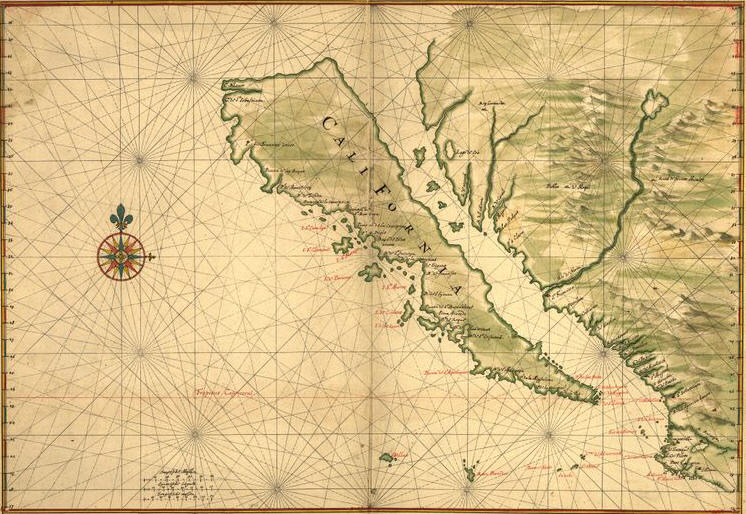
The name “California” itself predates Cabrillo’s voyage and emerged from popular fiction. It first appeared in Las sergas de Esplandián (The Adventures of Esplandián), a Spanish chivalric romance novel published in 1510 by Garci Rodríguez de Montalvo. The novel described a mythical island paradise rich in gold, ruled by a formidable Black queen named Calafia. Spanish explorers, possibly inspired by the novel and the perception of the Baja California Peninsula as an island, began using the name. By the time Cabrillo sailed north, the name was already associated with the exotic lands beyond Mexico’s northwest frontier.
Sir Francis Drake and Other Early Encounters
Despite Cabrillo’s expedition, Spain did not immediately move to colonize California due to its perceived lack of immediate riches and the logistical challenges of supporting settlements so far north. For over three decades, California remained largely unexplored by Europeans, known only through Cabrillo’s charts. However, this changed with the arrival of other European powers, most notably England.
In 1579, English privateer Sir Francis Drake, circumnavigating the globe in his ship, the Golden Hind, landed on the California coast, likely in what is now Drake’s Bay north of San Francisco. Drake claimed the land for Queen Elizabeth I and named it “Nova Albion” (New England), in a symbolic challenge to Spanish claims. While his visit was brief, it underscored the potential for rival European nations to establish a presence in the region, rekindling Spanish interest in securing its northern frontier. Later Spanish expeditions, such as that of Sebastián Vizcaíno in 1602, further explored and mapped the coast, giving names to places like Monterey Bay and Santa Barbara, and solidifying Spanish claims, even if actual settlement was still centuries away. These early explorations, though largely fleeting, set the geopolitical stage for California’s eventual colonization.
Spanish Colonization and the Mission Era
Despite early European contact, permanent Spanish settlement in California did not begin until the late 18th century. Two primary motivations drove this delayed colonization: the perceived threat of Russian expansion from Alaska and British interest in the Pacific Northwest, and the desire to extend Spain’s spiritual conquest to the indigenous populations of Alta California (Upper California). This era, known as the Mission Era, profoundly reshaped the landscape, culture, and demographics of California, laying the foundation for many of its modern cities and landmarks.
Establishing a Foothold: Missions, Presidios, and Pueblos
The colonization effort, spearheaded by Gaspar de Portolá and Franciscan missionary Junípero Serra, began in 1769. The strategy was to establish a chain of religious outposts (missions) to convert native peoples to Christianity and a Spanish way of life, supported by military garrisons (presidios) to protect Spanish interests and suppress indigenous resistance, and civilian towns (pueblos) to provide agricultural support and a growing Spanish population.
The first mission, Mission San Diego de Alcalá, was founded near San Diego Bay in July 1769. Over the next 50 years, 21 missions were established along the El Camino Real (The Royal Road), stretching approximately 600 miles from San Diego north to Sonoma. Each mission was typically a self-sufficient community, including churches, workshops, housing, and agricultural fields. Along with the missions, four presidios were built at San Diego, Santa Barbara, Monterey, and San Francisco, providing military control and protection. Three major pueblos were also founded: Pueblo de San José (1777), Pueblo de Los Ángeles (1781), and Villa de Branciforte (near present-day Santa Cruz, 1797). These missions, presidios, and pueblos formed the backbone of Spanish colonial California.
Today, these mission sites are among California’s most visited historical landmarks, offering a glimpse into this complex period. Travelers can explore the beautiful adobe architecture, tranquil gardens, and museums that preserve artifacts from both the Spanish and indigenous cultures. Many missions, like Mission San Juan Capistrano or Mission Santa Barbara, are still active parishes and serve as vibrant cultural centers, offering guided tours and special events that cater to history buffs and casual tourists alike.
Life Under Spanish Rule
Life under Spanish rule for indigenous Californians was profoundly transformative and often brutal. Native peoples were coerced or compelled to live at the missions, where they were taught European farming techniques, crafts, and the Spanish language, and forced to convert to Catholicism. Their traditional lands were appropriated, their cultural practices suppressed, and they were subjected to harsh labor and severe punishments. While the missions aimed to “civilize” and “Christianize” the native populations, the impact was devastating, leading to massive population declines due to European diseases, overwork, and the breakdown of traditional societal structures.
For the relatively small number of Spanish and Criollo (people of Spanish descent born in the Americas) settlers, life was often challenging but offered new opportunities. The ranchos, large land grants awarded by the Spanish and later Mexican governments, became the dominant economic and social units outside the missions and pueblos. These vast estates focused on cattle ranching, providing hides and tallow for trade. The rancheros, a distinct class of wealthy landowners, developed a unique Californio culture characterized by equestrian skills, hospitality, and a distinct blend of Spanish and Mexican traditions. Many of California’s most charming towns and cities, like San Luis Obispo and Carmel-by-the-Sea, trace their roots back to these colonial-era foundations, inviting visitors to step back in time.
A Shifting Landscape: Mexican Independence and American Expansion
The early 19th century brought tumultuous changes to California, as the ripples of revolution spread across the Americas. Spain’s hold on its vast colonial empire weakened, leading to Mexican independence and a brief but significant period of Mexican rule in California. This era, however, was quickly overshadowed by the burgeoning westward expansion of the United States, culminating in the Mexican-American War and the dramatic Gold Rush that cemented California’s place in the American Union.
From Spanish Colony to Mexican Territory
In 1821, after a decade-long struggle, Mexico gained independence from Spain, and Alta California automatically became a territory of the new Mexican republic. This transition brought significant changes. One of the most impactful was the secularization of the missions in the 1830s. The Mexican government, wary of the Franciscans’ power and seeking to redistribute land, dismantled the mission system. Much of the vast mission lands were granted to politically connected individuals, creating an even greater number of large ranchos and strengthening the Californio elite.
During the Mexican period (1821-1848), California experienced a blend of continuity and gradual transformation. The Californio culture flourished, characterized by a leisurely pace of life, elaborate fiestas, and a strong cattle-based economy. However, the region remained sparsely populated by non-indigenous settlers and was increasingly subject to external pressures. American trappers, traders, and pioneers began to trickle into California, drawn by its fertile lands and strategic location. Figures like John C. Frémont and Kit Carson led expeditions that further fueled American interest, paving the way for eventual conflict. The legacy of Mexican California can still be felt in the state’s architecture, place names, and culinary traditions, especially in cities like Los Angeles and Santa Barbara, which preserve historical barrios and adobe structures from this era.
The Gold Rush and California’s Rapid Transformation
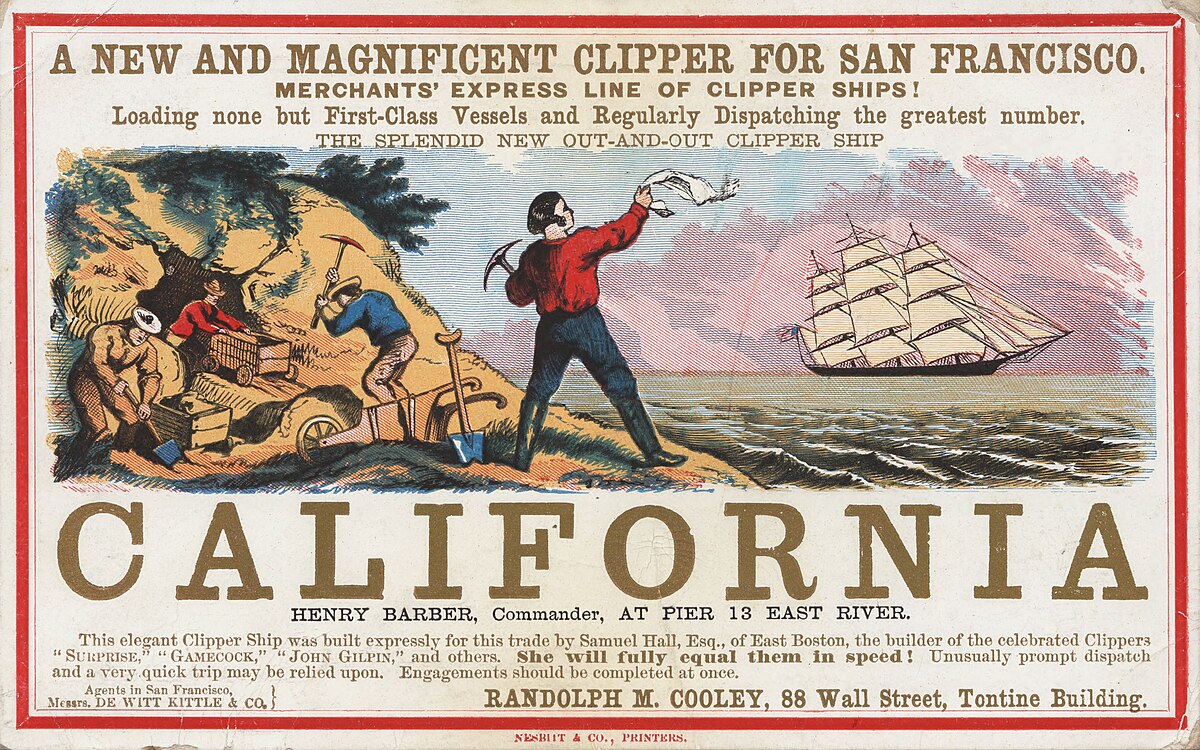
The decisive moment in California’s “discovery” for the United States came unexpectedly in January 1848, just nine days before the Treaty of Guadalupe Hidalgo officially ended the Mexican-American War and ceded California to the United States. On January 24, 1848, James W. Marshall discovered gold at Sutter’s Mill near Coloma. This seemingly small event ignited one of the most significant migrations in human history – the California Gold Rush.
The news of gold spread like wildfire, attracting hundreds of thousands of “forty-niners” from across the United States and the globe, including Europe, China, Australia, and South America. California’s population exploded, transforming a sleepy agricultural outpost into a bustling, chaotic, and rapidly developing territory. Boomtowns sprang up overnight, and cities like San Francisco grew exponentially, becoming major ports and commercial centers. The Gold Rush era was characterized by a spirit of adventure, entrepreneurship, and often brutal competition, as well as significant social upheaval and displacement for native populations and existing Californio residents.
The massive influx of people and wealth accelerated California’s path to statehood. On September 9, 1850, California was admitted to the Union as the 31st state, bypassing the typical territorial phase. The Gold Rush fundamentally shaped California’s economy, demographics, and identity, fostering a culture of innovation, risk-taking, and rapid growth that continues to define the state. Visitors today can explore the historic towns of the Gold Country, such as Columbia State Historic Park, which offer immersive experiences into this pivotal chapter of American history, from panning for gold to exploring preserved 19th-century Main Streets.
California Today: A Legacy of Discovery and Diversity
From its indigenous roots to the successive waves of European and American influence, California’s journey of “discovery” is a continuous narrative of layers and evolving identities. What began as a land known only to its native inhabitants, then a mythical island in a Spanish novel, and later a remote Spanish outpost, transformed into a Mexican territory, and finally, a booming American state. This rich historical tapestry is not merely confined to textbooks; it is vibrantly alive in the state’s modern landscape, culture, and the myriad experiences it offers to travelers.
Iconic Landmarks and Cultural Tapestry
The historical “discovery” of California has bequeathed a wealth of iconic landmarks that draw millions of visitors annually. The 21 Spanish missions, from San Diego to Sonoma, stand as solemn reminders of the Spanish colonial era, inviting tourists to explore their beautiful architecture and often tragic histories. Presidios and early pueblos evolved into major cities like San Francisco, Monterey, and Los Angeles, where historic districts like Old Town San Diego or Olvera Street in Los Angeles preserve the ambiance of their Mexican past.
The Gold Rush left an indelible mark on the landscape, with towns like Sacramento (the state capital), Placerville, and Nevada City offering meticulously preserved historical sites, complete with museums, authentic mining displays, and period architecture. Beyond the man-made landmarks, the natural wonders that captivated early explorers – from the towering redwoods of Northern California to the majestic cliffs of Big Sur and the serene beauty of Yosemite National Park – remain paramount attractions, demonstrating the enduring allure of California’s landscape. These sites are not just tourist destinations; they are living testaments to the historical forces that shaped the state, offering valuable insights into its complex past.
The cultural tapestry of modern California is a direct reflection of its multifaceted history. The influences of indigenous peoples, Spanish colonizers, Mexican rancheros, and American pioneers, coupled with subsequent waves of immigration from around the world, have created an incredibly diverse and vibrant society. This diversity is celebrated in California’s cuisine, arts, festivals, and community life, making it a truly global destination.
Experiencing California’s Rich History as a Traveler
For those planning a trip, California offers an unparalleled array of historical and cultural experiences. Imagine staying at a luxury hotel in San Francisco like the Palace Hotel, built during the city’s Gold Rush boom, then venturing out to explore Alcatraz Island or crossing the iconic Golden Gate Bridge, each a product of California’s ceaseless evolution. In Southern California, a stay at a resort near Santa Barbara could involve visiting its historic mission and presidio, followed by a gourmet meal influenced by Spanish and Mexican traditions.
Travel guides often highlight routes like Highway 1, which not only offers stunning scenic drives but also connects many of the coastal towns that sprang from early missions and ranchos. Exploring the Gold Country allows for a unique lifestyle experience, from boutique accommodations in historic buildings to tasting local wines and artisanal foods born from the region’s agricultural richness. Budget travelers and luxury seekers alike can find experiences tailored to their preferences, whether it’s camping amidst historical forests or indulging in opulent hotels that harken back to the Gilded Age. Understanding “when California was discovered” isn’t just about a single date; it’s about appreciating the layered journey of exploration, conquest, and settlement that has culminated in the extraordinary state we know today. It’s an invitation to embark on your own journey of discovery, finding personal connections to a history that shaped not only a state but also a nation and, in many ways, the world.
LifeOutOfTheBox is a participant in the Amazon Services LLC Associates Program, an affiliate advertising program designed to provide a means for sites to earn advertising fees by advertising and linking to Amazon.com. Amazon, the Amazon logo, AmazonSupply, and the AmazonSupply logo are trademarks of Amazon.com, Inc. or its affiliates. As an Amazon Associate we earn affiliate commissions from qualifying purchases.