
The very mention of the California Gold Rush evokes images of daring prospectors, untamed frontiers, and the tantalizing gleam of fortune. It was an epochal event that reshaped the landscape, demography, and destiny of California and, indeed, the entire United States. But to truly understand its profound impact and enduring legacy, we must first answer the fundamental question: When did this transformative period unfold?
The California Gold Rush officially began with a serendipitous discovery in January 1848 and peaked rapidly in the following years, drawing hundreds of thousands of hopefuls from across the globe. While the initial frenzy subsided by the mid-1850s, the economic, social, and cultural ripple effects continued for decades, permanently altering the course of American history and laying the groundwork for [California]’s vibrant identity as a land of opportunity and innovation. From the dusty trails of the pioneers to the bustling streets of modern San Francisco, the spirit of the Gold Rush continues to inspire and intrigue, making it a pivotal chapter for travelers, historians, and anyone seeking to understand the allure of the American West.
The Spark: A Discovery That Changed a Nation
The ignition point of the California Gold Rush can be traced with remarkable precision to a quiet morning in the foothills of the Sierra Nevada mountains. This single event, seemingly minor at the time, would unleash a torrent of human migration, ambition, and ingenuity unprecedented in American history.
James W. Marshall and the First Glimmer
On January 24, 1848, a carpenter named James W. Marshall was overseeing the construction of a sawmill for his employer, Swiss pioneer John Sutter. The mill was located on the American River near present-day Coloma. As Marshall inspected the tailrace of the mill, where water drained away, his eyes caught a glimmer. He reached down and retrieved several shiny flakes of what he immediately suspected was gold. His initial reaction was one of cautious excitement, taking the discovery to Sutter to confirm its authenticity.
John Sutter, a prominent landowner with vast holdings that included what would become Sacramento, attempted to keep the discovery a secret. He feared that a gold rush would disrupt his agricultural empire and deplete his workforce. However, the nature of such a profound revelation made secrecy impossible. Word began to leak out, initially through local channels and then more widely. The very site of this pivotal moment, Sutter’s Mill, quickly transformed from a simple construction project into an enduring symbol of opportunity. Today, travelers can visit the reconstructed mill at Marshall Gold Discovery State Historic Park in Coloma, experiencing firsthand the birthplace of this global phenomenon. This landmark serves as a powerful reminder of how a single discovery can fundamentally alter human destiny and spark an entire industry of travel and tourism dedicated to its story.

The Immediate Aftermath and Global Announcement
Despite Sutter’s efforts, the news of gold spread like wildfire. By the spring of 1848, prospectors, predominantly from California itself, began flocking to the American River region. However, it was a dramatic public announcement in December 1848 that truly set the world ablaze. President James K. Polk (not a proper noun example to link, but good for context) confirmed the discovery in his address to Congress, presenting actual samples of gold from California. This official endorsement, coupled with sensationalized newspaper reports that exaggerated the ease of finding gold, ignited a global phenomenon.
Suddenly, hundreds of thousands began making plans to journey to this distant, mysterious land. The timing was particularly poignant as California had only recently become a U.S. territory following the end of the Mexican-American War in February 1848 with the Treaty of Guadalupe Hidalgo. This new American acquisition, previously a sparsely populated frontier, was now revealed to be a treasure trove, attracting an unprecedented migration. The allure of immediate wealth offered a powerful draw, setting the stage for the dramatic year of 1849 and beyond, turning the remote landscape into a bustling hub of human activity and pioneering lifestyle.
The Rush Intensifies: Waves of Migration and Economic Transformation
The period immediately following President Polk’s announcement witnessed an explosion in migration, turning a trickle of hopefuls into a veritable flood. The “rush” element of the Gold Rush truly began to manifest, transforming not just the physical landscape but also the nascent social and economic structures of California.
The ‘Forty-Niners’ and the Perilous Journey
The year 1849 became synonymous with the Gold Rush, giving rise to the iconic term “Forty-Niners.” These were the courageous, and often desperate, individuals who left their homes in search of fortune. Their journeys were fraught with peril, representing one of the largest mass migrations in human history.
There were three primary routes to California:
- Overland Trails: The most common route for those coming from the United States was the overland trail, famously including the Oregon Trail and its various offshoots to California. This journey, spanning thousands of miles across rugged terrain, hostile weather, and sometimes hostile native populations, could take anywhere from four to six months. Wagon trains were a common sight, filled with families and single men, their possessions, and their dreams. This arduous travel experience shaped the character of many who arrived, fostering resilience but also leaving a trail of hardship and death.
- Sea Routes (via Panama): For those seeking a quicker, though still challenging, path, voyages through Panama offered a hybrid solution. Travelers would sail from the East Coast of the United States to Panama, cross the Isthmus (often on foot or mule through dense jungle), and then board another ship on the Pacific side to sail up to San Francisco. While faster, this route was plagued by disease, long waits for connecting ships, and the immense logistical challenges of crossing the narrow land bridge.
- Sea Routes (around Cape Horn): The longest but often safest sea route involved sailing around Cape Horn at the southern tip of South America. This journey, spanning thousands of miles of treacherous ocean, could take five to eight months, comparable to the overland trails in duration. However, it allowed travelers to bring more supplies and avoided the immediate dangers of overland travel.

These migrations transformed the demographic profile of California almost overnight. The population exploded from around 14,000 non-native Americans in 1848 to over 100,000 by the end of 1849, and nearly 380,000 by 1860. This rapid influx created an unprecedented demand for everything from accommodation to food, services, and entertainment, turning many small settlements into bustling hubs.
Boomtowns and the Rise of San Francisco
The immediate effect of the Gold Rush was the proliferation of boomtowns throughout the Mother Lode region of the Sierra Nevada foothills and the San Joaquin Valley. Towns like Columbia, Nevada City, and Placerville sprang up seemingly overnight, initially as rough collections of tents and shanties, quickly evolving into more permanent structures. These towns were characterized by their transient populations, makeshift infrastructure, and a vibrant, often chaotic, lifestyle centered around the pursuit of gold.
However, no city experienced a more dramatic transformation than San Francisco. Before the Gold Rush, it was a sleepy port village known as Yerba Buena. By the end of 1849, its population had skyrocketed from about 1,000 to over 25,000, making it the central hub for incoming prospectors and supplies. Ships arriving in the bay were often abandoned by their crews, who immediately headed for the goldfields, leaving a forest of masts in the harbor. Many of these abandoned vessels were later repurposed as makeshift hotels, warehouses, or even filled in to create new land, expanding the city’s waterfront.
San Francisco became the primary gateway to the goldfields, a critical center for trade, finance, and social life. It was here that supplies were bought, gold was sold, and news from home arrived. The demand for accommodation was insatiable, leading to exorbitant prices for even basic lodging. Hotels and boarding houses, though rudimentary by modern standards, flourished, representing an early boom in the hospitality sector. This rapid urbanization and economic expansion laid the foundation for San Francisco to become a major metropolitan center and a global city, a far cry from its humble origins. Today, its rich history, including its Gold Rush roots, makes it a premier travel destination, attracting tourists interested in its iconic landmarks and diverse culture.
Life in the Goldfields: Challenges, Opportunities, and a New Society
Life in the goldfields was far from the romanticized image often portrayed. It was a brutal, demanding existence marked by physical hardship, fierce competition, and a constant struggle against the elements. Yet, it was also a crucible of opportunity, forging a unique society characterized by its diversity and entrepreneurial spirit.
The Harsh Realities of Mining Life
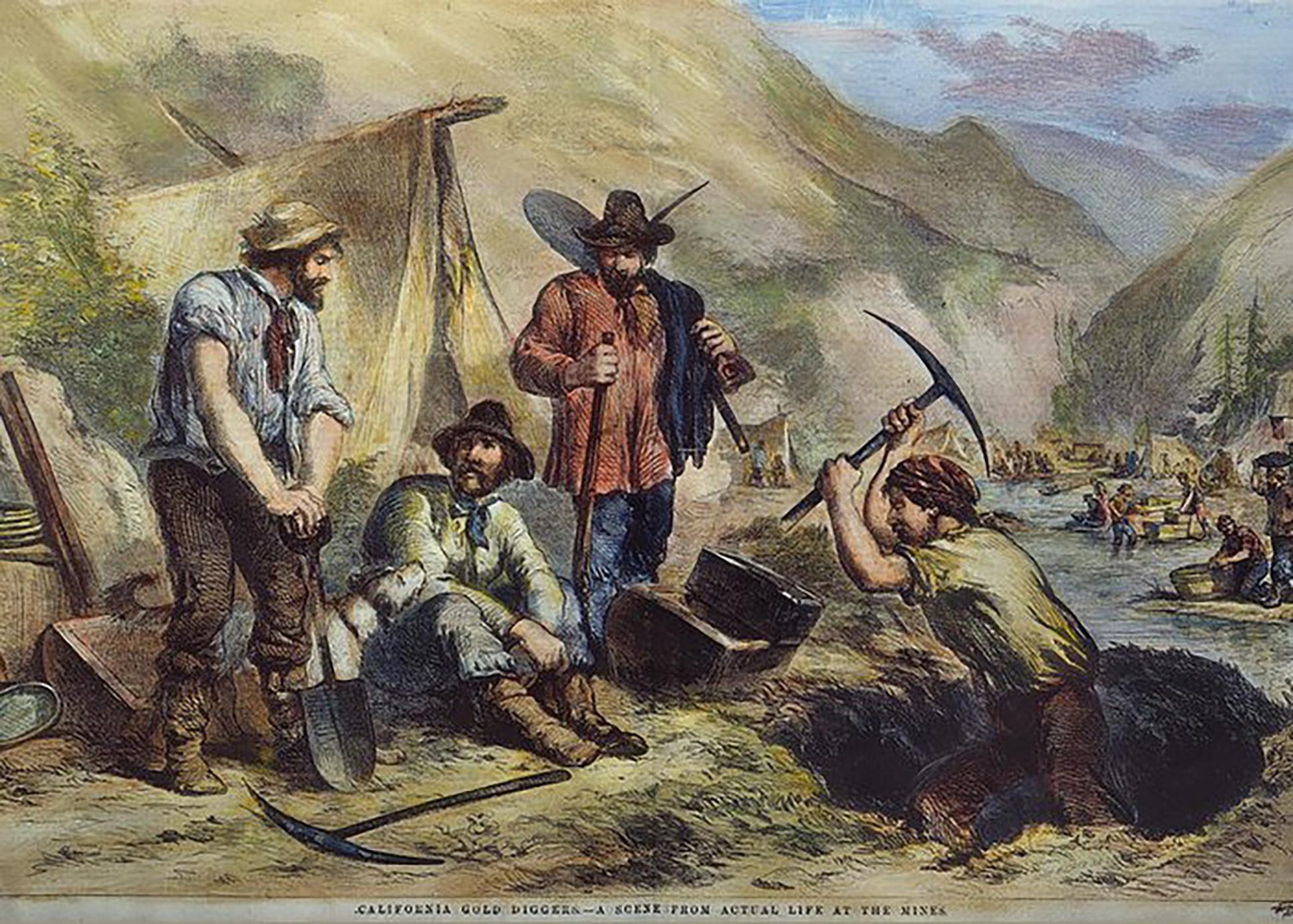
For the vast majority of prospectors, the dream of striking it rich remained just that – a dream. While some individuals did make fortunes, the average miner found little more than enough to subsist. The work itself was back-breaking. Early methods involved panning and sluicing in riverbeds, demanding long hours under the scorching sun or in freezing water. As surface gold became scarcer, more intensive methods like hydraulic mining (using powerful water jets to blast hillsides) and hard-rock mining (digging shafts into solid rock) emerged, requiring significant capital and labor.
Miners often lived in temporary camps, enduring primitive living conditions. Sanitation was poor, leading to widespread disease such as cholera, dysentery, and scurvy. Accidents in the mines were common, and medical care was virtually non-existent. The diet was monotonous and often unhealthy, consisting largely of salted meat, beans, and coffee. The cost of living was astronomically high due to the scarcity of goods and the high demand fueled by gold. A single egg could cost a dollar, and basic tools or food items commanded prices unimaginable elsewhere. This harsh reality fostered a rugged, individualistic lifestyle, where self-reliance was paramount, and comforts were rare luxuries.
A Melting Pot of Cultures
One of the most profound and lasting impacts of the California Gold Rush was its role in creating an incredibly diverse society. The promise of gold drew people from every corner of the globe, transforming California into a truly multicultural melting pot.
While the majority of forty-niners came from the United States, particularly from New York, Boston, and Philadelphia, significant numbers arrived from distant lands:
- China: Chinese immigrants, often called “Celestials,” formed one of the largest non-American groups. They brought unique mining techniques and contributed significantly to the development of infrastructure, but also faced immense discrimination and violence.
- Latin America: Miners from Mexico, Chile (if mentioned, but avoiding adding too many new proper nouns without reason), and other Latin American countries were among the earliest arrivals, particularly those from nearby Mexico who had prior mining experience.
- Europe: French, German, and Irish prospectors, among others, flocked from Europe, seeking escape from economic hardship or political unrest in their home countries.
- Australia and Hawaii: Even distant lands like Australia and the Sandwich Islands (modern-day Hawaii) sent their share of adventurers.
This incredible diversity, while enriching, also led to significant social tensions and conflicts. Discrimination against non-white miners was rampant, often fueled by xenophobia and economic competition. Laws like the Foreign Miners’ Tax targeted specific groups, particularly Chinese and Latin American miners, forcing many to abandon the goldfields. Despite these challenges, the intermingling of cultures created a vibrant, if chaotic, society that laid the foundation for [California]’s unique cultural identity, a legacy that continues to draw visitors eager to explore its diverse heritage and local culture.
The End of an Era: The Legacy of the Gold Rush
By the mid-1850s, the easily accessible surface gold had largely been extracted, marking the official end of the initial Gold Rush fever. However, the true end of the era was not a sudden stop but rather a transformation, evolving into new forms of mining and leaving an indelible mark on California and the United States.
From Panning to Industrial Mining
As individual prospectors found fewer nuggets and flakes, the nature of gold extraction shifted dramatically. The era of the lone miner with a pan gave way to industrial-scale operations. Hydraulic mining, which involved powerful jets of water washing away entire hillsides to expose gold-bearing gravels, became prevalent. While highly efficient, this method caused catastrophic environmental damage, silting up rivers and destroying farmlands, eventually leading to its regulation and partial ban.
Simultaneously, hard-rock mining gained prominence, requiring significant capital investment in machinery, tunnels, and processing plants to extract gold from quartz veins deep within the earth. Companies replaced individual prospectors, and mining transitioned from an individualistic pursuit to a structured industry with wage laborers. This transformation sustained gold production for decades, contributing to the nation’s wealth and technological advancement, but it also fundamentally changed the lifestyle and opportunities within the mining regions. The boomtowns that once served individual miners either withered into ghost towns or evolved into more stable, diversified communities with established accommodation and services.
Permanent Shifts and Modern California
The California Gold Rush had a profound and permanent impact on the development of California and the United States as a whole.
- Population Boom and Statehood: The massive influx of people rapidly propelled California to statehood in 1850, bypassing the traditional territorial phase. This swift demographic shift also gave California significant political weight.
- Economic Development: The gold wealth fueled economic growth across the nation. San Francisco emerged as a major financial and trade center on the Pacific Coast. The Gold Rush also stimulated the development of other industries, including agriculture, manufacturing, and transportation, as the demand for goods and services to support the growing population surged.
- Infrastructure: The need to connect California with the East Coast spurred the construction of transcontinental railroads and improved shipping routes, dramatically reducing travel times and facilitating further westward expansion.
- Cultural Legacy: The Gold Rush cemented California’s image as a land of opportunity, innovation, and diverse cultures. The pioneering spirit, the willingness to take risks, and the pursuit of dreams became deeply ingrained in the Californian lifestyle.
Experiencing the Gold Rush Today: Travel and Tourism
While the golden age of panning is long past, the legacy of the California Gold Rush thrives, offering a rich tapestry of history and adventure for modern travelers. The gold country, spanning the foothills of the Sierra Nevada, is now a popular tourist destination, inviting visitors to step back in time and explore its storied past.
Travelers interested in history and cultural tourism can explore numerous landmarks and attractions:
- Sutter’s Fort State Historic Park in Sacramento offers a glimpse into life before the rush, showcasing the fortified settlement of John Sutter. Nearby, Old Sacramento State Historic Park preserves a vibrant district with historic buildings, cobblestone streets, and museums reflecting the city’s Gold Rush boom. The California State Capitol Museum also provides context for [California]’s statehood spurred by the rush.
- Marshall Gold Discovery State Historic Park in Coloma is the exact site where James W. Marshall found the first nugget. Visitors can see a replica of Sutter’s Mill, try their hand at gold panning, and explore historical exhibits.
- Columbia State Historic Park is a remarkably preserved Gold Rush town where visitors can experience a living history museum. Costumed docents, stagecoach rides, and historic shops transport you to the 1850s, offering a unique opportunity to engage with the local culture and lifestyle of the era.
- Bodie State Historic Park provides a stark contrast as a genuine, well-preserved ghost town. Its “arrested decay” status offers an authentic, chilling glimpse into a boomtown that went bust, showcasing the transient nature of many Gold Rush settlements.
For those planning to visit, the region offers a variety of accommodation options, from charming historic bed and breakfasts in renovated Gold Rush-era buildings to modern hotels and resorts. These destinations provide not only historical insights but also opportunities for outdoor activities like hiking, river rafting, and exploring scenic routes. The Gold Rush remains a cornerstone of American tourism, a testament to its enduring power and the human spirit’s eternal quest for adventure and prosperity. It is a period that continues to define California as a premier travel destination, rich in history, attractions, and unforgettable experiences.
LifeOutOfTheBox is a participant in the Amazon Services LLC Associates Program, an affiliate advertising program designed to provide a means for sites to earn advertising fees by advertising and linking to Amazon.com. Amazon, the Amazon logo, AmazonSupply, and the AmazonSupply logo are trademarks of Amazon.com, Inc. or its affiliates. As an Amazon Associate we earn affiliate commissions from qualifying purchases.