
The history of Florida is a rich tapestry woven with threads of exploration, conquest, territorial disputes, and the inexorable march toward self-governance. While today it stands as a prominent state known for its vibrant culture, stunning natural beauty, and economic prowess, its journey to statehood was long and complex. Florida officially became the 27th state of the United States on March 3, 1845. This pivotal date marked the culmination of centuries of shifting allegiances and significant geopolitical maneuvers, transforming a contested colonial outpost into a full-fledged member of the American republic. Understanding this timeline requires a journey back through the various empires that laid claim to its strategic shores and fertile lands, each leaving an indelible mark on its identity.
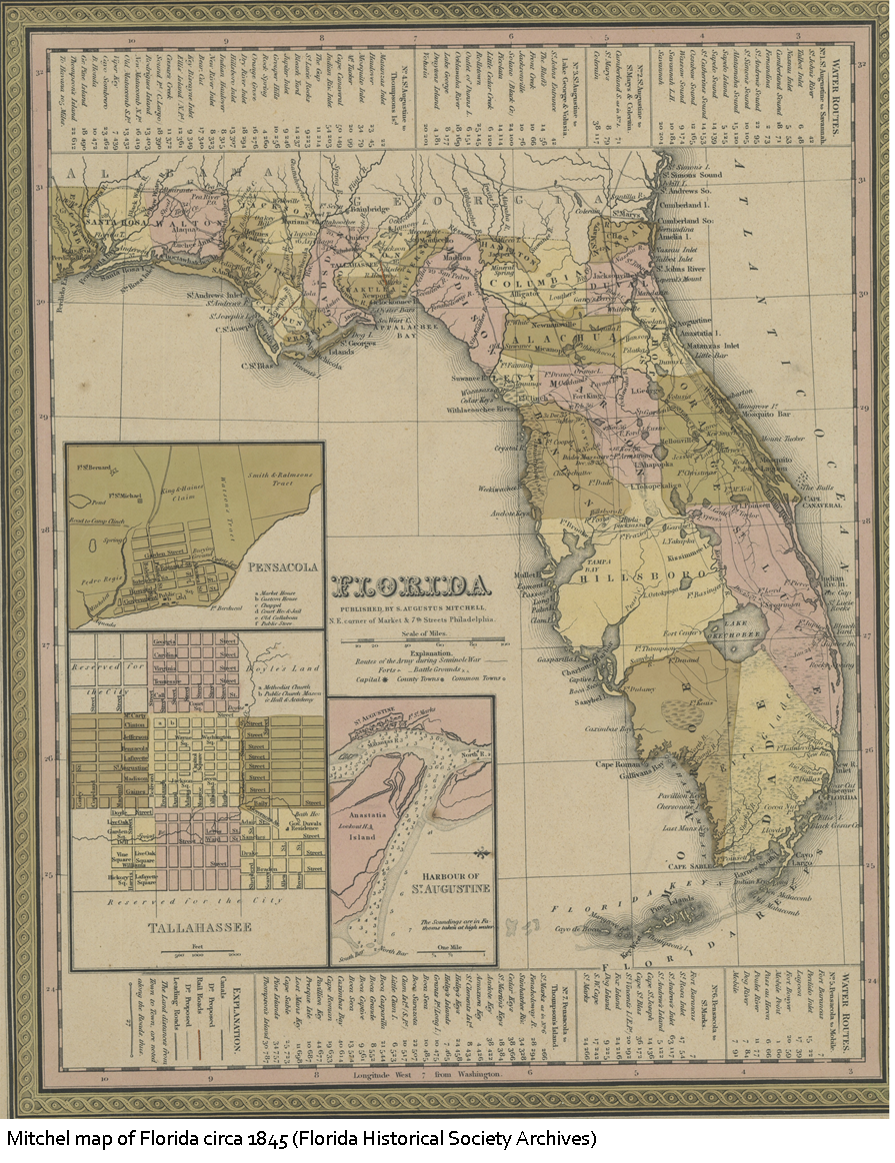
Early Explorations and Colonial Rivalries
Long before its recognition as a state, the peninsula known today as Florida was a coveted prize for European powers. Its strategic location, bordering the Gulf of Mexico and the Atlantic Ocean, made it a crucial gateway for trade routes and military control in the New World.
Spanish Claims and Early Settlements
The Spanish were the first Europeans to explore and attempt to colonize Florida. In 1513, Juan Ponce de León landed near present-day St. Augustine and claimed the territory for Spain, naming it “La Florida” in honor of the Easter season, Pascua Florida (Festival of Flowers). Despite early failures, Spain established the first permanent European settlement in what would become the United States at St. Augustine in 1565, under the leadership of Pedro Menéndez de Avilés. This outpost served as a defensive stronghold, protecting Spanish shipping lanes from piracy and rival European incursions.
For over two centuries, Florida remained primarily a remote and sparsely populated Spanish colony. Its northern borders were constantly contested, particularly by the expansionist British colonies to the north and the French presence to the west. The indigenous populations, including the Seminole and Timucua peoples, also played a crucial role in shaping the region’s history, often caught between the competing colonial powers.
British Interlude and American Ambitions
The geopolitical landscape shifted dramatically in 1763. Following Spain’s defeat in the Seven Years’ War, also known as the French and Indian War in North America, Spain ceded Florida to Great Britain under the Treaty of Paris. The British divided the territory into East Florida (with its capital at St. Augustine) and West Florida (capital at Pensacola). During this brief 20-year period, the British encouraged settlement and economic development, though the region remained largely untamed.
The American Revolutionary War brought another change. Florida remained loyal to the British crown during the conflict. However, after the United States secured its independence, Spain, which had allied with the Americans, regained control of both East and West Florida in the Treaty of Paris of 1783. This second Spanish period, lasting until 1821, was marked by increasing instability. The young United States coveted Florida for several reasons: it offered valuable access to the Gulf of Mexico, its undefended borders were a haven for runaway slaves and hostile Native American tribes, and it was strategically important for national security.
The Path to American Territory
The early 19th century saw escalating tensions between the United States and Spain over Florida. Spain’s declining power made it difficult to govern the distant colony effectively, leading to a state of lawlessness that frequently spilled over into American territories.
The Adams-Onís Treaty of 1819
The United States’ desire for Florida intensified after the Louisiana Purchase in 1803 and the War of 1812. American settlers encroached on Spanish territory, and military incursions, most notably by General Andrew Jackson during the First Seminole War (1817-1818), demonstrated American determination. Jackson‘s actions, which included seizing Pensacola, effectively pushed Spain to the negotiating table.
The diplomatic negotiations culminated in the signing of the Adams-Onís Treaty (also known as the Transcontinental Treaty) in 1819. Under this agreement, Spain ceded all of Florida to the United States in exchange for $5 million in claims and the United States’ relinquishing its claims to Texas. The treaty was ratified in 1821, and Florida officially became an organized territory of the United States on July 17, 1821, with Andrew Jackson appointed as its first military governor.
Territorial Government and Growing Pains
As an American territory, Florida began to develop its governmental structures. In 1824, Tallahassee was chosen as the territorial capital, strategically located between the two primary settlements of St. Augustine and Pensacola. The territorial period, however, was far from peaceful. The expansion of white settlements led to renewed conflicts with the Seminole people over land, resulting in the brutal Second Seminole War (1835-1842). This protracted and costly conflict significantly impacted the territory’s development and demographic makeup. Despite these challenges, the population grew, and the demand for statehood began to emerge.
Statehood Achieved: March 3, 1845
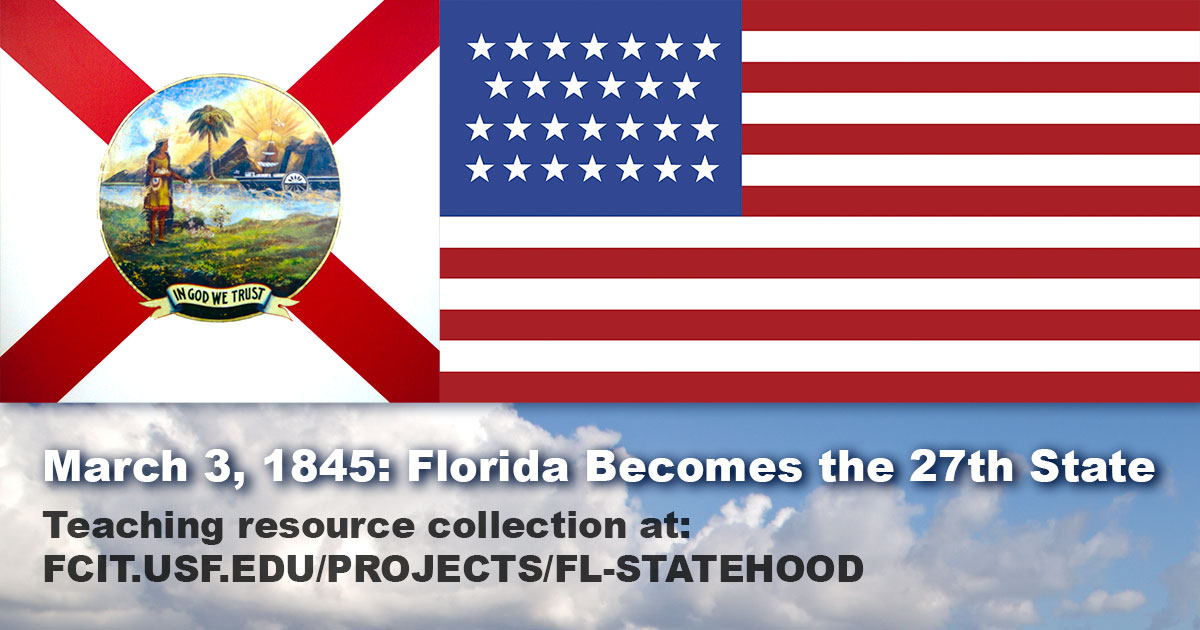
The desire for statehood in Florida intensified in the late 1830s and early 1840s. Territorial residents sought greater self-governance, representation in Congress, and the full rights and privileges afforded to states.
Factors Influencing Statehood
Several factors converged to push Florida towards statehood. Economic development, particularly in cotton plantations in the northern part of the territory, led to a growing and influential planter class. This class desired a stronger political voice to protect their economic interests, including the institution of slavery, which was central to the plantation economy. Furthermore, the burgeoning population meant that the territory was becoming more self-sufficient and capable of managing its own affairs. The successful conclusion of the Second Seminole War, which effectively removed most Seminoles to lands west of the Mississippi River, also opened up vast tracts of land for settlement and further fueled the call for statehood.
The Slavery Question and Balancing Act
The issue of slavery played a critical role in the timing of Florida’s admission to the Union. At the time, the United States maintained a delicate balance between free states and slave states in the Senate to prevent any one side from dominating legislative power. Florida was slated to enter as a slave state, which would disrupt this balance. Therefore, its admission was often paired with that of a free state to maintain equilibrium.
On March 3, 1845, President John Tyler signed the bill admitting Florida as the 27th state. Crucially, Iowa, a free territory, was simultaneously admitted as the 29th state (though its admission was delayed until 1846 due to boundary disputes, the legislative intent to pair them was clear). This political maneuvering, typical of the era, ensured that Florida’s slave state status did not immediately tip the scales in the national debate over slavery, though it was a temporary solution that would eventually lead to the Civil War.
Florida’s Role in the Nation’s History
Upon achieving statehood, Florida quickly became an integral, albeit sometimes turbulent, part of the national fabric. Its history post-1845 reflects broader national trends and challenges.
Florida and the Civil War
As a slave state, Florida’s allegiance during the Civil War was predictable. It seceded from the Union on January 10, 1861, becoming the third state to join the Confederacy. Although not a major battlefield, Florida provided vital supplies, particularly beef and salt, to the Confederate war effort. Key battles, such as the Battle of Olustee in 1864, demonstrated the state’s commitment to the Southern cause. Following the Confederacy’s defeat, Florida underwent the challenging period of Reconstruction Era, grappling with the abolition of slavery and the integration of formerly enslaved people into society. It was readmitted to the Union in 1868.
Economic and Demographic Transformations
The late 19th and 20th centuries saw Florida undergo dramatic transformations. The arrival of railroads, spearheaded by visionaries like Henry Flagler, opened up the state’s vast resources and pristine coastline to tourism and agriculture. Citrus cultivation boomed, and cities like Miami, Tampa, and Orlando began their rise as major urban centers. Post-World War II, Florida experienced exponential growth, fueled by migration from other states, the burgeoning aerospace industry, and an ever-expanding tourism sector, epitomized by the development of world-renowned theme parks.
Legacy and Modern Florida
The historical trajectory that led to Florida’s statehood in 1845 continues to shape its identity as a modern American state. Its unique blend of cultures, influenced by centuries of Spanish, British, and American rule, is evident in its architecture, cuisine, and diverse population.
Enduring Cultural Influence
From the ancient streets of St. Augustine, the oldest continuously inhabited European-established settlement in the United States, to the Cuban influences of Miami’s Little Havana, Florida embodies a confluence of historical narratives. Its strategic importance, once a military concern for colonial powers, transformed into an economic and cultural nexus, drawing people from all over the world. The legacy of its territorial past, including the struggles with indigenous populations and the complexities of slavery, serves as a reminder of the foundational events that forged the state.

A Modern Landmark State
Today, Florida stands as a testament to its long and varied past. It is a landmark state not just for its physical attractions and natural wonders, but for the depth of its historical journey. The date March 3, 1845, is more than just an entry in a historical ledger; it represents the moment a contested frontier became a full partner in the American experiment, embarking on a path that would see it grow into one of the nation’s most dynamic and influential regions. Its history is a vital part of the broader story of the United States, illustrating the processes of territorial expansion, political negotiation, and cultural evolution that defined the nation’s formative years.
LifeOutOfTheBox is a participant in the Amazon Services LLC Associates Program, an affiliate advertising program designed to provide a means for sites to earn advertising fees by advertising and linking to Amazon.com. Amazon, the Amazon logo, AmazonSupply, and the AmazonSupply logo are trademarks of Amazon.com, Inc. or its affiliates. As an Amazon Associate we earn affiliate commissions from qualifying purchases.