
Florida, often celebrated as the Sunshine State, is a global beacon for travel, boasting world-renowned attractions, pristine beaches, and a vibrant cultural scene. From the magical theme parks of Orlando to the Art Deco charm of Miami and the historic streets of St. Augustine, its appeal to tourists is undeniable. Yet, beneath the veneer of modern resorts and thrilling experiences lies a rich, tumultuous history that began centuries ago, long before it became the travel hotspot it is today. To understand Florida’s present and its enduring allure, one must delve into its past, particularly the question of its founding. When was Florida truly founded, and what events shaped its remarkable journey from a wild, uncharted land to a bustling nexus of tourism and accommodation?
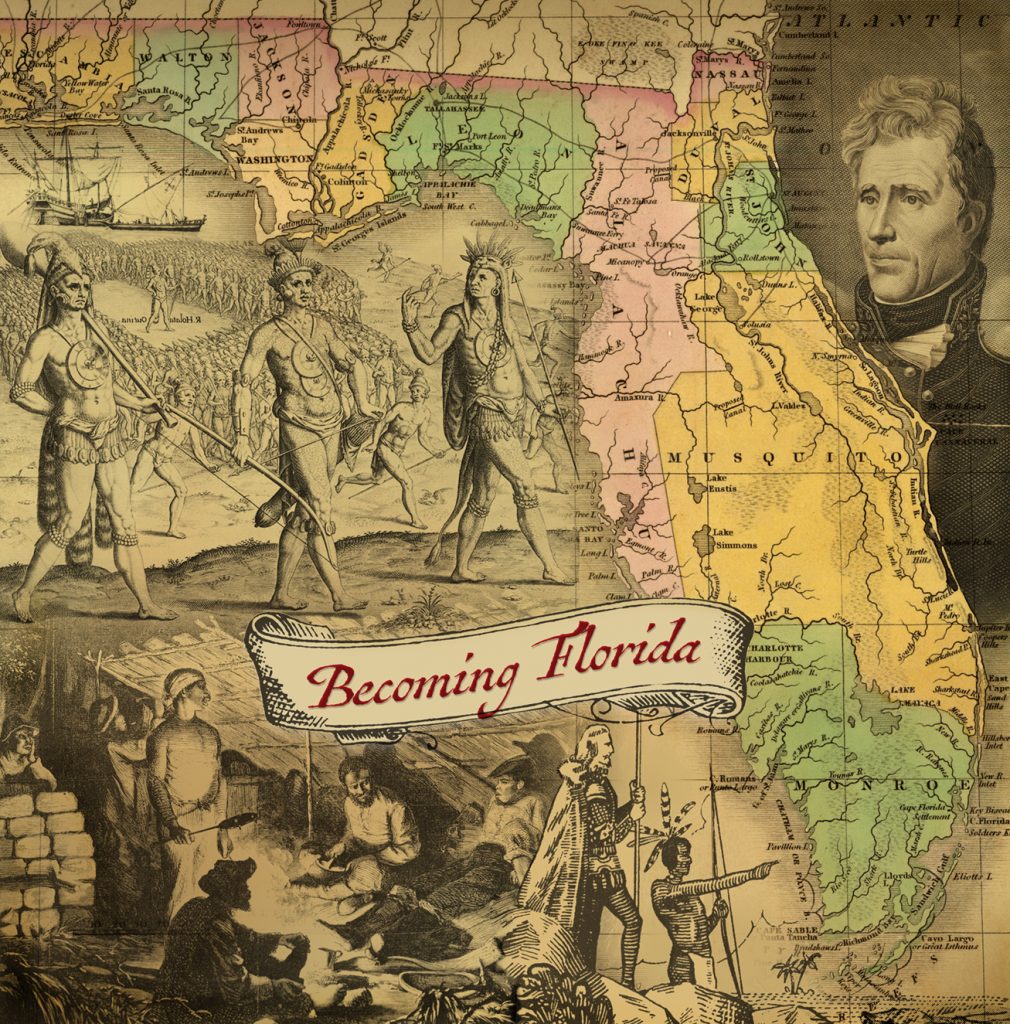
The answer isn’t a single date but a tapestry woven from exploration, conquest, colonial shifts, and eventual integration into the United States. Its story is a fascinating narrative of indigenous cultures, European empires vying for control, and the eventual forging of a unique American identity. For those planning a visit, understanding this historical foundation enriches the travel experience, transforming mere sightseeing into a journey through time, allowing visitors to connect with the very essence of this extraordinary destination.
The Dawn of European Discovery: Spanish Exploration
The European “founding” of Florida can be traced back to the early 16th century, a period of fervent exploration by European powers eager to expand their empires and discover new trade routes and riches. Among these explorers was Juan Ponce de León, a Spanish conquistador who played a pivotal role in charting this new frontier.
Juan Ponce de León and the Naming of La Florida
It was in 1513 that Juan Ponce de León, then the governor of Puerto Rico, set sail in search of new lands and, according to legend, the fabled Fountain of Youth. On April 2, 1513, he sighted what he believed to be a large island. Given the lush landscape and the fact that it was the Easter season, known in Spain as Pascua Florida (meaning “Flowery Easter” or “Feast of Flowers”), he christened the land “La Florida.” This act marked the first documented European contact with, and naming of, what we now know as Florida.
This “founding” was purely from a European perspective, as the land was already home to diverse and thriving indigenous populations for thousands of years. The Calusa, Timucua, and Tequesta peoples, among others, had established complex societies, rich cultures, and sophisticated ways of life across the peninsula. Ponce de León’s landing near what is now St. Augustine or possibly further south on Florida’s Atlantic Coast, initiated a period of contact and often conflict that would profoundly alter the trajectory of these native civilizations. Today, visitors to historical sites across Florida can learn about these early inhabitants, with many museums and cultural centers offering insights into their enduring legacy, providing a crucial context for understanding the state’s full history.
Early Spanish Settlements: St. Augustine, the Oldest City
While Ponce de León named Florida, effective Spanish colonization did not immediately follow. Several attempts at establishing permanent settlements proved unsuccessful, often met with fierce resistance from native tribes or succumbing to the harsh environment. It wasn’t until 1565 that a lasting European settlement was finally established.
This monumental task fell to Pedro Menéndez de Avilés, sent by Spain with orders to secure Florida and remove a newly established French Huguenot colony at Fort Caroline (near modern-day Jacksonville). Menéndez successfully founded St. Augustine on September 8, 1565, making it the oldest continuously inhabited European-established settlement in the United States. This date is arguably the most significant for the “founding” of a permanent European presence in Florida.
St. Augustine quickly became a strategically vital outpost for the Spanish empire, protecting shipping lanes and acting as a base for missionary efforts. The city’s enduring Spanish colonial architecture, its formidable Castillo de San Marcos fortress, and its quaint cobblestone streets are testament to this deep history. For travelers interested in landmarks and cultural tourism, St. Augustine offers an unparalleled experience. Historic hotels like the Casa Monica Resort & Spa offer luxurious accommodation within steps of centuries-old sites, allowing visitors to literally sleep amidst history. The city is a living museum, offering guided tours, re-enactments, and numerous attractions that vividly bring Florida’s colonial past to life.
A Shifting Tapestry of Colonial Powers
Florida’s early history under European rule was not one of stable Spanish dominion. Geopolitical struggles between the great European powers meant that Florida frequently changed hands, each transition leaving an indelible mark on its culture, demographics, and development.
British Interlude: The Twenty-Year Rule
A significant shift occurred in 1763 following the conclusion of the Seven Years’ War (known in North America as the French and Indian War). Under the terms of the Treaty of Paris (1763), Spain ceded Florida to Great Britain in exchange for Havana, Cuba. This marked the beginning of a relatively brief, but impactful, period of British rule.
The British divided Florida into two colonies: British East Florida, with its capital at St. Augustine, and British West Florida, governed from Pensacola. They actively encouraged settlement, offering land grants and promoting agricultural development. During these two decades, the British improved infrastructure, cultivated crops like sugar cane and indigo, and expanded trade. While the Spanish had focused on military outposts and missions, the British introduced a more concerted effort at economic development and colonization. The influence of this period can still be seen in some architectural styles and place names, particularly in the northern parts of the state. For history buffs, exploring the remains of British-era plantations or visiting museums that showcase this period offers a different perspective on Florida’s colonial lifestyle.
Spanish Reclamation and American Expansion
The British tenure in Florida came to an end with the American Revolution. Although Florida remained loyal to the British crown during the war, Spain, siding with the American colonists and France, launched successful campaigns against British holdings in West Florida. By the Treaty of Paris (1783), which recognized American independence, Great Britain returned Florida to Spain.
The second Spanish period (1783-1821) was characterized by increasing instability. The newly formed United States coveted Florida, viewing it as essential for its security and westward expansion, especially as a haven for escaped slaves and a base for indigenous resistance against American encroachment. Border disputes, Native American raids (often spurred by tensions with American settlers), and American military incursions, such as those led by Andrew Jackson during the First Seminole War (1817-1818), weakened Spanish control.
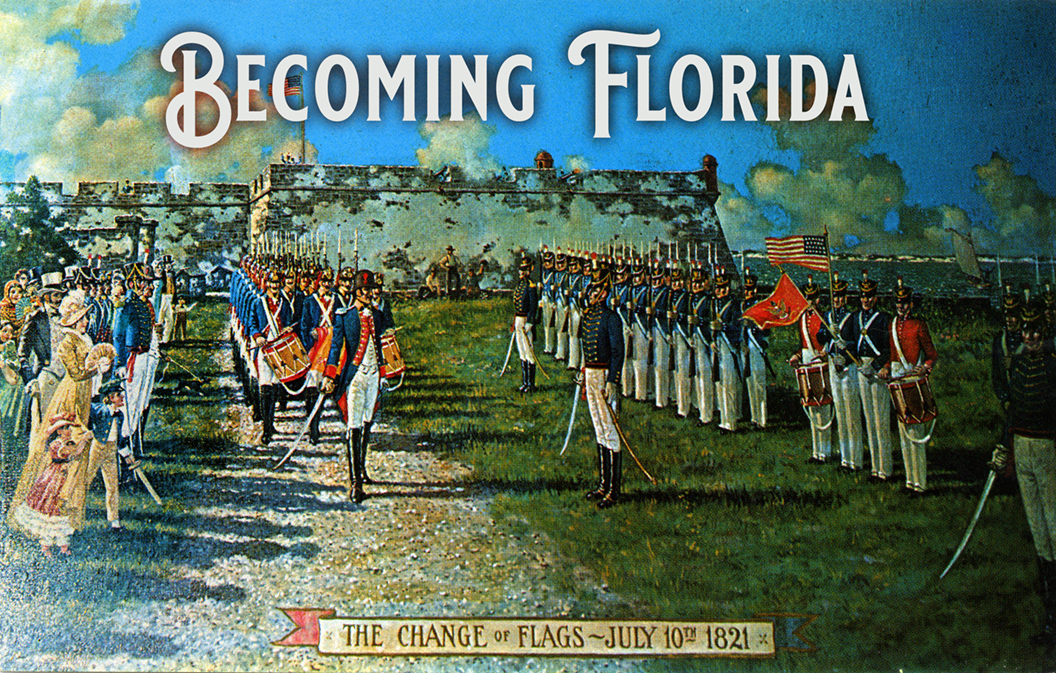
Ultimately, Spain, grappling with internal turmoil and struggling to maintain its vast overseas empire, found Florida an increasing burden. In 1819, the Adams-Onís Treaty was signed, formally ceding Florida to the United States. This treaty, ratified in 1821, marked the definitive end of European colonial rule in Florida and ushered in its American era. From a modern travel perspective, this era’s legacy is seen in the multicultural influences present in Florida’s cuisine, architecture, and even language, particularly in southern Florida where Spanish influence remains strong.
From Territory to Statehood: The American Era
With the transfer of Florida to the United States in 1821, a new chapter began. It was no longer a colonial outpost but a territory on the path to becoming an integral part of the American republic, though this transition came with its own set of challenges, particularly for the indigenous inhabitants.
The Florida Territory and Indigenous Displacement
Upon acquiring Florida, the United States designated it as the Florida Territory. Andrew Jackson briefly served as its first military governor. The capital was eventually established at Tallahassee in 1824, strategically located between the two primary settlements of St. Augustine and Pensacola.
This period saw a significant influx of American settlers, primarily from Georgia and the Carolinas, eager to establish cotton and sugar plantations. This expansion inevitably led to increased conflict with the Seminole people, a diverse group formed from various Native American tribes (Creek, Miccosukee, and others) and escaped slaves who had forged a new identity in Florida’s wilderness. The desire for land and the implementation of removal policies, epitomized by the Indian Removal Act of 1830, escalated tensions into the brutal Second Seminole War (1835-1842). This devastating conflict, one of the costliest in American history in terms of lives and finances, resulted in the forced removal of most Seminoles to Indian Territory (modern-day Oklahoma), though a small contingent famously resisted and survived in the depths of the Everglades.
The legacy of these conflicts and displacements is a somber but integral part of Florida’s founding story. Visitors seeking deeper experiences can visit cultural centers and tribal lands that preserve the heritage of the Seminole and Miccosukee people, offering a poignant reminder of the human cost of expansion and the resilience of indigenous cultures.
Statehood and the Road Ahead
After years as a territory, its population growing and its political structures solidifying, Florida officially achieved statehood on March 3, 1845, becoming the 27th state admitted to the Union. This date marks the “founding” of Florida as a full and equal member of the United States.
However, its journey was far from over. As a slave-holding state, Florida soon seceded from the Union in 1861 to join the Confederacy, enduring the hardships of the Civil War and the subsequent era of Reconstruction. It was only in the late 19th and early 20th centuries that Florida truly began to flourish, propelled by developments in agriculture, the expansion of railroads, and the visionary efforts of industrialists like Henry Flagler, who built luxury resorts and extended railways down the Atlantic Coast, laying the groundwork for modern tourism. Hotels such as The Breakers Palm Beach, originally built by Flagler, stand as testaments to this era, blending historic elegance with contemporary luxury accommodation, catering to a lifestyle of refined travel that continues to define parts of Florida.
Florida Today: A Legacy of History and Tourism
Today, Florida is a vibrant, diverse state, its past deeply intertwined with its present as a premier travel destination. The layers of its founding – from indigenous presence to Spanish exploration, British administration, and American development – have all contributed to its unique character.
Preserving the Past: Historic Landmarks and Cultural Tourism
The history of Florida’s founding is not relegated to dusty textbooks; it’s palpable in its landmarks and cultural offerings. St. Augustine remains the crown jewel of historical tourism, with its Castillo de San Marcos, Fort Matanzas National Monument, and countless other sites inviting visitors to step back in time. Pensacola, too, boasts a rich history, evident in its historic village and naval aviation museum. Even bustling modern cities like Miami and Tampa preserve elements of their past, from historic districts to museums detailing their evolution.
For the adventurous traveler, exploring the natural landscapes that define Florida – the Everglades National Park, the Keys, or the myriad of springs – offers a connection to the environment that captivated Ponce de León centuries ago. Many eco-tourism experiences are built around appreciating Florida’s pristine natural beauty, reflecting a lifestyle that values sustainable travel. Resorts and accommodations in these areas often blend into the natural environment, offering unique experiences like glamping or boutique stays that respect the local ecosystem while providing luxury amenities.
Modern Florida: A Premier Travel Destination
From its initial naming in 1513 to the establishment of St. Augustine in 1565, and finally its statehood in 1845, Florida’s founding is a multi-layered story. Each chapter has contributed to making it the vibrant destination it is today, attracting millions seeking diverse experiences. The state offers an incredible array of travel options: family-friendly adventures at Walt Disney World and Universal Studios Florida in Orlando, luxurious beachfront resorts along the Gulf Coast and Atlantic Coast, cultural immersion in Miami’s Little Havana, and serene getaways in the Florida Keys or on Amelia Island.
Accommodation options are as varied as the travel experiences themselves, ranging from opulent suites in Palm Beach at hotels like The Vinoy Renaissance St. Petersburg Resort & Golf Club to budget-friendly apartments and charming bed-and-breakfasts. Modern developments like Cape Canaveral’s Kennedy Space Center offer glimpses into future frontiers, echoing the spirit of exploration that first brought Ponce de León to these shores. The state’s infrastructure for tourism – its extensive network of hotels, resorts, and vacation rentals – is a direct result of this long historical development, transforming a once contested territory into a global hub for leisure and business stays.
In conclusion, “When was Florida founded?” is a question with multiple answers, each revealing a critical stage in its formation. From its European “discovery” and naming in 1513, to the establishment of the first permanent settlement in 1565, and finally its admission into the Union in 1845, Florida’s history is a captivating journey. This complex past has shaped its unique identity, creating a destination where ancient history and modern luxury coexist, offering endless possibilities for discovery and relaxation for every type of traveler.
LifeOutOfTheBox is a participant in the Amazon Services LLC Associates Program, an affiliate advertising program designed to provide a means for sites to earn advertising fees by advertising and linking to Amazon.com. Amazon, the Amazon logo, AmazonSupply, and the AmazonSupply logo are trademarks of Amazon.com, Inc. or its affiliates. As an Amazon Associate we earn affiliate commissions from qualifying purchases.